Interior design website design services should include discovery and strategy, a page plan, help with writing, visual design, development, search setup, migration from any existing site, testing, launch and support afterward. Some providers offer only the visual design and build, leaving content and search to you, which is why quotes can look so different for what seems like the same project.
This breakdown explains what each stage involves and what to ask when comparing providers.
Discovery and strategy
A good build begins with questions rather than layouts. Who are your ideal clients? Which services do you want to grow? Where do you work? How do clients find you now? What is not working about your current site?
The answers shape everything that follows. A provider who skips this stage tends to produce a site that looks good but does not reflect the business. Expect a conversation or two and possibly a short questionnaire.
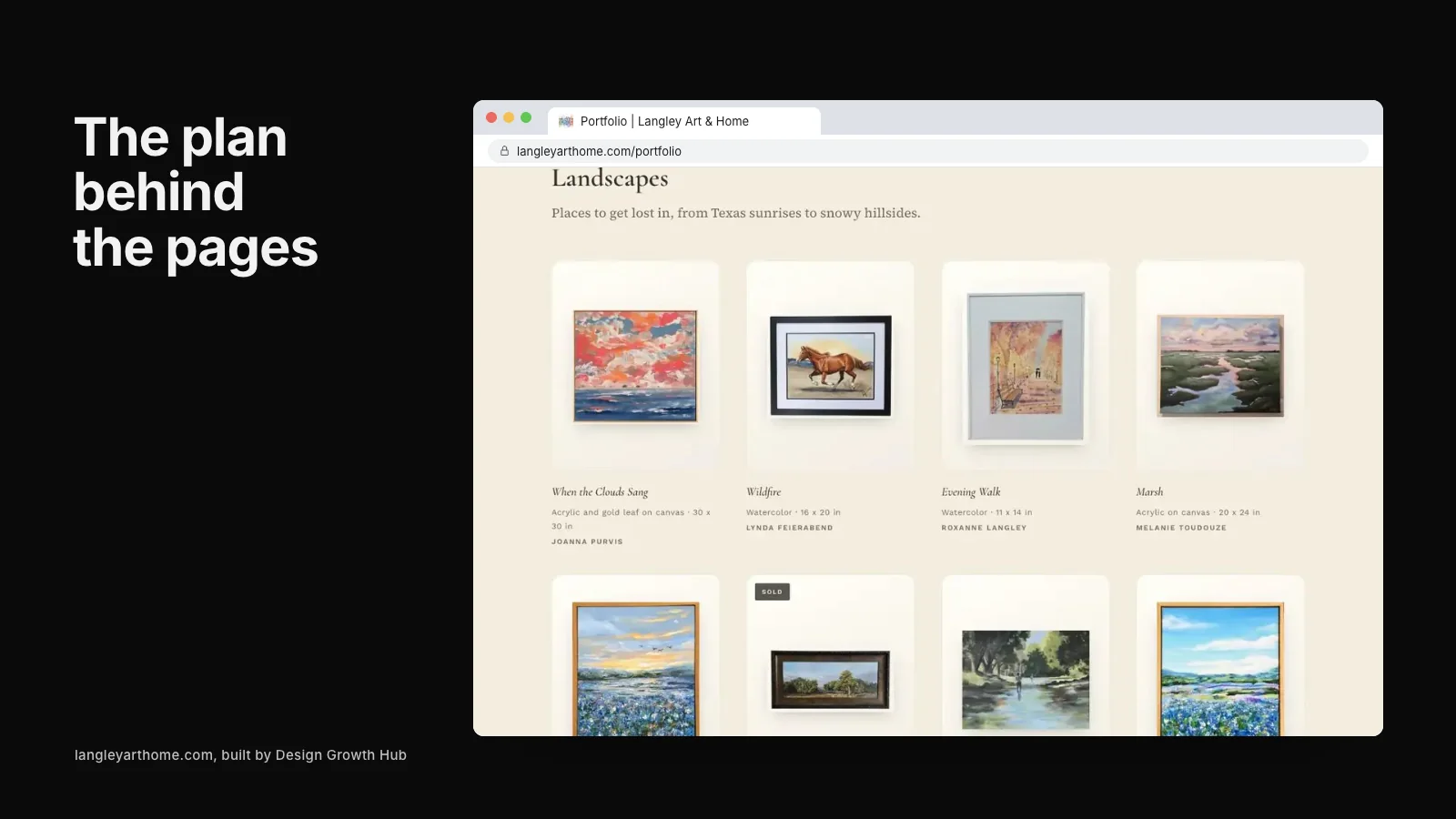
Page planning and structure
Next comes a sitemap: the list of pages, how they relate and what each one needs to say. For a design studio, that typically includes home, about, service pages, portfolio and project pages, press, contact and possibly location pages or a journal.
Structure matters for both visitors and search. It decides how people move through your site and how clearly Google understands your services. Our guide to what website architecture means explains why.
Content and writing
This is where services differ most. Some providers expect you to supply every word. Others write or edit service pages, project stories and your about page with you, based on interviews and notes. Since content often decides whether a site brings inquiries, it is worth clarifying exactly what is included.
Photography direction may also be part of this stage: choosing the strongest images, identifying gaps and advising on what to reshoot.
Visual design
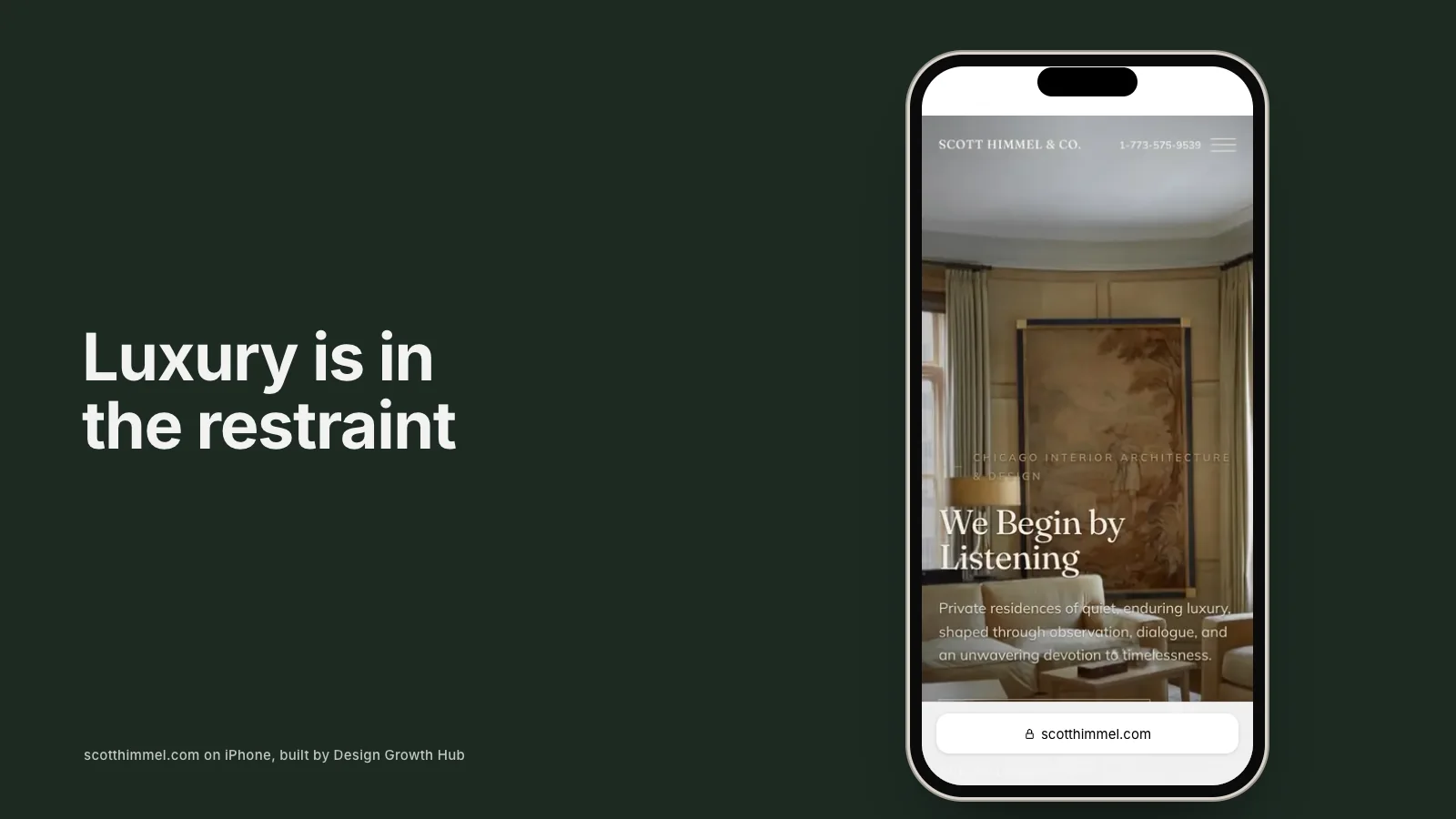
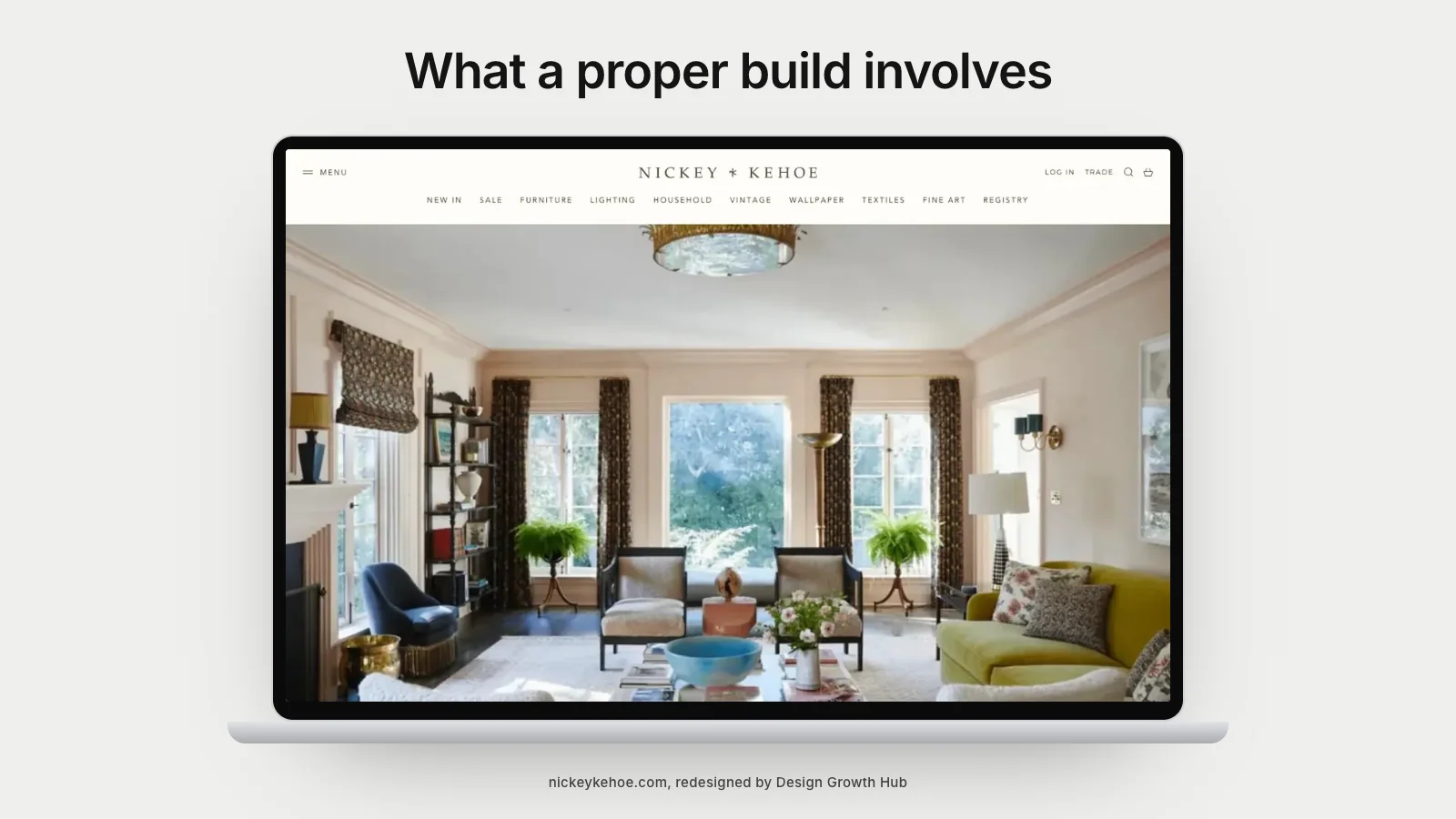
Design covers layout, typography, color, image treatment and interaction. Usually it starts with the home page and a project page, then extends to the rest. A good designer for interior studios understands that photography must lead and that restraint often feels more luxurious than decoration. Our article on what makes a luxury website feel luxury explores this.
Motion and animation, if included, should be purposeful. Our article on animated interior design websites discusses where it helps.
Development
Development turns the design into a working website. It should include responsive layouts for phones and tablets, fast image handling, accessible markup and a way for you to update content easily. Ask which platform will be used and whether you will be able to add projects yourself.
If you sell products, development scope grows considerably. Our article on interior design ecommerce websites covers what changes.
Search setup
Search setup should be part of every build, not an optional extra. It includes page titles and descriptions, clean page addresses, heading structure, image alt text, structured data, a sitemap file and connection to Google Search Console. Many providers also align your Google Business Profile details with the website.
Some studios also want ongoing search work after launch. That is usually a separate service, described in our article on what interior design SEO services should include.
Migration and redirects
If you are replacing an existing website, your old pages may have built up visibility and links over years. A careful migration maps every old address to its new equivalent and sets up redirects, so visitors and search engines are sent to the right place. Skipping this step can cost you rankings and break links in press features.
When we rebuilt Lisa Furey Interiors, old pages were redirected so years of links kept working. You can read about it in the Lisa Furey Interiors case study.
Testing and launch
Before launch, every page should be checked on several devices and browsers. Forms should be tested to confirm messages arrive. Links should be checked. Speed should be measured on mobile. After launch, the provider should confirm that the site is indexed and that analytics are working.
Training and support
You should leave the project able to update your own site, or with a clear arrangement for updates. Ask whether training is included, how support works after launch and what it costs. A short guide on adding a new project is often enough.
How to compare providers
When comparing quotes, line them up against these stages:
- Is discovery and strategy included?
- How many pages are designed and built?
- Who writes or edits the content?
- Is search setup included, and what does it cover?
- How are old pages redirected?
- What testing happens before launch?
- What support is offered afterward?
Look at their past work too, especially for studios like yours. Our list of what an interior design company website should include is a useful reference when reviewing portfolios.
What to expect from us
At Design Growth Hub, our website redesign and build services cover every stage above, with a focus on design studios, architects and builders. If you would rather start smaller, request a studio review and we will suggest what your site needs most. If you plan to build it yourself, our guides to creating an interior design website step by step and building a portfolio website cover the essentials.
Make your studio easier to find
When the right clients search, clarity is what brings them to you. Let us look at the structure behind how you are found.
Request a Studio Review