An interior design website should sell products online when products are a genuine part of the business: a curated shop, your own furniture or lighting line, vintage pieces or handmade objects. When done well, a shop adds income and reinforces your aesthetic. When added as an afterthought, it can distract from design services and confuse visitors. The key is clear separation between the design studio and the shop, so each audience finds its way quickly.
Here is how to decide, how to structure it and what to learn from studios that do it well.
When a shop makes sense
- You have a physical shop or showroom.
- You design and produce your own products.
- You source vintage or antique pieces regularly.
- You offer e-design services with product lists.
- Your audience already asks where to buy pieces you use.
If none of these apply, a shop may add complexity without much return.
When it may not
If your main goal is winning full-service projects and you have no real product business, a shop can make your studio look more like a retailer. It also requires ongoing work: photography, descriptions, inventory, shipping and customer service.
Separating studio and shop
The most effective sites make the two paths clear from the first screen. Navigation might include "Design Studio" and "Shop" as distinct sections. The home page can introduce both briefly, then let visitors choose.
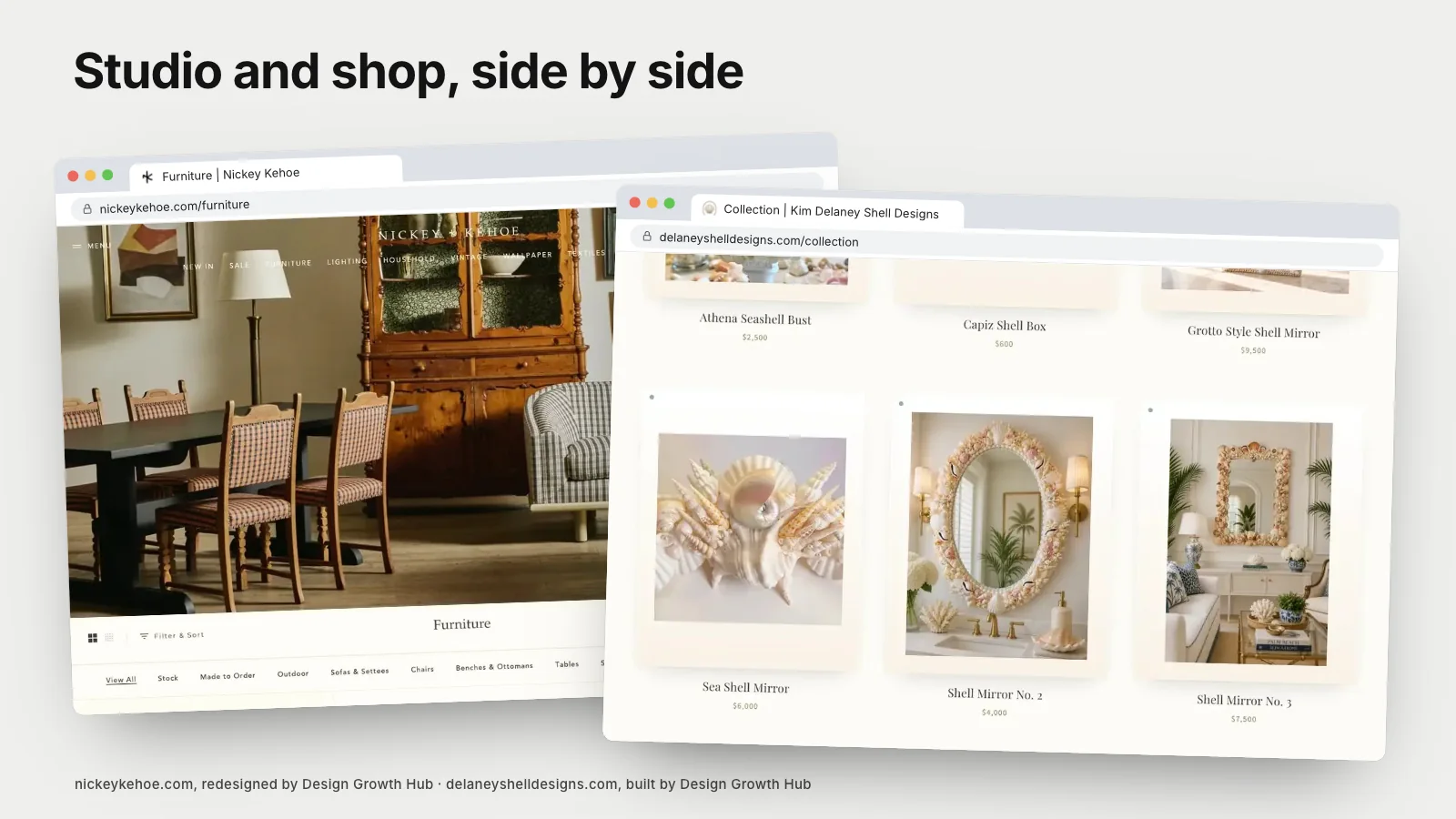
Nickey Kehoe in Los Angeles and New York is a strong example. The website brings the design studio portfolio, project stories and a full furniture and vintage storefront together on Shopify, with navigation that keeps them distinct. You can see how it works in the Nickey Kehoe case study.
Inquiry-first product pages
Not every product needs a buy button. High-value, custom or handmade pieces often work better with an inquiry-first approach: beautiful images, details and a way to ask about availability or commissions.
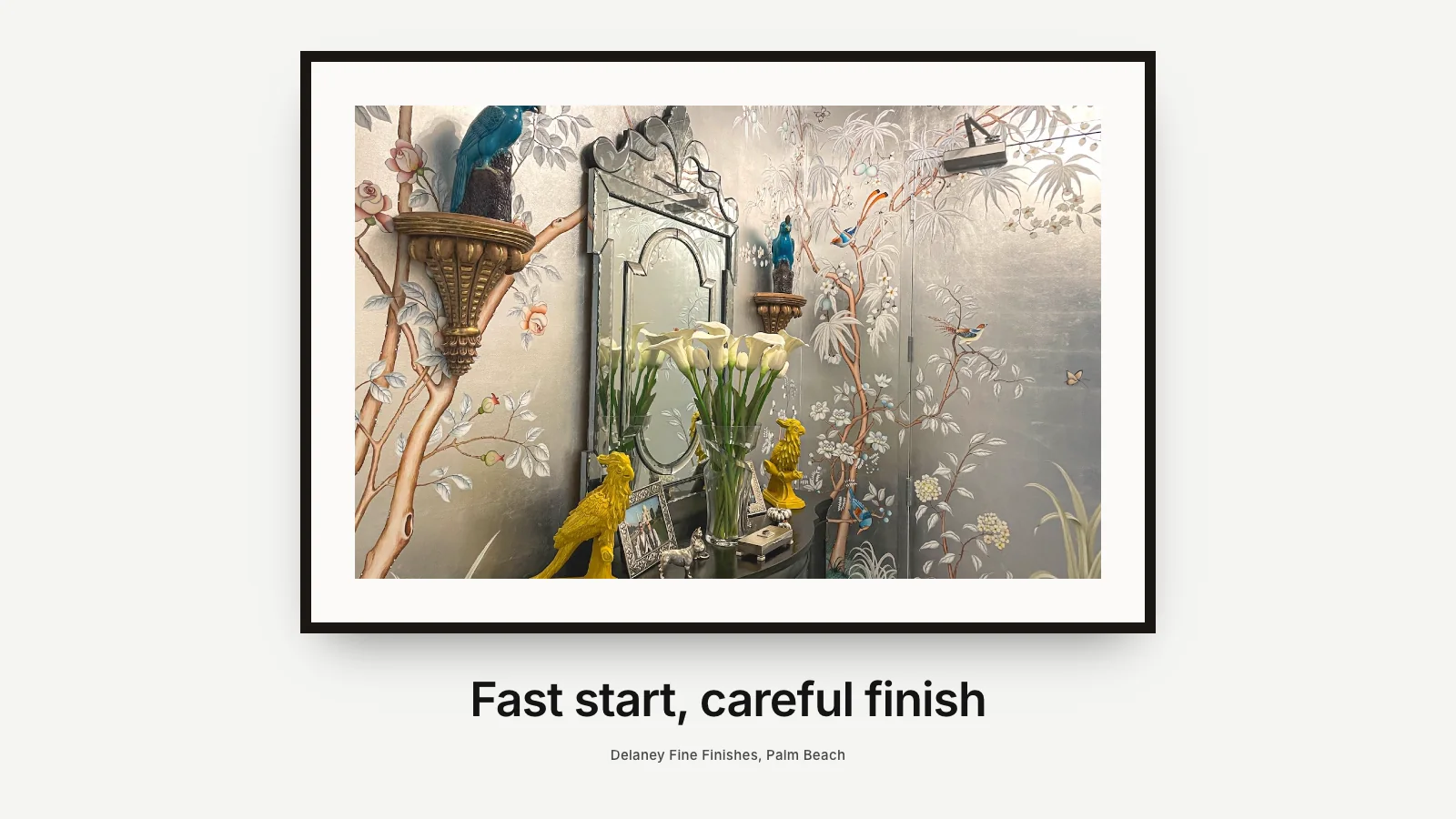
Kim Delaney Shell Designs, which creates handcrafted shell mirrors and coastal objects, uses a custom Shopify theme with inquiry-first product pages suited to one-of-a-kind work. See the Kim Delaney Shell Designs case study.
Choosing a platform
Shopify is widely used for design shops because it handles catalogs, payments, inventory and shipping reliably, and it can be designed to feel refined. WooCommerce on WordPress and Squarespace Commerce are other options. Choose based on catalog size, how products are sold and how much design control you need. Our guide to creating an interior design website step by step discusses platform choices.
Product pages that sell
Product pages deserve the same care as project pages:
- Strong photography, including scale and detail shots.
- Clear titles and descriptions with dimensions and materials.
- The story behind the piece, where relevant.
- Shipping, lead time and returns information.
- Related products and, where appropriate, projects featuring the piece.
Linking projects and products
One of the advantages of combining a studio and shop is connecting them. A project page can feature products available in the shop; a product page can show the piece in a real project. This builds inspiration and trust in both directions.
Search and products
Product pages can attract search traffic for specific items and styles. Clear titles, descriptions and structured data help. But remember that product shoppers are a different audience from full-service clients. Keep both sets of pages well organized so search engines understand each.
A smaller shop alongside a studio
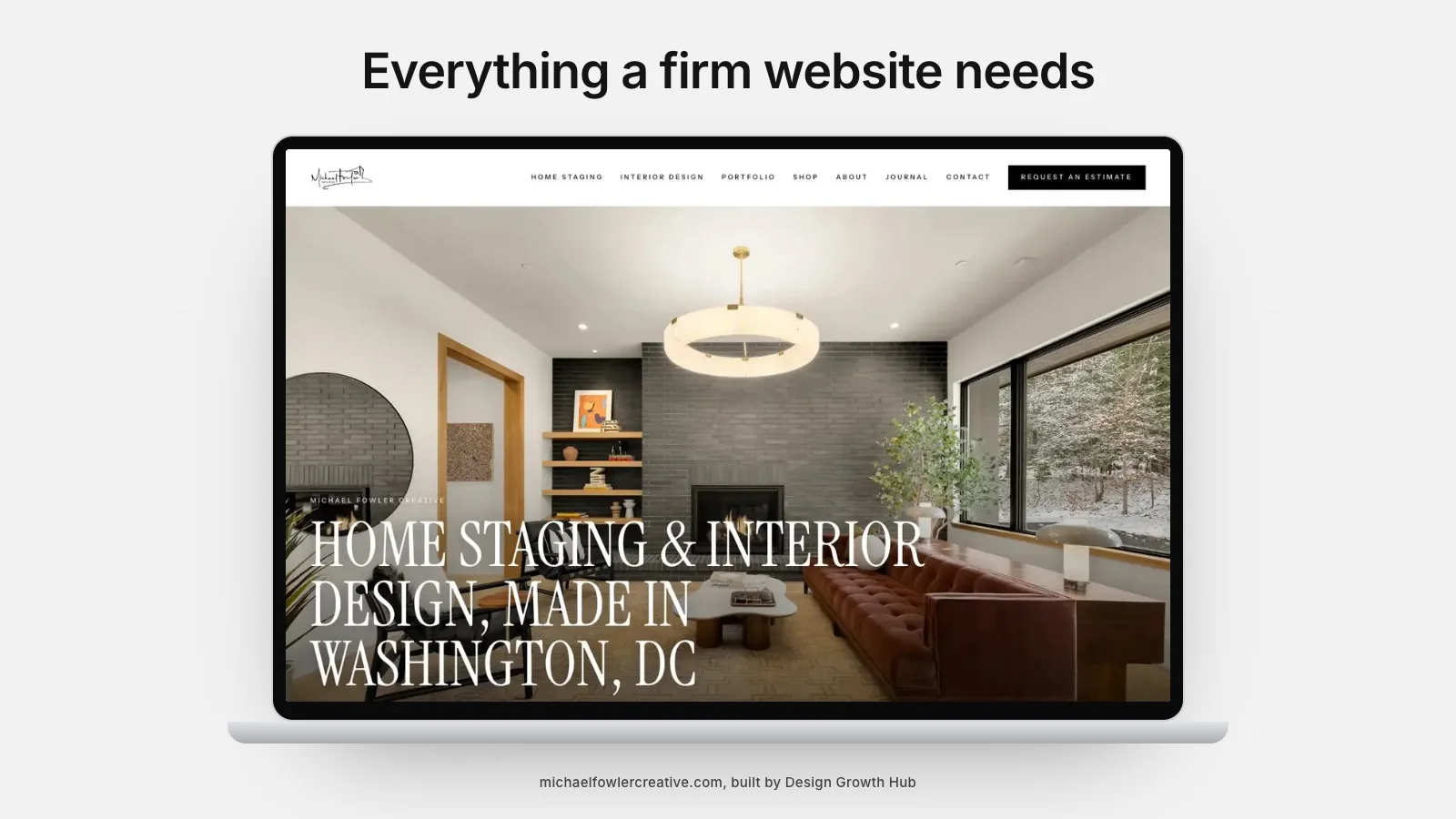
Some studios run a small shop of a few favorite pieces, gift items or their own textiles. Michael Fowler Creative includes a shop and journal alongside a large portfolio, showing how a studio can add products without overwhelming design services. See the Michael Fowler Creative case study.
Trade programs and designer pricing
Some studios with shops also sell to other designers at trade prices. If you plan to offer this, decide how trade accounts are approved and how pricing is shown. Many platforms support customer groups or separate trade portals. Keep the public shop simple and handle trade orders through a clear, separate process so neither audience is confused.
Operations to consider
- Who photographs and lists products?
- How is inventory tracked?
- How are shipping and returns handled?
- Who answers customer questions?
- How will trade or designer pricing be managed, if offered?
Plan these before launch.
Design considerations
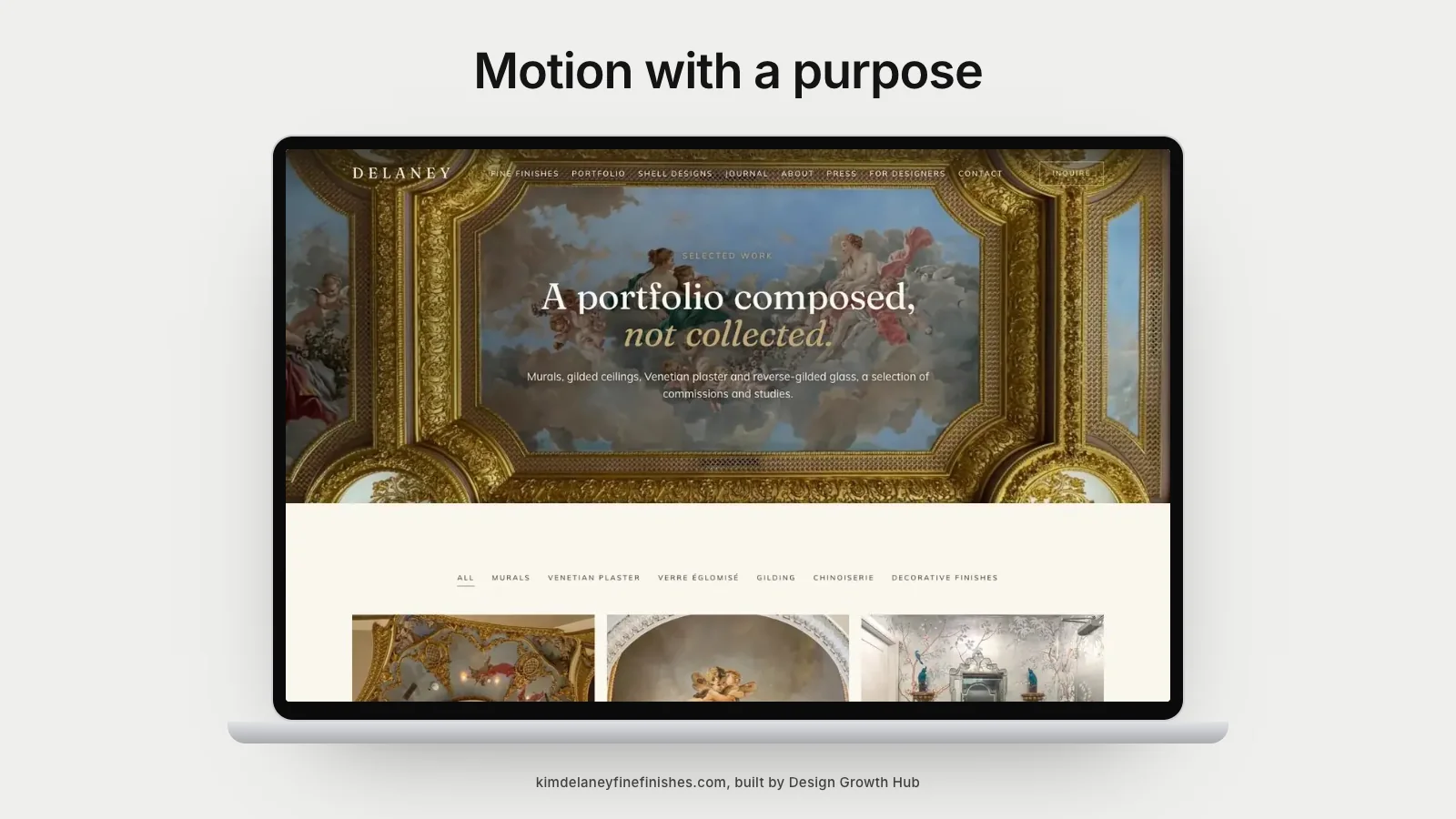
A shop should feel like part of your brand, not a generic template. Typography, photography and layout should match the studio side. Motion and effects should support browsing, not slow it down, as discussed in animated interior design websites.
Measuring success
Track sales, average order value and which products sell. Also watch whether the shop affects design inquiries positively or negatively. Some studios find the shop introduces new clients to their design services.
Planning the whole site
A combined studio and shop needs careful planning. Our guides to what a company website should include, building a portfolio website and the website guide for growing studios cover the studio side. If you are considering AI-assisted builds, our article on building a website with AI explains the trade-offs.
If you are planning a studio and shop website, our website creation service has built both on Shopify and custom platforms. Or request a studio review to talk about your plans.
Make your studio easier to find
When the right clients search, clarity is what brings them to you. Let us look at the structure behind how you are found.
Request a Studio Review