An interior design website developer turns a design into a working website: building pages, handling images, setting up forms, connecting search basics and making sure the site is fast, secure and easy to update. When hiring, look for experience with image-heavy portfolio sites, clarity about platform and ownership, attention to speed and search setup and a plan for support after launch. Many studios work with a team or agency that combines design, content and development.
Here is what to know before you hire.
Designer, developer or agency?
- Web designer: plans layouts, typography, color and how visitors move through the site.
- Developer: builds the site, writes code or configures a platform, and handles technical performance.
- Agency or studio: often combines strategy, design, content, development and search.
Some individuals do both design and development. For a design studio, the key is that someone owns each part: strategy, design, content, development and search setup.
What a developer typically does
- Builds page templates from the approved design.
- Sets up the content management system so you can edit pages.
- Optimizes images for fast loading.
- Builds forms and connects them to your email or tools.
- Sets up page titles, descriptions, structured data and sitemaps.
- Configures redirects from an old site.
- Tests across devices and browsers.
- Launches the site and connects analytics and Search Console.
Experience that matters for design studios
Design websites have particular needs:
- Large, high-quality photography that must still load quickly.
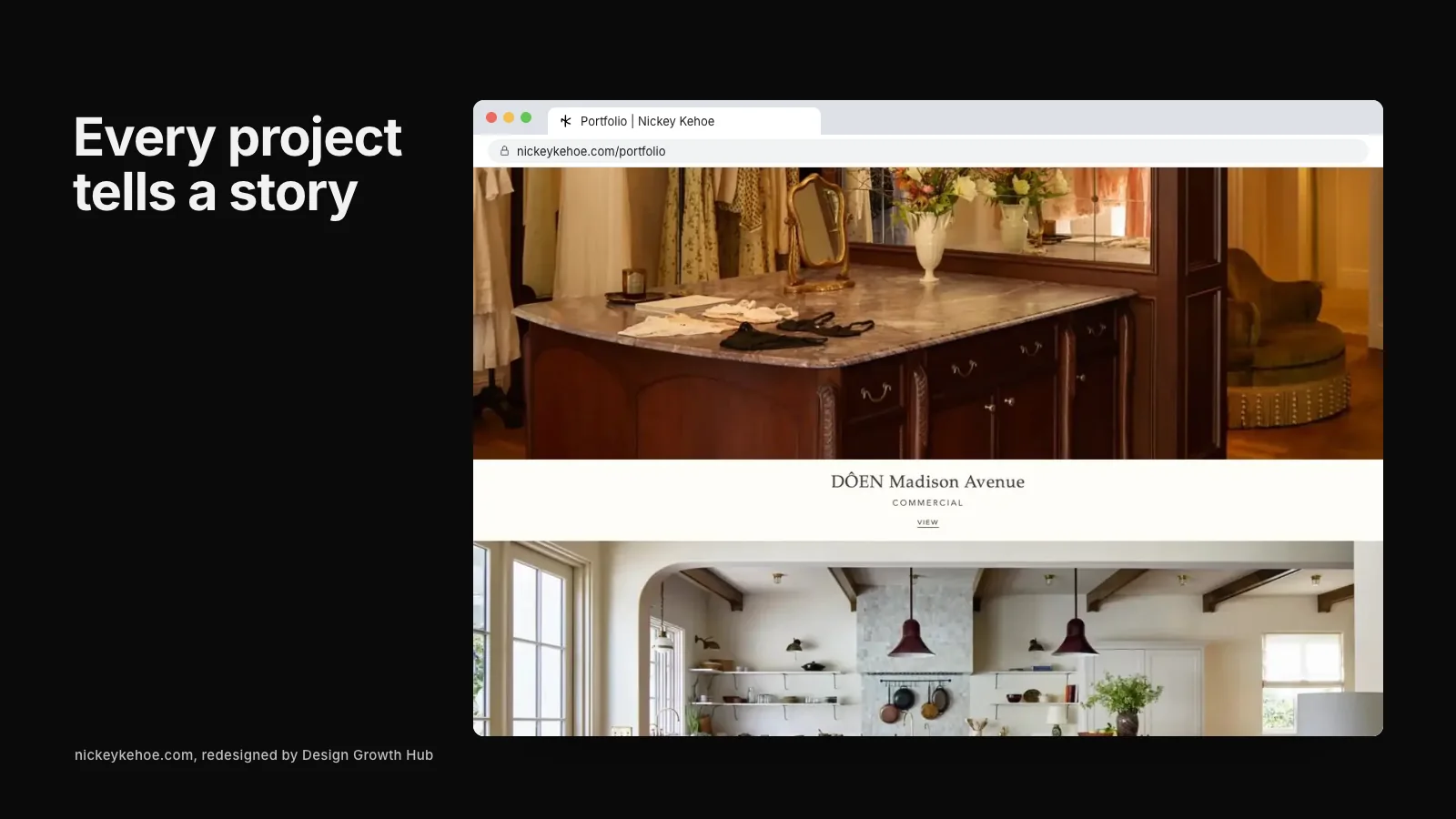
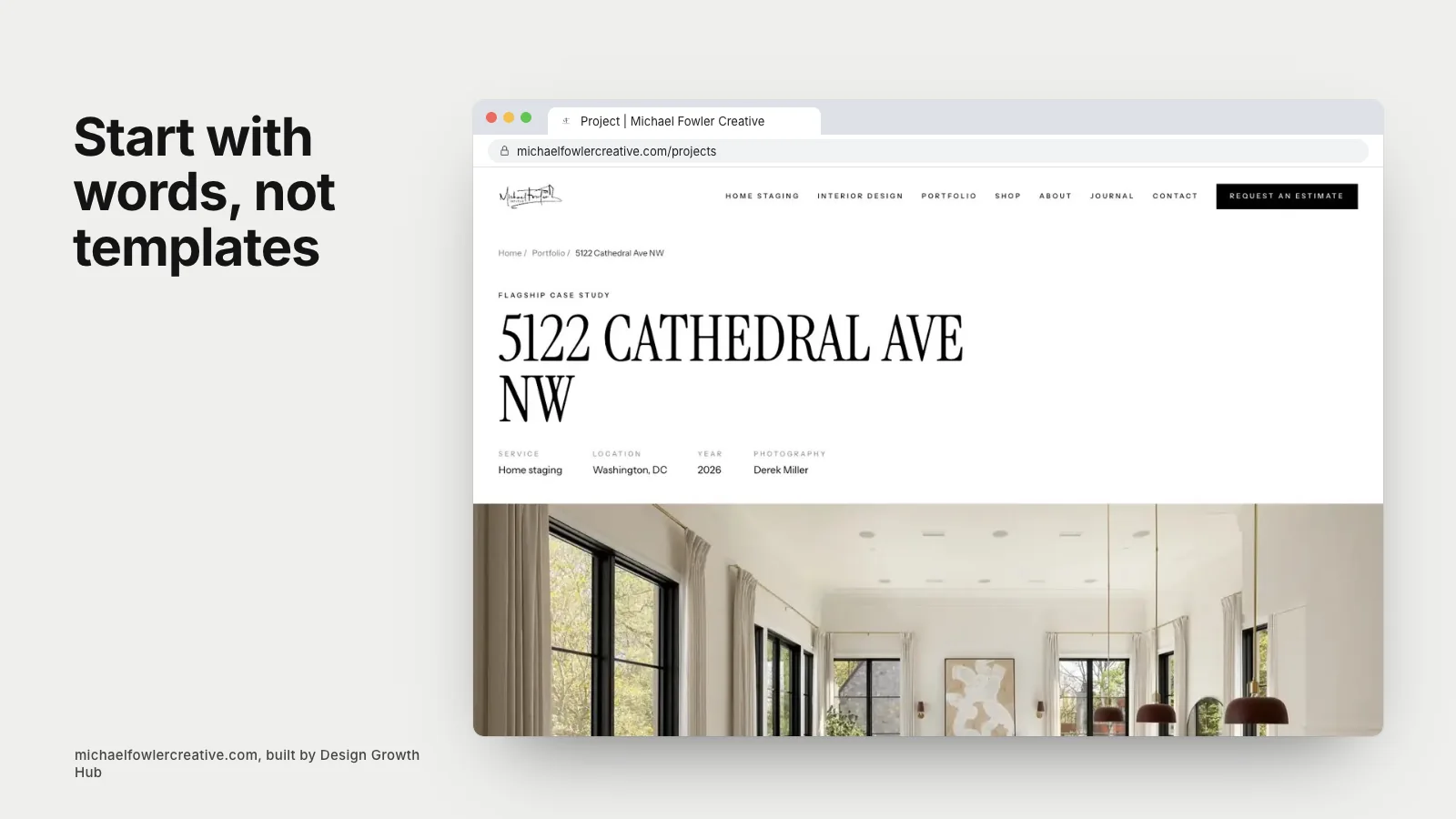
- Project pages with galleries, stories and captions.
- Clean typography and generous spacing.
- Strong mobile performance.
- Search structure for services, projects and locations.
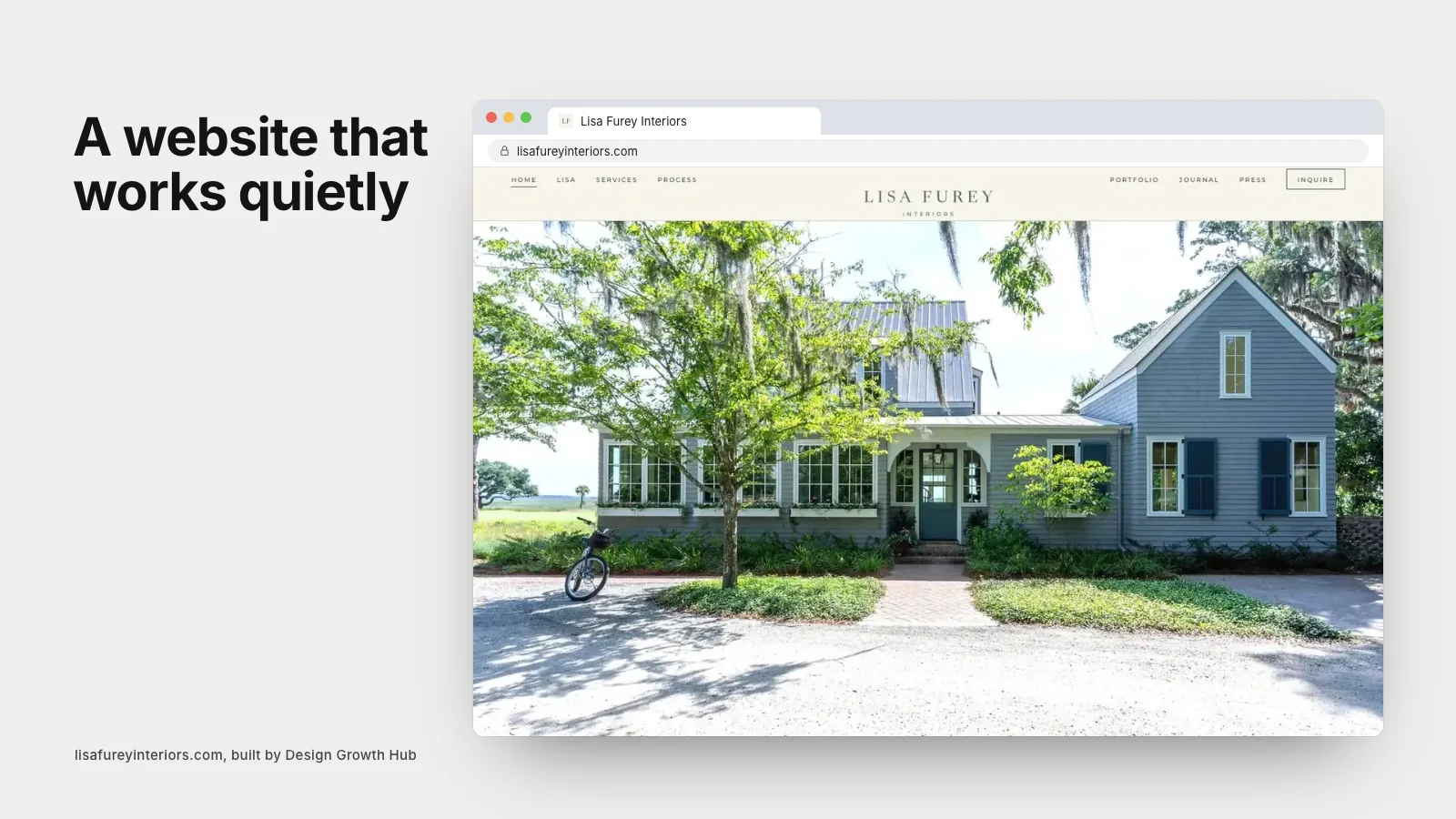
Ask to see portfolio sites the developer has built and test them on your phone. Our article on building an interior design portfolio website explains what those sites should include.
Choosing a platform
Developers work with different platforms: WordPress, Webflow, Shopify, builders like Squarespace or fully custom builds. Ask why they recommend a particular platform for your studio. The right choice depends on how many pages you need, how often you update and whether you sell products. Our article on selling products on an interior design website covers the ecommerce question.
Questions to ask before hiring
- Can I see design studio or portfolio sites you have built?
- Which platform do you recommend, and why?
- Will I be able to add projects and edit text myself?
- How do you handle image optimization and page speed?
- What search setup is included?
- How will you handle redirects from my current site?
- Who owns the website, domain and hosting accounts?
- What happens after launch, and what does support cost?
- How do you test before launch?
Ownership and access
Make sure your domain, hosting and website accounts are in your name or your business's name, with the developer given access as needed. Many studios have lost control of their sites when a developer moved on. Clear ownership protects you.
Content and the developer
Developers build what they are given. If content is not ready, the site may launch with placeholder text or weak pages. Plan who will write service pages, project stories and your about page before development begins. Our guide to creating an interior design website step by step sets out the order.
Design quality
A developer working from a weak design will build a weak site, however well coded. If your developer is not also a designer, make sure a strong design is approved before development. Motion and interaction should be agreed in advance, as discussed in animated interior design websites.
Search setup
Search basics should be part of every build: page titles, descriptions, headings, clean addresses, image alt text, structured data, sitemaps and redirects. Ask exactly what is included and who will check it. Our checklist of what an interior design company website should include lists the essentials.
Costs
Developer costs vary widely with experience, platform and scope. A small builder site costs far less than a custom site with many pages and features. Compare quotes by scope, not just price. Our guide to interior design website cost explains the main factors.
Support after launch
Websites need updates, security patches and occasional fixes. Ask whether the developer offers support plans, how quickly they respond and what is included. If you plan to manage the site yourself, ask for a short training session and written guide.
Timelines and your involvement
Ask the developer for a realistic timeline and what they need from you at each stage. Delays usually come from content and feedback rather than code. Agree in advance how many rounds of revisions are included, who approves each stage and how changes after approval are handled. A clear plan keeps the project calm and prevents a launch date from slipping month after month.
Red flags
- No portfolio of similar sites.
- Reluctance to put accounts in your name.
- Vague answers about search setup or redirects.
- No testing process.
- Promises that sound too good to be true.
Working with a combined team
Many studios find it easier to work with a team that handles strategy, design, content, development and search together. It reduces the risk of gaps between disciplines. Our guide to the interior design website guide for growing studios explains how those pieces fit.
At Design Growth Hub, our website creation service brings design, development and search together for design studios. You can see examples in our case studies, or request a studio review to talk about your site.
Turn your website into a visibility asset
A website can be a brochure or an asset that brings clients. We help design studios build the second kind.
Request a Studio Review