The cost of an interior design website ranges from little more than a monthly subscription for a template you set up yourself, to a few thousand dollars for a designer working within a builder, to five figures for a fully custom site with professional writing, structure and search setup. The right budget depends on the number of pages, how much content needs to be created, how distinctive the design must be and what the site needs to do for your business.
Here is what drives the price at each level, the costs studios often forget and how to think about value rather than price alone.
The do-it-yourself template
Building your own site on Squarespace, Showit, Wix or a WordPress theme costs the least in cash. You pay a subscription or theme fee, a domain and perhaps a few premium features. The real cost is your time, often far more than expected once you include choosing photos, writing copy, adjusting layouts and learning the platform.
For a new studio with a modest portfolio, this can be a perfectly sensible start. Our guide to creating an interior design website step by step helps you make the most of it.
A designer working within a builder
Many studios hire a web designer to customize a template or build within a builder. Costs vary with experience and scope. You get a more polished result and save time, while keeping the simplicity of the platform. Limits remain around structure, speed and flexibility as you grow.
A custom-designed website
A custom site is designed and built specifically for your studio. It usually includes strategy, page planning, design, development, search setup and often help with writing. Prices are higher, commonly reaching five figures for a complete studio site, because the work is substantially greater. The result should be faster, more distinctive and better structured for search and inquiries.
What drives the price
Whatever level you choose, the same factors push cost up or down:
- Number of pages: each service, location and project page adds work.
- Content: writing service pages and project stories from scratch takes significant time.
- Design depth: a unique design costs more than adapting an existing one.
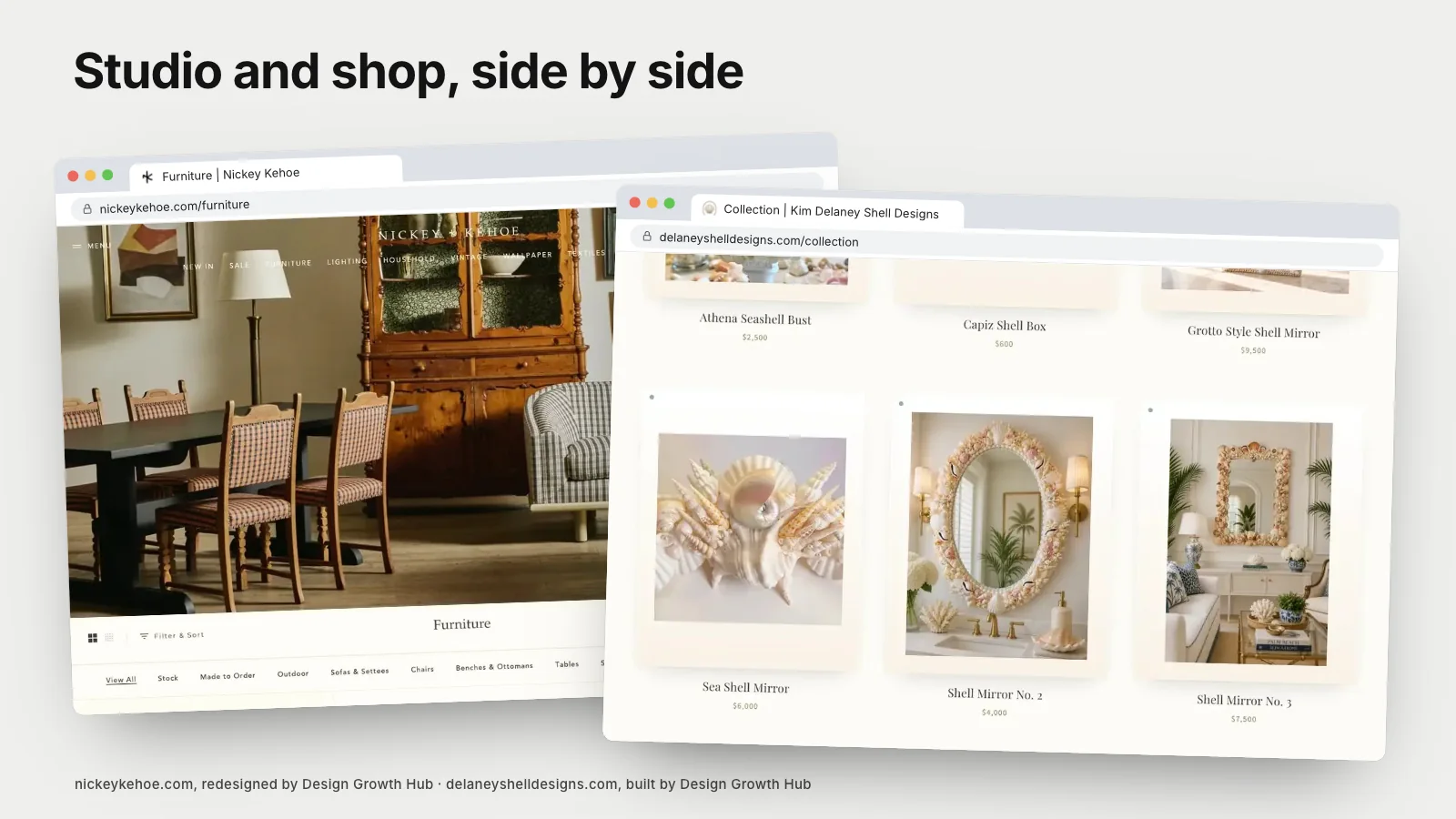
- Features: shops, filters, client portals, booking or custom integrations all add scope.
- Migration: moving content from an old site and setting up redirects takes care.
- Search setup: structured data, page titles, descriptions and technical basics.
- Photography: if new photography is needed, it is usually a separate cost.
If you are considering selling products, our article on interior design ecommerce websites explains how a shop changes scope. Animation and motion can also add design and development time, as discussed in animated interior design websites.
The costs studios forget
- Photography: often the most important investment and rarely included in website quotes.
- Copywriting: if you do not write it yourself, it needs to be budgeted.
- Hosting and domain: small, but ongoing.
- Maintenance: updates, security and backups, especially on WordPress.
- Ongoing content: adding new projects and keeping pages current.
How to judge value
The most useful question is not "How much does a website cost?" but "What does this website need to do for my business?" If one additional well-matched project each year would more than cover the investment, a stronger website is easy to justify. If your studio relies entirely on a few long-standing referral relationships, a simpler site may be enough.
Look at how your current website performs. Do you receive inquiries through it? Are they the right kind? Do referred clients mention it? These answers tell you whether more investment would likely pay off.
Comparing quotes fairly
When comparing providers, make sure quotes cover the same scope. Ask:
- How many pages are included, and which ones?
- Who writes the content?
- Is search setup included, and what does it cover?
- How are old pages redirected if I am replacing a site?
- What happens after launch, and what does ongoing support cost?
- Can I update the site myself?
A lower quote that leaves out writing, search setup or migration may cost more in the end. Our guide to what website design services include explains these components.
Website cost compared with other marketing
It can help to compare a website with other marketing costs. Advertising, directory listings and lead services are ongoing expenses. A well-built website is a long-term asset that supports every other channel: referrals, Instagram, Google and AI search. That does not make it automatically worth any price, but it changes how the investment should be judged.
What we see at Design Growth Hub
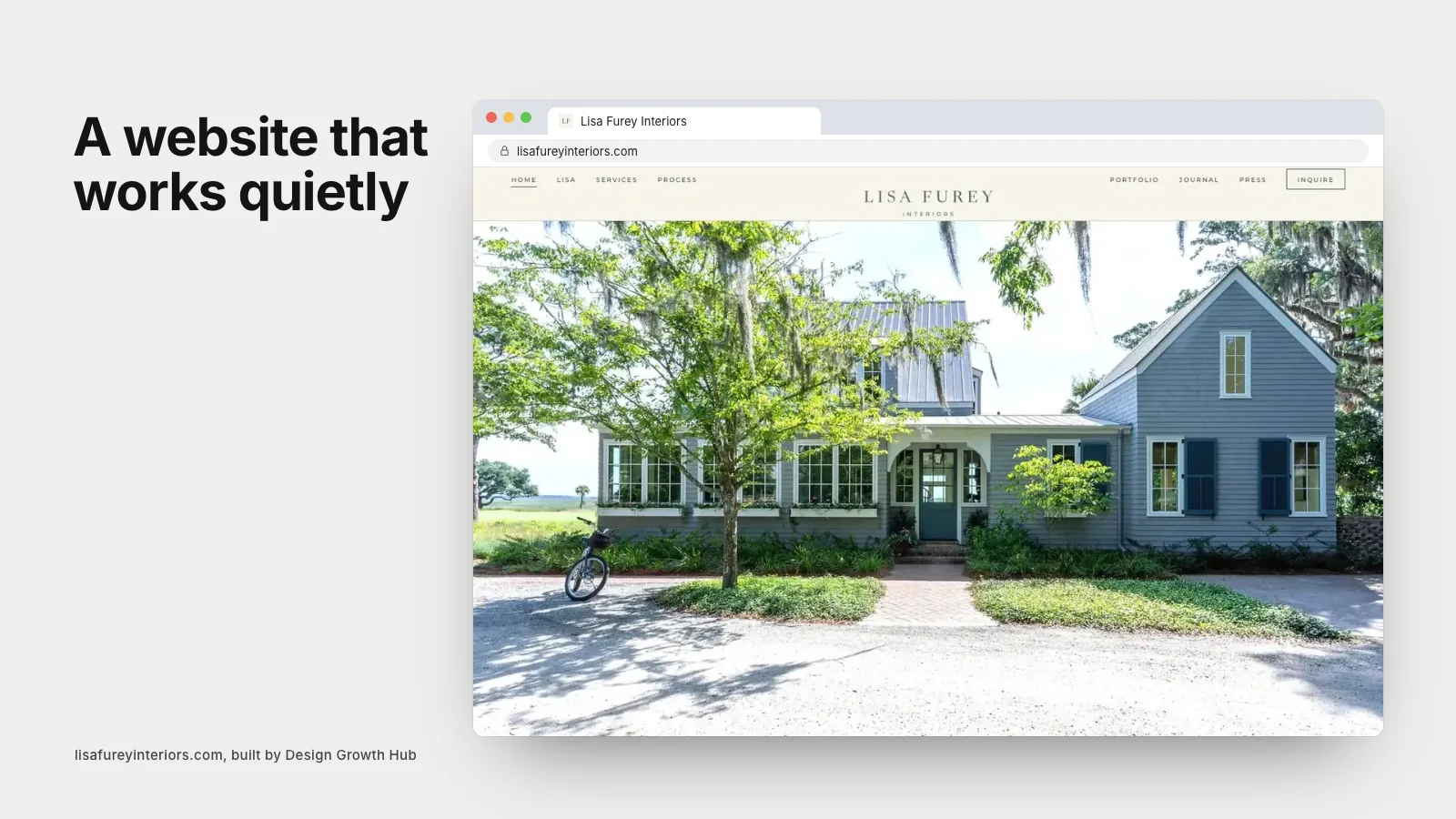
The studios we work with usually come to us when a template has been outgrown or when inquiries do not match the work they want. Lisa Furey Interiors moved from Squarespace to a 29-page custom build. Martire Custom Homes needed a new identity and a 49-page website. In each case, the scope reflected the business, not a fixed package. You can see more in our case studies.
If you would like a realistic sense of what your studio needs, our website creation service begins with a review. You can request a studio review and we will suggest a sensible scope. Our guides to what a company website should include, building a portfolio website and the website guide for growing studios will help you plan in the meantime.
See how Google + AI understand your studio
A beautiful portfolio matters. But if search engines and AI tools cannot connect your studio to the right searches, better-fit clients may never reach your website.
Request a Studio Review