Website design for furniture stores and showrooms should make the website feel like an extension of the showroom: clear categories, detailed product pages with dimensions and materials, room inspiration showing pieces together, accurate showroom information, services such as delivery and design help, a trade program for designers and, if you sell online, a smooth checkout. Whether you sell online or use the site as a catalog, the goal is to help shoppers find what they want and decide to buy or visit.
Here is how to structure and design a furniture store website.
Decide your model
Before design, decide what the website should do:
- Catalog only: shows products and encourages showroom visits or inquiries.
- Full ecommerce: sells products online with delivery.
- Hybrid: sells some products online and others by inquiry or in store.
The choice affects platform, structure and operations. Our article on building a furniture ecommerce website covers full online sales.
Clear category structure
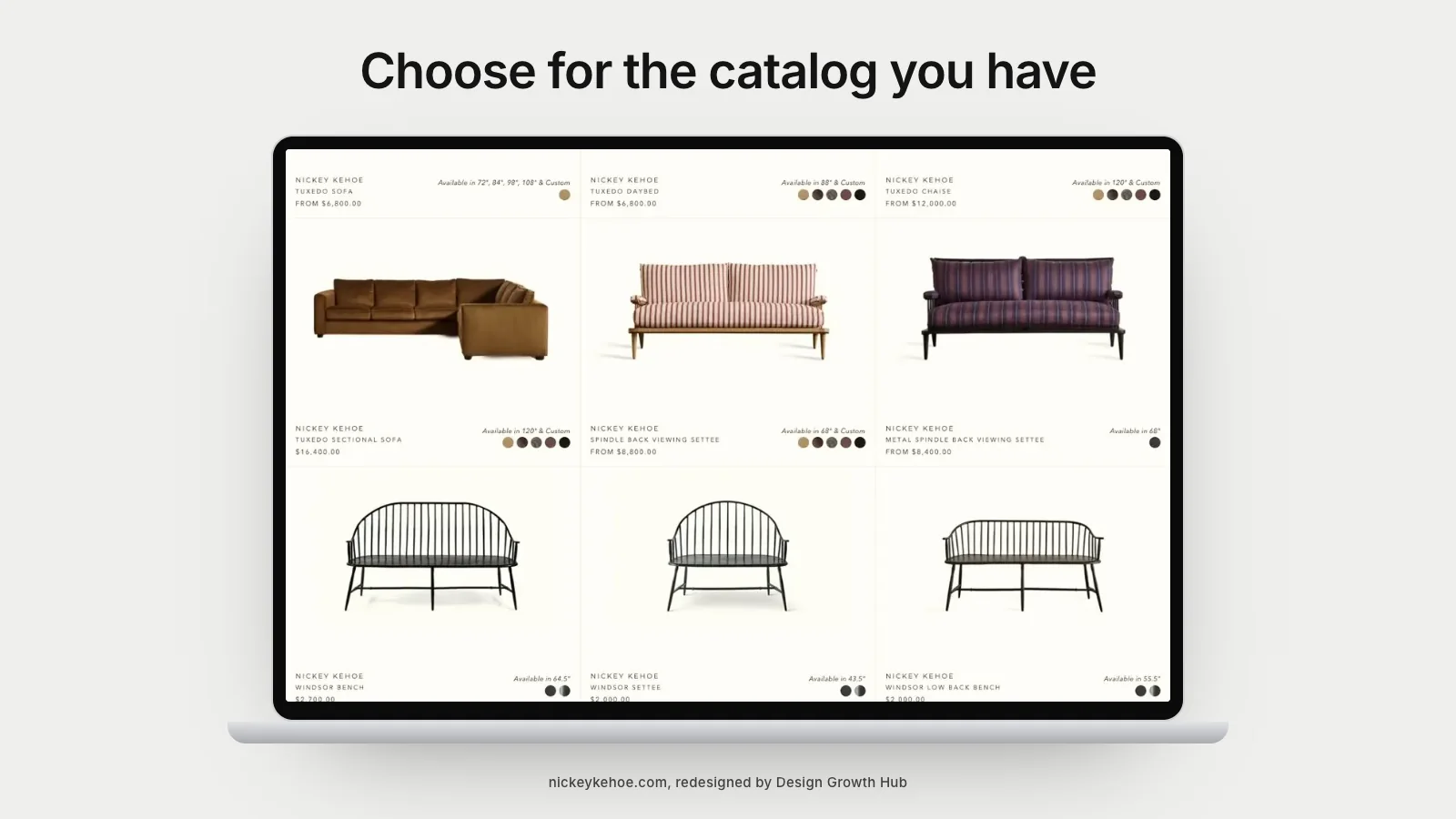
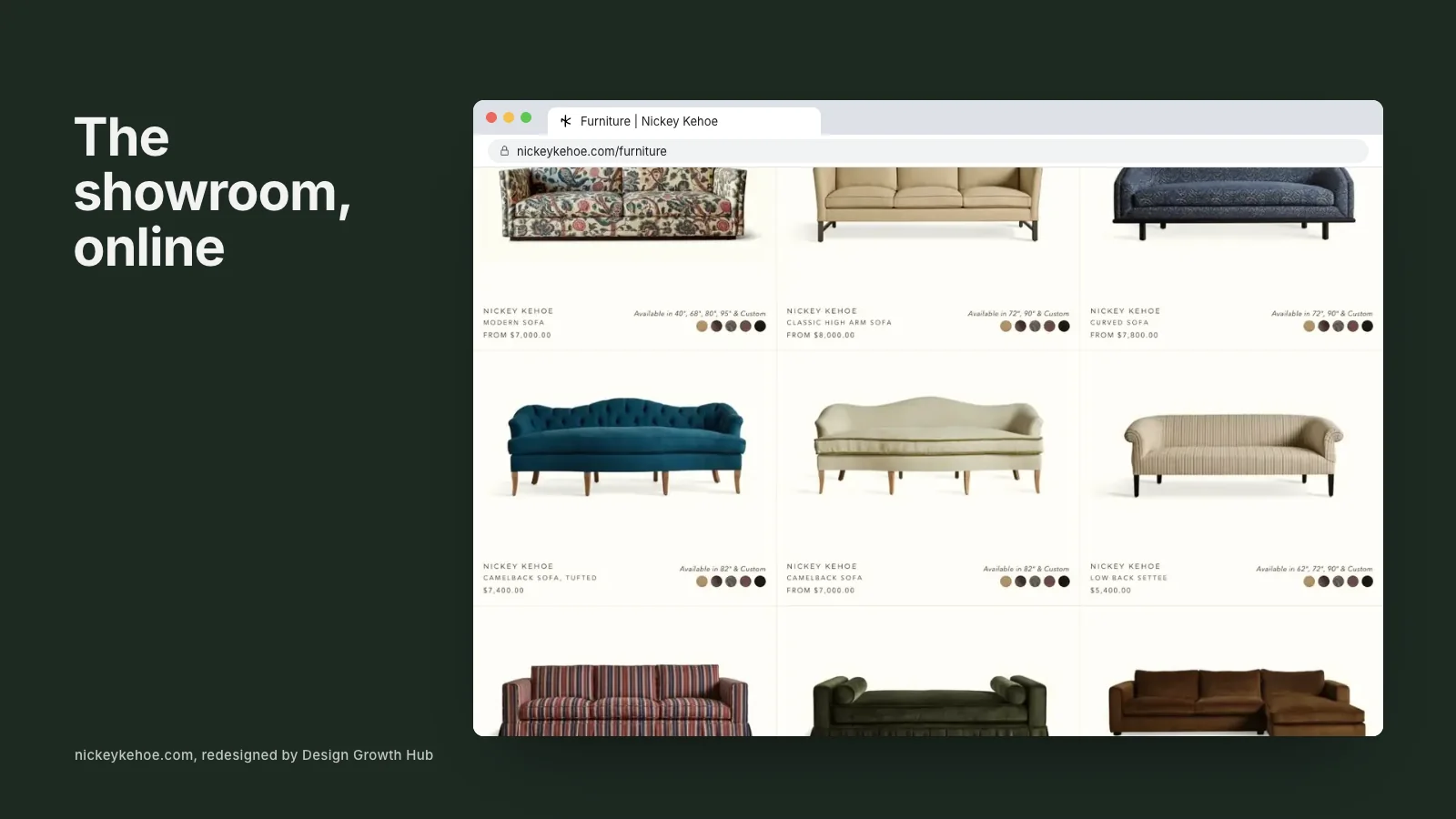
Organize products the way shoppers think: by room (living, dining, bedroom, office), by type (sofas, tables, beds) and by brand or collection. Filters for size, material, color and price help shoppers narrow choices.
Detailed product pages
Each product page should include:
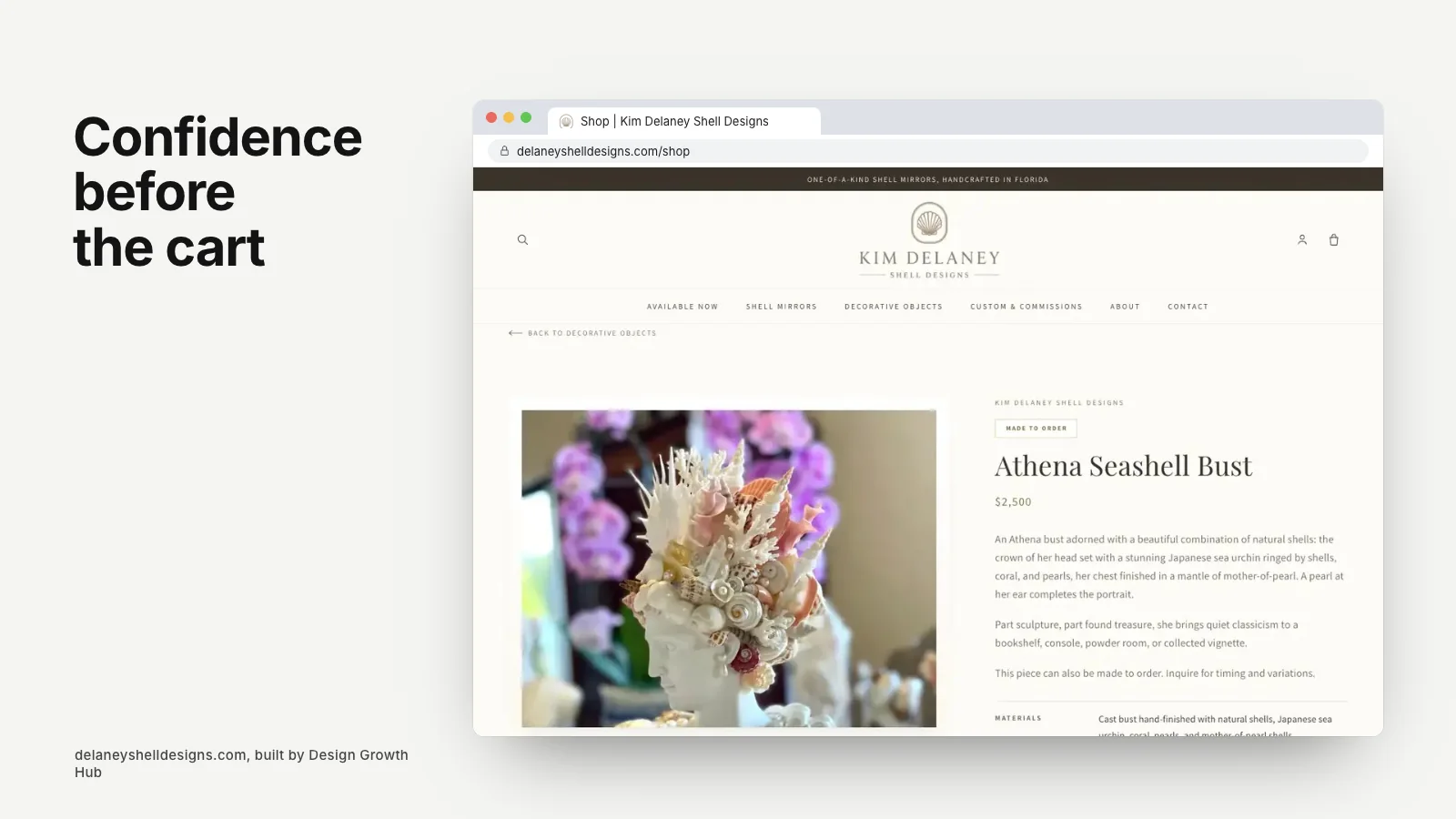
- Multiple high-quality photos, including scale and detail shots.
- Dimensions and materials.
- Fabric and finish options.
- Price or price range, if appropriate.
- Availability and lead times.
- Delivery information.
- Related products and room settings.
Accurate details reduce questions and returns.
Room inspiration
Shoppers buy rooms. Show pieces together in styled settings, linking each item to its product page. Inspiration galleries help shoppers imagine their home and encourage larger purchases.
Showroom information
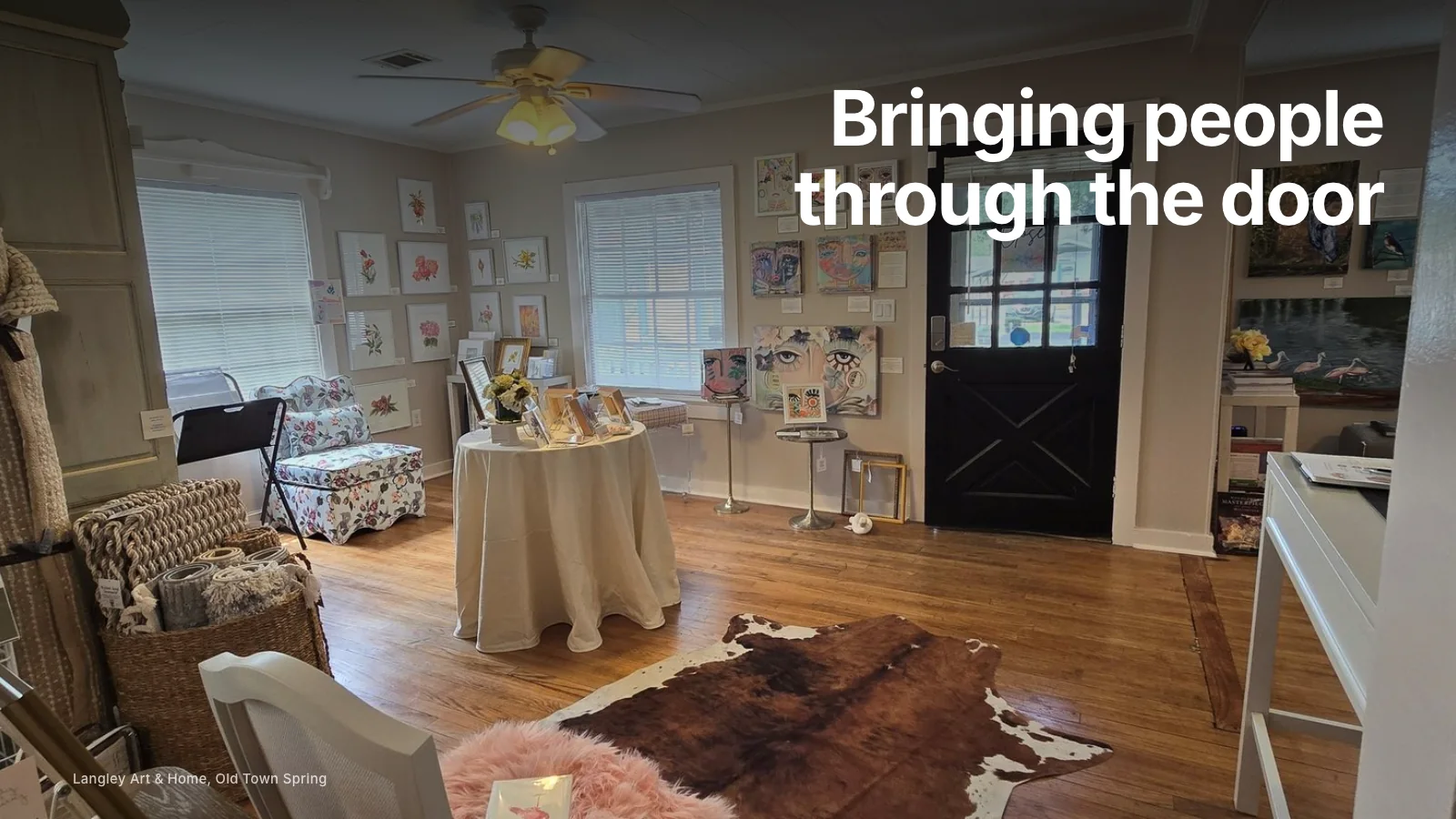
Make your address, hours, parking and directions easy to find. Include photos of the showroom and a short introduction to your team. Many visitors check this before driving over.
Services
Highlight delivery, assembly, custom orders, fabric selection and design help. These services differentiate you from online-only retailers.
Trade program
A page for interior designers explaining your trade program, with a simple application, builds relationships. Our article on furniture store marketing ideas explains how trade programs support sales.
Search and visibility
Product and category pages can appear for searches for specific items and styles. Clear titles, descriptions and structured data help. A complete Google Business Profile supports local searches. Make sure business details match across your website and profile.
Speed and mobile
Furniture sites are image-heavy. Compress images, load them as shoppers scroll and test on phones. Slow pages lose shoppers.
Platforms
Shopify, BigCommerce, WooCommerce and Squarespace Commerce are common choices. The right platform depends on catalog size, online sales and integrations. Our guide to the best website builder for furniture stores compares them.
Design that reflects your store
Your website should feel like your showroom: the same aesthetic, tone and quality. Avoid generic templates that make your store look like every other retailer.
Conversion
Make it easy to buy or inquire. Clear calls to action, a simple cart or inquiry form and reassuring information about delivery and returns help. Our article on conversion website design explains principles that apply to any business.
Related businesses
Closet companies, design build firms and other showroom-based businesses share similar needs. Our articles on the best closet design websites and design build websites offer ideas.
Help shoppers judge scale and quality
The biggest worry when buying furniture without touching it is whether it will fit and feel right. Help shoppers with clear dimensions, photos of pieces in real rooms, close-ups of fabrics and joinery, and simple tools such as printable dimension guides. Offer fabric swatches by mail or in the showroom. Each detail reduces hesitation and returns.
Make appointments easy
Many customers prefer to visit with a plan. An easy way to book a showroom appointment, a design consultation or a fabric selection session encourages serious shoppers to come in. Confirm bookings by email and remind them the day before.
Show the people behind the store
Introduce your owners, designers and sales team with photos and short bios. Shoppers who feel they know someone at the store are more likely to visit and ask for help. A personal touch is one of the main advantages a local showroom has over online retailers.
Use the website to support the showroom
Staff can use the website during conversations in the showroom: showing fabric options, related pieces or delivery timelines. Some stores add a simple way to save favorites and share them with a salesperson. When the website and showroom work together, shoppers move between them comfortably.
Write helpful content
Articles about choosing a sofa, measuring for a dining table or caring for leather attract shoppers early in their research and show your expertise. Link them to relevant products and categories. Helpful content also gives search engines and AI tools more to understand about your store.
Respect the visitor's time
Avoid pop-ups that block products the moment someone arrives, slow sliders and confusing menus. Let shoppers browse calmly, as they would in a well-run showroom.
Keeping it current
Update products, availability and room settings regularly. Remove discontinued items or mark them clearly. Outdated information frustrates shoppers.
If you would like a furniture store website that feels like your showroom, our website creation service has built studio and shop websites, including on Shopify. Or request a studio review to start.
Start with a Google + AI visibility audit
Before changing anything, it helps to see clearly. A visibility audit shows exactly where your studio is easy, or hard, to understand.
Request a Studio Review