The most effective marketing ideas for local furniture stores bring people into the showroom and keep them returning: styled room settings that inspire, a trade program for interior designers, events that create reasons to visit, strong local search visibility and a complete Google profile, social content showing pieces in real homes, an online catalog that lets shoppers browse before they come in and email that keeps past customers informed. Showrooms compete with online retailers by offering what they cannot: touch, expertise and inspiration.
Here are ideas grouped by goal.
Create inspiring room settings
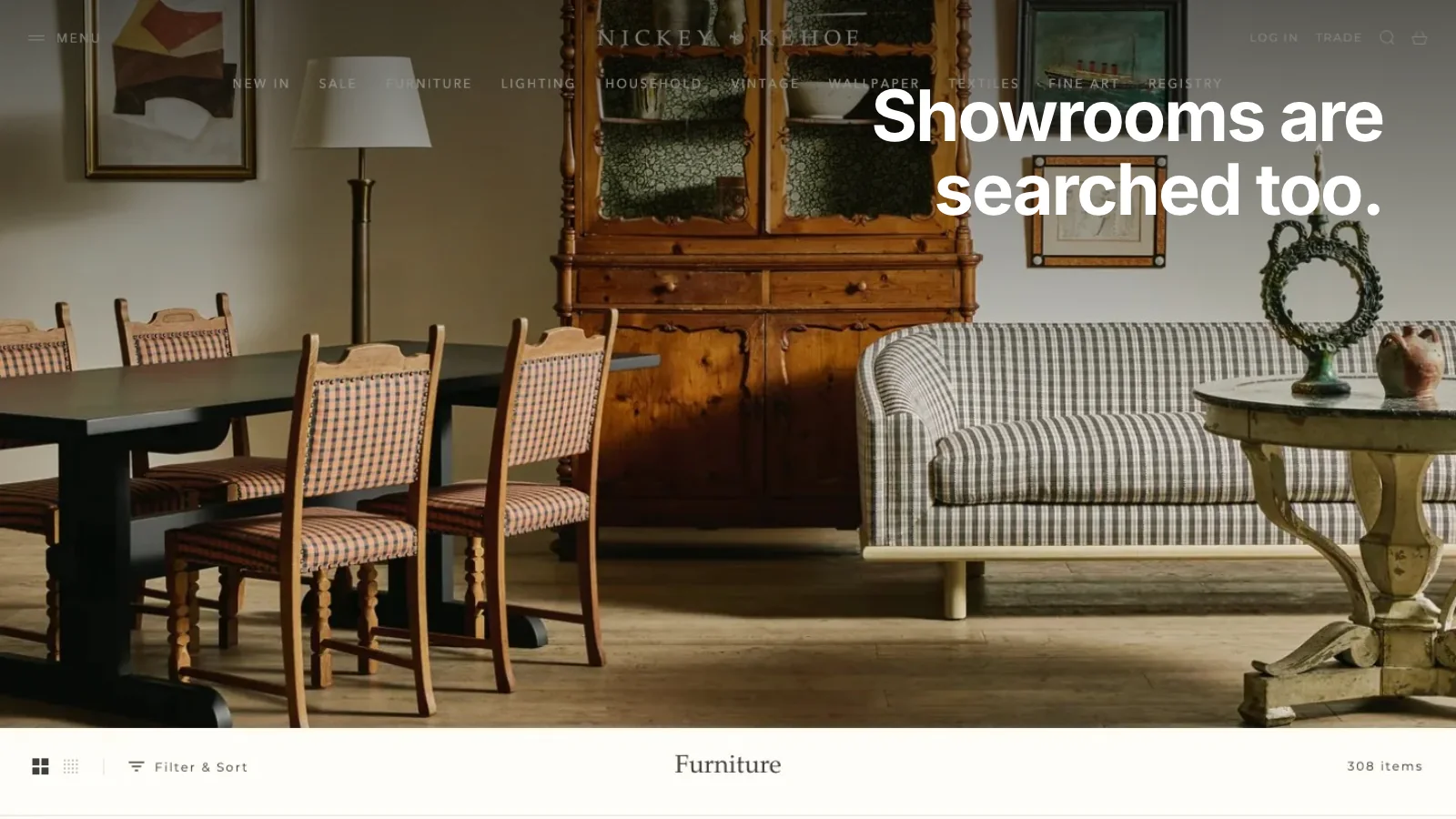
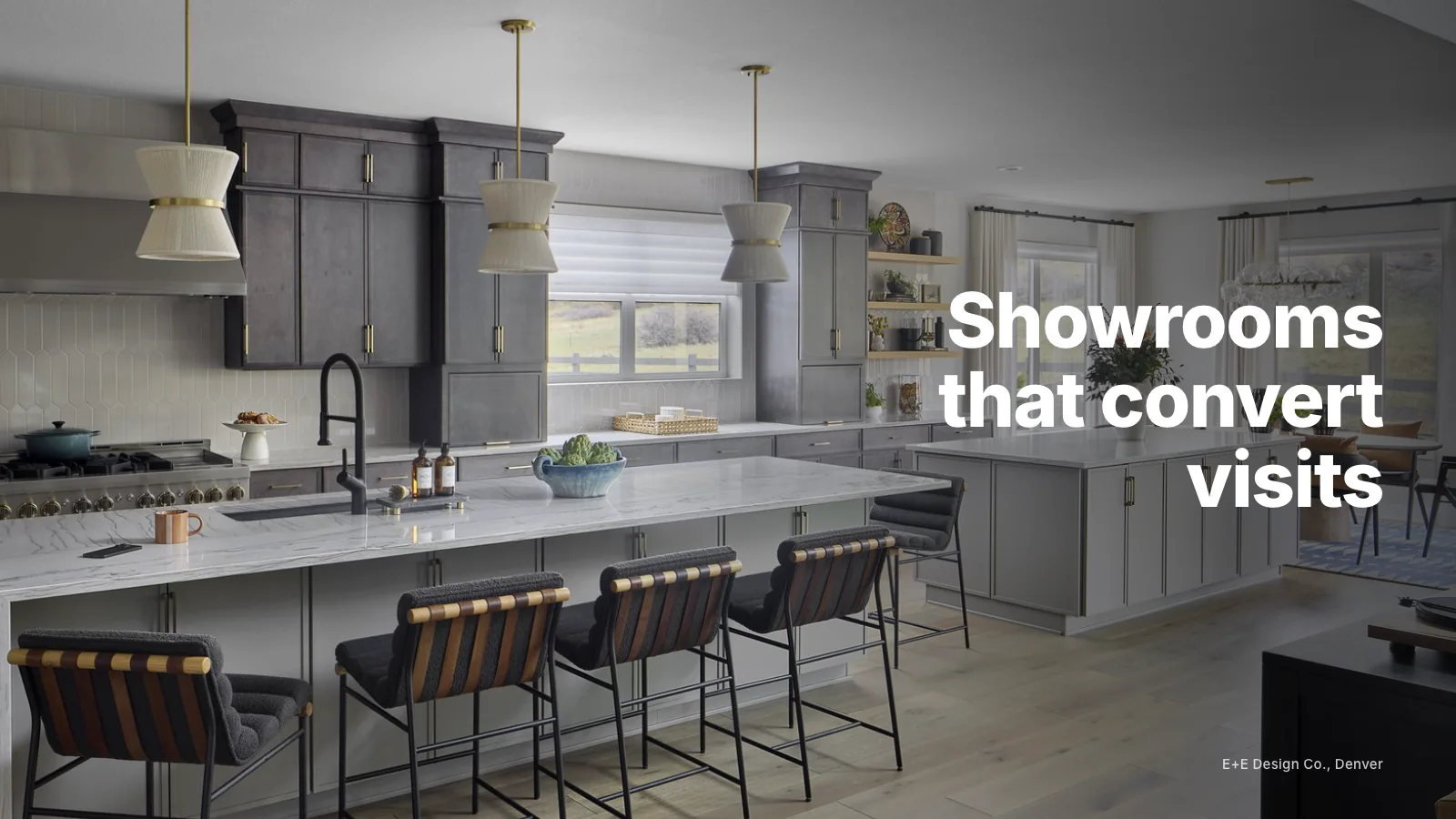
Shoppers buy rooms, not just sofas. Style vignettes as complete rooms with lighting, rugs, art and accessories. Change them seasonally. Photograph them for your website and social media. Room settings help shoppers imagine pieces in their own homes and encourage larger purchases.
Launch or strengthen a designer trade program
Interior designers can bring steady business. A trade program might include designer pricing, a dedicated contact, sample loans, quick quotes and space to meet clients in the showroom. Promote it on a dedicated page and through local design associations.
Host events
Events give people reasons to visit: new collection launches, designer talks, small workshops on styling or choosing upholstery, partnerships with local artists or charities. Keep events focused and well promoted. Photograph them for social media.
Strengthen local search
Shoppers search "furniture store near me", "sofa store [town]" or for specific brands. A complete Google Business Profile with accurate hours, photos of your showroom and products, regular posts and steady reviews helps you appear. Make sure your address and hours are exact. Our article on how luxury furniture showrooms can appear in AI search explains how AI tools now factor into discovery.
Build an online catalog
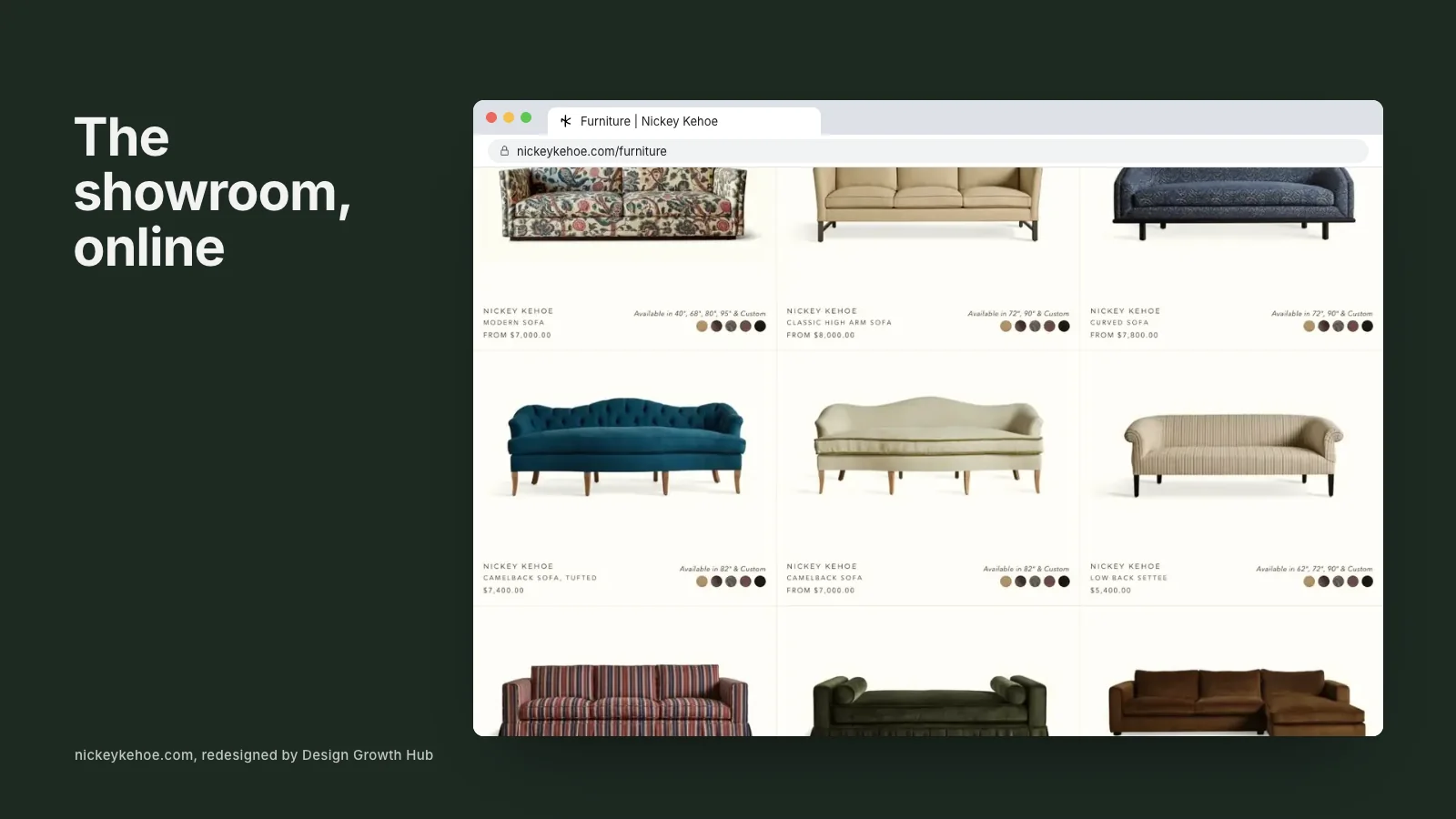
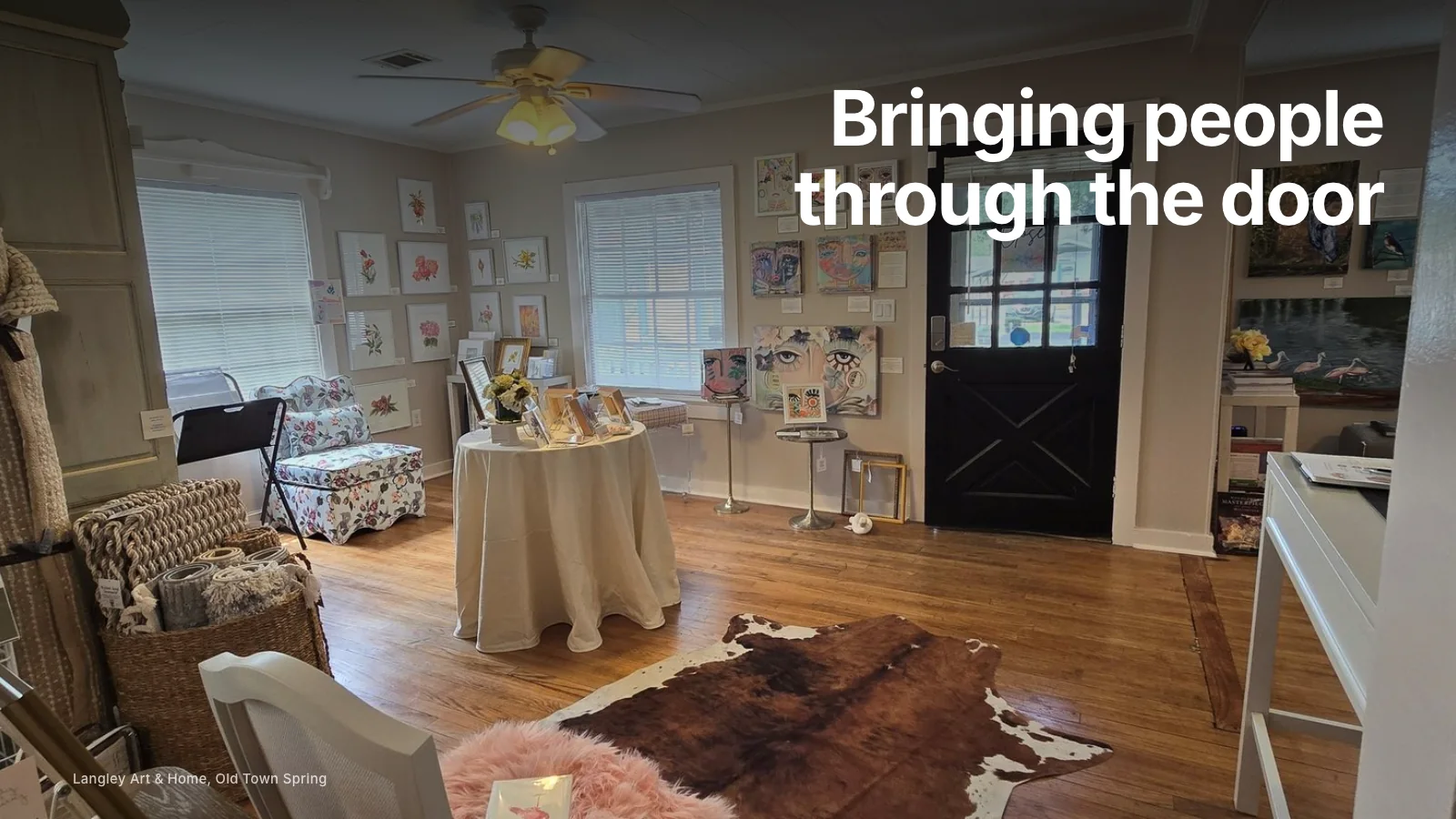
Many shoppers browse online before visiting. A catalog showing your products, with clear photos, dimensions and availability, helps them plan a visit. Even if you do not sell online, a browsable catalog brings people through the door. Our article on website design for furniture stores explains what to include.
Share social content
Instagram, Pinterest and Facebook suit furniture marketing. Share room settings, new arrivals, customer homes with permission, behind-the-scenes and styling tips. Our article on social media marketing for furniture stores offers more ideas.
Email past customers
Customers who have bought once often return. Email them about new collections, events and seasonal ideas. Keep emails visual and focused.
Partner with local businesses
Partner with builders, realtors, designers and home-related businesses. Offer staging pieces for show homes, co-host events or provide welcome offers to new homeowners through realtors.
Highlight services
Delivery, assembly, custom orders, fabric selection and design help are valuable services. Promote them clearly. They differentiate local showrooms from online-only retailers.
Collect and share reviews
Ask happy customers for Google reviews, especially after delivery when they are enjoying their new pieces. Respond to every review.
Seasonal campaigns
Plan campaigns around times when people refresh their homes: spring, before holidays, moving seasons. Feature relevant room settings and products.
Learning from adjacent showrooms
Kitchen and bath and flooring showrooms face similar challenges. Our articles on kitchen and bath marketing solutions and flooring marketing ideas offer transferable ideas. Makers who sell through showrooms may find furniture product marketing strategy useful.
Tell the stories behind the pieces
Shoppers love knowing where furniture comes from: the workshop that made a table, the mill that wove a fabric, the designer behind a collection. Share these stories on product pages, in social posts and on tags in the showroom. Stories give shoppers reasons to choose a piece and to choose your store over an anonymous online listing.
Offer design help
Many shoppers feel uncertain about scale, color and how pieces work together. Offering in-store design consultations, or simple services such as floor plan advice and fabric sampling, turns uncertainty into confidence and often leads to larger purchases. Promote the service clearly on your website and in the showroom, and explain how to book it.
Make returning easy for past customers
Customers who furnished one room often return for the next. Keep notes on what they bought, follow up after delivery to make sure they are happy and invite them to events or previews of new collections. A personal note from the salesperson who helped them can be far more effective than a general promotion.
Show up where homeowners plan
People planning a move, renovation or new home are natural furniture customers. Partner with realtors, builders and remodelers to reach them at the right time, perhaps with a welcome visit offer or a showroom event for new homeowners. These partnerships put your store in front of people who are about to buy.
Keep the showroom fresh
Regular visitors notice when nothing changes. Rotate room settings, feature new arrivals near the entrance and refresh window displays. A showroom that feels new gives people reasons to come back and share what they saw.
Measure what works
Ask customers how they heard about you, track website visits and catalog views and note which events bring sales. Focus on what works.
Ideas that rarely pay off
- Constant discounting that trains customers to wait for sales.
- Generic print ads with no clear reason to visit.
- Social posts showing only product shots on white backgrounds.
- Outdated online information.
If you would like help strengthening your showroom's website and local visibility, our Google search services work with showrooms and design businesses. Or request a studio review to start.
Request a Studio Review
If your work is already strong, the next step is making sure Google + AI can understand it clearly.
Request a Studio Review