A furniture e-commerce website converts when it gives shoppers the confidence to buy large, expensive items they cannot touch: detailed product pages with multiple photos, exact dimensions and materials, clear variant selection for fabrics and finishes, honest delivery timelines and costs, fair return policies, reviews and customer photos, swatch programs, fast pages and a simple checkout. Each element removes a reason to hesitate.
Here is how to build a furniture store that sells online.
Product pages that answer every question
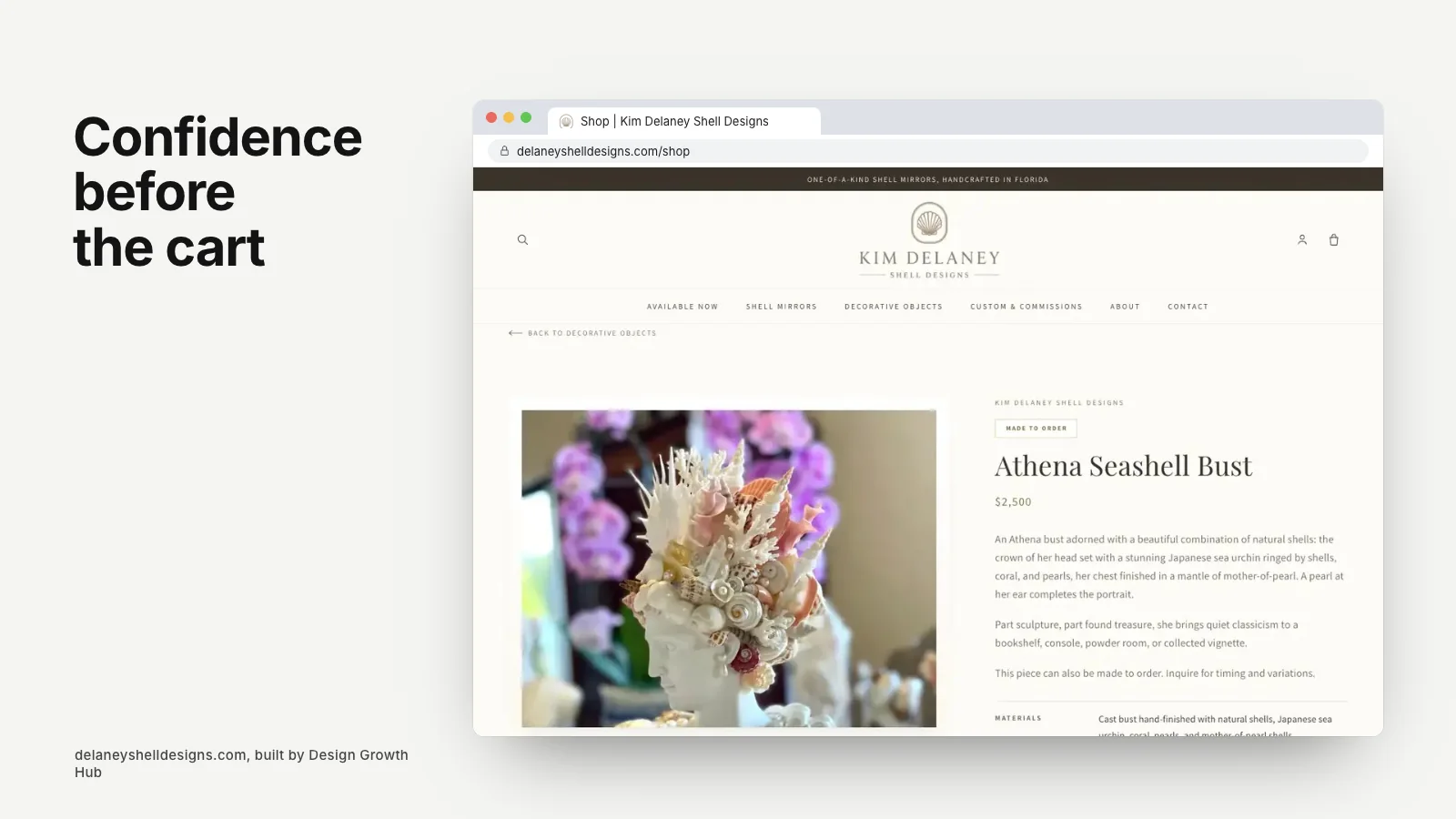
A strong furniture product page includes:
- Multiple high-quality photos from different angles.
- Close-ups of materials, stitching and finishes.
- Photos in styled rooms for scale and context.
- Exact dimensions, including seat height and depth.
- Materials, construction and care.
- Variants for fabric, finish and size.
- Lead time and delivery information.
- Reviews and customer photos.
Clear variant selection
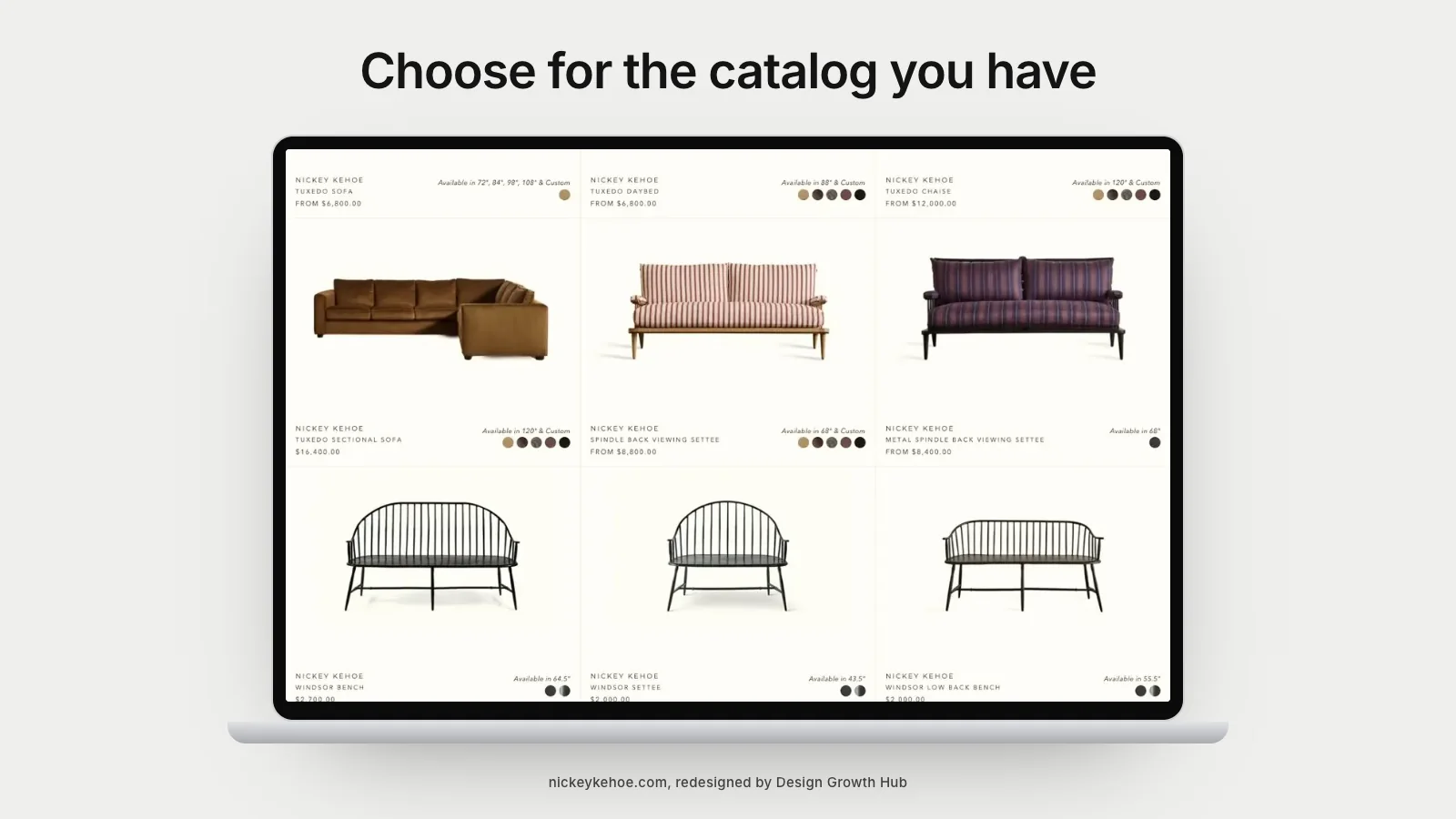
Furniture often comes in many fabrics, finishes and sizes. Make choosing easy with swatch images, clear labels and photos that update when options change. Show how lead time or price changes with each choice.
Photography
Photography sells furniture online. Invest in consistent, professional images with accurate color. Show pieces from multiple angles, in context and in detail. Short videos showing scale or texture can help.
Delivery and returns
Delivery is a major concern for furniture shoppers. Explain options, costs, timelines, white-glove service and what to expect on delivery day. Make return policies clear and fair. Surprises at checkout lose sales.
Swatches and samples
Offer fabric and finish swatches, ideally free or low cost. Shoppers who see swatches in their home buy with more confidence and return less.
Trust signals
Reviews, ratings, customer photos, press mentions, secure checkout indicators and clear contact information build trust. Display them on product pages and at checkout.
Navigation and filters
Organize products by room, type and collection. Filters for size, material, color, price and availability help shoppers narrow choices quickly.
Search
A good site search with useful results helps shoppers who know what they want. Track what people search for to identify gaps.
Checkout
Keep checkout simple: guest checkout, clear costs, multiple payment options and minimal steps. Show delivery estimates before payment.
Speed and mobile
Furniture sites are image-heavy. Compress images, use modern formats and test on phones. Slow pages lose shoppers. Our article on page speed and SEO explains why.
Platforms
Shopify, BigCommerce and WooCommerce are common choices. Our article on the best website builder for furniture stores compares them, and website design for furniture stores covers design.
Home page and inspiration
Inspiration helps shoppers start browsing. Our article on what belongs on a furniture website home page explains how to structure the front door of your store.
Content and search visibility
Helpful content about choosing furniture, caring for materials and styling rooms attracts shoppers and supports search visibility. Clear product titles and descriptions help both search engines and AI tools.
Learning from design websites
Interior design and architecture websites excel at presenting work beautifully. Our articles on website ideas that bring inquiries, interior designer website design and architect website design offer presentation ideas that translate to furniture.
A real example
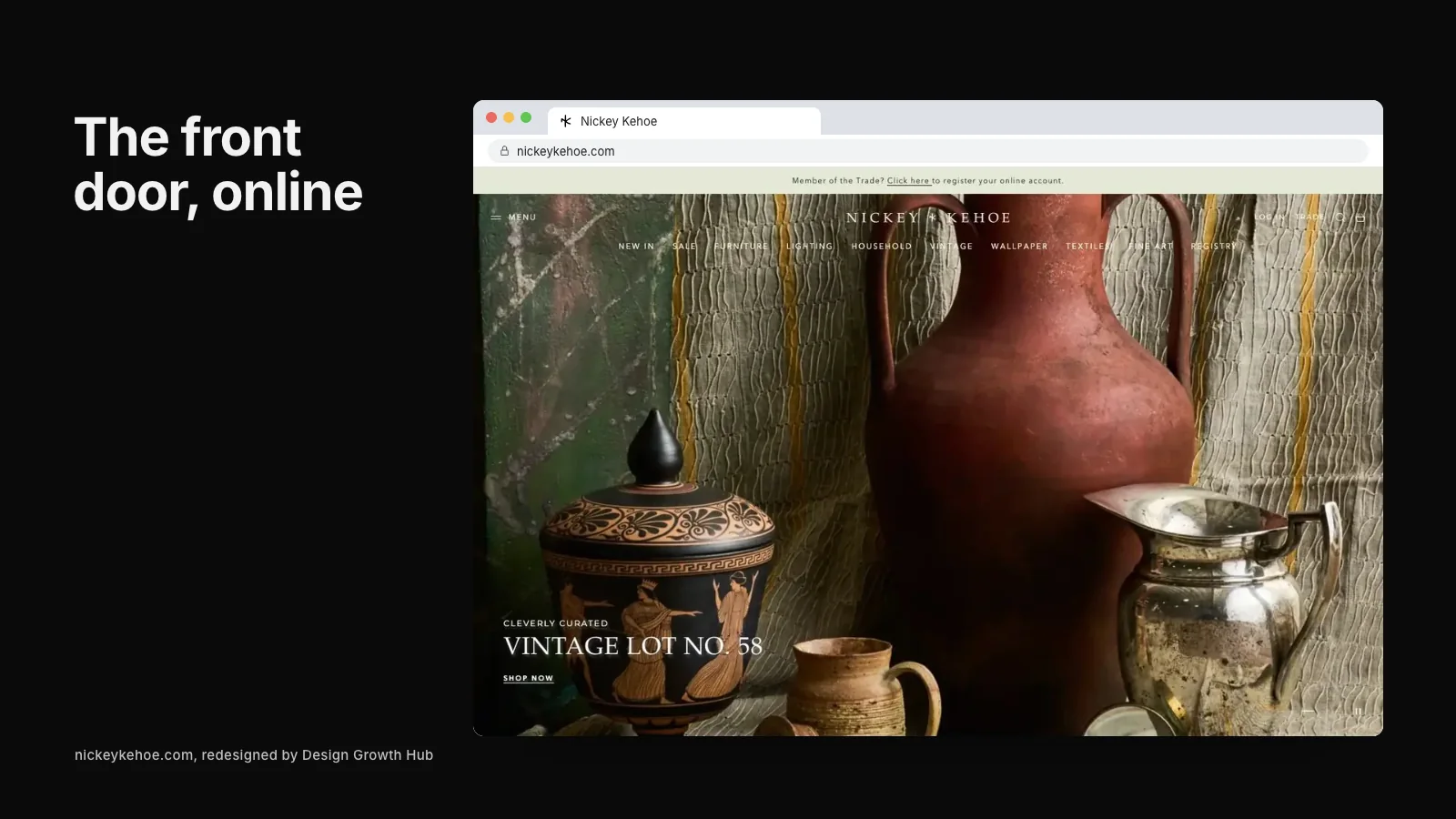
Nickey Kehoe's Shopify website brings a design studio and a furniture and vintage storefront together, keeping both paths clear. You can see it in the Nickey Kehoe case study.
Live help and quick answers
Shoppers often have one question that stands between them and a purchase: will this fit through my door, how firm is this cushion, how long does delivery really take? Live chat, a visible phone number or a quick-response email option can capture these shoppers. Make sure someone knowledgeable answers promptly during business hours.
Saved items and reminders
Furniture decisions take time. Let shoppers save favorites or create wish lists, and with permission, send gentle reminders when saved items are low in stock or when new fabrics arrive. These features bring shoppers back when they are ready to decide.
Showing complete rooms
Shoppers often want to furnish a room, not buy a single piece. Collection pages that show complete room settings, with each item linked and the option to add several pieces at once, encourage larger orders and help shoppers who lack confidence in combining pieces.
Post-purchase experience
The experience after checkout influences reviews and repeat purchases: clear order confirmation, accurate delivery updates, careful packaging, smooth delivery and a follow-up with care tips. Each step is a chance to build loyalty. Invite reviews a week or two after delivery, once customers have settled in with their new pieces.
Accessibility and clarity
Use readable text sizes, clear buttons and descriptive alt text for product images. Accessible stores work better for every shopper and help search engines understand your products.
Testing changes carefully
When you change product pages, checkout or navigation, watch the effect on conversion over several weeks. Small changes, such as moving delivery information higher on the page or adding a size comparison image, can have a meaningful impact.
Clear sizing tools
Simple tools such as printable outlines or room planners help shoppers check fit before buying, which reduces returns and builds confidence for larger pieces.
Measuring conversion
Track conversion rate, average order value, cart abandonment and return rates. Test improvements, such as clearer delivery information or better photos, and measure their effect.
If you would like help building a furniture e-commerce website that converts, our website creation service has built studio and shop sites on Shopify. Or request a studio review to start.
See how Google + AI understand your studio
A beautiful portfolio matters. But if search engines and AI tools cannot connect your studio to the right searches, better-fit clients may never reach your website.
Request a Studio Review