The best website builder for a furniture store depends on your catalog size, how complex your product options are, whether you sell online and how much design control you want. Shopify suits most furniture retailers selling online, with strong ecommerce features and many design options. BigCommerce offers strong catalog tools for larger stores. WooCommerce on WordPress provides flexibility for stores with developer support. Squarespace and Wix can work well for smaller catalogs or showroom-led stores that mainly want to inspire visits.
Here is how they compare on the features furniture stores need.
What furniture stores need from a builder
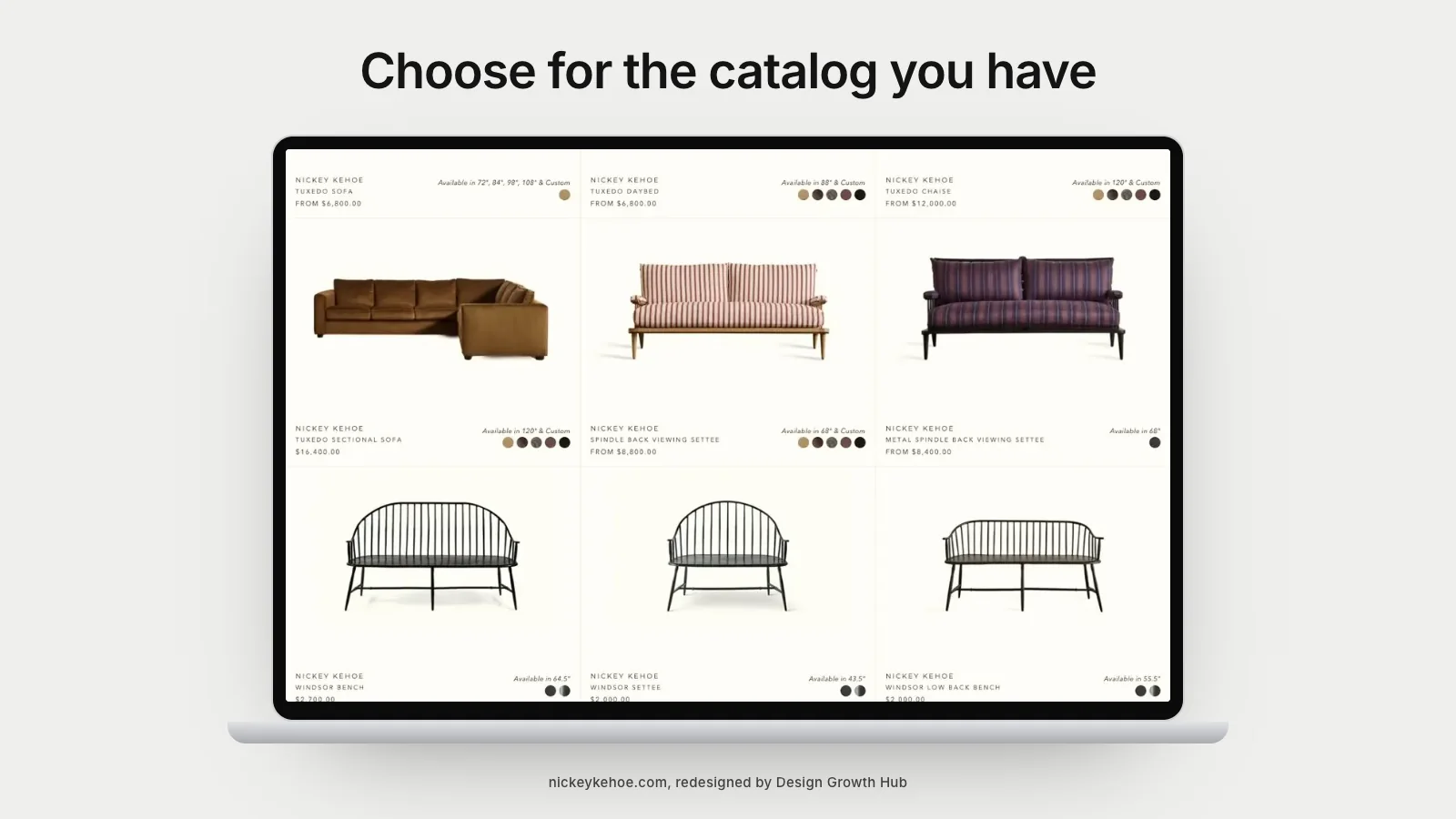
- Product variants: fabrics, finishes, sizes and configurations.
- Large, high-quality images: multiple angles and room settings.
- Detailed specifications: dimensions, materials, care.
- Delivery and shipping rules: white-glove delivery, regional zones, freight.
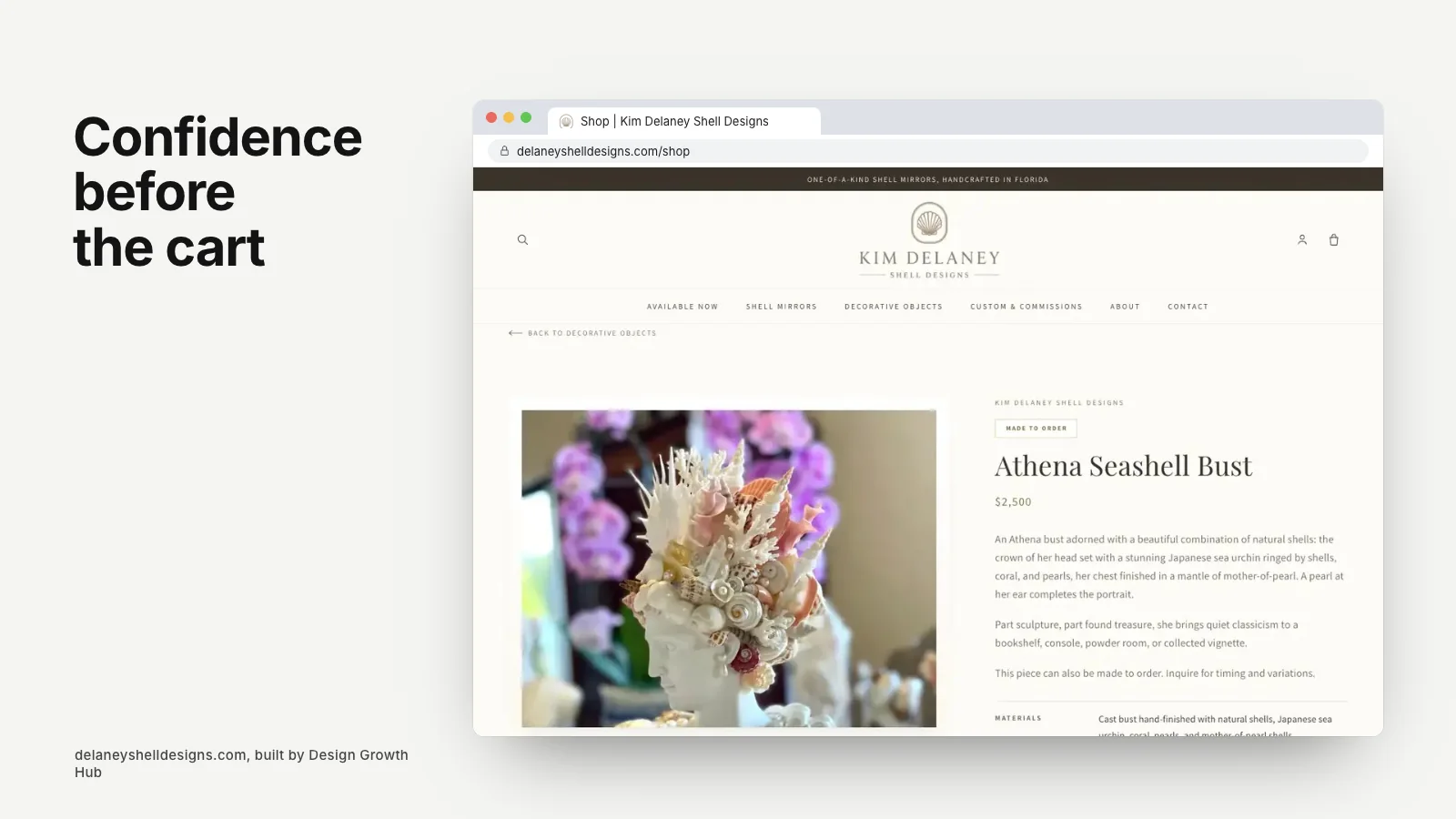
- Inventory and lead times: in stock, made to order, special order.
- Room inspiration: collections and styled settings linked to products.
- Trade pricing: for interior designers, if offered.
- Showroom information: hours, location and appointments.
Shopify
Shopify is widely used by furniture retailers. It handles catalogs, payments, inventory and shipping reliably, offers many themes and apps and can be customized for a refined look. Apps can add product configurators, delivery scheduling and trade pricing.
Strengths: reliable ecommerce, large app ecosystem, design flexibility. Considerations: apps add monthly costs; complex configurations may require custom work.
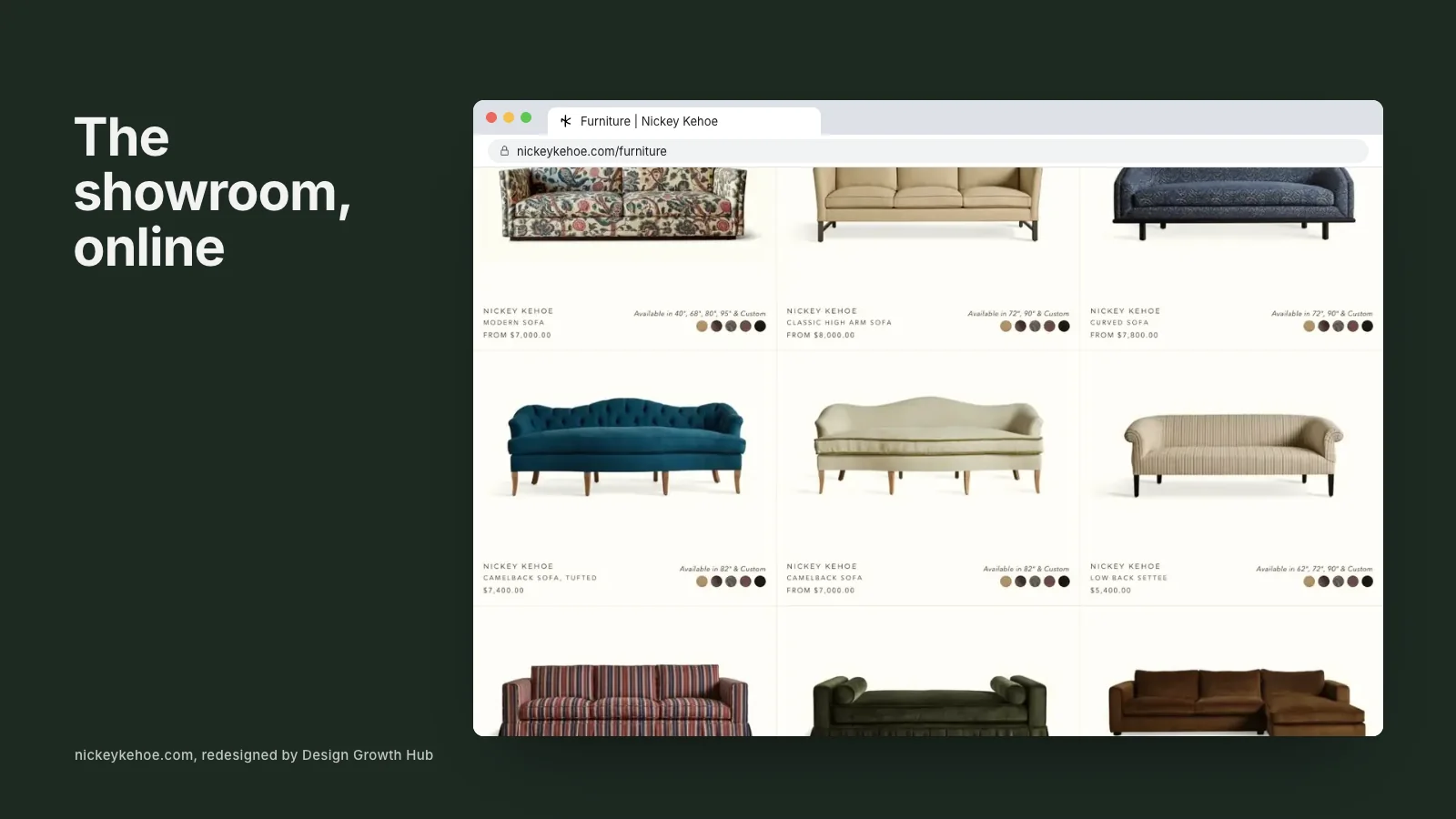
Nickey Kehoe's website, built on Shopify, brings a design studio portfolio and a full furniture and vintage storefront together. You can see it in the Nickey Kehoe case study.
BigCommerce
BigCommerce offers extensive built-in catalog features, suited to larger inventories and complex product options.
Strengths: catalog tools, built-in features. Considerations: design customization may need developer help.
WooCommerce
WooCommerce adds ecommerce to WordPress, offering flexibility for custom layouts and integrations.
Strengths: flexibility, content and commerce together. Considerations: hosting, updates and security require attention; performance depends on setup.
Squarespace Commerce
Squarespace offers attractive templates and simple management, suited to smaller catalogs and showroom-led stores.
Strengths: design quality, ease of use. Considerations: fewer advanced ecommerce features for complex variants and delivery rules.
Wix
Wix is easy to start with and offers ecommerce features suitable for small stores.
Strengths: ease of use, quick setup. Considerations: can be harder to scale or customize deeply.
Catalog-only sites
If you do not sell online, a builder that presents products beautifully and drives showroom visits may be enough. Squarespace or a simple WordPress site can work. Focus on product photos, room inspiration and showroom information.
Comparing fairly
Test each builder with real products: create a sofa with several fabrics and sizes, add delivery rules and view it on a phone. Ask how easy it is to update products, manage inventory and handle trade orders.
Design matters
Furniture shoppers respond to inspiring presentation. Choose a builder and theme that let you present products beautifully and match your showroom's aesthetic. Our article on website design for furniture stores covers design principles, and building a furniture ecommerce website covers online sales in depth.
Search considerations
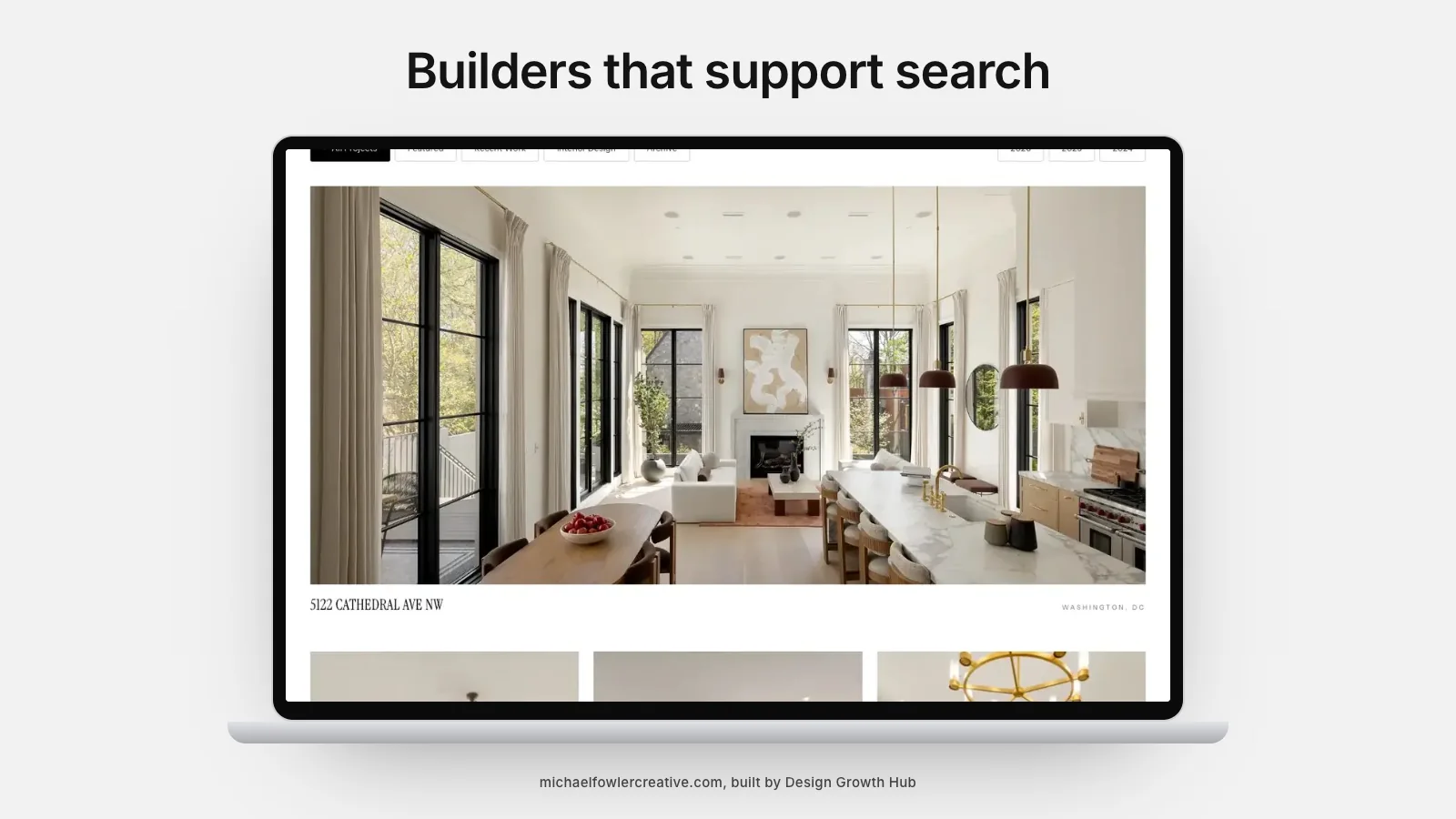
Make sure the builder lets you edit product titles, descriptions, image alt text and page addresses, and supports structured data. Our article on website builders with good SEO compares search features across platforms.
Choosing for growth
Consider where your store will be in a few years. Moving platforms later is possible but takes planning. Choose a builder that can grow with your catalog and sales.
Integrations with your showroom systems
Many furniture stores use point-of-sale, inventory or order management systems in the showroom. Check whether a builder can connect to them, so stock levels and orders stay consistent between the website and the store. Manual double entry quickly becomes a burden as your catalog grows.
Handling special orders and lead times
Much furniture is made to order, with lead times that vary by fabric, finish and manufacturer. Choose a builder that lets you display lead times clearly on product pages and, ideally, update them easily. Shoppers who know what to expect are less likely to cancel or complain when delivery takes weeks.
Showing price or inviting inquiry
Some stores show prices online; others prefer inquiry for high-end or custom pieces. Many builders support both through product settings or apps. Decide which approach fits each category. A mixed approach, with prices for in-stock pieces and inquiry for custom work, is common.
Costs beyond the subscription
Builder subscriptions are only part of the cost. Themes, apps for configurators or delivery scheduling, payment fees, photography and development all add up. Compare the total cost of the setup you need rather than the headline subscription price.
Getting help with setup
Even easy builders benefit from expert setup for furniture stores, especially for variants, delivery rules and catalog structure. A well-planned setup saves time every week afterward. If you work with a developer or agency, ask to see furniture or design sites they have built.
Learning from other industries
Interior designers face similar platform choices. Our articles on choosing a website builder as an interior designer and using a builder versus hiring a designer offer relevant perspective. For bringing shoppers to your site, see furniture store marketing ideas.
If you would like help choosing and building the right platform for your furniture store, our website creation service has built Shopify and custom sites for design businesses. Or request a studio review to start.
Start with a Google + AI visibility audit
Before changing anything, it helps to see clearly. A visibility audit shows exactly where your studio is easy, or hard, to understand.
Request a Studio Review