Architect website design that wins residential clients starts from the homeowner's point of view. Most homeowners have never hired an architect, so the website should explain plainly what the firm does, how a residential project unfolds, what fees and timelines typically look like and who will lead the work. Projects should be told as stories of real homes, with photography, drawings and the thinking behind the design. Recognition and reviews add confidence, and a calm, simple inquiry path invites the first conversation.
Here is how to design an architecture website that speaks to residential clients.
Understand the residential client
Homeowners commissioning a new home or major renovation are making one of the largest decisions of their lives. Many feel uncertain about how architects work, what services they need and what it will cost. They are looking for a firm that seems both talented and approachable. A website that only speaks to other architects, with abstract language and minimal explanation, can feel intimidating.
Write for an intelligent homeowner who is new to the process. Clarity is not a compromise of design quality; it is a sign of confidence.
Position the practice clearly
State what you design and where in a sentence near the top of the home page: "Residential architecture for new homes and significant renovations across the Hudson Valley." If you specialize, say so: modern homes, historic renovations, coastal houses or sustainable design. Clear positioning attracts clients whose projects suit your strengths.
Tell the story of each home
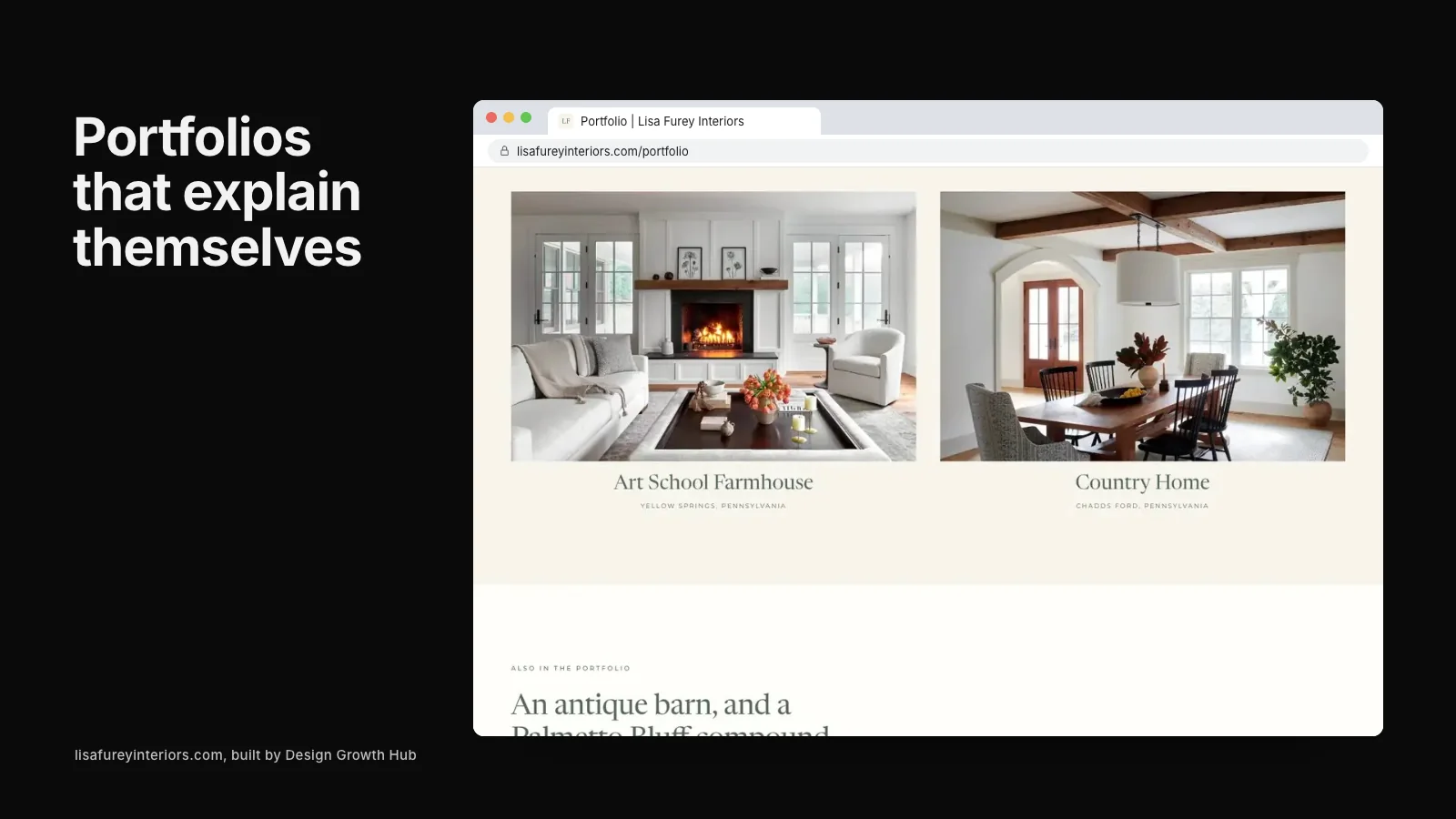
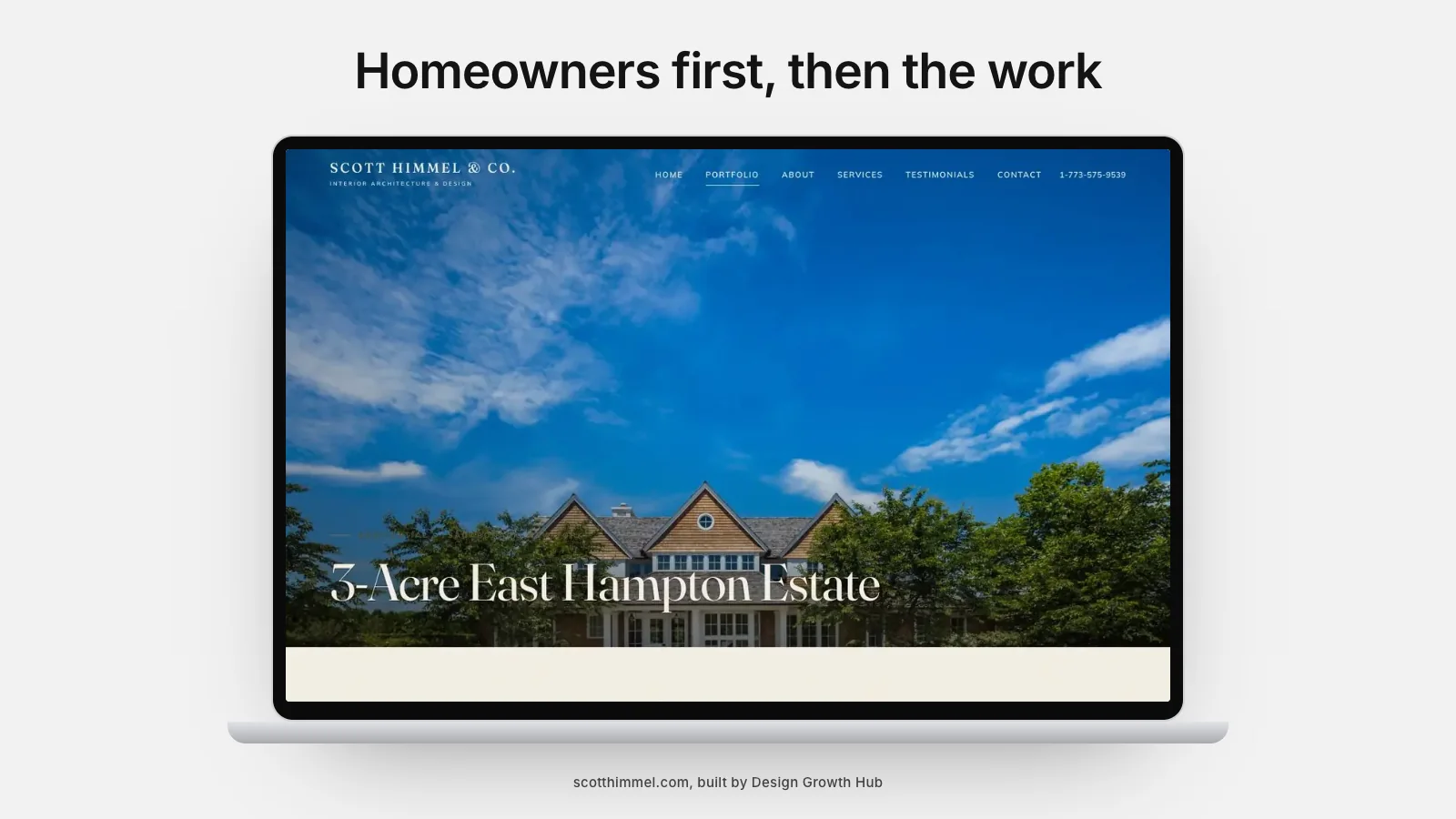
Residential project pages should read like stories. Describe the clients' goals, the site and its constraints, the key design moves, materials and how the home is lived in now. Include photography, plans and sketches. Add facts such as location, size, completion date and collaborators, including the builder and interior designer. Homeowners want to see how you solved problems similar to theirs.
Our collection of architecture portfolio examples shows several effective approaches.
Explain the process
A clear process page is one of the most useful pages on a residential architect's website. Walk through the phases in plain language: initial conversations and site visits, feasibility and programming, schematic design, design development, permitting, construction documents, bidding and construction administration. Explain what clients do at each stage, how decisions are made and roughly how long each phase takes.
Talk about fees honestly
Fees are a major source of anxiety. You do not need to publish exact numbers, but explaining how you structure fees, whether as a percentage of construction cost, a fixed fee or hourly, and what factors affect them helps clients plan. Some firms mention typical construction budgets for the projects they take on, which helps both sides decide whether to talk.
Introduce the people
Clients hire people they trust. Introduce principals and project leaders with real photos and short, specific bios. Explain who will lead a project and how the team works with clients. A personal note from the principal about why they love residential work can make the firm feel approachable.
Show collaboration
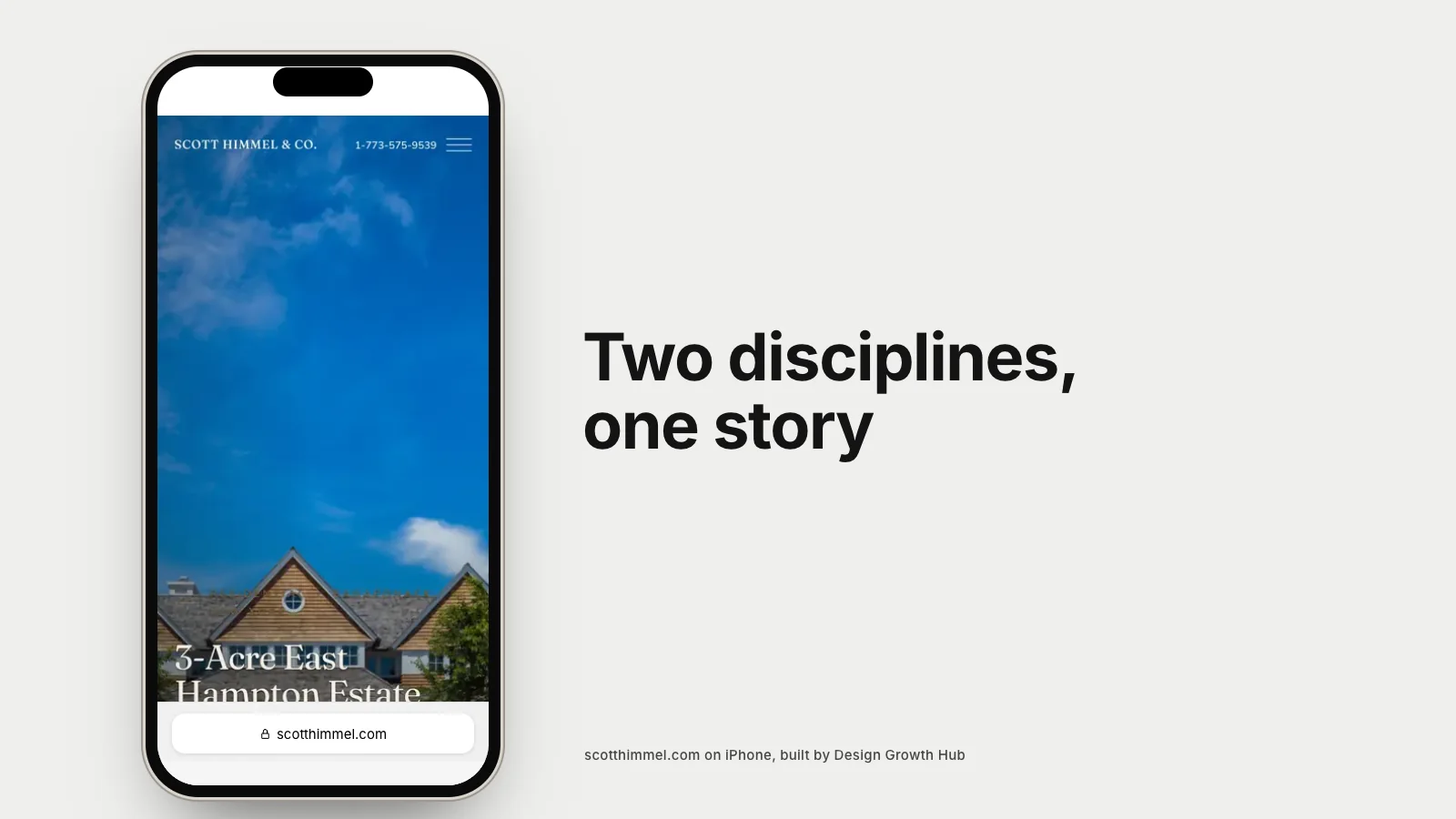
Residential projects involve builders, interior designers, landscape architects and engineers. Show how you collaborate and credit partners on project pages. Clients are reassured when they see a firm that works well with others. If your practice includes interiors, explain how the two disciplines work together; our article on one website for an architecture and interior design practice explores that approach.
Present recognition calmly
Publications, awards and home tours build credibility. Present them in a dedicated section and on relevant project pages, linked where possible. Let the work lead; recognition supports it.
Include reviews and testimonials
Testimonials from past homeowners describing the experience, especially communication and how the firm handled challenges, are powerful. Include them on project pages and an about page, with permission.
A calm inquiry path
Keep the contact form short: name, email, project location, project type, approximate timeline and an optional budget range. Explain what happens next, such as an introductory call. Offer a phone number for those who prefer to talk. Avoid long questionnaires before the first conversation.
Design that supports the work
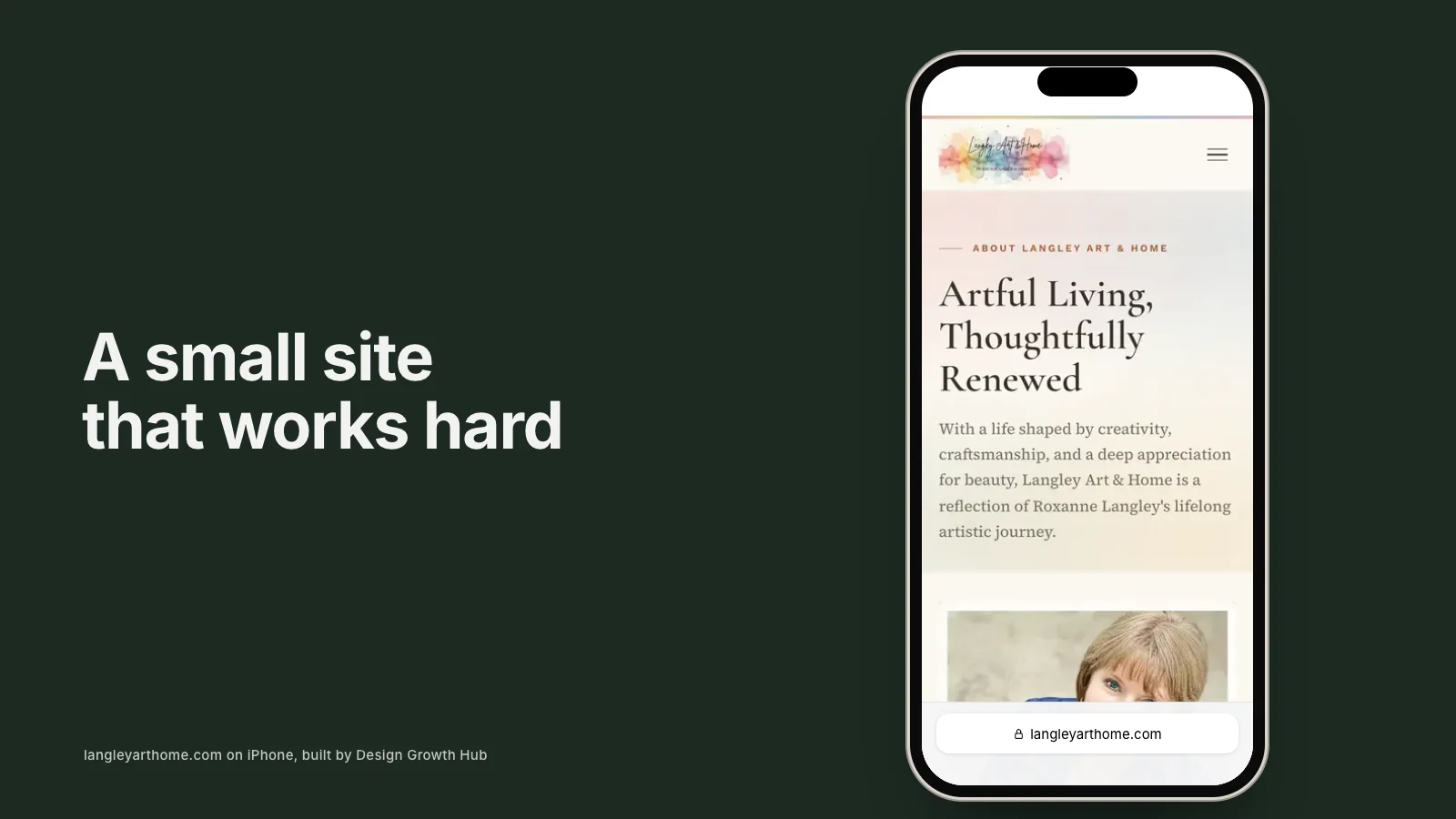
Architecture websites should be calm and confident: generous white space, large photography, readable typography and simple navigation. Avoid heavy animations that delay seeing the work. Make sure pages load quickly on phones, where many clients first visit.
Search and AI visibility
Homeowners search for "residential architect in [area]" or "architect for home addition near me." Service and location wording, detailed project pages and a complete Google Business Profile help you appear. AI tools increasingly summarize architects when homeowners ask for recommendations, so clear, consistent information matters.
Learning from adjacent professions
Interior designers face similar challenges in presenting work and building trust. Our article on interior designer website design that wins better clients offers transferable ideas, and client presentation tips explains how presentation builds confidence. Contractors approach the same homeowners from a different angle, as discussed in contractor website design. Freelance and solo architects may find website design for freelance architects more specific to their situation.
Common mistakes
- Abstract language that homeowners cannot follow.
- Projects shown without context or story.
- No explanation of process or fees.
- Hidden contact information.
- Portfolios that have not been updated in years.
If you would like an architecture website that speaks clearly to residential clients, our website creation service works with architects and design firms. Or request a studio review to start.
Turn your website into a visibility asset
A website can be a brochure or an asset that brings clients. We help design studios build the second kind.
Request a Studio Review