Architecture portfolios that win clients share one quality: they explain projects rather than simply displaying them. Within that principle, practices take different approaches. Narrative portfolios tell each project as a story. Drawing-led portfolios foreground plans, sections and sketches. Typology portfolios organize work by building type for clients looking for specific experience. Process-led portfolios show how designs evolve. Residential portfolios focus on how families live. Each approach suits different practices and clients.
Here are these approaches, with an example from our own work and what you can borrow from each.
The narrative portfolio
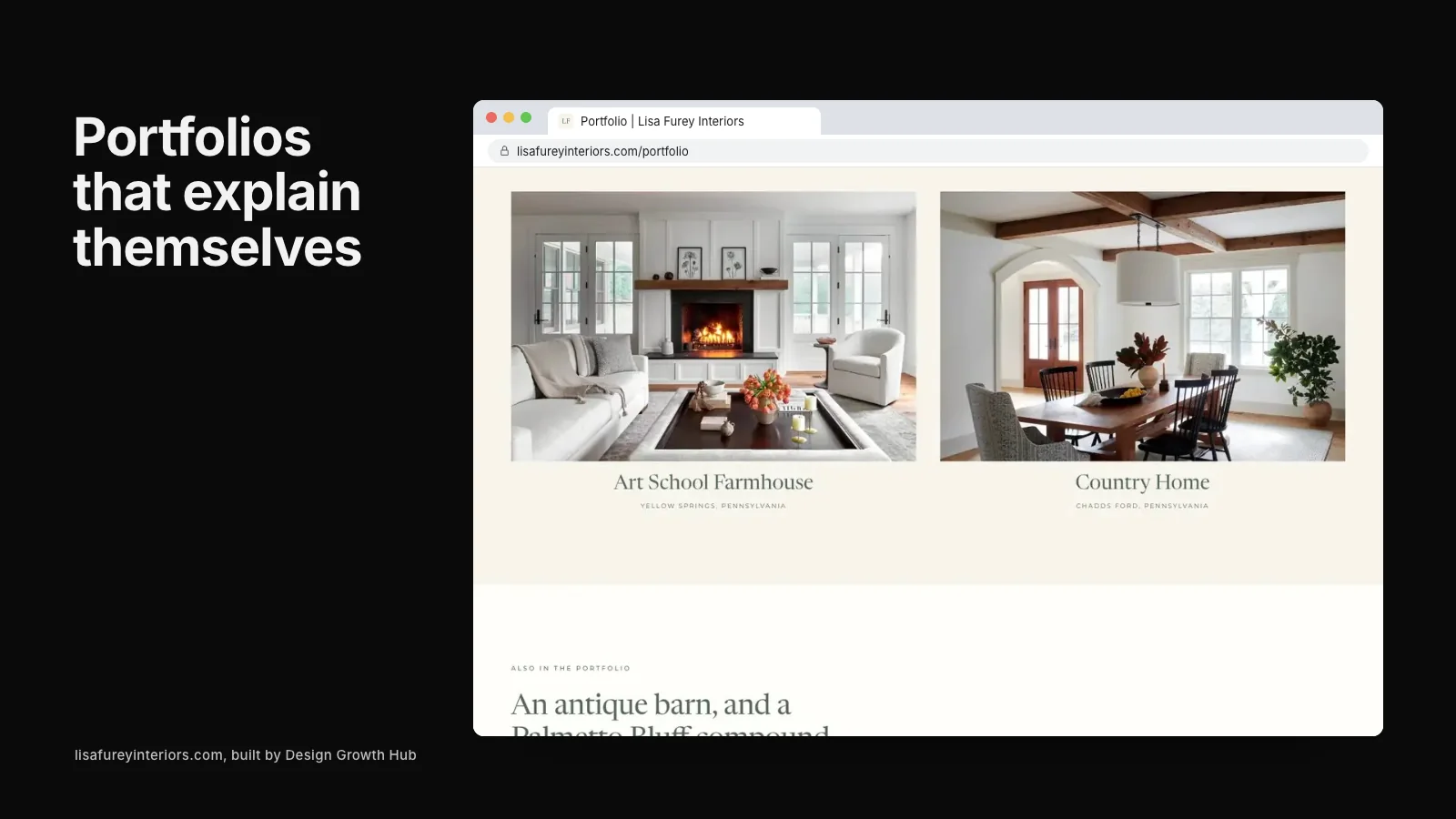
Each project is told as a story: the brief, the site, the key design moves, materials and outcome, with photography paced like a magazine feature. Narrative portfolios suit residential and boutique practices whose clients want to understand the thinking behind each home.
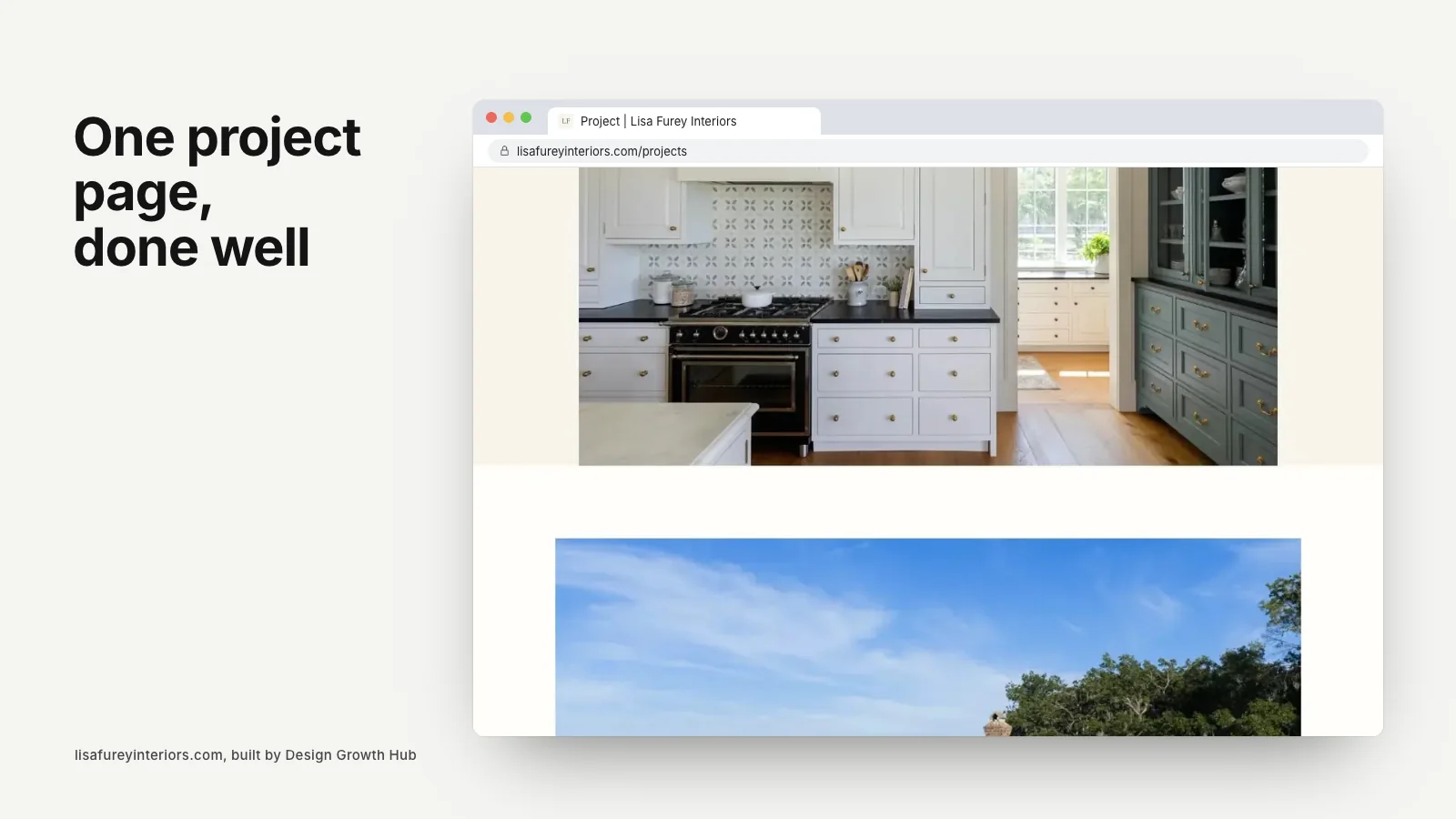
What to borrow: write a short story for every project. Our guide to an architecture portfolio project page example offers a structure.
The drawing-led portfolio
Some practices lead with drawings: plans, sections, axonometrics and sketches, supported by photography. This approach shows design intelligence clearly and appeals to clients and peers who value process.
What to borrow: present drawings at readable sizes with short captions explaining what they reveal.
The typology portfolio
Firms working across housing, education, hospitality or civic projects organize their portfolios by type. Clients looking for a specific kind of experience find relevant projects quickly. Project facts such as size, budget range and completion date are prominent.
What to borrow: organize projects the way clients look for them and provide the facts decision makers need.
The process-led portfolio
Some portfolios show how projects evolved: early sketches, models, design options, construction and completion. Process-led portfolios suit practices whose clients value collaboration and want to understand how decisions are made.
What to borrow: include a few process images in each project to show the journey.
The residential portfolio for architecture and interiors
Firms offering architecture and interior design together often present integrated portfolios where each home is shown as one design, from site to furnishings. Scott Himmel & Co. in Chicago is an example from our own work: 24 project pages, a filterable portfolio and an About page that brings decades of press and honors forward. You can see it in the Scott Himmel case study.
What to borrow: if your practice covers more than one discipline, show how they work together in each project.
Common traits of winning portfolios
- A curated selection rather than an archive.
- Descriptive project titles with type and location.
- Project facts and credits.
- Narratives in clear, client-friendly language.
- Drawings and process alongside photography.
- Consistent layouts.
- Fast pages and readable images on phones.
- A clear invitation to inquire.
Matching the approach to your clients
Think about how your ideal clients choose an architect. Homeowners often respond to narratives and photography. Institutional clients look for typology and facts. Design-minded clients appreciate drawings and process. Most practices combine approaches. Our article on defining your ideal architecture client profile helps clarify who you are designing the portfolio for.
The about page alongside the portfolio
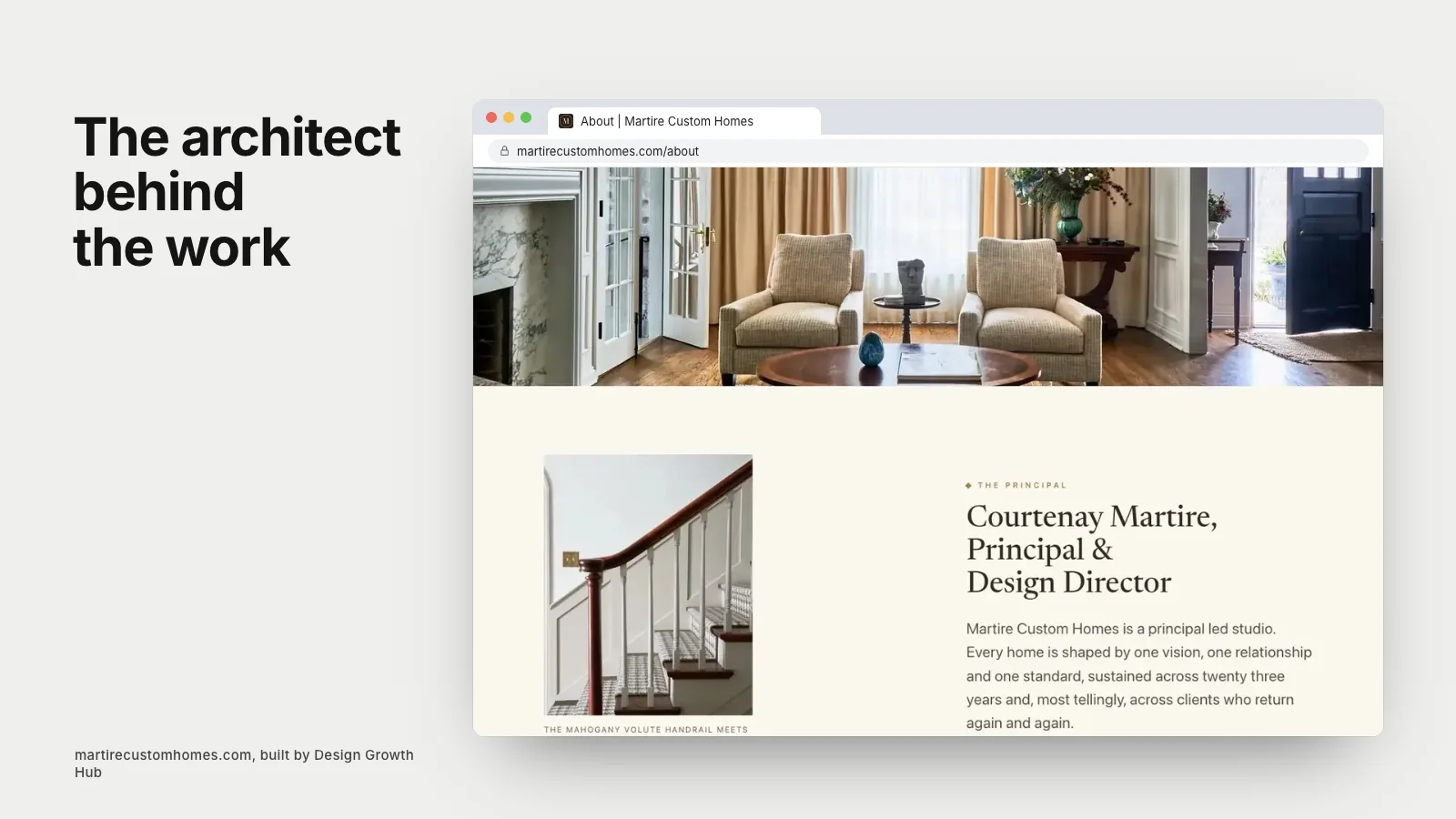
Portfolios work best alongside an about page that introduces the people and practice. Our guide to writing the about page of an architecture portfolio offers prompts.
Learning from firm websites
Our articles on architecture firm website examples and architect website design that wins residential clients show how portfolios fit into complete websites. For the bigger marketing picture, see an architecture firm marketing strategy that compounds.
The emerging practice portfolio
Young practices with few built projects often show competition entries, unbuilt designs, small renovations and research. The best emerging portfolios are honest about the stage of the practice and let the quality of thinking show through drawings, models and clear writing. Clients who appreciate fresh ideas often respond strongly to this kind of portfolio.
What to borrow: label unbuilt work clearly and use it to demonstrate thinking rather than pretending to scale.
The before and after renovation portfolio
Practices focused on renovation and adaptive reuse often show existing conditions beside finished spaces, with plans that reveal what changed. This approach makes the value of architectural thinking obvious to homeowners and developers considering similar projects.
What to borrow: show the starting point. Transformations are among the most persuasive stories an architect can tell.
Writing that makes portfolios work
Across every approach, clear writing separates strong portfolios from forgettable ones. A few specific sentences about why a roof is shaped a certain way or how a plan supports daily life make projects memorable. Avoid abstract language; write as you would explain the project to a thoughtful client on site.
Keeping portfolios current
The best portfolios are updated regularly. New projects appear as they are photographed, older ones are refreshed or retired and recognition is added as publications appear. A current portfolio signals an active practice and gives returning visitors reasons to look again.
Linking projects together
Strong portfolios link each project to related work and services, so visitors keep exploring rather than leaving after one page.
Common mistakes
- Showing everything rather than curating.
- Beautiful images with no explanation.
- Drawings too small to read.
- Inconsistent layouts between projects.
- No path from project to contact.
If you would like help building a portfolio that wins clients, our website redesign service works with architects. You can also browse our case studies or request a studio review to start.
Build your visibility foundation
Design Growth Hub helps interior designers build the visibility foundation behind high-value discovery.
Request a Studio Review