The about page of an architecture portfolio should help a prospective client understand who you are, how you think and what working with you would be like. Write it in your own voice, explain your design approach in plain language, describe relevant experience, introduce the team with real portraits, list recognition honestly and end with an invitation to talk. For individual architects and small practices especially, the about page is often the second most visited page after the portfolio.
Here is how to structure it, with prompts and an example.
Start with a clear introduction
Open with a sentence that says who you are and what you do.
Example: "I am an architect based in Asheville, designing homes and small public buildings that respond carefully to the mountains around them."
Tell your story briefly
A few sentences about how you came to architecture, where you trained and worked and what led you to start your practice. Keep it relevant to how you design today.
Explain your approach
Describe what you care about in design, in plain language. Instead of "we explore the dialogue between form and context," try "we start every project by spending time on the site, noticing light, views and how the land moves, before drawing anything." Clients understand and remember specific descriptions.
Prompts:
- What do you notice first on a new site?
- What do you want people to feel in your buildings?
- Which materials do you return to, and why?
- How do you work with clients through the process?
Describe experience
Mention the types and scale of projects you have designed, notable collaborations and any specialties such as historic renovation or sustainable design. For newer practices, include relevant experience from previous firms, with honest description of your role.
Introduce the team
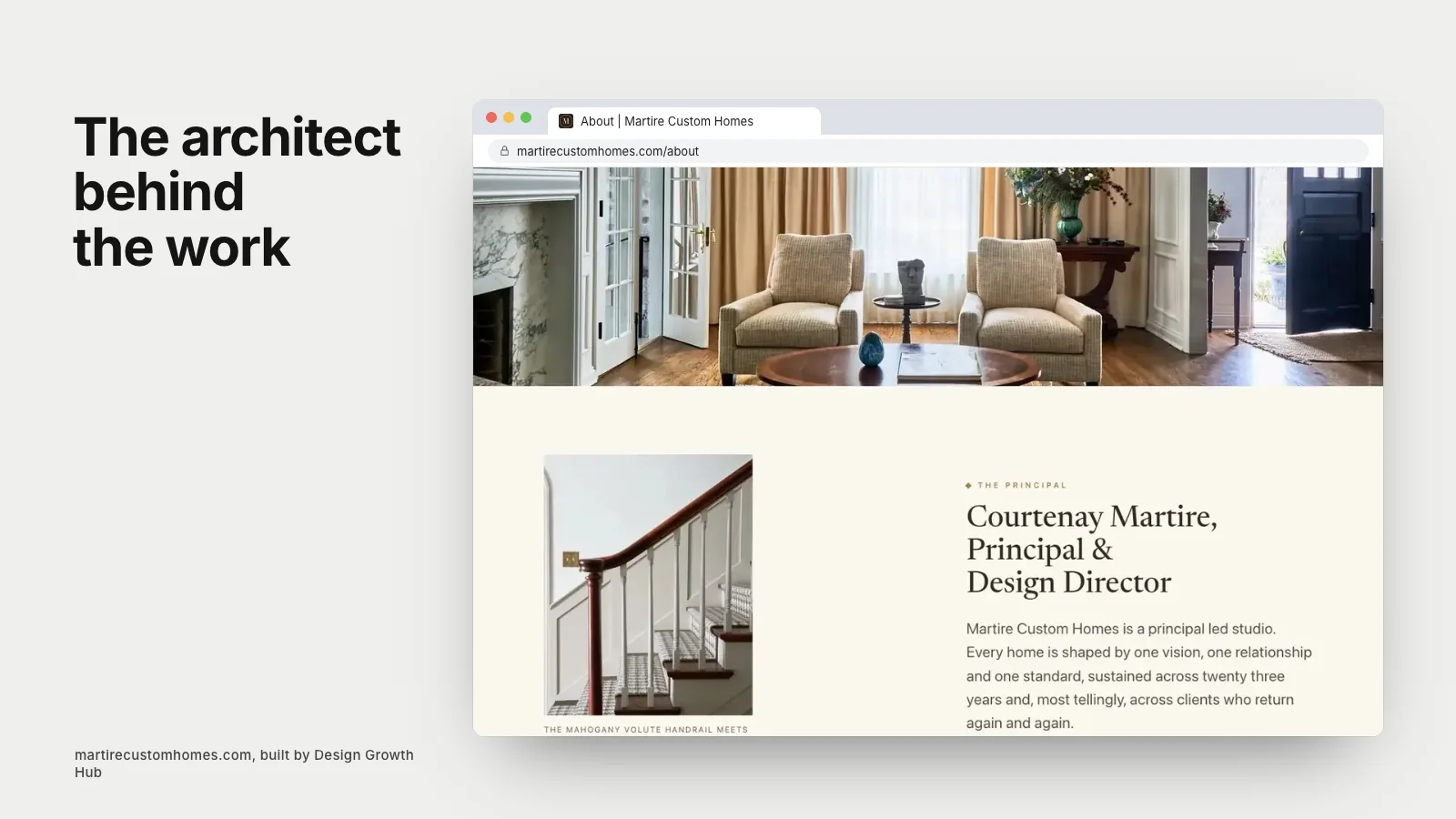
For firms, introduce principals and key team members with real photos, roles and short bios. For individual architects, include a natural portrait, ideally in your studio or a building you designed.
Recognition and credentials
List licenses, professional memberships, awards, publications and teaching. Present them simply and keep them accurate.
How you work with clients
Describe what clients can expect: how you communicate, how decisions are made, how you collaborate with builders and consultants. This section often matters more to clients than design philosophy.
An example to adapt
"I started this practice in 2016 after ten years designing houses and schools in Portland. I wanted to work more closely with families and builders here in the mountains, on projects where I could be on site every week.
Every project begins with time on the land. I walk it at different times of day, sketch and listen to how my clients live before proposing anything. I like simple forms, honest materials and rooms that feel calm.
I keep the practice small on purpose, so clients work with me directly from first sketch to final walkthrough."
End with an invitation
Close with a clear next step: "If you are planning a home or renovation, I would love to hear about it." Link to your contact page and selected projects.
Photographs that feel natural
The portrait on your about page shapes first impressions. Choose a natural, well-lit photo in your studio, on site or in a building you designed, rather than a stiff headshot against a plain backdrop. For firms, consistent portraits of each team member make the page feel cohesive. Studio photos showing models, drawings and people at work add warmth and authenticity.
Values and commitments
If your practice has commitments that matter to clients, such as sustainability, community work, preservation or accessibility, describe them briefly with examples. Specific commitments backed by projects are more credible than general statements.
Keep it current
Update the about page when the team changes, when you complete significant projects or receive recognition, and when your focus evolves. An about page that mentions people who have left or awards from many years ago suggests a practice that is not paying attention.
Answer the question clients really ask
Behind every visit to an about page is a simple question: would I enjoy working with this person? Read your draft with that question in mind. If the page answers it warmly and specifically, it is doing its job.
Ask someone else to read it
Ask a past client or friend outside architecture to read your about page. If they can describe how you work afterward, it is clear enough.
Writing style
Use the first person for individual practices and the first person plural or third person for larger firms. Avoid jargon, keep paragraphs short and read it aloud before publishing.
Search and AI visibility
Your about page helps search engines and AI tools understand who you are, where you work and what you specialize in. Mention your location, services and credentials naturally.
Related guides
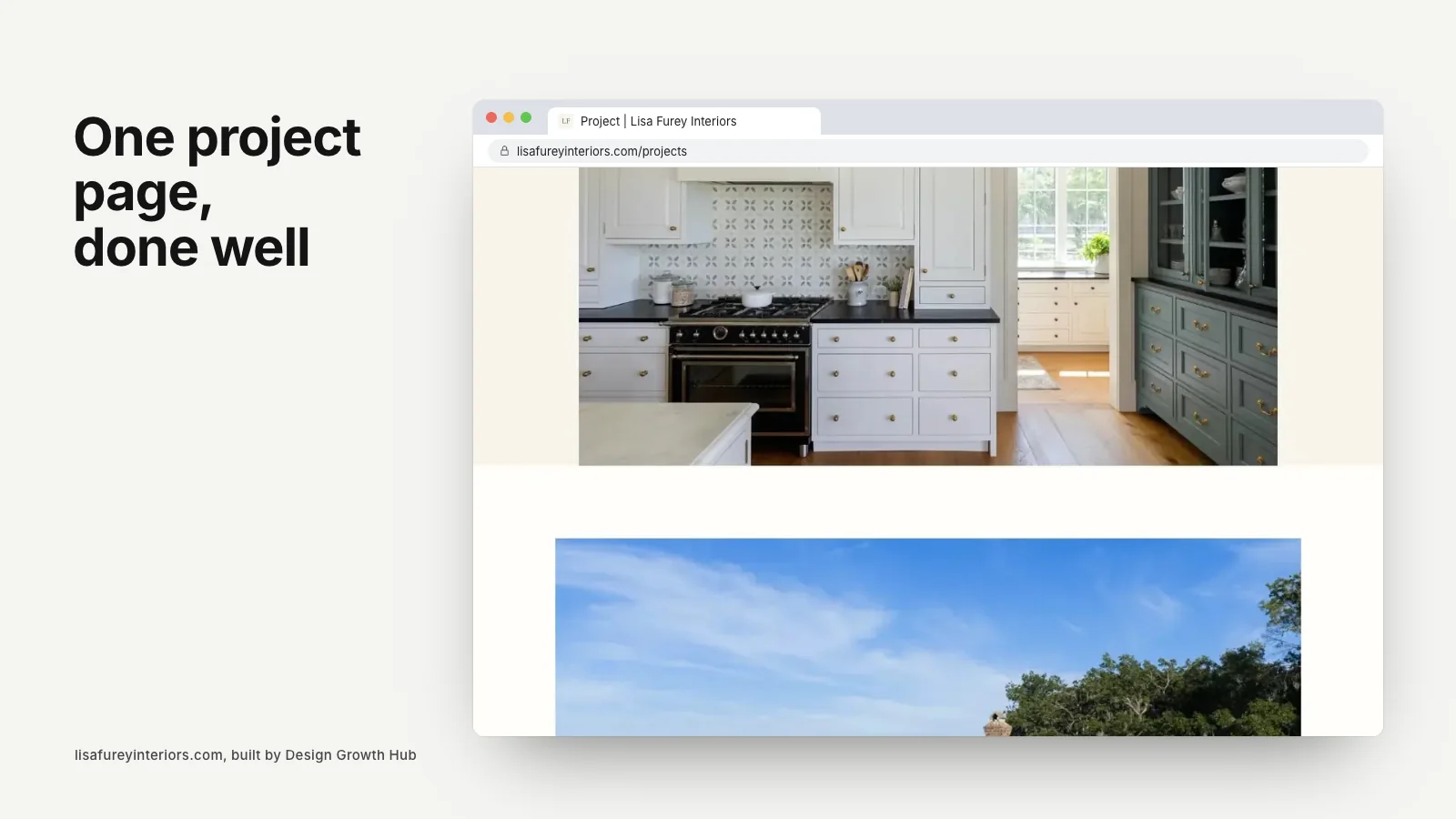
Our articles on how to build an architecture portfolio website, an architecture portfolio project page example and architecture portfolio examples cover the rest of the portfolio. A portfolio landing page can serve campaigns, and choosing a portfolio website builder helps with the platform. For a broader plan, see writing an architecture firm marketing plan.
If you would like help writing your about page and portfolio, our website redesign service works with architects. Or request a studio review to start.
Strengthen your Google + AI visibility
The studios that get found are not always the best. They are the clearest. Let us make yours easier to understand and recommend.
Request a Studio Review