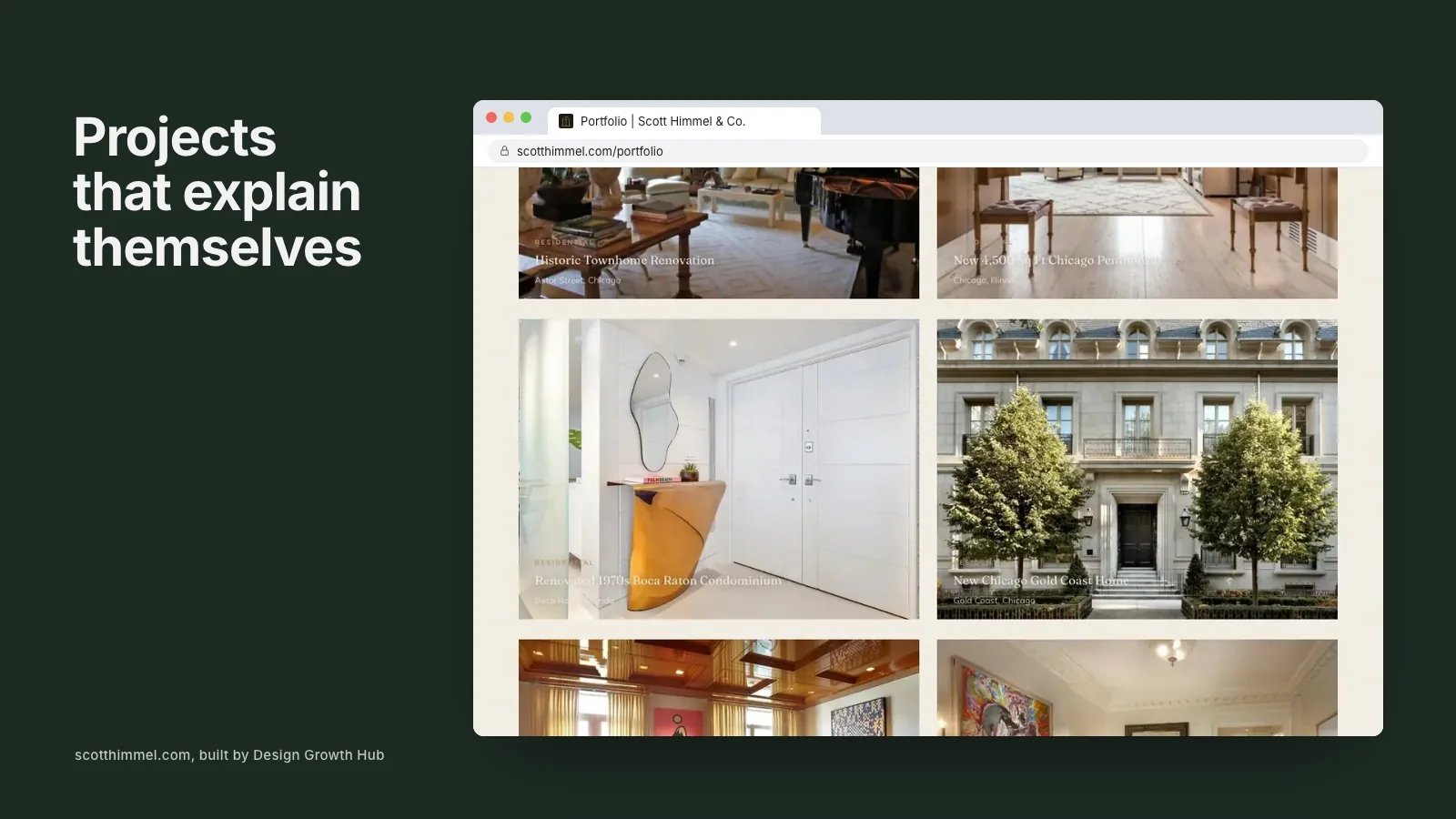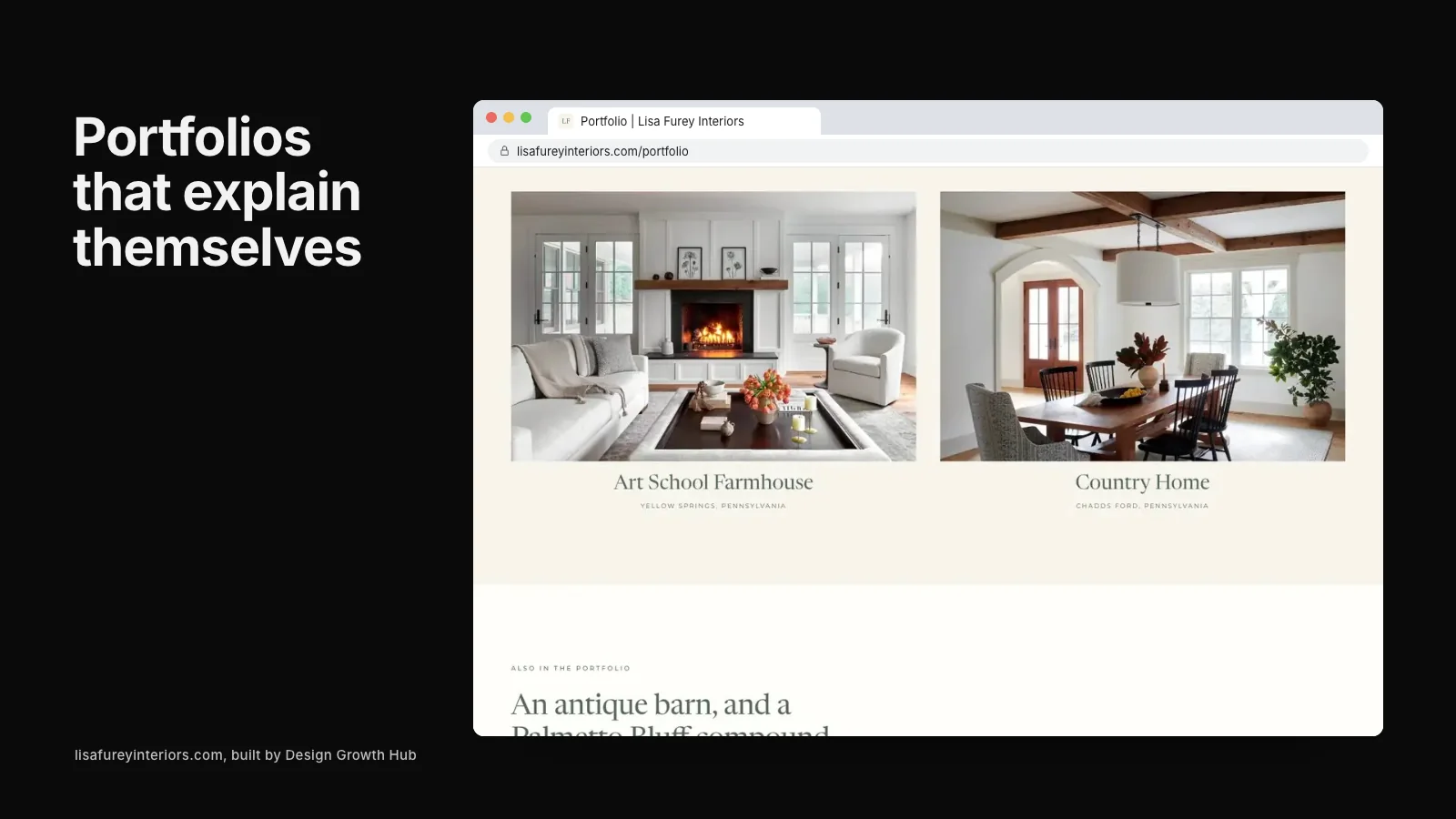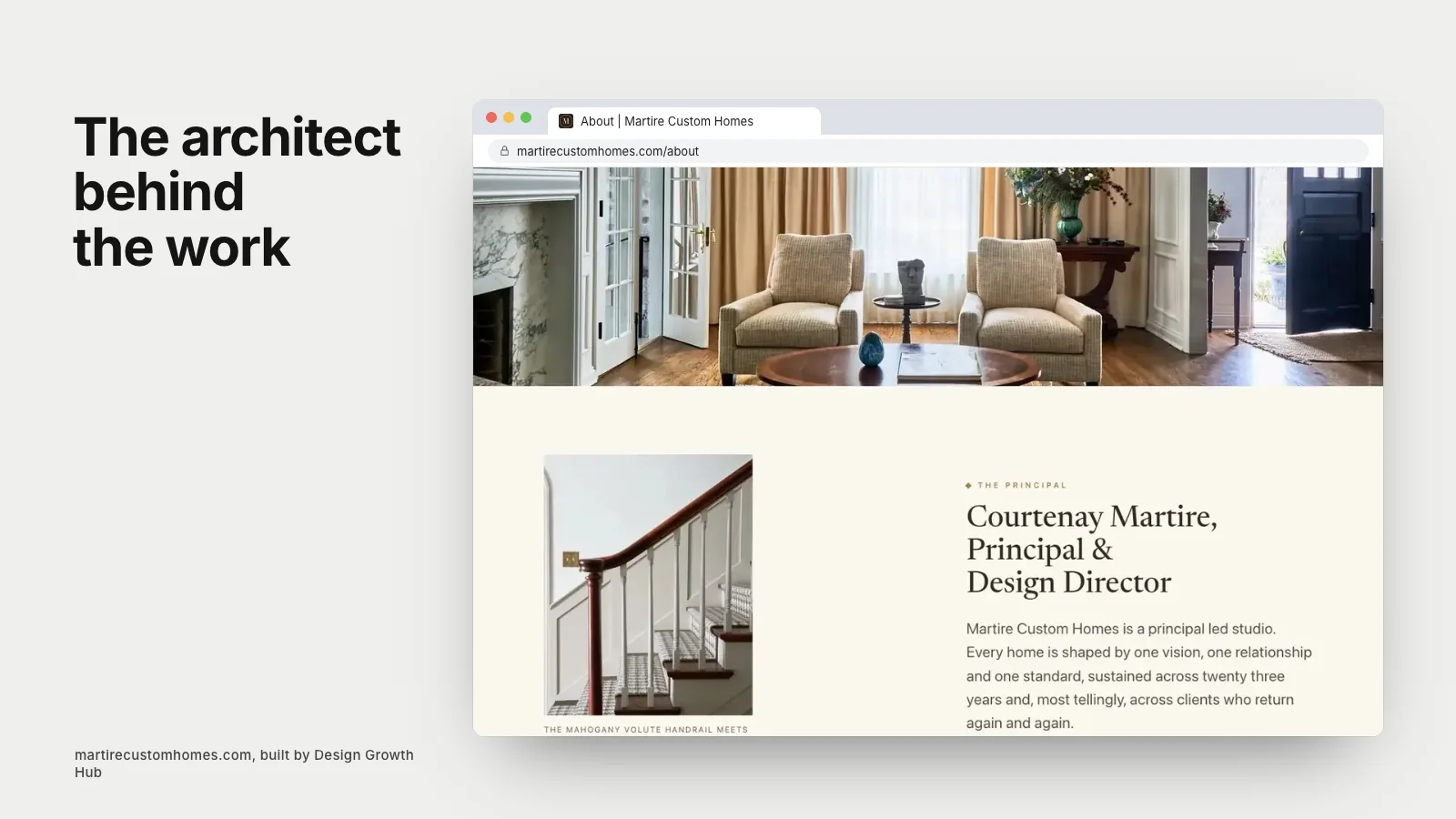
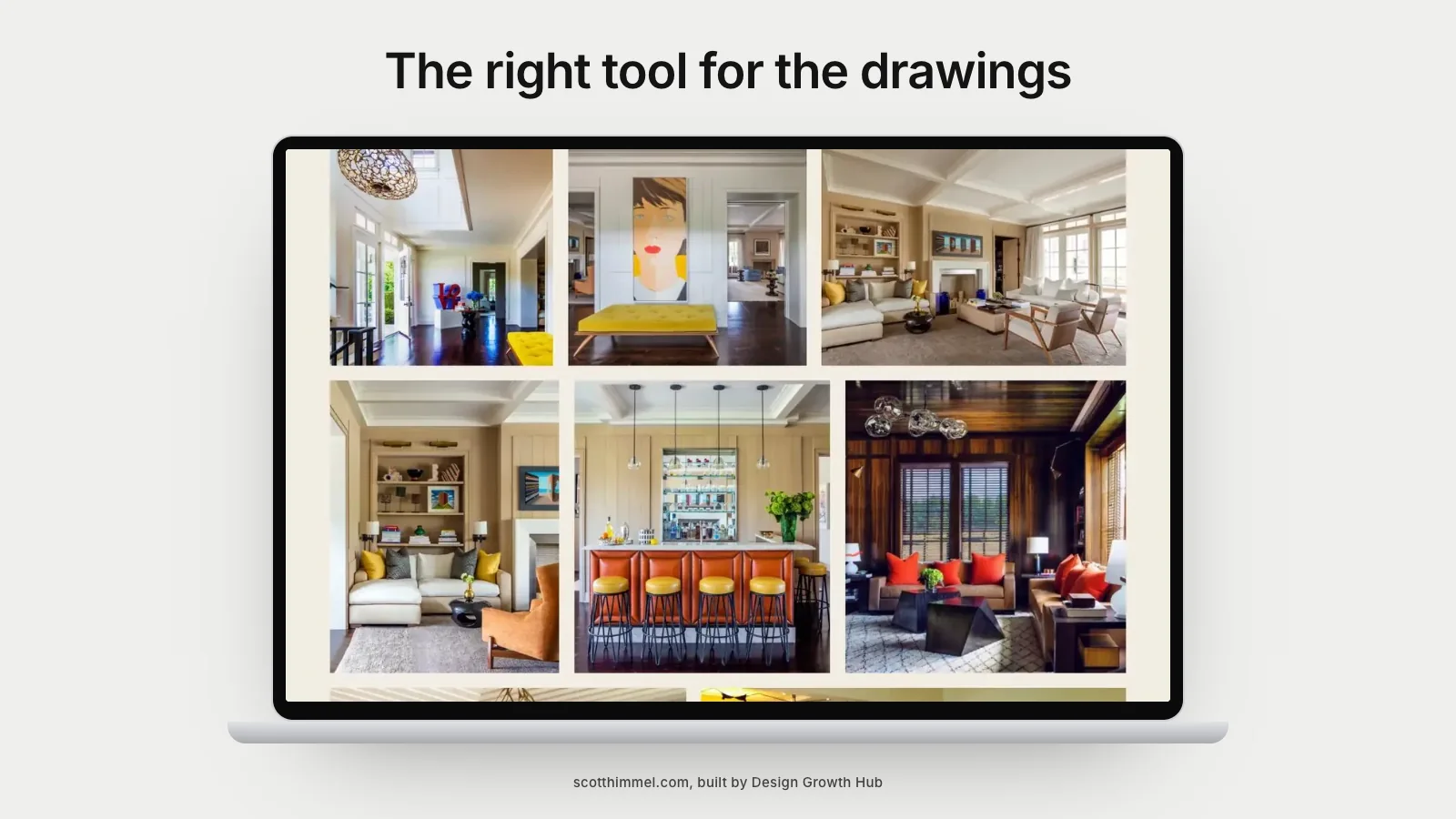
The best architecture portfolio website builder depends on the size of your portfolio, how distinctive you want the design to be and who will maintain the site. Squarespace offers clean templates and easy editing for small studios. Format and Cargo are popular with architects and students for visual portfolios. Webflow gives designers detailed control with fast, clean output. WordPress handles large portfolios and complex structures with the right setup. Custom builds suit established firms wanting a distinctive, well-structured site.
Here is how they compare for architects.
What architects need from a builder
- Large, high-quality images without slow pages.
- Drawings displayed at readable sizes.
- Flexible project page layouts for narratives and facts.
- Filters or categories for projects.
- Control over page titles, descriptions and alt text.
- Easy updates when new projects are completed.
- Good performance on phones.
Squarespace
Squarespace offers elegant templates, simple editing and hosting included. It suits individual architects and small studios with modest portfolios.
Strengths: ease of use, attractive templates, reliable hosting. Considerations: layouts can feel similar to other sites; large portfolios can become cumbersome.
Format
Format is designed for creative portfolios, including architecture. It focuses on presenting images and offers portfolio-specific features.
Strengths: portfolio focus, simple setup. Considerations: less suited to sites needing many service or content pages.
Cargo
Cargo is popular with designers and architects for experimental, visually distinctive portfolios.
Strengths: creative freedom, design-led community. Considerations: experimental layouts can sacrifice clarity and search basics if not handled carefully.
Webflow
Webflow gives designers fine control over layout and interaction, with clean, fast output and a content management system for projects.
Strengths: design control, performance, structured project collections. Considerations: steeper learning curve; structural changes usually need someone familiar with the platform.
WordPress
WordPress powers many firm websites and can handle large portfolios, news, careers and complex structures.
Strengths: flexibility, scalability, extensive integrations. Considerations: requires maintenance, security updates and careful theme and plugin choices.
Custom builds
Established firms often choose custom websites built around their portfolio, structure and brand. Custom builds offer the most distinctive design and best performance but cost more.
Testing before choosing
Build or mock up one real project page with your photography and drawings, then view it on a phone and laptop. Check how drawings display, how quickly the page loads and how easy it is to edit. This test reveals more than any feature list.
Search and AI visibility
Whatever builder you choose, make sure you can control page titles, descriptions, headings, image alt text and page addresses. Detailed project pages and consistent firm information help search engines and AI tools understand your practice.
Growth and moving later
Consider where your practice will be in a few years. Moving platforms later is possible but takes planning, including redirects from old pages. Own your domain and keep copies of your content.
Planning your portfolio
The builder matters less than the content. Our guides to building an architecture portfolio website, architecture portfolio examples and writing the about page of an architecture portfolio explain what to include. For firm-level examples, see architecture firm website examples and what great architecture firm websites have in common. Practices combining disciplines can see one website for an architecture and interior design practice.
Hosting, ownership and costs
Hosted builders such as Squarespace, Format, Cargo and Webflow include hosting in their plans, while WordPress and custom sites need separate hosting. Whatever you choose, register your domain in your own name and keep login details safe. Compare total costs over several years, including plans, themes, plugins, hosting and any developer time, rather than only the monthly price.
Collections and structured content
Platforms that store projects as structured collections, with fields for location, type, year, size and collaborators, make it easier to build filters, list views and consistent project pages. Webflow and WordPress handle this well; simpler builders may require more manual work. For firms with many projects, structured content saves time and keeps pages consistent.
Image handling
Architecture portfolios depend on large images. Check whether a builder automatically creates smaller versions for phones, supports modern image formats and loads images as visitors scroll. Poor image handling is one of the most common reasons architecture sites feel slow.
Editing for the whole team
If several people will update the site, consider how easy it is for non-designers to add projects without breaking layouts. Platforms with clear editing interfaces and locked templates protect the design while allowing updates.
A quick decision guide
If you are an individual architect or student with a modest portfolio, start with Squarespace, Format or Cargo. If you are a small firm wanting more design control and structured projects, consider Webflow. If you are a larger firm with news, careers and many projects, consider WordPress or a custom build. If your brand and portfolio need to stand apart in a competitive market, a custom design built on a platform your team can manage is often worth the investment.
Getting help
Many architects build their own portfolio sites, especially early in their careers. Firms competing for larger commissions often benefit from professional design and structure.
If you would like help choosing a platform or building your site, our website creation service works with architects. Or request a studio review to start.
Build your visibility foundation
Design Growth Hub helps interior designers build the visibility foundation behind high-value discovery.
Request a Studio Review