
One website for an architecture and interior design practice should present both disciplines clearly while showing why having them together benefits clients. The strongest sites explain the integrated approach on the home page, tell project stories that move from site and structure to rooms and furnishings, offer clear service pages for clients who need architecture, interiors or both, introduce the people from each discipline and use a structure that helps visitors and search engines understand everything the practice does.
Here is how to plan and present such a website.
Explain the integrated approach
Clients may not realize the benefits of one practice handling architecture and interiors: a coherent design from the outside in, fewer handoffs, coordinated details such as built-in cabinetry and lighting and a single team responsible for the whole. Explain these benefits plainly near the top of the home page and on a dedicated approach page. Acknowledge that some clients engage only one discipline, and welcome them too.
Integrated project stories
Project pages are where the integrated approach becomes visible. Tell each project as one story: the site and architecture, then the interiors, materials, furniture and art. Show exterior and interior photography together, plans alongside room views and details that connect the two, such as a window that frames a view from a reading chair.
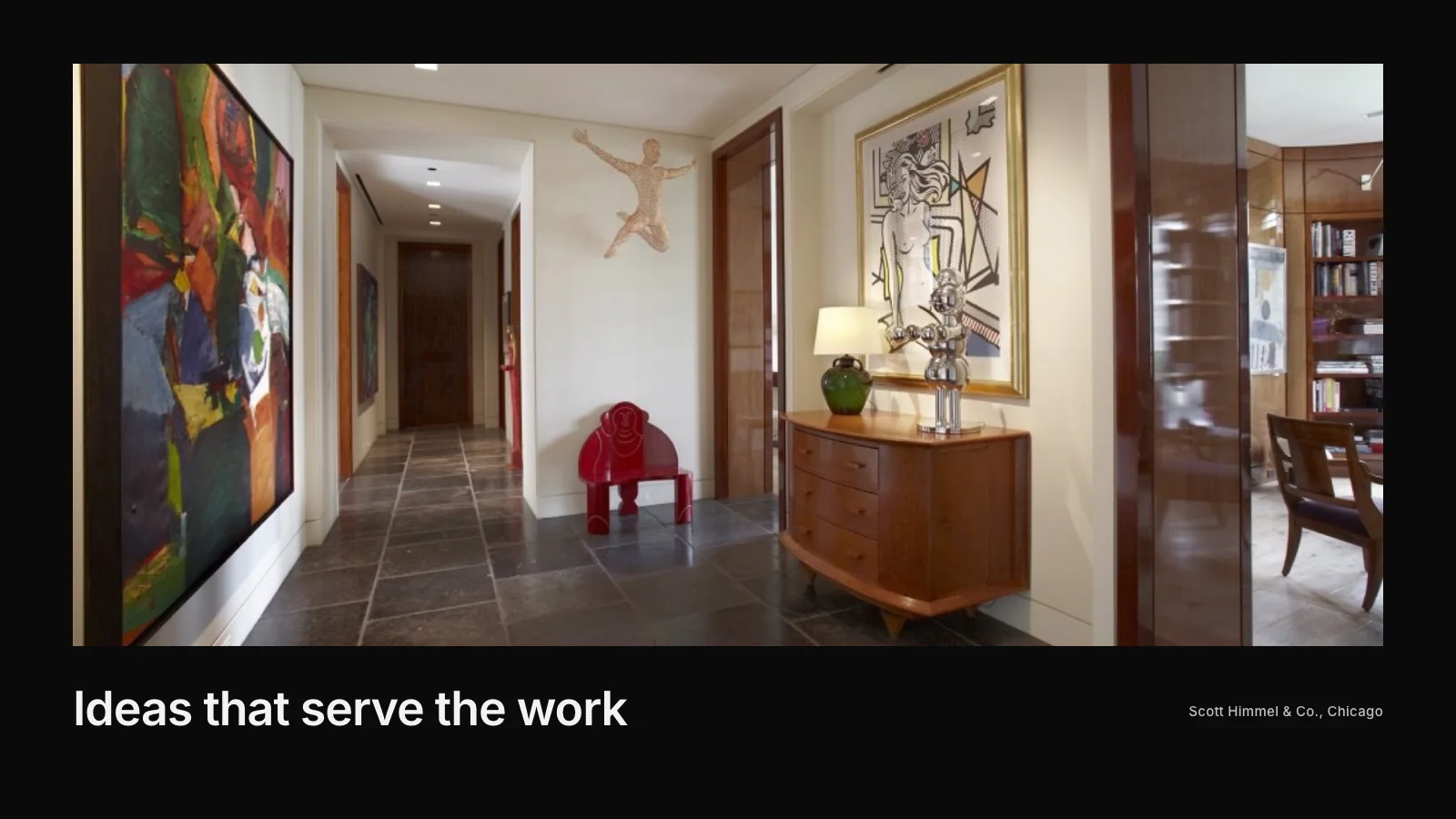
Scott Himmel & Co. in Chicago, an architecture and interior design firm, presents its work this way. The website includes 24 project pages, a filterable portfolio, services, testimonials and an About page that brings decades of press and honors forward. You can see it in the Scott Himmel case study.
Filters for each discipline
Some visitors want to see only interior work or only architecture. Filters by discipline, along with project type and location, let them browse efficiently while the default view shows the integrated work.
Clear service pages
Create separate pages for architecture, interior design and integrated services. Each should explain what is included, the process and related projects. This helps clients find the service they need and helps search engines match each page to relevant searches.
Introduce both teams
Show the architects and interior designers who work together, with real photos and roles. Explain how they collaborate on projects. Clients want to know who will lead each part of the work.
Process for both disciplines
Explain how the process works when both disciplines are involved, from early site studies to furnishing and installation. Clarify how decisions are coordinated and how clients stay informed.
Recognition across disciplines
Present publications and awards for both architecture and interiors. Note when features covered the whole home.
Structure for search
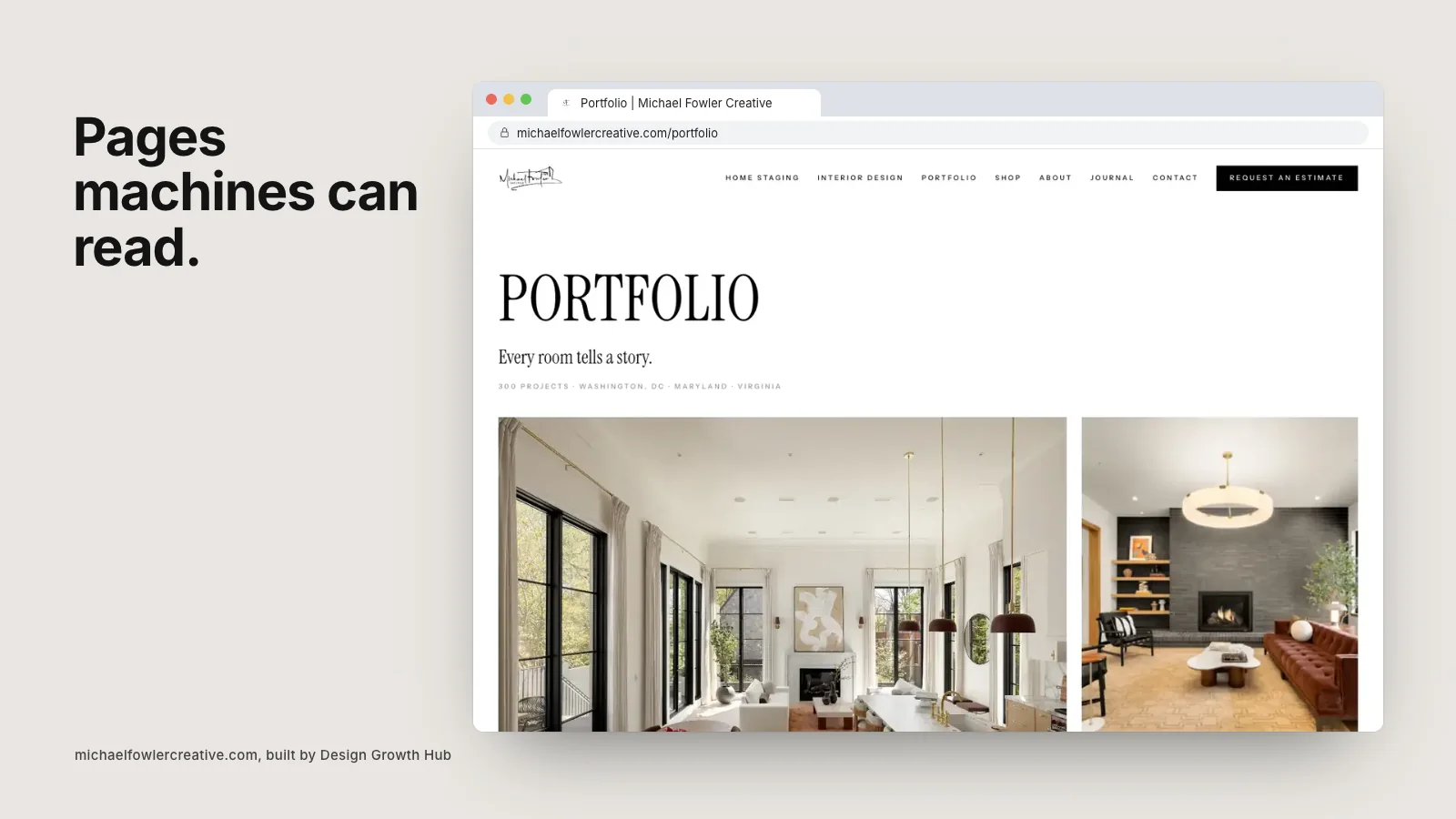
A clear structure helps search engines understand a combined practice: separate service pages, project pages with both architecture and interiors described, consistent business details and a Google Business Profile with accurate categories. Our article on making a design website AI-readable explains how written context helps AI tools describe the practice.
Design that serves both
Design the site so architecture and interior photography both look their best: generous space, consistent editing and layouts that allow wide exterior views and intimate interior details. Our articles on architecture website design ideas and interior design website best practices offer guidance from both sides.
Trust before contact
Integrated projects are significant investments. Testimonials, process explanations and clear next steps help clients feel confident. Our article on building trust before a client contacts you explains which signals matter most.
Smaller combined practices
Smaller practices offering both disciplines can follow a lighter version: a focused portfolio, a personal about page and clear services. Our articles on website design for freelance architects and architect website design that wins residential clients offer starting points.
Naming and branding
Combined practices sometimes struggle with naming: one firm name for both disciplines, separate names for each or a parent brand with two studios. Whatever you choose, make the relationship clear on the website. Visitors should understand within seconds that one team handles both architecture and interiors, and how to engage either or both.
Showing coordinated details
The strongest evidence of an integrated practice is in details: cabinetry that aligns with window mullions, lighting planned with ceiling geometry, materials that continue from exterior to interior, furniture designed for specific architectural spaces. Close-up photographs and short captions explaining these connections make the value of integration visible.
Explaining fees for combined services
Clients may wonder how fees work when both disciplines are involved. Explain whether architecture and interiors are contracted together or separately, how phases align and what clients can expect at each stage. Clarity about fees builds confidence and prevents misunderstandings.
Presenting furnishings and procurement
If your interior design work includes sourcing furniture, art and accessories, explain how procurement works, how budgets are managed and how installation is coordinated with construction. Clients often worry about the final stage of a project, and a clear explanation reassures them.
Common mistakes
- Presenting the disciplines as two separate businesses.
- Showing only exteriors or only interiors of a project.
- Vague services that do not explain what each discipline includes.
- Missing team members from one discipline.
If you would like a website that presents your architecture and interiors together, our website creation service has built sites for combined practices. Or request a studio review to start.
Strengthen your Google + AI visibility
The studios that get found are not always the best. They are the clearest. Let us make yours easier to understand and recommend.
Request a Studio Review