The best architecture firm website examples to learn from are not single sites to copy but patterns that suit different kinds of practices. Residential studios emphasize homes told as stories, a clear process and approachable people. Firms combining architecture and interiors present both disciplines together. Research-led practices foreground ideas, writing and exhibitions. Regional generalists organize diverse work by sector. Each pattern teaches something about structure and clarity you can adapt to your own practice.
Below are these patterns, including one from our own work, and what each teaches.
The residential studio
Residential studios serve homeowners who are often new to working with an architect. Strong sites lead with a few beautifully photographed homes, explain the process in plain language, introduce the principal personally and invite inquiries calmly.
What to borrow: tell each home's story, explain how a project unfolds and make the firm feel approachable. Our article on what great architecture firm websites have in common describes these qualities.
The architecture and interiors firm
Some firms design buildings and interiors together. Their websites present both disciplines without confusing visitors, often through integrated project stories that show the house and its rooms as one design.
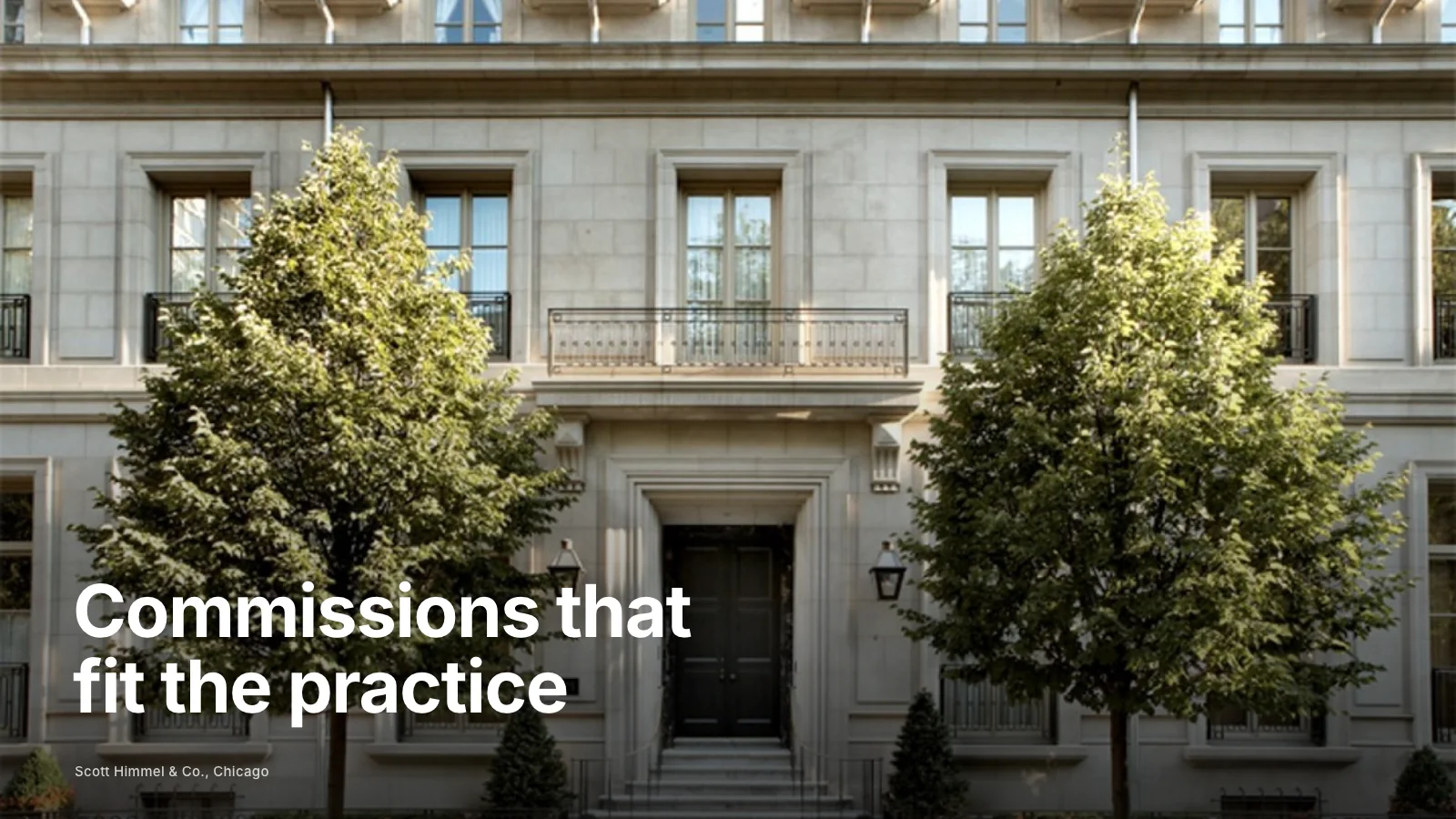
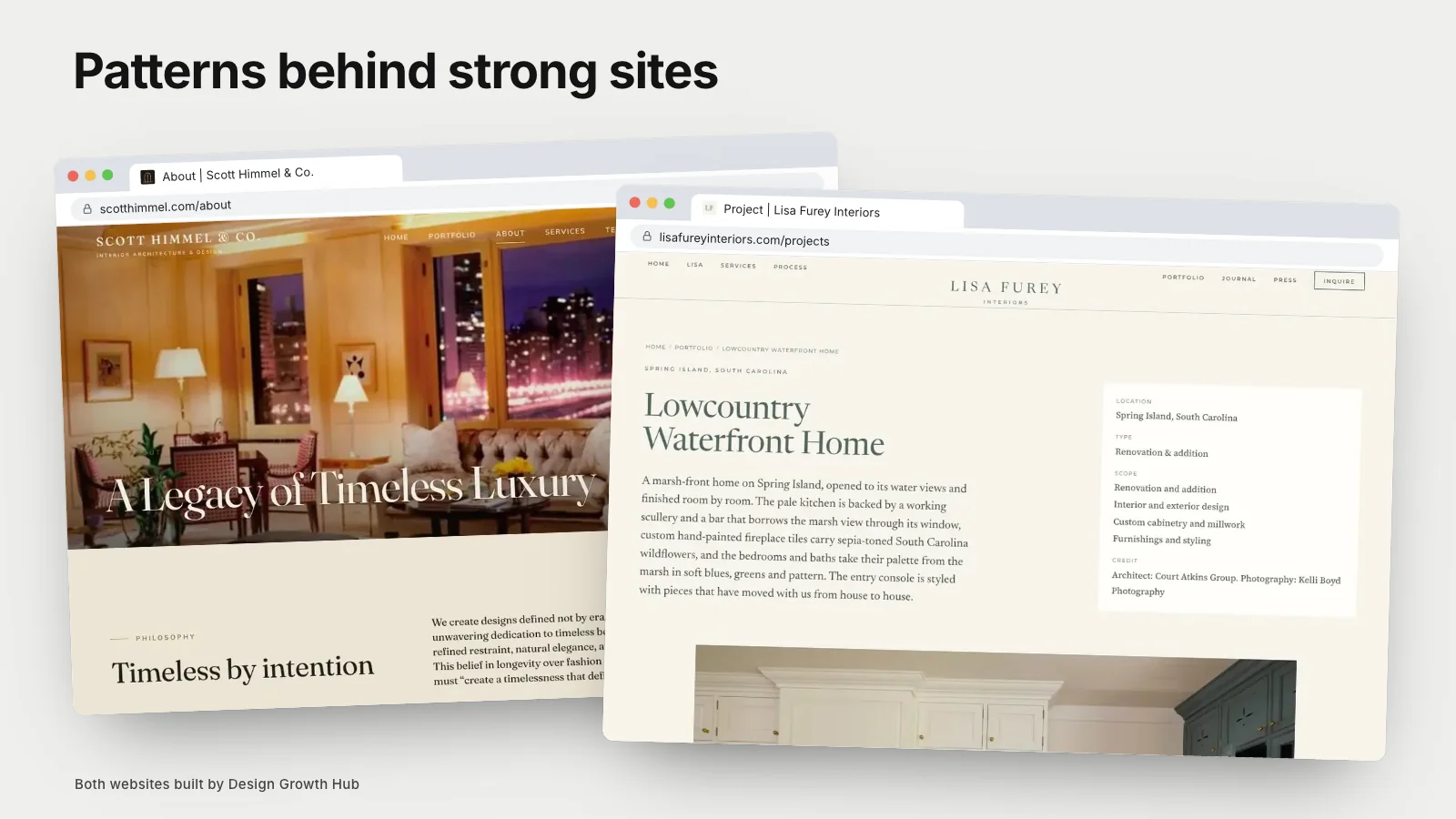
Scott Himmel & Co. in Chicago is an example from our own work. The website, rebuilt from Wix, includes 24 project pages, a filterable portfolio, services and an About page that brings decades of press and honors forward. You can see it in the Scott Himmel case study, and our article on one website for an architecture and interior design practice explores the approach.
What to borrow: if you offer more than one discipline, show how they work together in each project.
The research-led practice
Some practices are known as much for ideas as for buildings: research, writing, teaching, exhibitions and competitions. Their websites give space to essays, publications and process alongside projects.
What to borrow: if ideas define your practice, make them visible. Writing and research can attract clients who value thoughtful design.
The regional generalist
Firms working across housing, education, civic and commercial projects need to organize diverse work clearly. Strong sites use sector filters, project facts and short summaries so visitors find relevant projects quickly.
What to borrow: structure the portfolio around how clients look for work like theirs.
The sustainability-focused firm
Practices specializing in sustainable or high-performance design present performance information, materials and certifications alongside design stories.
What to borrow: if a specialty defines you, make it clear on the home page and in every project.
The emerging practice
Young firms with fewer built projects often show competitions, unbuilt designs and smaller works, with a strong personal voice from the founders.
What to borrow: be honest about the stage of the practice and let the quality of thinking show.
Patterns shared by strong examples
- A clear statement of what the firm does and for whom.
- Projects with facts, narrative, drawings and photography.
- People and leadership presented personally.
- Process explained for clients.
- Recognition presented calmly.
- Clear structure and fast pages.
- Easy contact paths.
How to learn from examples
When you look at another firm's website, ask how quickly you understand the practice, how easy it is to find relevant projects, how the firm explains its thinking and how simple it is to make contact. Borrow structure and clarity; do not copy design or text.
Structure matters
Behind every strong example is good structure. Our article on what website architecture means explains how page hierarchy and internal links support both visitors and search engines.
Marketing beyond the website
The website is one part of a firm's marketing. Our articles on architecture firm marketing for residential practices, writing an architecture firm marketing plan and choosing an architecture firm marketing agency explain the bigger picture.
The landscape architecture practice
Landscape architects present work that changes with seasons and time. Strong sites show projects across seasons and years, include plans and planting details and explain how designs respond to ecology, climate and use.
What to borrow: if your work evolves over time, show it. Revisiting projects years later demonstrates lasting quality.
The interiors-led architecture practice
Some practices are best known for their interiors within architectural projects. Their websites often lead with interior photography and material details, supported by plans that show how spaces connect.
What to borrow: lead with what clients value most in your work, while still showing the architectural thinking behind it.
What none of the strong examples do
They do not hide the contact page, bury projects under long introductions, use vague language that could describe any firm or let the portfolio go stale. Avoiding these mistakes is often as valuable as adopting any single idea.
Learning from your own analytics
Your own website data is also an example to learn from. Look at which project pages visitors view most and where they leave. These patterns show which work attracts attention and where the site needs clearer paths.
Choosing your pattern
Most practices combine elements of several patterns. Start with the one that best describes your firm today and the work you want next, then borrow ideas from others where they fit.
If you would like help applying these patterns to your website, our website redesign service works with architects. You can also browse our case studies or request a studio review to start.
Build your visibility foundation
Design Growth Hub helps interior designers build the visibility foundation behind high-value discovery.
Request a Studio Review