An architecture portfolio landing page, whether it is the home page of your website or a page built for a specific audience, has one job: to make a strong first impression and lead visitors deeper. It should say clearly what you design and where, open with an image that represents the work you want more of, present a small selection of projects, introduce the people behind the practice, show a few signs of credibility and make the next step obvious. It should also load quickly, because many visitors arrive on phones after hearing your name.
Here is how to design one, section by section.
Two kinds of landing pages
The term can mean two things. For most architects, the portfolio landing page is the home page: the first page most visitors see. Some practices also create focused landing pages for specific audiences, such as a page for developers, a page for a competition submission or a page supporting an advertising campaign. The principles are the same, but focused pages speak to one audience and one action.
Open with a clear statement
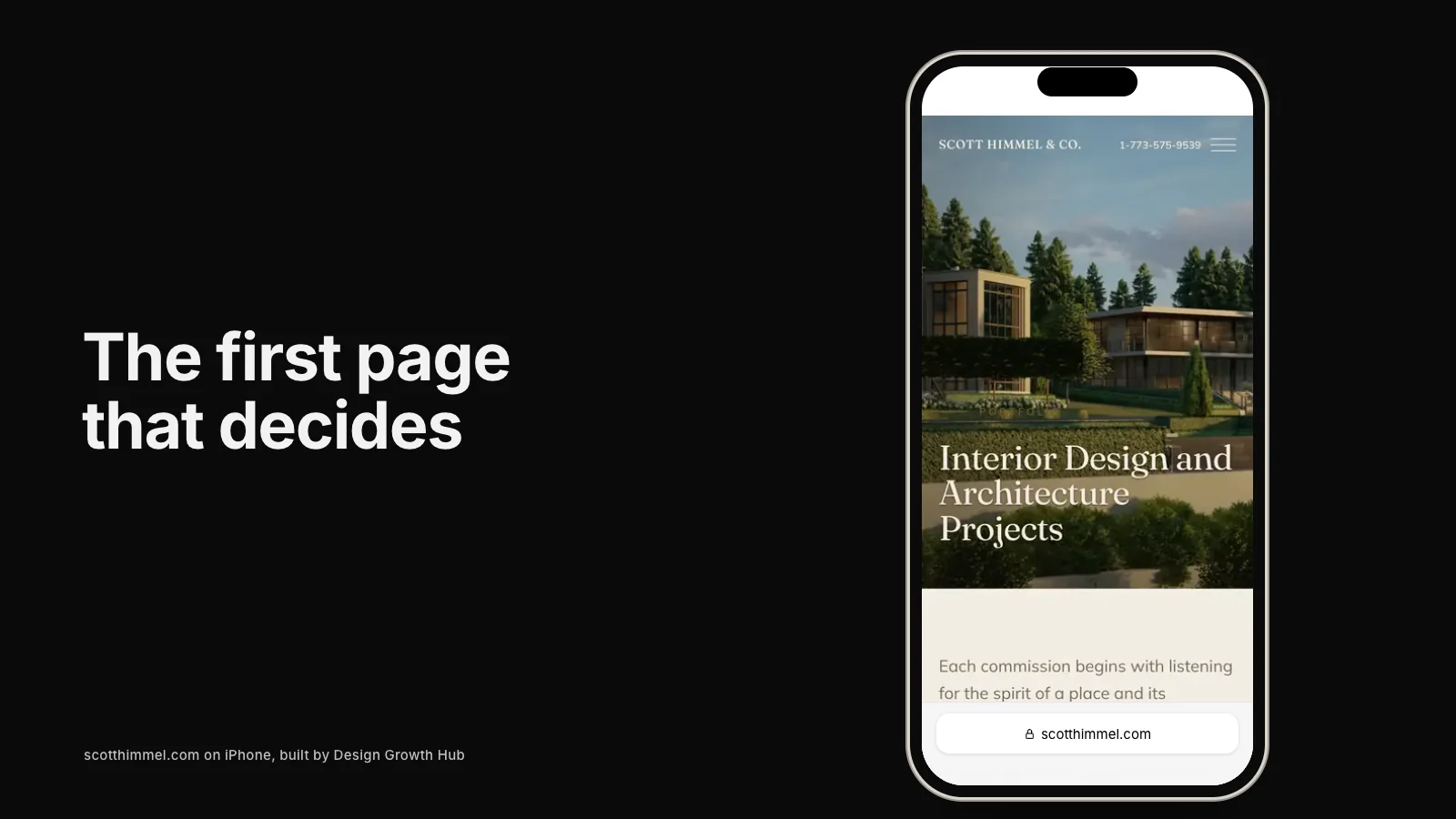
Pair a strong image with a short statement of what you design and where. "Architecture for homes and small cultural buildings in the Pacific Northwest" tells visitors immediately whether they are in the right place. Avoid abstract taglines that could describe any firm.
Choose the opening image carefully
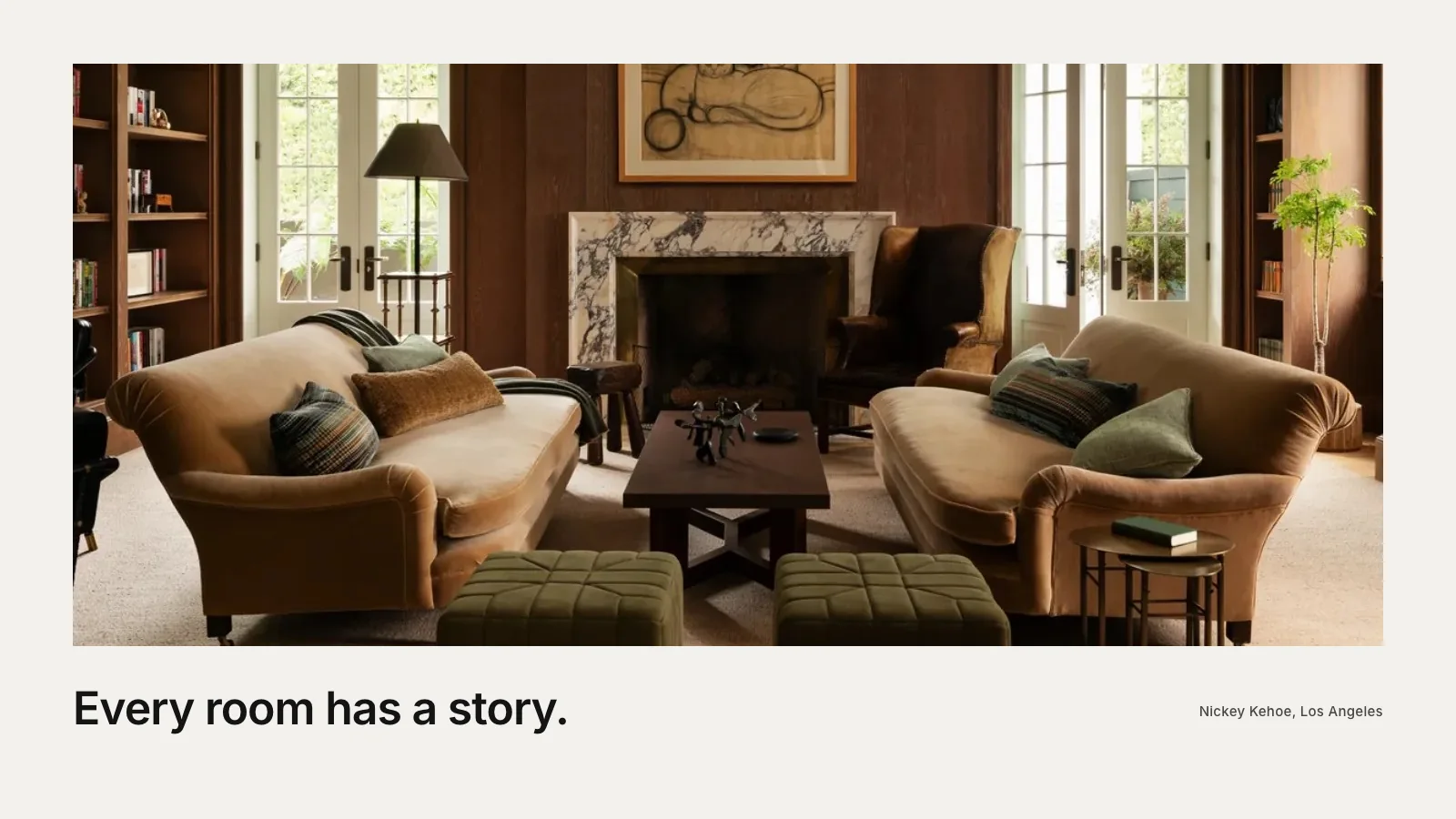
The first image sets expectations. Choose one that represents the work you want more of and crops well on phones. A building in its landscape, a defining interior or a characteristic detail can all work. Make it large and let it breathe.
Select a few projects
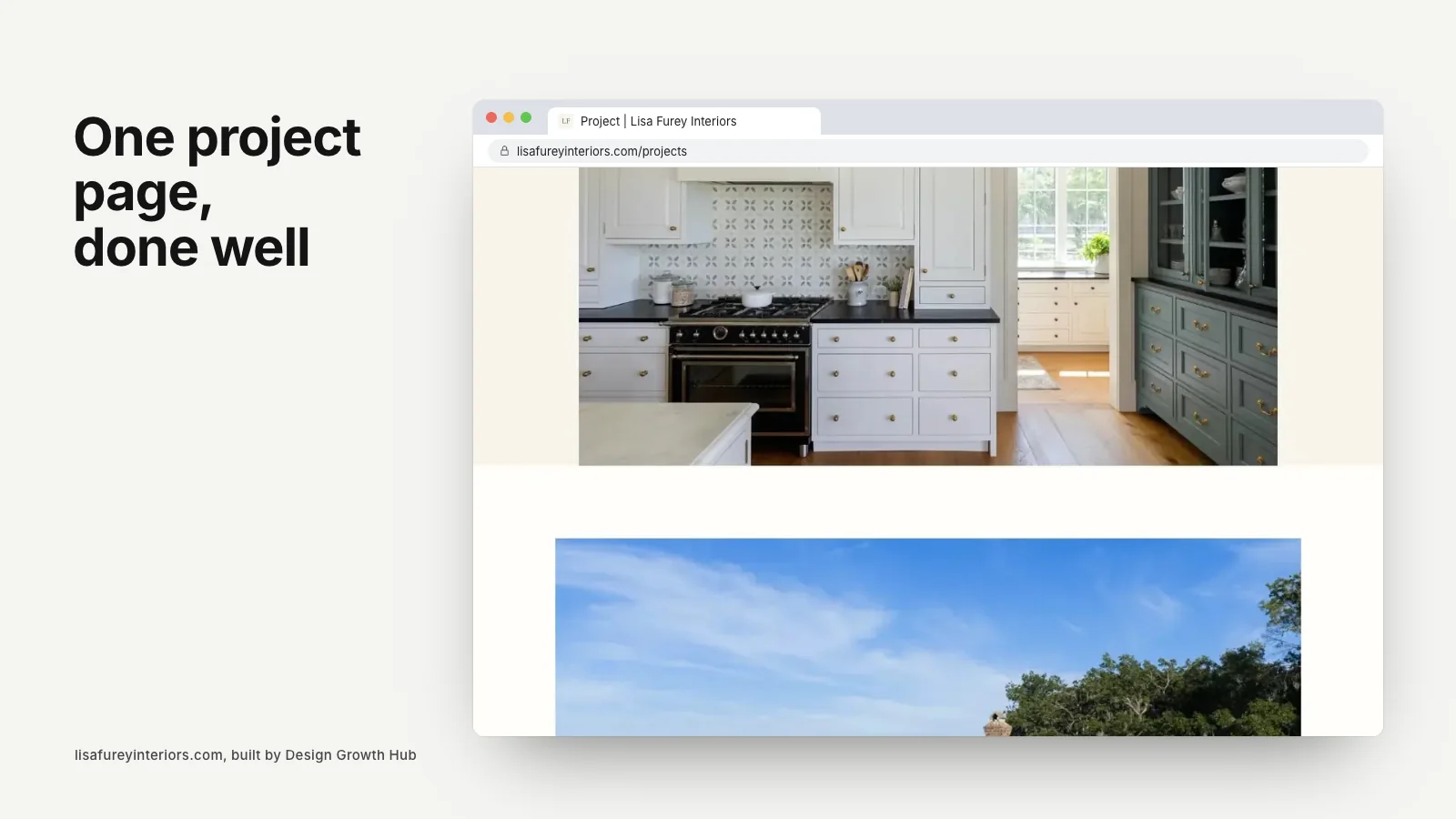
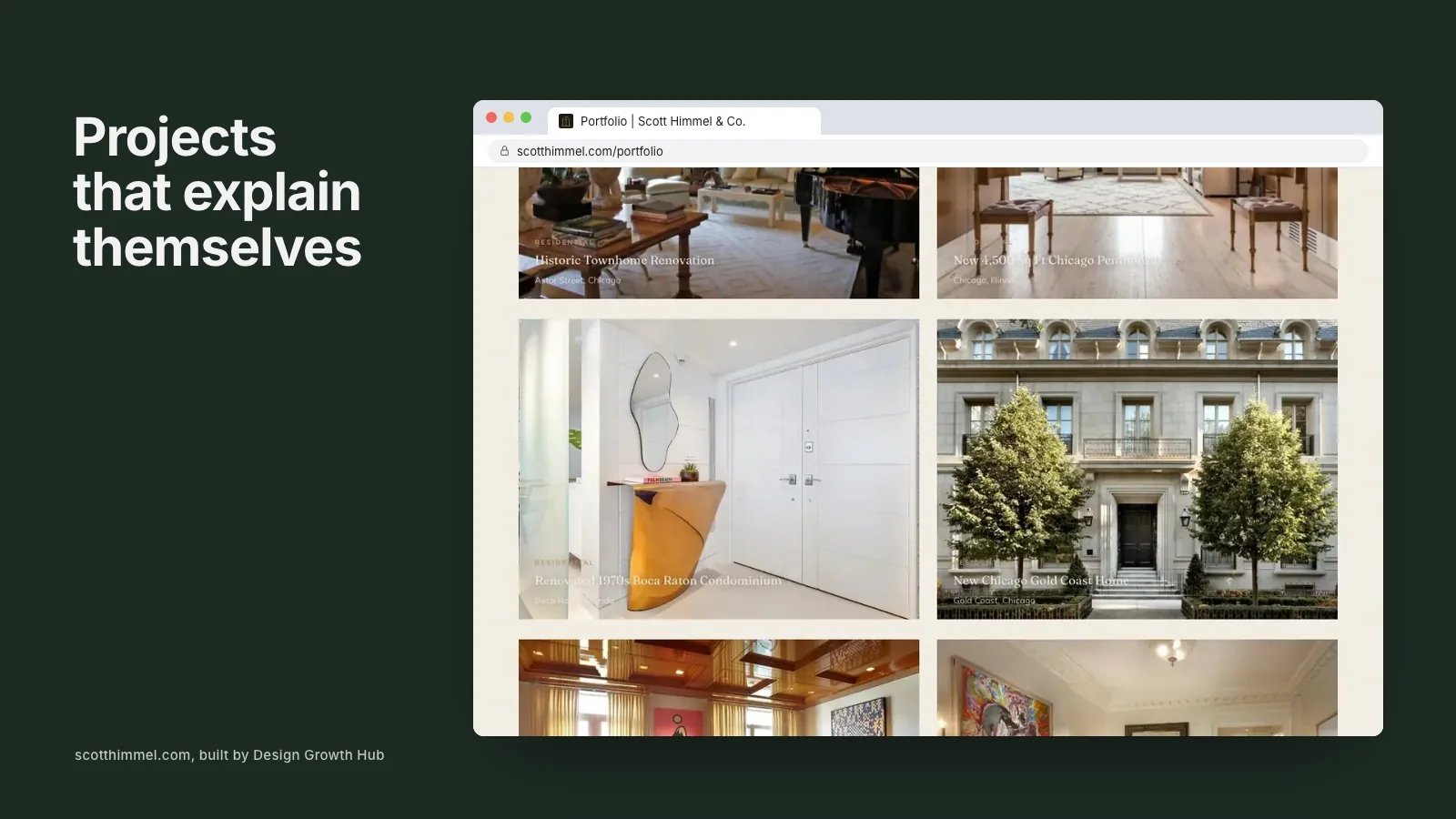
Show three to six projects, each with a strong image, a descriptive title and a link to the full project page. Avoid presenting the entire portfolio on the landing page; selection signals confidence and encourages exploration.
Introduce the practice
A short paragraph about who you are and how you work, perhaps with a portrait, helps visitors connect. Link to the about page for more.
Show credibility
Include a few signals of credibility: publication logos, an award, a short client testimonial or key collaborators. Present them calmly so they support the work rather than compete with it.
Explain the process briefly
A few sentences about how projects unfold, linking to a process page, help prospective clients who are new to working with an architect.
Make the next step obvious
Close with a clear invitation, such as "Tell us about your project," linked to the contact page. Keep a contact link visible in the navigation as well.
Focused landing pages for campaigns
If you build a page for a specific audience or campaign, match it to how visitors arrive. A page for homeowners interested in modern homes on difficult sites might open with such a project, explain your approach to sloping land, show two or three related projects and include a short inquiry form. Remove distractions that pull visitors away from the main action.
Speed and mobile
Large images can slow landing pages. Compress images, use modern formats and load lower sections as visitors scroll. Test on a phone with mobile data. A slow first page loses visitors before they see the work.
Search and AI visibility
A clear statement, descriptive project titles and a well-structured page help search engines and AI tools understand your practice. Use a descriptive page title and meta description that mention what you design and where.
Portfolio pages beyond the landing page
The landing page leads to the rest of the portfolio. Our guides to building an architecture portfolio website, an architecture portfolio project page example and writing the about page of an architecture portfolio cover the pages visitors reach next. Our article on why portfolio pages need more than pretty photos explains why context matters on every project.
Learning from examples
Our collection of architecture portfolio examples shows different approaches to presenting work, and our guide to choosing a portfolio website builder helps with the technical side.
Common mistakes
- Abstract statements that do not say what the practice does.
- Sliders that rotate before anyone can look.
- Showing every project on the first page.
- Hiding contact details.
- Heavy images that load slowly on phones.
Writing the opening statement
The opening statement deserves several drafts. Try writing it as you would introduce the practice to a stranger at a dinner: what you design, where and perhaps one quality that sets you apart. Remove anything a client would not understand. A good statement is short enough to read in a glance and specific enough to remember afterward.
Updating the landing page
Change featured projects as new work is completed, and refresh the opening image occasionally. A landing page that evolves gives returning visitors, such as partners and past clients, a reason to look again and shows that the practice is active.
Testing the page
Ask someone unfamiliar with your practice to look at the landing page for ten seconds, then describe what you do and where. If they cannot, simplify the statement and opening image until they can.
If you would like help designing a landing page that makes a strong first impression, our website redesign service works with architects. Or request a studio review to start.
Build your visibility foundation
Design Growth Hub helps interior designers build the visibility foundation behind high-value discovery.
Request a Studio Review