The best interior design client presentations begin by restating the clients' goals in their own words, then show how the design answers those goals in a clear sequence from the overall idea to the details. They combine drawings and images with real materials, address budget openly and end with clear decisions and next steps. Clients say yes when they understand the design, feel heard and trust the process.
Here are practical tips for each part of a presentation.
Prepare the story
Before preparing slides or boards, write the story of the design in a few sentences. What did the clients ask for? What is the central idea? How does each room express it? A clear story keeps the presentation focused and helps clients follow along.
Restate the brief
Open by reminding clients what they told you: how they live, what frustrates them, what they hope to feel. Use their own words where you can. This shows you listened and frames every design decision that follows.
Example: "When we first met, you told me the house felt dark and disconnected, and that you wanted a kitchen where everyone could be together without tripping over each other. Everything we are about to show you starts from that."
Present from big to small
Start with the overall concept: the mood, palette and flow. Then move room by room, beginning with the most important spaces. Finish with details. This sequence prevents clients from getting stuck on a single fabric before they understand the whole.
Use visuals thoughtfully
- Floor plans: show flow and furniture layouts.
- Elevations and drawings: clarify built elements.
- Renderings: help clients visualize, but set expectations about how closely they represent the finished space.
- Mood images: convey atmosphere, used sparingly.
- Product images: show specific pieces.
Avoid overwhelming clients with too many options. Two or three well-considered choices are easier to decide on than ten.
Bring real materials
Clients understand materials far better when they can touch them. Bring fabric, stone, wood and finish samples. Arrange them by room. Let clients handle them while you explain why each was chosen.
Explain the why
For each major decision, explain the reasoning: how it serves the brief, the light, the architecture or the way the family lives. Clients are more likely to agree when they understand the thinking.
Address budget openly
Budget anxiety can quietly undermine a presentation. Be clear about how the design relates to the agreed budget. If some elements exceed it, present them as options rather than surprises. Clients appreciate honesty and control.
Invite questions throughout
Pause after each section and invite questions. It keeps clients engaged and lets you address concerns before they grow. Listen carefully to reactions, including hesitation.
Handle disagreement calmly
If clients dislike something, ask what specifically does not feel right. Often the issue is smaller than it appears, and an adjustment solves it. Avoid becoming defensive. Your role is to guide, not to win an argument.
Close with decisions and next steps
End by summarizing what was agreed, what needs further thought and what happens next. Agree dates for decisions and follow-up. Send a written summary afterward.
In person or remote
In-person presentations are ideal for materials and atmosphere. Remote presentations can work well with clear slides, good screen sharing and samples sent ahead of time. Choose based on the project and the clients' preferences.
Your presentation as part of your brand
The way you present reflects your studio. Consistent, beautiful presentation materials in your brand's fonts and colors, a calm pace and thoughtful details all reinforce the impression your website and consultation created. Our article on interior designer website design explains how brand consistency builds trust from first click to final presentation.
Before and after the presentation
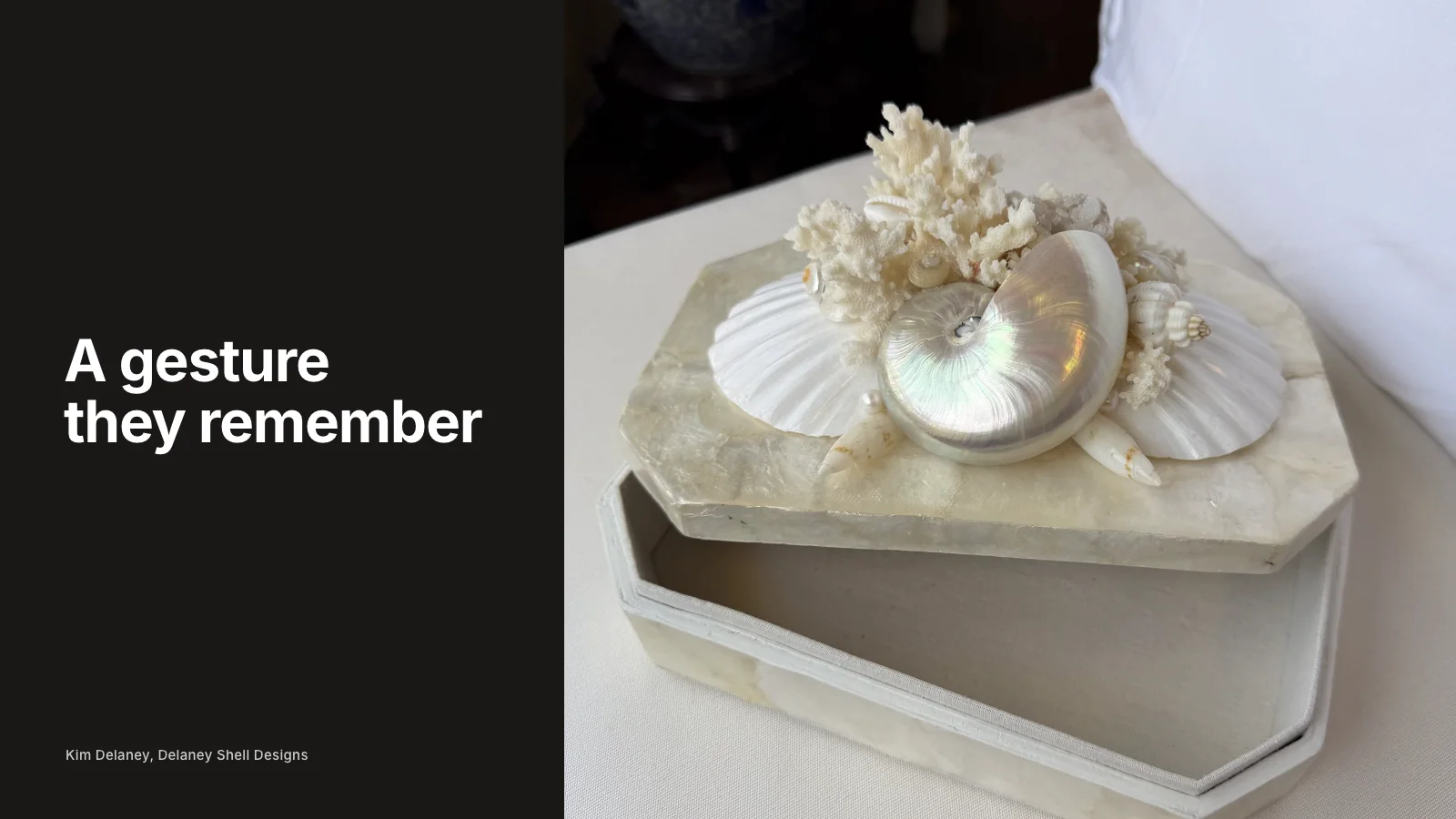
The presentation sits within a longer journey. Our articles on turning a consultation into a project, the client intake form and email marketing for interior designers cover the stages before and after. At the end of the project, a thoughtful gesture can turn satisfied clients into advocates, as discussed in client gifts that earn referrals and reviews.
Rehearse the difficult moments
Most presentations have one or two moments that could be difficult: an element that exceeds the budget, a bold choice the clients may hesitate over or a compromise forced by the architecture. Rehearse how you will introduce these moments. Explain the reasoning first, then show the solution, then invite questions. Clients respond far better to a calm, prepared explanation than to a nervous one.
Leave something behind
After an in-person presentation, leave clients with a summary they can revisit: a short document or a link to the presentation, the key decisions and the next steps. Many clients like to talk things over privately after the meeting. A clear summary helps them remember what they saw and makes it easier to approve decisions quickly.
Learning from each presentation
Note what clients responded to and what caused hesitation. Over time, you will refine your approach. Some studios even ask clients, after a project, what helped them feel confident during presentations.
Presenting your studio online
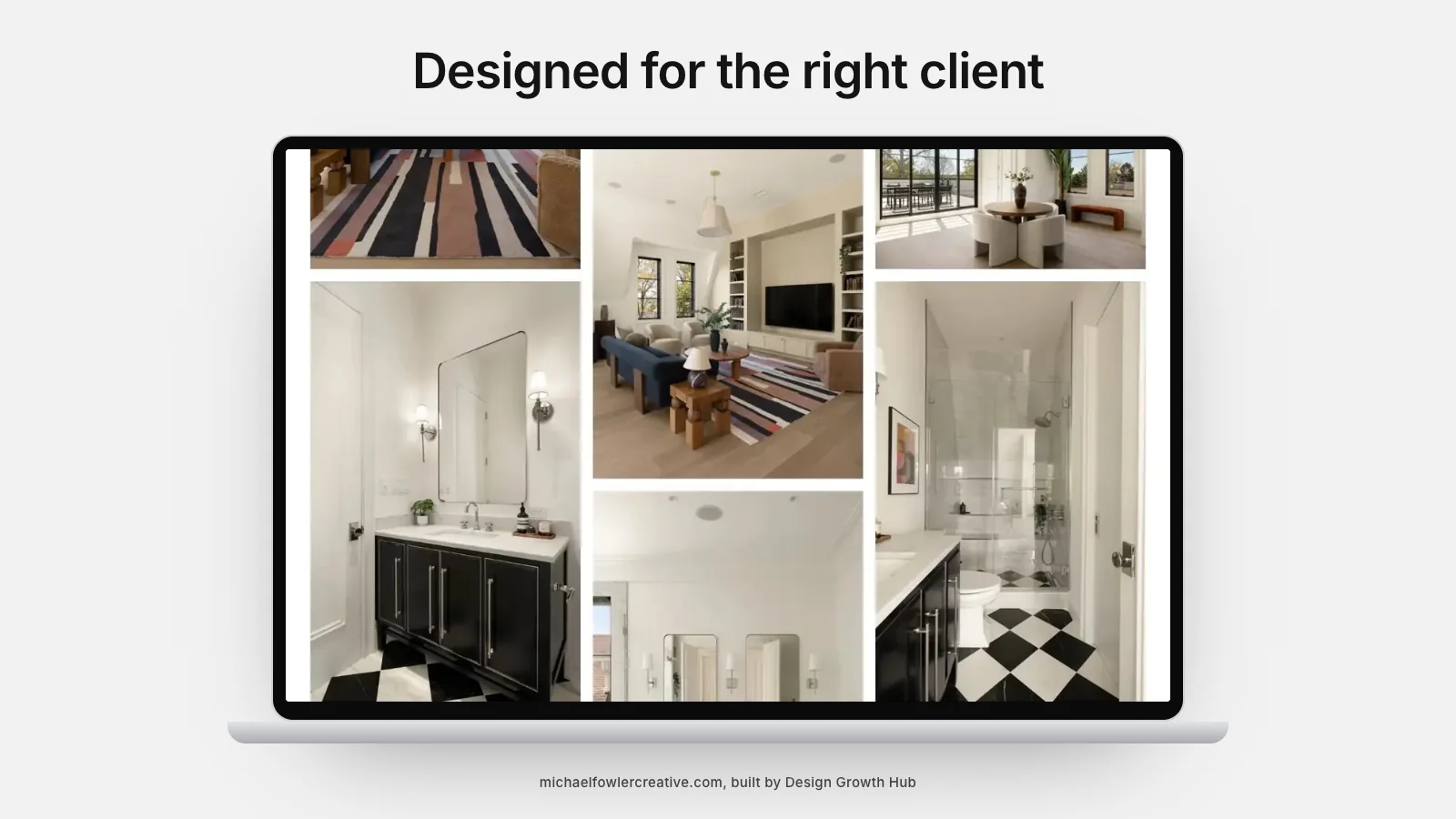
Many of the same principles apply to your website: restate the client's needs, show relevant work, explain your thinking and make the next step clear. Our article on why clients search by project type explains how to present work so the right clients recognize themselves.
If you would like your website to present your studio with the same clarity as your best presentations, our website redesign service can help. Or request a studio review to start.
Request a Studio Review
If your work is already strong, the next step is making sure Google + AI can understand it clearly.
Request a Studio Review