Contractor website design that wins remodeling jobs focuses on trust and clarity. Homeowners want to see real projects similar to theirs, understand your services and process, know you are licensed and insured, read reviews from local clients and find it easy to request an estimate. A clean, fast, mobile-friendly site with these elements outperforms a flashy one that leaves homeowners guessing.
Here is what a remodeling contractor's website should include and how to design it to bring better jobs.
Why trust comes first
Remodeling involves strangers working inside someone's home for weeks or months, often with significant money at stake. Homeowners worry about quality, reliability, communication, budget overruns and cleanliness. Your website's job is to answer those worries before they become reasons not to call.
A clear opening screen
Within seconds, visitors should know what you do and where. "Kitchen, bath and whole-home remodeling in Westchester County" is clearer than "Building dreams since 1998." Pair it with a strong photo of a finished project and a visible button to request an estimate.
Service pages for each type of work
Give each main service its own page: kitchen remodeling, bathroom remodeling, additions, basements, whole-home renovations. Each should explain what is included, show related projects and answer common questions. Service pages help homeowners find what they need and help Google match your site to specific searches. Our articles on bathroom remodeling leads and kitchen remodeling leads explore those services further.
Real project galleries
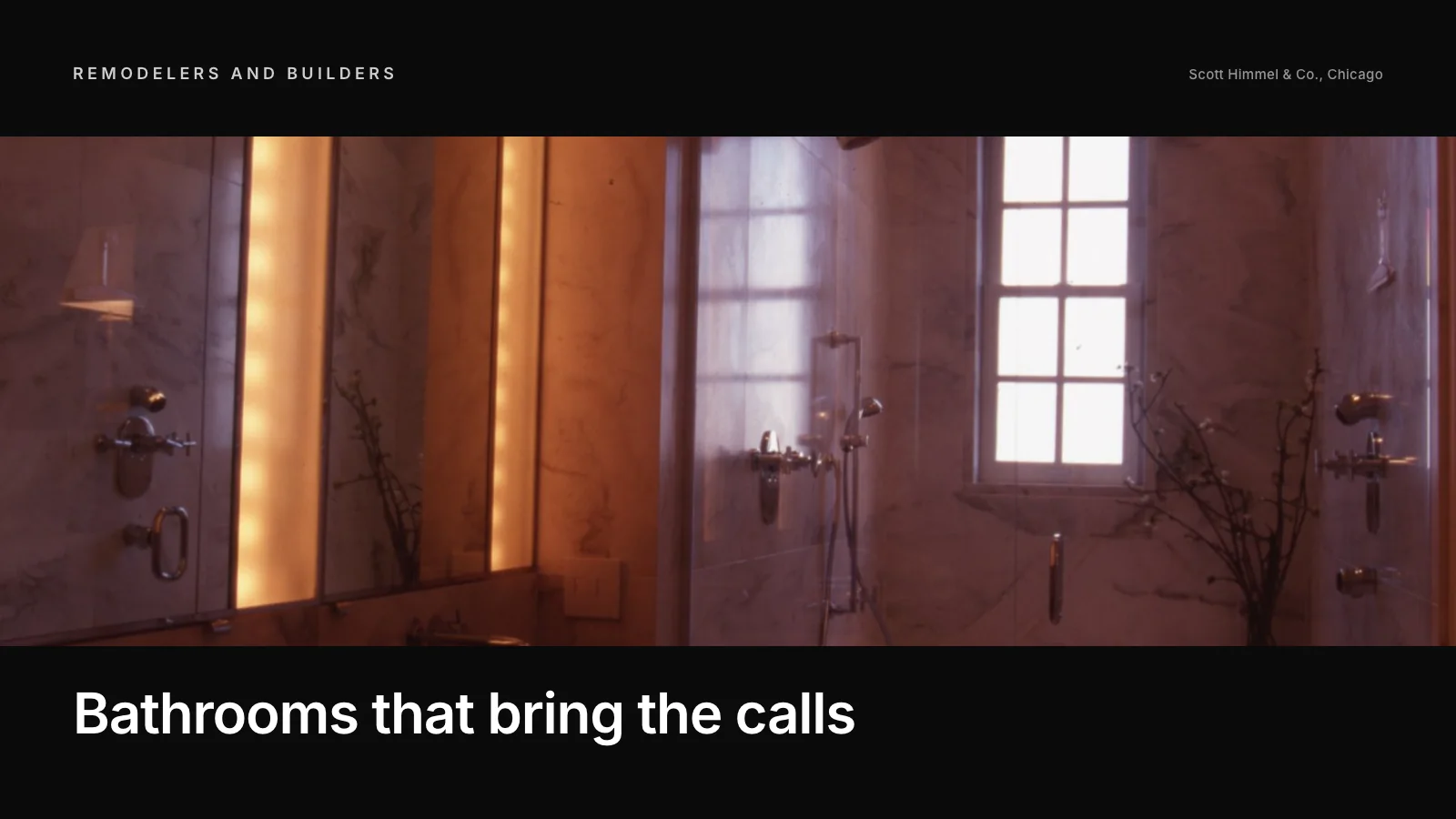
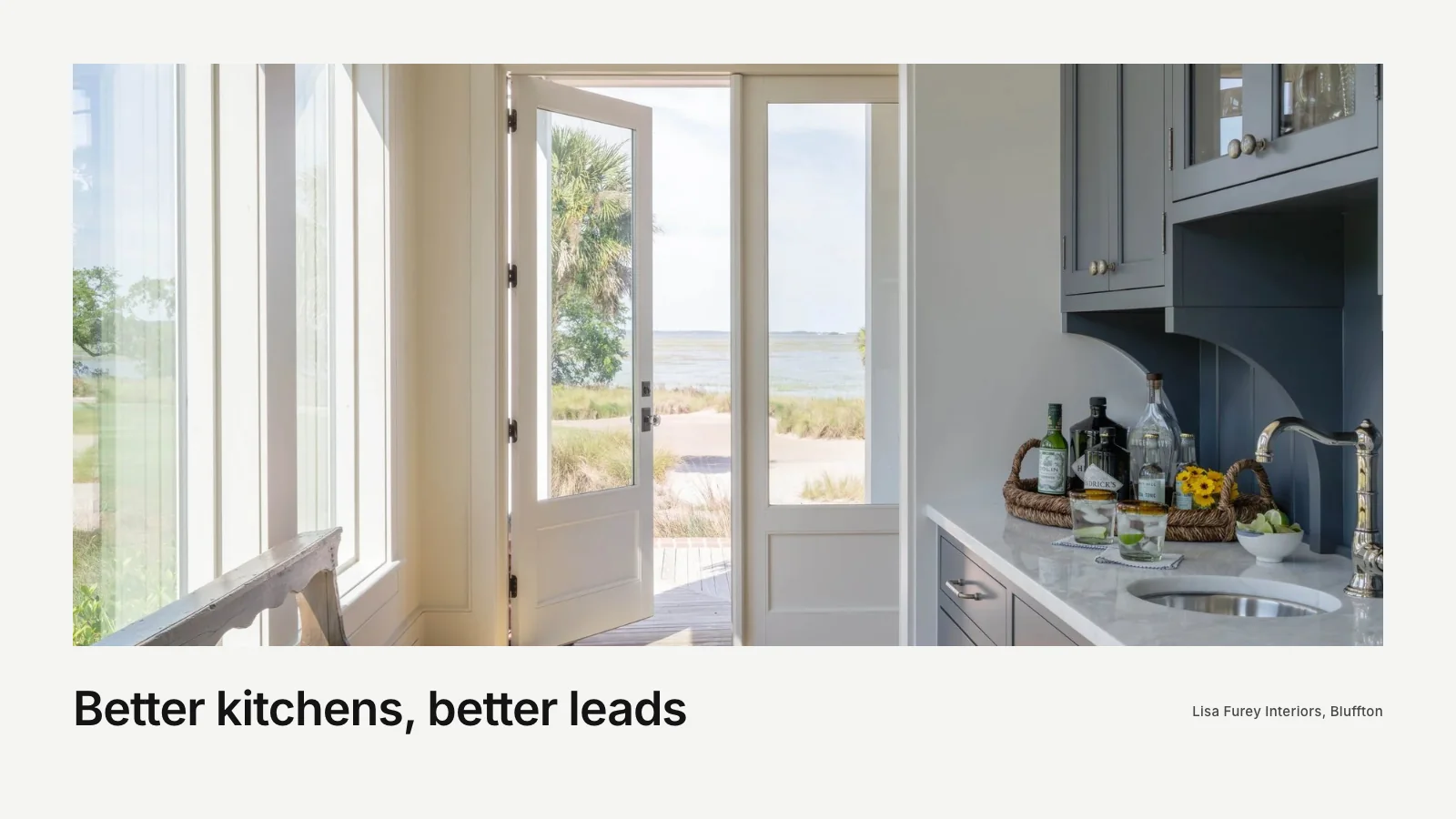
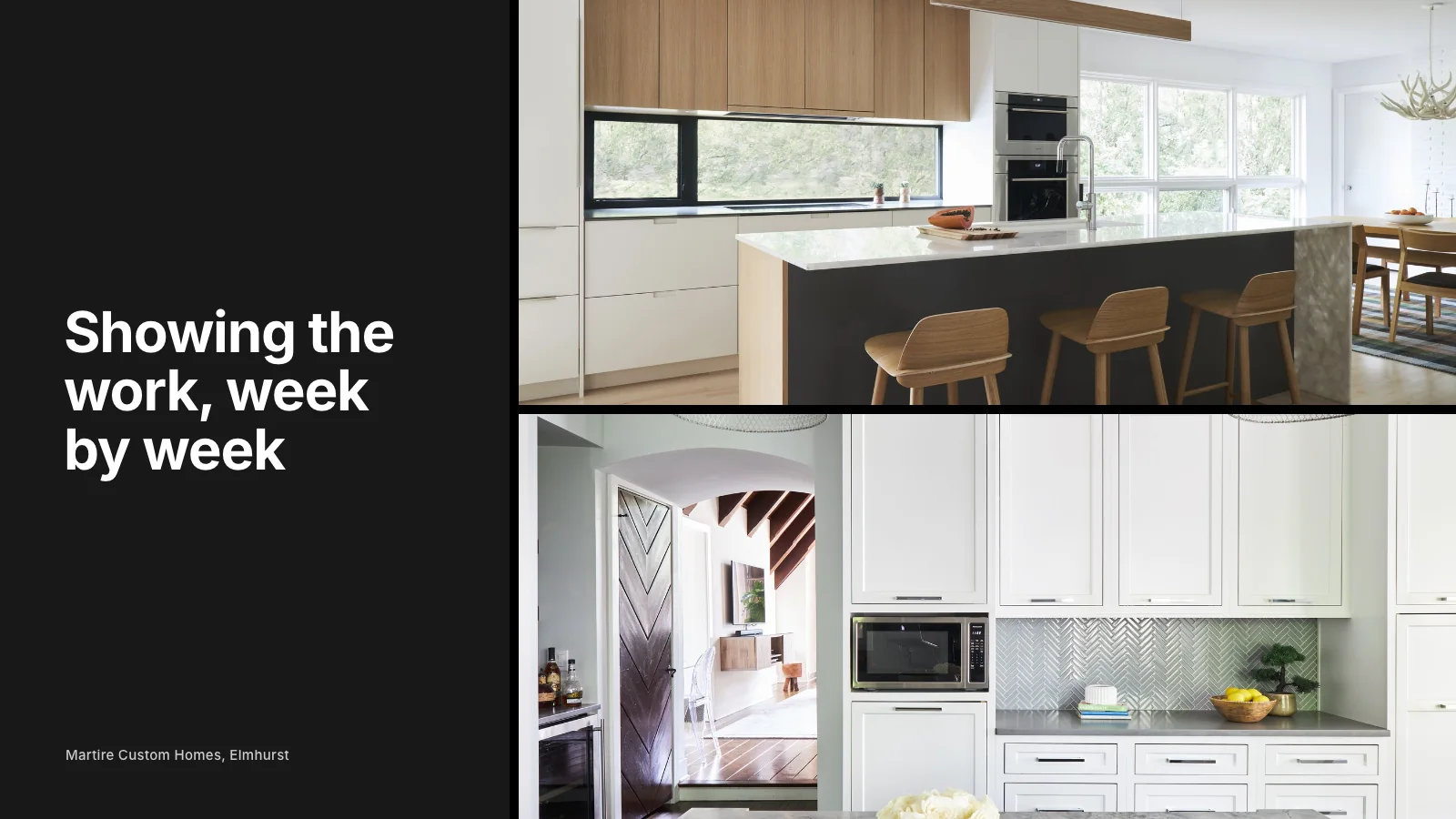
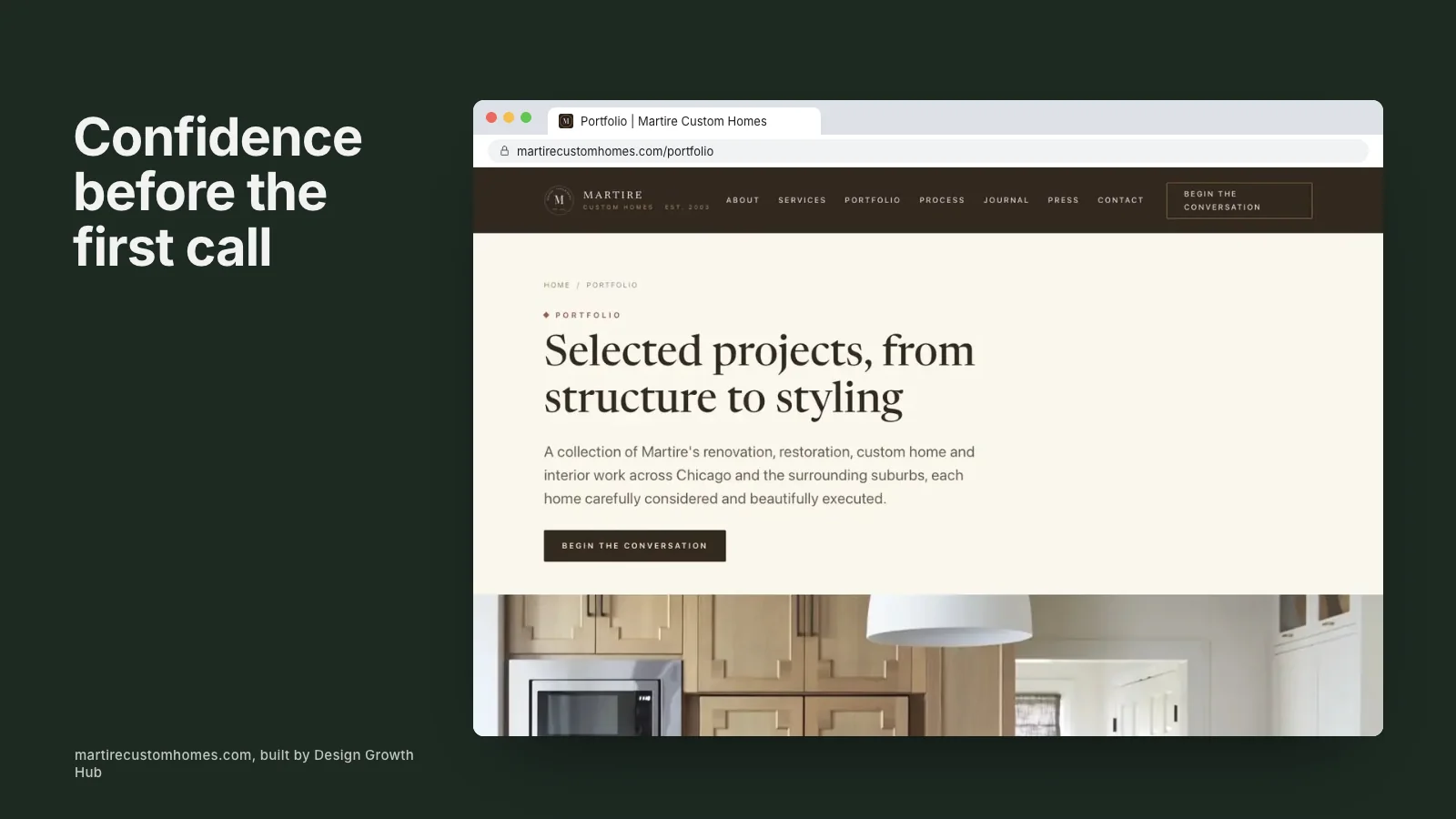
Show finished projects with professional photos. Organize them by type and give each a short description: location, scope and what changed. Avoid stock photos, which homeowners spot quickly and which damage trust.
Before and after
Remodeling is about transformation. Before and after images show the value of your work more clearly than finished photos alone. Pair them with a sentence explaining what you changed.
Your process
Explain how a project unfolds: first call, site visit, estimate, design and selections, scheduling, construction, walkthrough and warranty. Note how you communicate, how you protect the home and how you handle changes. A clear process reassures homeowners worried about chaos.
Reviews and testimonials
Display reviews prominently and link to your Google profile. Testimonials that mention specific projects, communication and cleanliness are especially persuasive. Our guide to getting more Google reviews as a contractor explains how to build them.
Licensing, insurance and credentials
State your license numbers where required, insurance coverage and any certifications or association memberships. Homeowners often look for this, and its absence can raise doubts.
Service area
List the towns and areas you serve. Consider short pages for your main areas with local projects. This helps local homeowners recognize you and supports local search.
The team
Introduce the owner and key team members with real photos. Remodeling is personal; homeowners want to know who will be in their house.
A simple estimate request
Keep the form short: name, contact details, address or town, project type, timeline and a brief description. Explain what happens next. Make the button visible on every page and easy to tap on phones.
Mobile and speed
Many homeowners browse on phones. Make sure pages load quickly, text is readable, galleries swipe smoothly and the call and estimate buttons are easy to reach. A click-to-call button helps homeowners who prefer to phone.
Financing and warranties
If you offer financing options or warranties, explain them clearly. They can reduce hesitation for larger projects.
Social proof beyond reviews
Awards, local press, association memberships and partnerships with designers or showrooms add credibility. Our article on social media for remodeling contractors explains how to extend that proof online.
Search basics
Each page should have a descriptive title, clear headings and accurate business details. A complete Google Business Profile and consistent listings support local visibility. Our guide to SEO for contractors covers the details.
Common contractor website mistakes
Many remodeling websites lose jobs through small, fixable problems. The phone number is hidden in the footer. The gallery is full of unlabeled photos, so homeowners cannot tell which projects are kitchens and which are basements. The service area is missing, leaving visitors unsure whether you work in their town. The estimate form asks for too much or does not work on phones. Reviews are mentioned but not shown.
Fixing these issues rarely requires a full redesign. A clear review of the site, page by page, from the point of view of a homeowner planning a project usually reveals the biggest problems within an hour.
Writing in the homeowner's language
Contractors sometimes describe their work in trade terms that homeowners do not use. A homeowner searches for "kitchen remodel" rather than "kitchen renovation general contracting services". Use plain words on your pages, describe what the finished room will be like to live in and explain technical choices simply when they matter. Clear language builds confidence and helps search engines match your pages to real searches.
Learning from related fields
Architects and interior designers face similar challenges in presenting work and building trust. Our articles on architect website design and interior designer website design offer ideas that translate well. For general contractors handling broader work, see general contractor website design.
Choosing who builds it
If you hire a company to build your site, ask to see contractor sites they have built and how they handle search and mobile performance. Our guide to hiring a contractor website design company lists the questions to ask.
If you would like a website built to win the remodeling jobs you want, our website creation service works with remodelers and builders. Or request a studio review and we will review your current site.
Turn your website into a visibility asset
A website can be a brochure or an asset that brings clients. We help design studios build the second kind.
Request a Studio Review