
General contractor website design for residential work should show the range of projects you manage, prove you run jobs reliably and make it easy for homeowners to start a conversation. That means organizing projects by type, explaining how you coordinate trades and schedules, displaying licensing, insurance and reviews, listing service areas clearly and offering a simple way to request an estimate or call. Homeowners hiring a general contractor want reassurance that someone capable is in charge.
Here is how to structure and design a site that does that.
What makes general contractors different
Specialty contractors focus on one trade or one type of room. General contractors coordinate many trades across larger projects: additions, whole-home renovations, structural changes and new builds. Homeowners hiring a general contractor are trusting you to manage complexity, which means your website must communicate organization as much as craftsmanship.
A clear opening statement
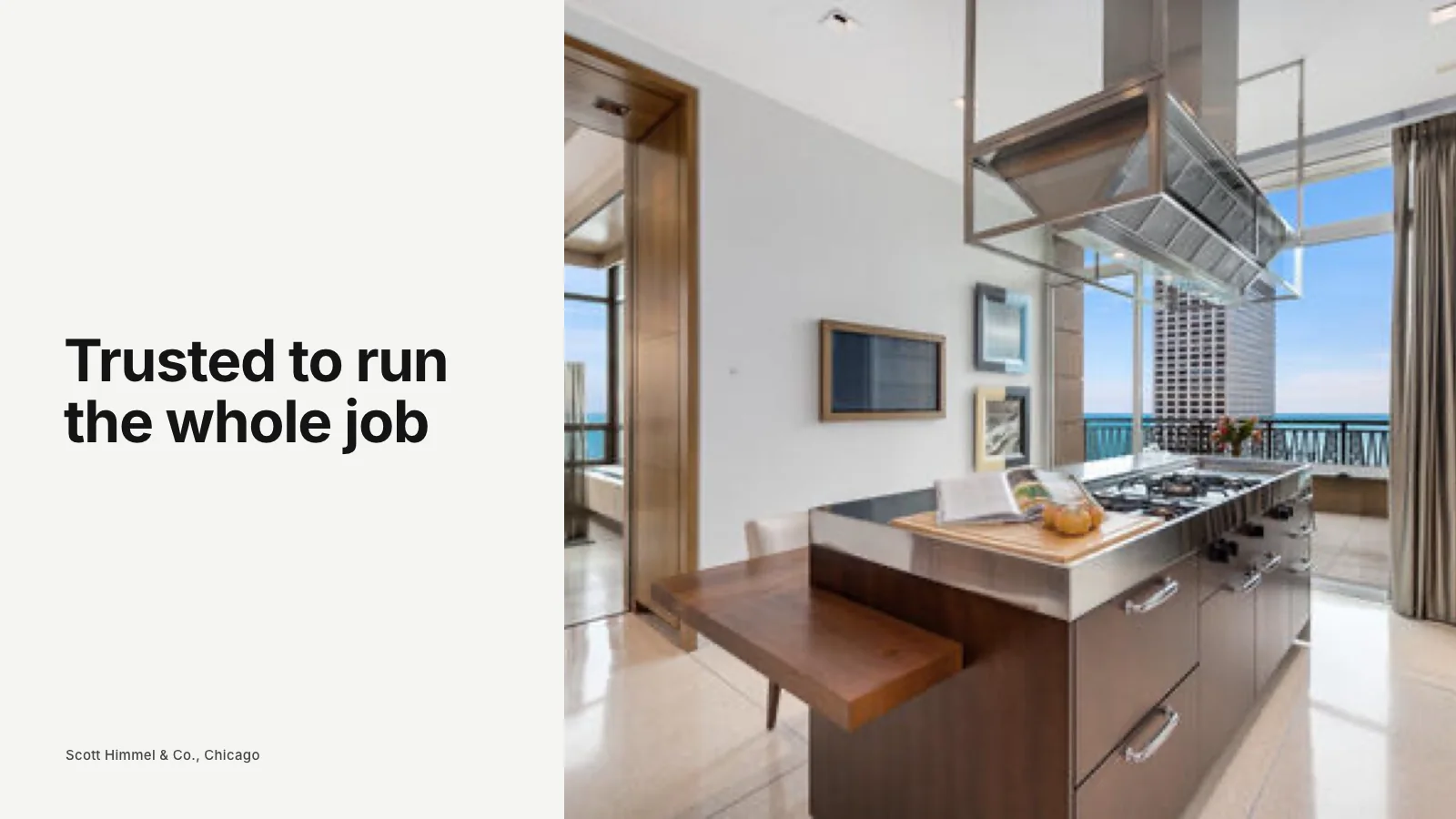
Begin with a plain sentence describing what you do and where: "Residential general contractor for additions, whole-home renovations and custom builds in Montgomery County." Pair it with a strong project image and two clear actions: view projects and request an estimate.
Organize work by project type
General contractors often handle many kinds of projects. Without structure, a portfolio can feel scattered. Group projects into clear categories such as:
- Additions and expansions.
- Whole-home renovations.
- Kitchens and baths.
- Basements and lower levels.
- Custom homes.
- Exterior and structural work.
Give each category a page with related projects and a short explanation of what is involved. This helps homeowners find work like theirs and helps search engines understand each service.
Explain how you manage projects
This is where general contractors can stand out. Explain how you plan, schedule and coordinate trades. Describe how you handle permits and inspections, how you communicate with homeowners and how you manage changes and budgets. Mention project management tools or regular updates if you use them.
A homeowner who understands your process is far more likely to trust you with a complex project.
Show your trade relationships
Many homeowners worry about who will actually be working in their home. Explain how you select and work with trusted subcontractors, how long you have worked with key trades and how quality is checked. You do not need to name every subcontractor, but showing that your team is stable and vetted builds confidence.
Project stories with substance
For your most significant projects, write short stories describing the goal, the challenges, the trades involved and the result. Include before and after photos where possible. Project stories show how you solve problems, which matters more for general contracting than polished finished photos alone.
Reliability signals
- License numbers and insurance information.
- Years in business and number of completed projects, if accurate.
- Memberships in trade associations.
- Warranty information.
- Reviews from homeowners, especially those mentioning communication and schedule.
Place these where homeowners will see them: near the top of the home page, on the about page and close to the estimate form.
Reviews
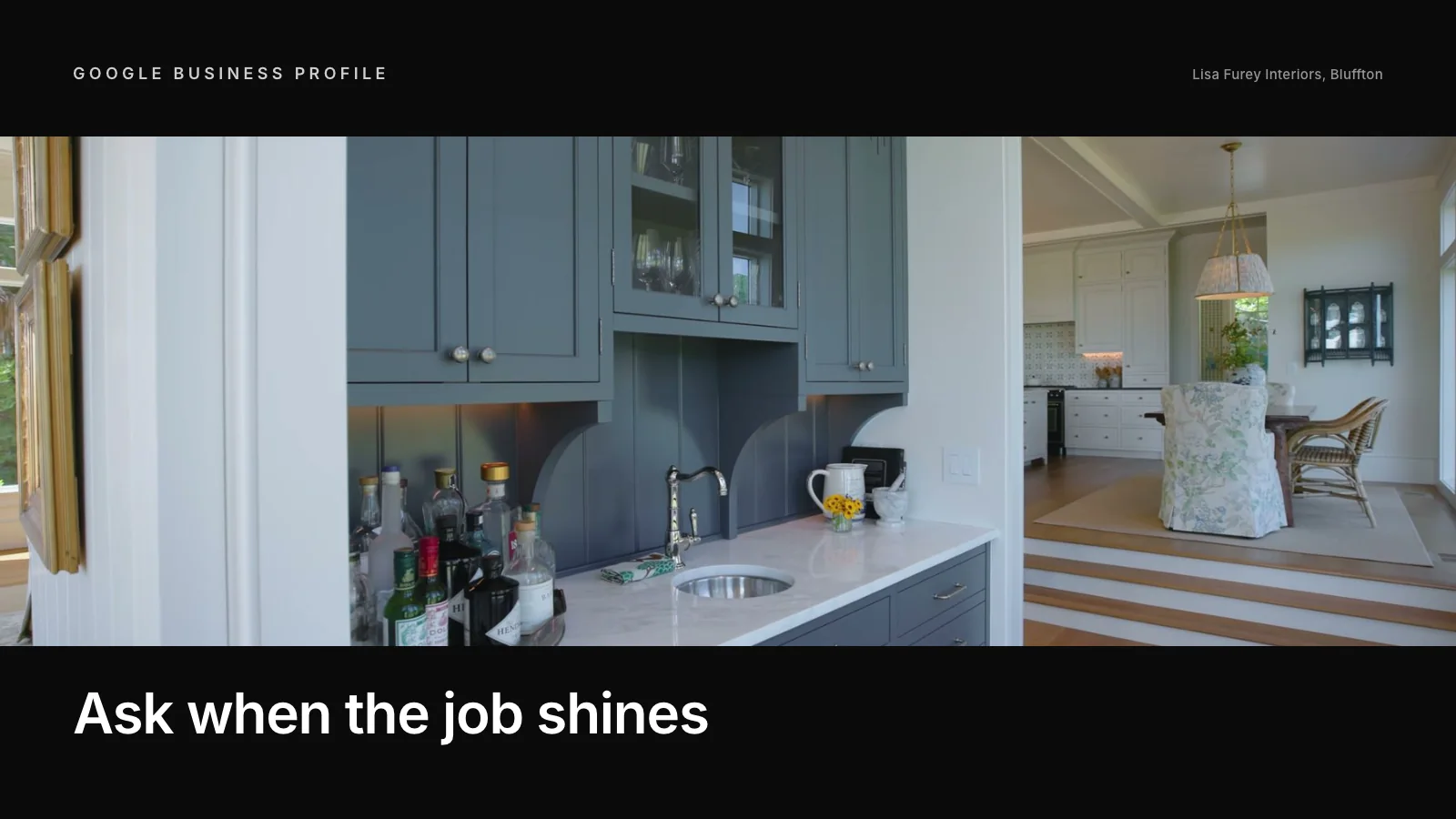
Display reviews on your website and link to your Google profile. Ask every satisfied client for a review. Our article on getting more Google reviews as a contractor offers practical steps.
Service areas
List the towns and regions you work in. Consider pages for your main areas with local projects and notes about the kinds of homes there. This helps homeowners and supports local search.
The estimate request
Keep the form short and explain what happens next. Ask for name, contact details, project address or town, project type, timing and a brief description. Offer a phone number and click-to-call for those who prefer to talk.
Mobile performance
Many homeowners check contractors on their phones, often between other tasks. Pages must load quickly, galleries must work smoothly and contact options must be easy to reach.
Content that answers questions
General contracting raises many questions: how long an addition takes, whether homeowners can stay during a renovation, how permits work, how changes affect cost. Answering these on service pages or in short articles builds trust and helps search visibility.
Working with architects and designers
Many residential projects involve architects or interior designers. A page explaining how you collaborate, with examples of joint projects, can bring referrals. Our article on architect website design shows how architects present their work, which can help you understand their perspective.
Marketing beyond the website
Your website works best alongside a complete Google Business Profile, reviews, referrals and, where appropriate, advertising. Our guides to general contractor marketing for residential projects and general contractor advertising ideas cover those channels.
Choosing who builds the site
If you hire a web design company, ask to see contractor sites they have built and how they handle project organization and mobile performance. Our guide to hiring a contractor website design company lists questions to ask. For remodelers focused on specific rooms, our article on contractor website design that wins remodeling jobs offers a narrower focus, and the best website setup for contractors covers the technical setup.
If you would like a website that shows homeowners you can manage complex projects well, our website creation service works with general contractors and builders. Or request a studio review to start.
See how Google + AI understand your studio
A beautiful portfolio matters. But if search engines and AI tools cannot connect your studio to the right searches, better-fit clients may never reach your website.
Request a Studio Review