
The best website for a contractor is not a specific template or platform. It is a setup that works together: a reliable platform you can update, a clear structure with pages for each service and area, real project photos and reviews, fast pages on phones, easy ways to call or request an estimate, a connection to your Google Business Profile and simple tracking that shows which pages bring jobs. Get those pieces right and almost any reasonable platform will serve you well.
Here is how to put the setup together, piece by piece.
Start with the platform
Contractors commonly use WordPress, Wix, Squarespace, Webflow or industry-specific builders. Each can work. The right choice depends on how many pages you need, how often you will update the site and whether you have help.
A small remodeler who wants to add a few projects a year might be happy on a simple builder. A company with many services, locations and projects may benefit from WordPress or a custom build with more structure. Our guide to choosing a website builder for contractors compares the options in detail.
Whatever you choose, make sure the domain, hosting and website accounts are in your name.
The page structure
A strong contractor website usually includes:
- Home: what you do, where, and a clear next step.
- Service pages: one for each main service, such as kitchens, baths, additions or new homes.
- Projects: a page for each significant project with photos and a short description.
- Service areas: the towns you work in, with pages for the most important ones.
- About: the owner, team, history and credentials.
- Reviews: testimonials and links to Google reviews.
- Contact: a short form, phone number and service area.
This structure helps homeowners find what they need and helps search engines understand your business. Our article on contractor website design that wins remodeling jobs goes deeper on each page.
Real proof on every page
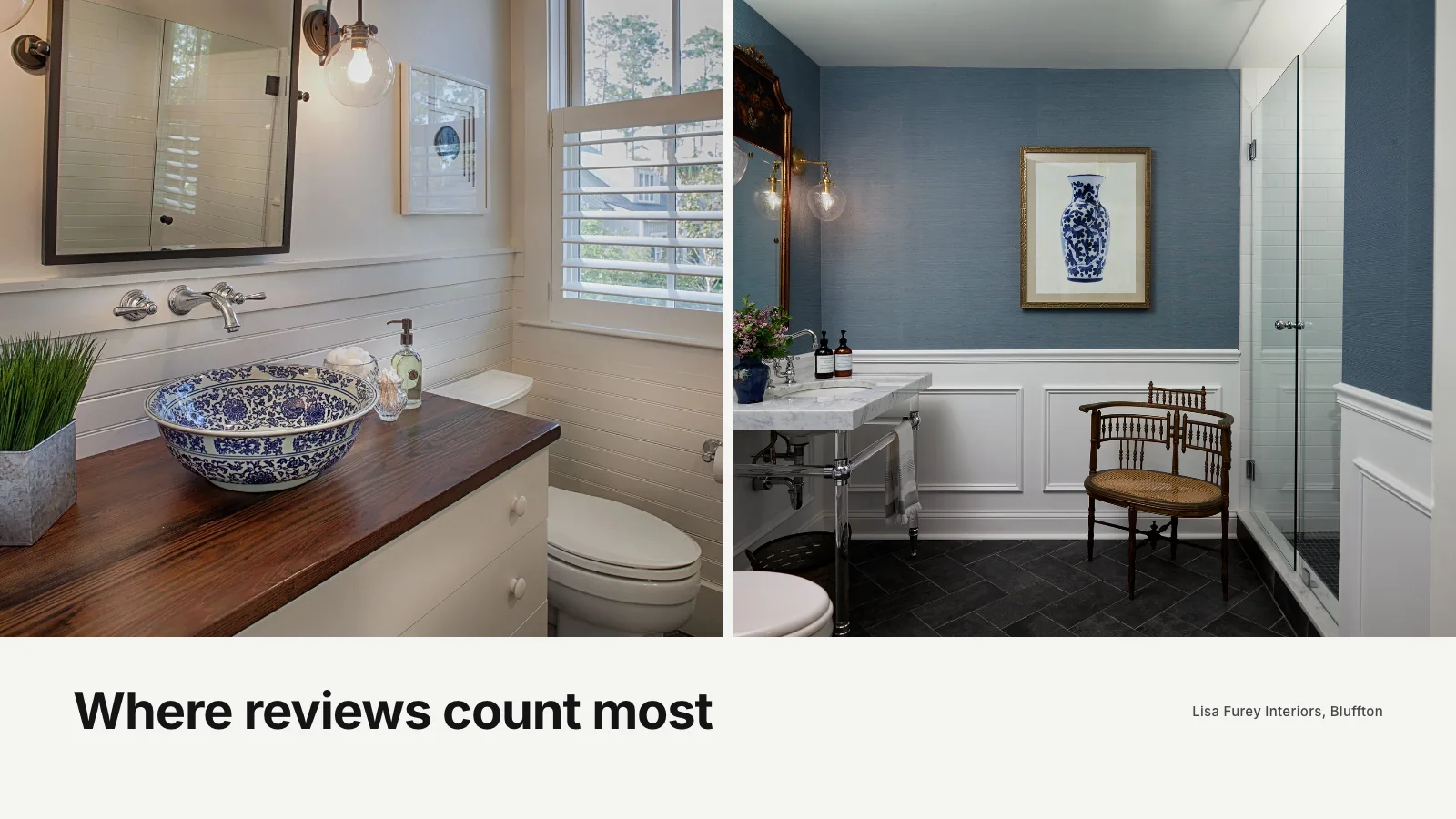
Homeowners hire contractors they trust. Every page should carry some proof: a relevant project, a short testimonial, a license number, a membership or an award. Avoid stock photos. Real projects, even photographed carefully on a good phone when professional photography is not possible, are far more convincing than generic images.
Reviews
Reviews are often the deciding factor for homeowners. Show a few on your website and link to your full Google reviews. Ask every satisfied client for a review at the end of the job. Comparing review platforms can help you decide where to focus, as covered in contractor review websites compared.
Service area pages
If you work across several towns, short pages for your main areas help local homeowners and search engines. Each page should mention the kinds of homes and projects you do there, link to local projects and avoid copying the same text with only the town name changed.
Fast, mobile-first pages
Most homeowners first see your website on a phone, often after a Google search or a referral text. Pages must load quickly, galleries must swipe smoothly and buttons must be easy to tap. Compress images and avoid heavy video on the home page. Test the site on your own phone using mobile data, not just office Wi-Fi.
Click-to-call and the estimate form
Some homeowners prefer to call; others prefer a form. Offer both. A click-to-call button on mobile makes calling easy. A short estimate form asking for name, contact details, town, project type, timing and a brief description is enough. Explain what happens after they submit.
Connecting to your Google Business Profile
Your Google profile and website should support each other. Link your profile to your website, use the same business name, phone number and service areas on both, and add project photos to your profile regularly. Many homeowners will see your profile before your website, so consistency builds trust.
Search basics
Each page needs a descriptive title, a clear main heading and accurate business details. Service and area pages should use the words homeowners search for. You do not need to become an SEO expert, but you do need these basics in place. Our article on affordable SEO for contractors explains what a sensible budget should cover.
Tracking what works
Set up simple tracking so you know how many calls and form submissions come from the website and which pages lead to them. Ask every new client how they found you. Over a few months, you will see which services and areas bring the best jobs, and you can invest more there.
Keeping it current
A contractor website should change as your business does. Add projects as they are completed, refresh photos on your Google profile, update services when you add or drop work and check that the estimate form still reaches you. A site that shows recent work signals an active, reliable company.
Who should build it
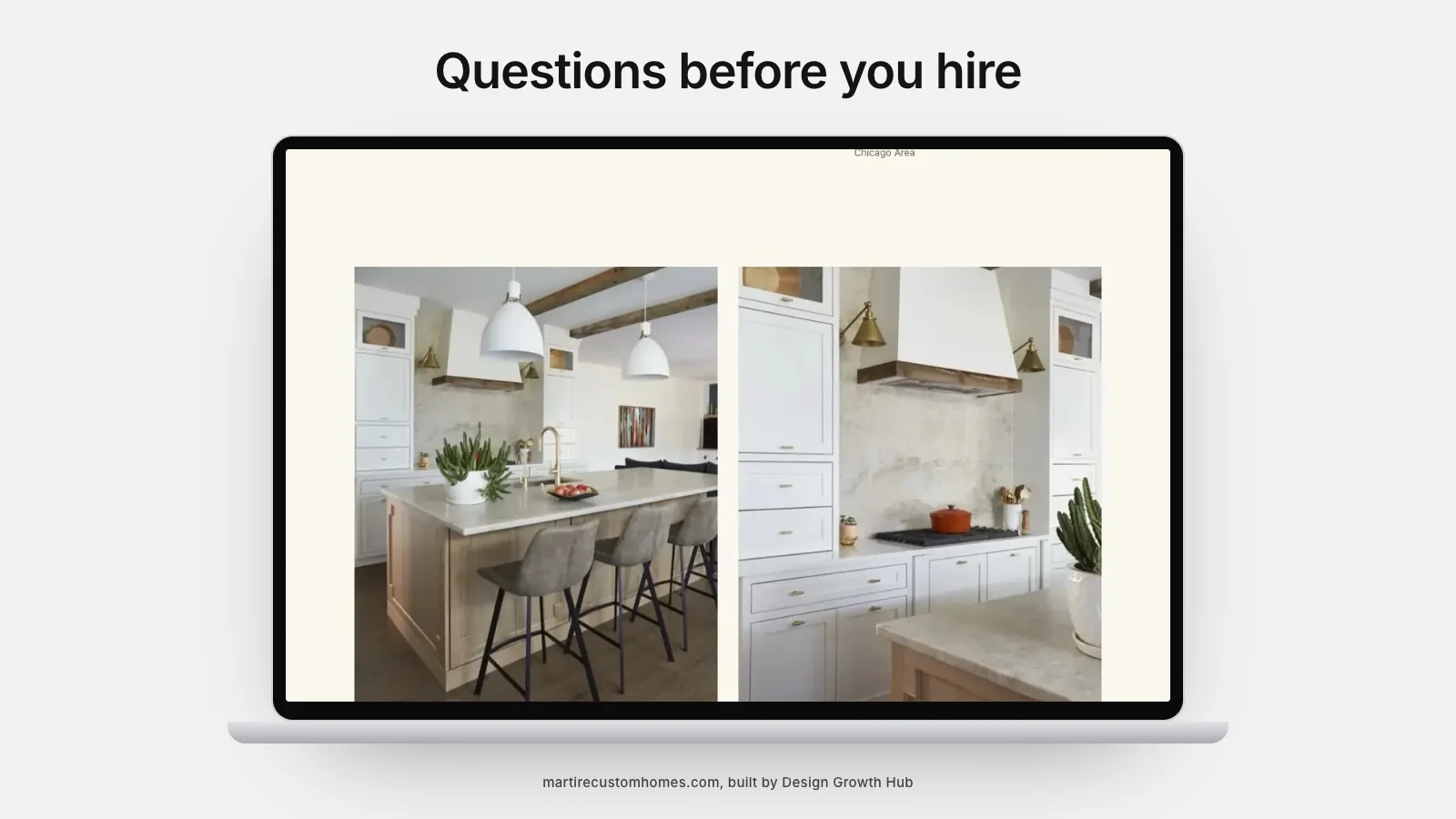
Many contractors build simple sites themselves. Others hire a web design company that understands contractors, search and mobile performance. If you hire, ask to see contractor sites they have built and test them on your phone. Our guide to hiring a contractor website design company lists the questions to ask. General contractors with broader work may find our article on general contractor website design helpful too.
The short version
Choose a platform you can manage, build pages for each service and area, show real projects and reviews, make the site fast on phones, make calling and requesting an estimate easy, connect it to your Google profile and track results. That is the best website setup for most contractors.
If you would like help putting this setup in place, our website creation service works with remodelers and builders. Or request a studio review and we will look at your current site.
See how Google + AI understand your studio
A beautiful portfolio matters. But if search engines and AI tools cannot connect your studio to the right searches, better-fit clients may never reach your website.
Request a Studio Review