General contractor marketing for residential projects should show homeowners and design partners that you can manage complex work reliably. That means clear positioning about the projects you run, a website that shows range and explains your process, a complete Google Business Profile with steady reviews, strong relationships with architects, designers and realtors, visible community presence and selective advertising. The goal is to be the contractor people trust with additions, whole-home renovations and custom builds.
Here is how to approach each part.
Market organization, not just craft
Homeowners hiring a general contractor are trusting you to coordinate many trades, manage schedules, handle permits and keep budgets under control. Beautiful finished photos matter, but so does evidence that you run jobs well. Your marketing should explain your process, communication and project management as clearly as it shows your craftsmanship.
Clear positioning
Decide which residential projects you want: additions, whole-home renovations, custom homes, historic restorations. State this clearly. "Residential general contractor for additions and whole-home renovations in Montgomery County" is far more useful than "general contracting services."
Your website
Your website should organize projects by type, explain your process, show your team and trade relationships, display licensing and reviews and make it easy to request an estimate. Our article on general contractor website design for residential work covers the details.
Google Business Profile and reviews
Complete your Google profile with accurate categories, services, service areas and project photos. Ask every satisfied client for a review. Reviews that mention communication, organization and schedule are especially valuable for general contractors.
Architects and designers
Many residential projects begin with an architect or interior designer, who then recommends contractors. Building these relationships can bring a steady stream of well-planned, larger projects. Do excellent work on shared projects, communicate clearly, respect the design intent and credit partners on your website. A page explaining how you collaborate helps partners recommend you.
Realtors and other partners
Realtors meet homeowners buying older homes that need work. Home inspectors, lenders and insurance adjusters may also refer projects. Make it easy for partners to share your name with a simple one-page summary of your services and service areas.
Community presence
Job site signs, branded vehicles, local sponsorships and involvement in community organizations build recognition. When neighbors need a contractor, your name is familiar.
Email to past clients
Past clients often need additional work and know others planning projects. A few emails a year sharing recent projects and seasonal tips keeps you in mind. Our guide to email marketing tips for contractors explains how to start.
Mobile-friendly presence
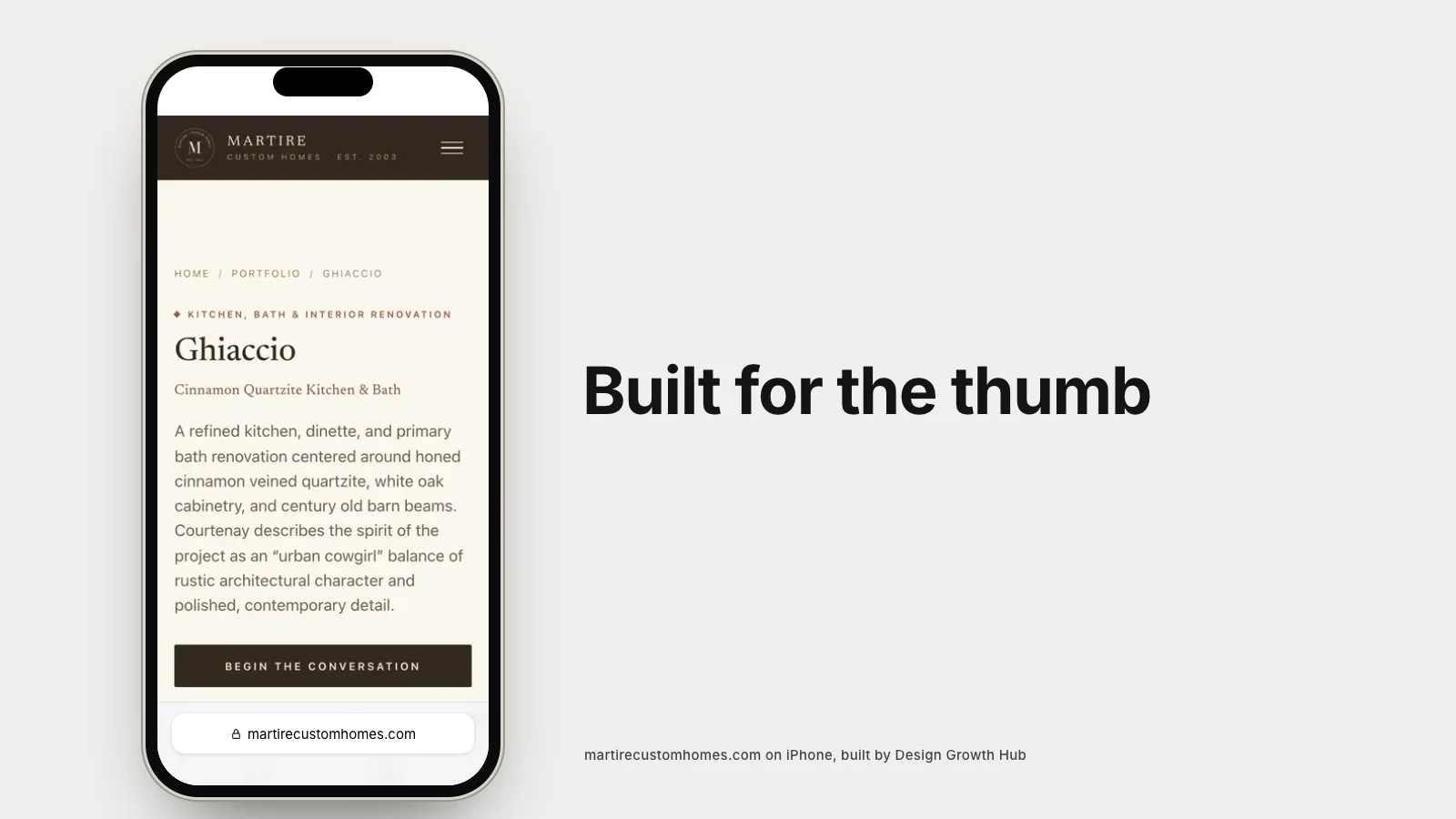
Homeowners and partners often check contractors on their phones. Make sure your website and profile work smoothly on mobile. Our article on mobile marketing tips for contractors offers practical steps.
Advertising
Google Ads and Meta ads can bring leads for specific services or areas. They work best with strong websites and reviews. Use focused landing pages, careful targeting and tracking that connects ads to signed jobs.
Content that shows expertise
Articles about planning an addition, what to expect during a whole-home renovation or how permits work show expertise and attract homeowners early in their research. Link them to your services and projects.
Planning and measuring
A simple marketing plan helps you stay consistent. Our article on a general contractor marketing plan you can follow offers a structure. Track leads by source and outcome so you know which channels bring the projects you want. Our guide to digital marketing for remodeling contractors explains the online steps, and growing a general contractor business with better leads covers longer-term growth.
Showing your project management
Homeowners considering a general contractor for a large project want evidence that the job will be organized. Share examples of how you communicate: a sample weekly update, a description of your scheduling process, photos of a tidy, well-protected job site. Explain how you handle permit applications, inspections and changes. These details reassure homeowners and design partners alike, because they show what working with you will actually be like.
Some contractors also share a short video walking through an active job site, explaining how they keep it safe and clean. It is a simple way to make reliability visible.
Learning from lost bids
Not every proposal will be accepted. When a homeowner chooses another contractor, ask politely if they would share why. Was it price, timing, communication or something else? Patterns in these answers show where your marketing or sales process needs work. Sometimes the fix is as simple as responding faster or explaining your proposal more clearly in person.
Building a reputation with inspectors and trades
Your reputation among building inspectors, suppliers and subcontractors also matters. Trades talk, and suppliers are often asked for recommendations. Paying on time, running organized sites and treating people well builds a reputation that quietly brings referrals and helps you attract the best trades when demand is high.
Protecting your capacity
General contractors can only run so many projects well. Marketing should help you choose better projects, not just more of them. When your calendar is full, shift effort from advertising to relationships and reputation.
If you would like help building the website and search presence that supports your marketing, our Google search services work with general contractors. Or request a studio review to start.
See how Google + AI understand your studio
A beautiful portfolio matters. But if search engines and AI tools cannot connect your studio to the right searches, better-fit clients may never reach your website.
Request a Studio Review