A design build website needs to explain the model clearly: one team responsible for design and construction, with a single point of contact, coordinated budgets and fewer handoffs. It should show design work alongside finished construction in every project, walk clients through the process from first meeting to completion, introduce the designers and builders who make up the team, present reviews and recognition and make it easy to start a conversation. Clients considering design build want reassurance that the integrated approach will save them stress, time and surprises.
Here is what to include and how to present it.
Explain the model
Many homeowners do not fully understand design build. Explain it simply on your home page and in more detail on its own page. Compare it with the traditional approach of hiring a designer or architect and then bidding the project to builders. Describe the benefits honestly: coordinated design and budget, a single contract and point of contact, fewer surprises and often a smoother schedule. Acknowledge that it suits some clients more than others.
Show design and construction together
The strongest design build portfolios show the full journey: initial conditions, design drawings or renderings, selections, construction progress and the finished result. This demonstrates the integration that sets you apart. Each project page might include:
- Before photos.
- Design sketches, plans or 3D views.
- Key selections such as cabinetry or tile.
- Progress photos.
- Professional photos of the finished space.
- A short story of the client's goals and how the team delivered.
Walk through the process
Design build clients want to know what happens and when. Describe your stages, such as discovery, design and budgeting, selections, preconstruction, construction and completion. Explain how budgets are developed alongside design, how decisions are made and how clients stay informed. A clear process page often does more to win projects than any gallery.
Introduce the team
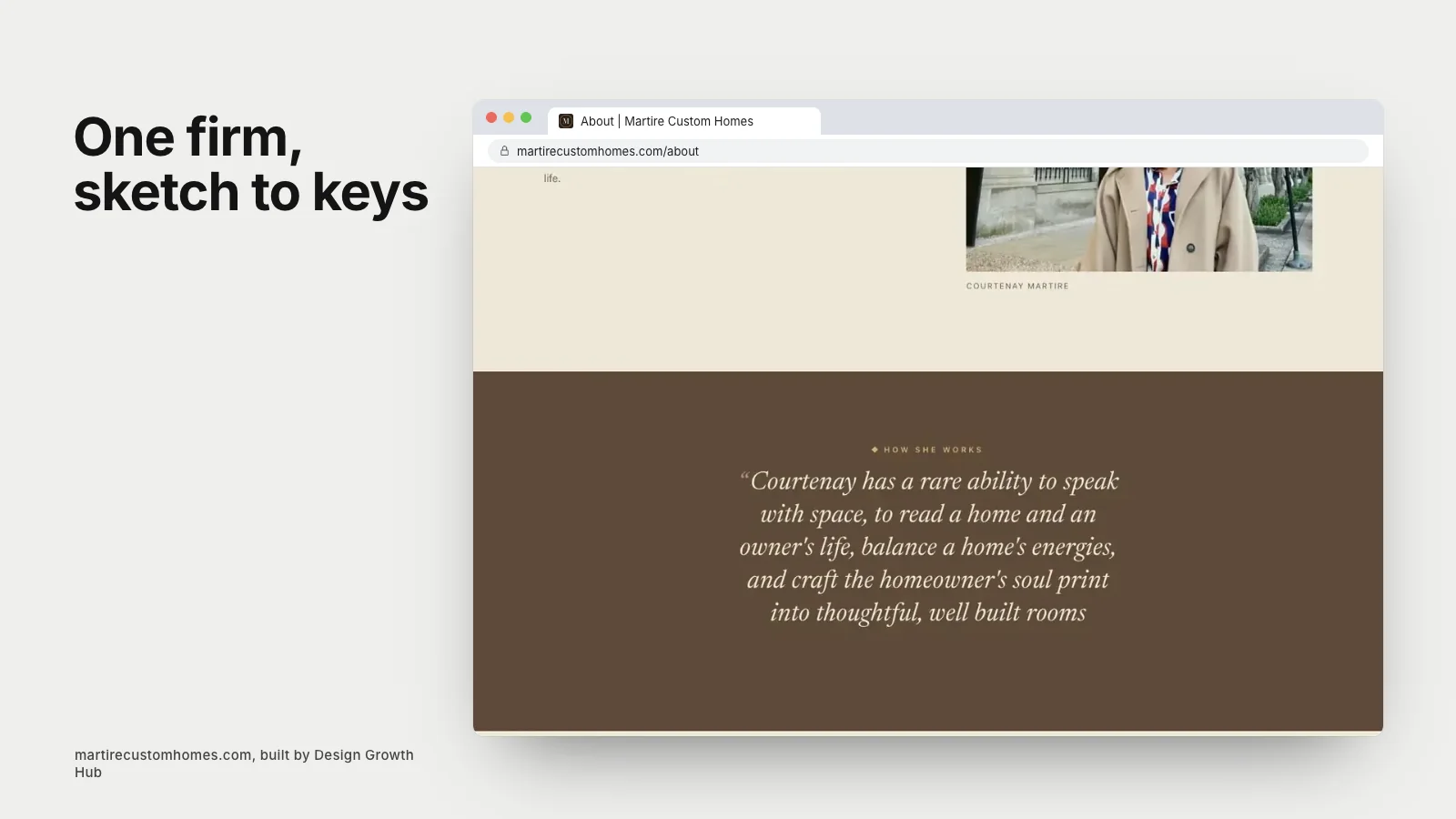
Show the designers, project managers and builders who will work together on a project. Explain how they collaborate. Clients choosing design build are trusting a team, not just a company name.
Services and project types
Give each core service its own page: kitchens, baths, additions, whole-home renovations, custom homes. Each page should explain the design build approach for that type of project and show examples.
Budget transparency
One of design build's strengths is aligning design with budget. Explain how you discuss budgets early and how design choices are made with cost in mind. You do not need to publish prices, but describing typical investment levels or what drives cost helps clients self-select.
Proof and recognition
Reviews, awards, publications and association memberships build confidence. Present them on service and project pages as well as on an about page. Our article on building trust before a client contacts you explains which proof points matter most.
Design quality
Design build firms compete with independent designers and architects. Showing strong design work, with thoughtful layouts and details, reassures clients that integration does not mean compromise. Our articles on interior designer website design and architect website design show how design professionals present their work, which offers useful ideas.
Portfolio structure
Organize projects by type and give each its own page. Our guide to building a portfolio website explains portfolio structure in a design context that translates well to design build.
Search and AI visibility
Clients search for "design build firm [area]" and "design build remodeling near me." Clear service and area pages, a complete Google Business Profile and consistent business details help you appear. AI tools increasingly answer questions about design build firms by summarizing websites and reviews. Our article on how design-build firms can win Google and AI search explains this in more depth.
Building with AI tools
Some firms consider AI website builders to get started quickly. They can help with drafts, but design build firms usually need custom content that explains their model and shows integrated projects. Our article on building a website with AI weighs the trade-offs.
Clear next steps
Explain what happens after someone inquires: a call, a site visit, an initial design meeting. Keep the inquiry form short and include a phone number.
Answer the questions clients ask
Clients considering design build often ask the same things. Will I still have choices, or will the builder push their own preferences? How are design fees handled if we do not proceed with construction? How do you make sure the design stays within budget? Can I bring my own designer or architect? Answering these honestly on your process page or in a short questions section removes hesitation and attracts clients who understand and value the model.
Show what happens when plans change
Every project has surprises: conditions behind walls, product delays, changes of mind. One of design build's advantages is that one team handles these together. A short story on a project page describing how the team adjusted the design and budget when something unexpected happened shows the model working in real life. It is more convincing than any general claim.
Common mistakes
- Failing to explain what design build means.
- Showing only finished photos, hiding the design work.
- Burying the process.
- Generic service descriptions.
- No clear next step.
If you would like a website that explains your design build approach clearly, our website creation service works with design build firms. Or request a studio review to start.
Strengthen your Google + AI visibility
The studios that get found are not always the best. They are the clearest. Let us make yours easier to understand and recommend.
Request a Studio Review