On this page6 sections
A design-build firm carries an unusual burden online. One client is searching for someone to gut and rebuild a 1990s kitchen. Another wants a custom lake home designed and constructed from raw land. A third just wants their finished house furnished and styled. All three could be your work, yet they search in completely different language, and most firm websites flatten that range into a single vague homepage. The result is a studio that does everything well and ranks for almost none of it. Sharpening website conversion for interior designers is what turns that breadth from a liability into an advantage.
The firms winning these searches are not louder. They are clearer. They have taught Google and the AI assistants exactly which services they own, where they work, and what kind of project they belong to, so the right inquiry lands instead of scattering.
Why design-build confuses search engines more than single-service studios
A pure interior design studio has a relatively tidy footprint. A design-build firm spans land acquisition advice, architectural planning, structural construction, and finished interiors, sometimes furnishing and styling on top. To a search engine, that can read as four loosely related businesses sharing one address. When the signals are mixed, Google hedges, and AI tools struggle to summarize what you actually do.
This is why a beautifully photographed site can still underperform. Stunning project galleries do not tell a machine whether you build new construction in the mountains or remodel coastal kitchens. That gap is the same reason gorgeous design websites still miss high-value clients. The work is undeniable. The structure underneath it is not.
Map your breadth before you try to rank for it
Design-build wins when each service has its own home. A client looking for a whole-home remodel should never land on the same page as one planning ground-up new construction. They have different fears, budgets, and timelines, and a single page cannot speak to both. This is the core argument for why designers need real service pages, not just a portfolio.
Start by listing every distinct path a client can take through your firm, then give each one a dedicated, deeply written page:
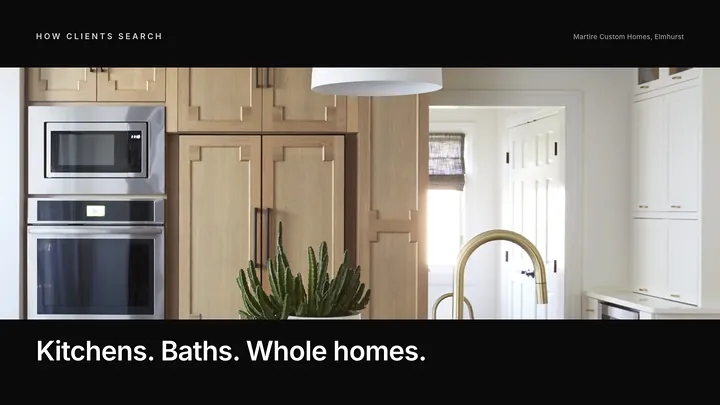
- Kitchen and bath renovation, framed as remodel-led design-build
- Whole-home remodels and structural reconfiguration
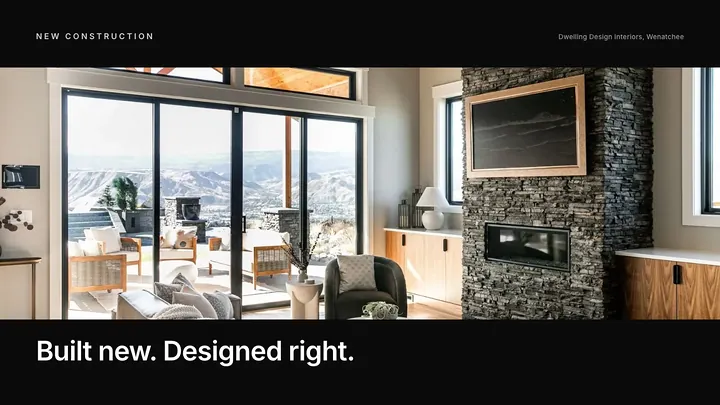
- New construction and custom home builds
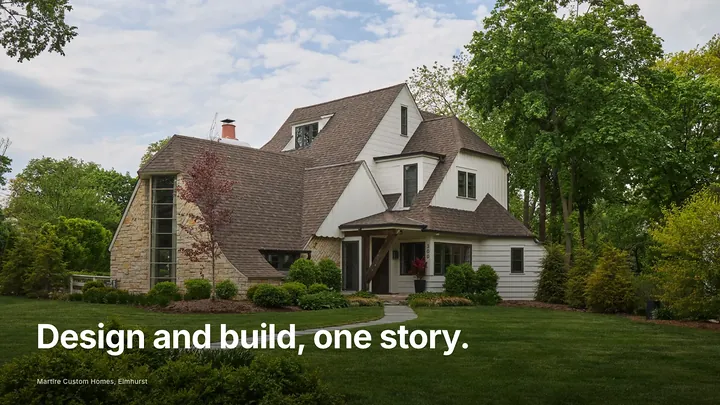
- Luxury residential design across lake, coastal, and mountain properties
- Furnishing and styling for completed or move-ready homes
This kind of mapping is also how high-value clients search by project type, not studio name. They rarely type your firm's name first. They type what they are trying to build.
Teach Google and AI what kind of firm you are
Once your services are separated, the next job is helping machines connect them back into one coherent entity: a single trusted firm that happens to do several things under one roof. That connective layer is where most firms fall short. They have pages, but nothing tells the system how those pages relate.
This is exactly what Google needs to understand before it recommends your studio, and it mirrors what AI tools need to know before recommending an interior designer. Both want clarity on who you are, where you operate, and which projects you have actually delivered.
A design-build firm that reads as one clear entity with five well-defined services will almost always outrank a firm with the same work but no structure behind it.
Position separately for renovation and new construction
The two largest revenue paths for most design-build firms, renovation and new construction, attract very different clients and demand very different messaging. Trying to win both with one generic pitch weakens both. Renovation buyers worry about living through the work and trusting your judgment on an existing structure. New construction buyers worry about vision, land, and the long road of a custom build.
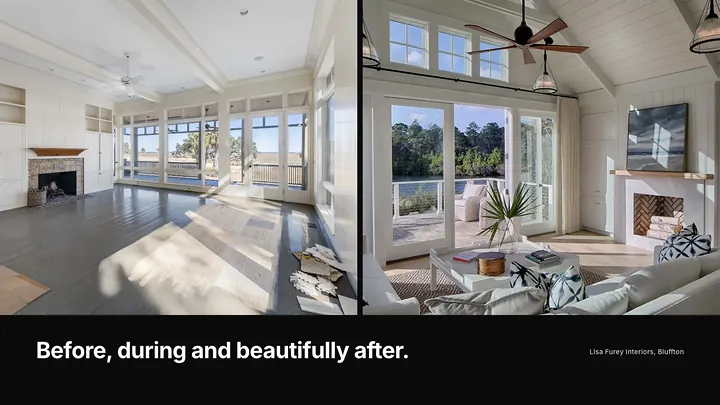
Treat these as separate positioning efforts. Lean into positioning your studio for high-value renovation clients on the remodel side, and positioning for new construction interior design searches on the build side. When each has its own clear voice and its own page, Google can route a kitchen-remodel search and a custom-home search to the correct part of your firm instead of the same blurred homepage.
Build local authority across every market you serve
Design-build is geographic by nature. You build and remodel in specific markets, and clients search with place in mind: a designer near them, a builder who knows their lake community, a firm familiar with mountain-home permitting. Showing up here depends on disciplined local signals, not follower counts. It is one more case where local authority matters more than follower count.
That means a complete, accurate Google Business Profile and steady, specific reviews that mention real project types. If you serve more than one region, you also need location pages that read like a firm that genuinely works there, which is the difference between useful location pages and generic filler. From complete structuring to visibility, the goal is for every market you serve to recognize you as a real, present option.
Turn your range into a foundation, not a liability
The breadth that confuses search engines is the same breadth that makes a design-build firm valuable to clients. A homeowner who can plan, build, and furnish through one trusted team is a powerful offer. The work is in making that legible to the systems now steering inquiries.
Done in the right order, this becomes a durable visibility foundation your studio can build on. Separated services, a clear firm entity, distinct positioning for renovation and construction, and real local authority compound over time, so the right new-construction lead in the mountains and the right kitchen remodel in the suburbs both find the same firm. If you want to see where your current setup stands, you can request a Google + AI visibility review built for design-build firms.
Next step
Make your studio easier to find
When the right clients search, clarity is what brings them to you. Let us look at the structure behind how you are found.
Request a Studio Review
Website redesign, Google SEO, Google Business Profile and AI search visibility, trusted by more than 100 interior design studios, architects and contractors across the United States.
 ChatGPT
 Gemini
 Perplexity
 Claude
 Copilot