Interior design branding that holds up online combines clear positioning, a recognizable name and logo, a considered typography and color system, a consistent photography style and a distinctive voice, all applied the same way across your website, social media, printed materials and Google profile. A strong brand helps clients recognize and remember you, signals the level of work you do and makes it easier for search engines and AI tools to describe your studio accurately.
Here is how each element works and how to keep them consistent as your studio grows.
Branding starts with positioning
Before designing anything, be clear about who you serve, what you do for them and what makes your approach different. A studio designing calm, practical family homes in the suburbs needs a different brand from one creating dramatic, collected interiors for city apartments. Your brand should express that position visually and verbally.
Write a short positioning statement and keep it nearby throughout the branding process.
Your name
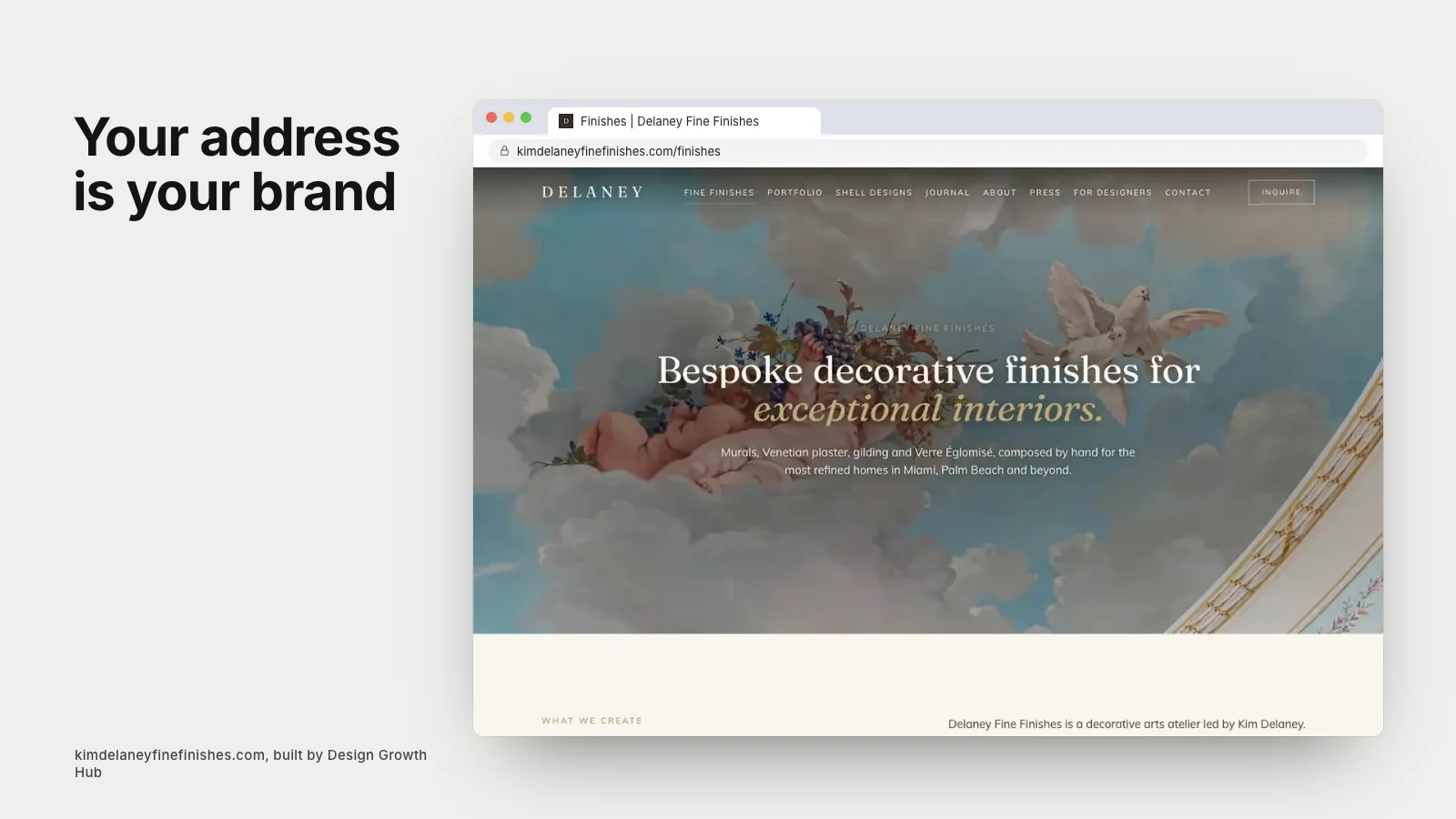
Many designers use their own name, which builds personal recognition. Others choose a studio name, which can make it easier to grow a team. Either works. What matters is that the name is easy to say, spell and remember, and that the matching domain and social handles are available. Our article on choosing a domain for a design website covers the practical side.
Logo and identity
A logo should be simple enough to read at small sizes, such as on a phone or as a social profile image, and refined enough to match your work. Many design studios use a wordmark, a monogram or a combination. Avoid overly literal icons such as chairs or houses, which can feel generic.
Martire Custom Homes is a good example of identity work done well: a new monogram and logo suite that led into a complete website on a new domain. You can see it in the Martire Custom Homes case study.
Typography
Typography often carries a brand more than the logo itself. A refined serif suggests tradition and editorial elegance; a crisp sans-serif suggests modernity and clarity. Choose one or two families that suit your work and use them consistently on your website, proposals and social graphics. Our guide to choosing fonts for an interior design website goes deeper.
Color
A restrained palette usually works best for design studios, letting project photography lead. Choose a background, a text color, one accent and a supporting neutral or two. Apply them consistently. Our guide to website color palettes offers practical steps.
Photography style
Your project photography is the most visible part of your brand. Consistent lighting, color treatment and styling make your portfolio feel cohesive. Work with photographers who understand your aesthetic and brief them consistently. Portraits of you and your team should match that style too.
Voice
How you write is part of your brand. Warm and personal? Calm and authoritative? Lightly witty? Your voice should appear consistently in your website copy, captions, emails and proposals. Write the way you speak to clients, and avoid generic design phrases that could belong to anyone.
Applying the brand to your website
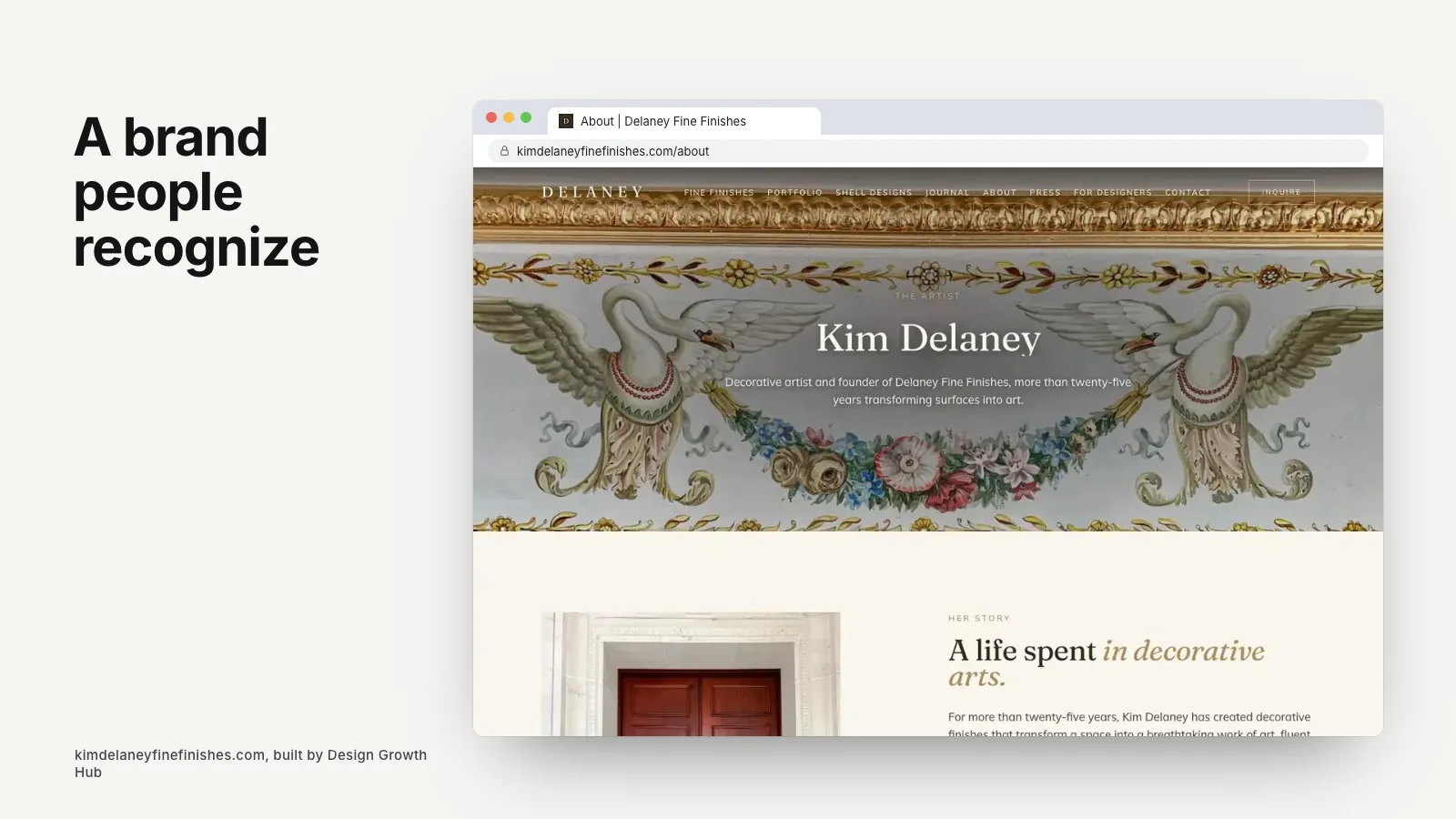
Your website is where your brand is experienced most fully. Typography, color, photography, voice and layout should all work together. A well-branded site feels coherent from the first screen to the contact form. It should also be clear and fast, because a beautiful brand that is hard to navigate undermines itself.
Applying the brand to social media
Instagram and Pinterest should feel like extensions of your website. Use the same photography style, a consistent tone in captions and, if you use graphics, your brand fonts and colors. Our guide to Instagram marketing that leads somewhere covers the details.
Applying the brand to print and presentation
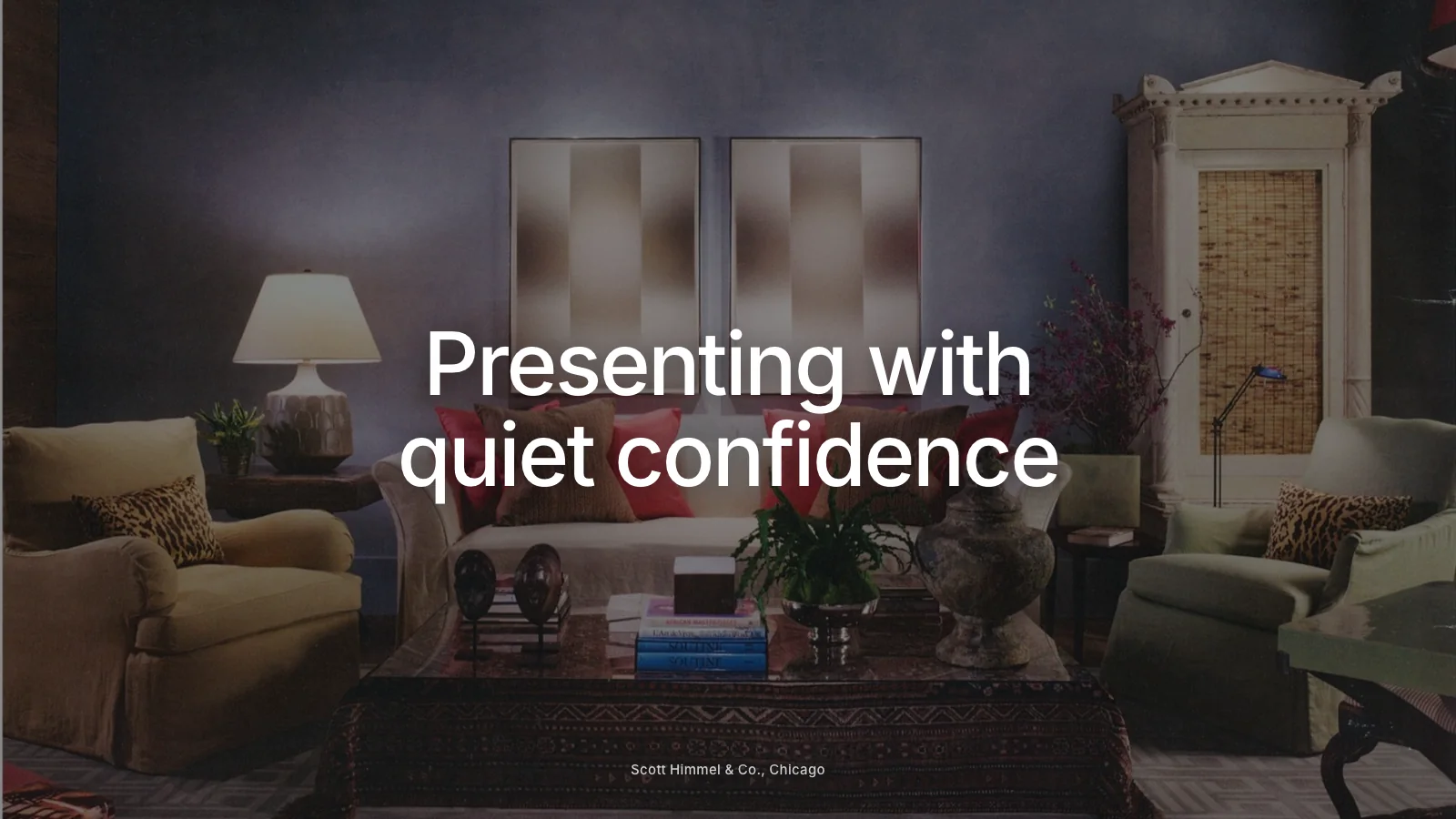
Proposals, presentations, invoices and packaging are all brand touchpoints. Clients notice when a beautiful website is followed by a plain document. Our article on client presentation tips that win projects explains how presentation reinforces your brand at the most important moment.
Brand and client experience
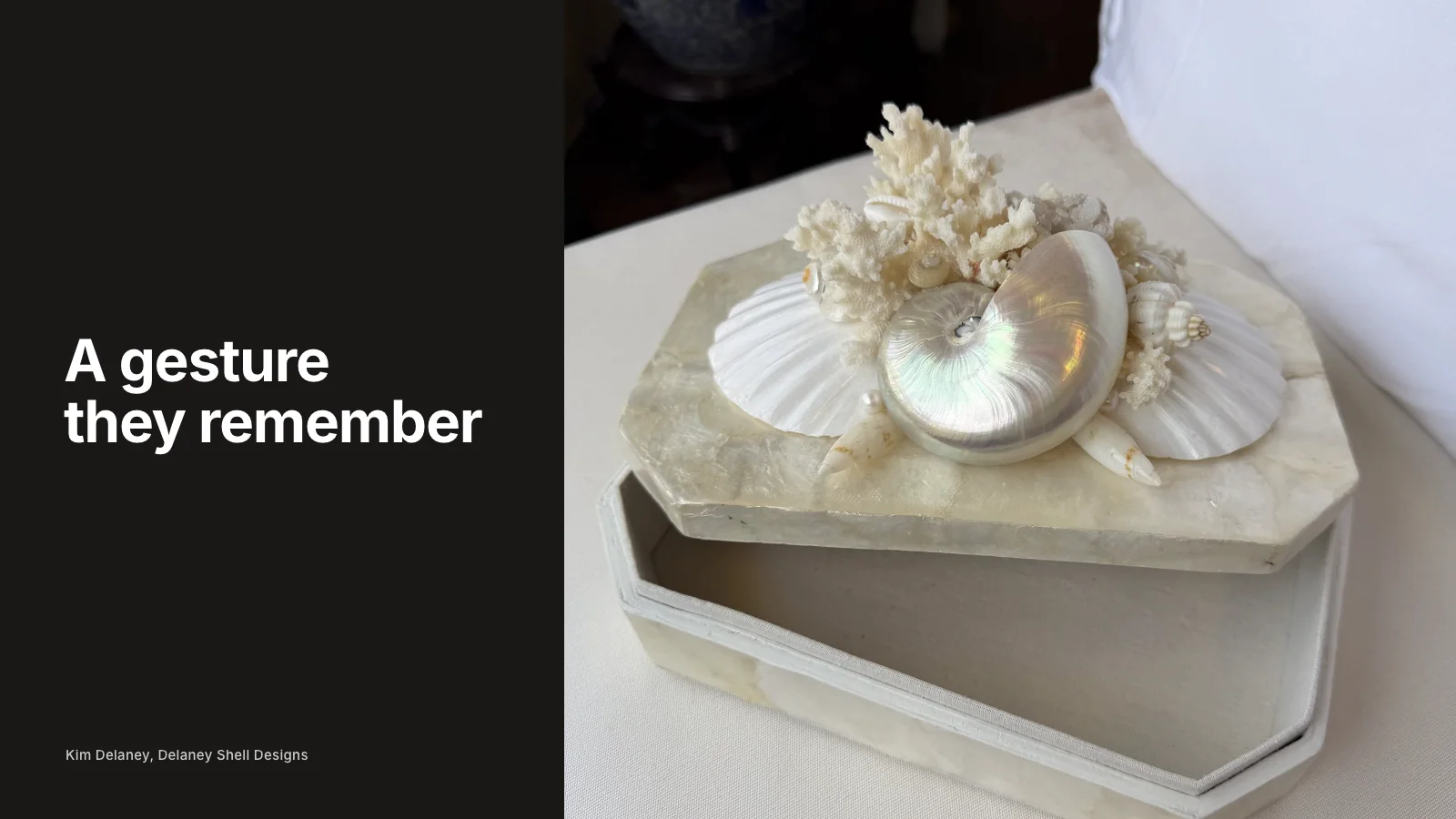
Branding extends to how clients feel working with you: how you communicate, how organized your process is and the small gestures along the way. Thoughtful touches, such as a well-designed welcome packet or a considered gift at the end of a project, reinforce the brand. Our article on client gifts that earn referrals and reviews offers ideas, and a client intake form shows how even administrative steps can feel on-brand.
Brand and Google
Your Google Business Profile is a brand touchpoint many people see first. Use your logo, strong photography and a description written in your voice. Keep your name and details consistent with your website.
Brand and AI visibility
AI tools describe businesses based on what they find online. A clear, consistent brand with a well-defined position and accurate details across your website, profiles and press makes it easier for them to describe you correctly.
When to rebrand
Rebranding makes sense when your work, clients or ambitions have outgrown your current identity, or when your brand feels inconsistent across channels. Plan a rebrand carefully, especially if it includes a name or domain change, so you keep the recognition and visibility you have built.
Keeping the brand consistent
Document your brand in a simple set of guidelines covering logo use, fonts, colors, photography and voice. Share it with anyone who creates materials for you. Review it once a year. If you sell products, the brand should extend into your shop too, as discussed in interior design ecommerce websites. For promotion across channels, see promoting your interior design business online and interior design marketing that brings better projects.
If you are building or refreshing your brand alongside a new website, our website creation service brings identity and site together. Or request a studio review and we will tell you where your brand feels inconsistent today.
Fix the structure behind your website
Beauty gets attention. Structure gets discovery. We help you build both, so the right clients arrive ready.
Request a Studio Review