To get more architecture clients from your website, make it immediately clear what kind of work you do and for whom, present projects as stories that show your thinking, explain your process and how fees work, introduce the people who lead projects, show proof such as testimonials and publications and give visitors a calm, easy way to start a conversation. Many architecture websites impress visitors with photography but never tell them what to do next, and clients who are unsure rarely reach out.
Here is a practical checklist for turning more website visitors into inquiries.
Clarify the first screen
Within a few seconds, visitors should know what the practice designs and where. A sentence near the top, such as "Residential architecture for new homes and renovations in Northern California," does this better than an abstract statement. Pair it with a strong image of the work you want more of.
Tell project stories
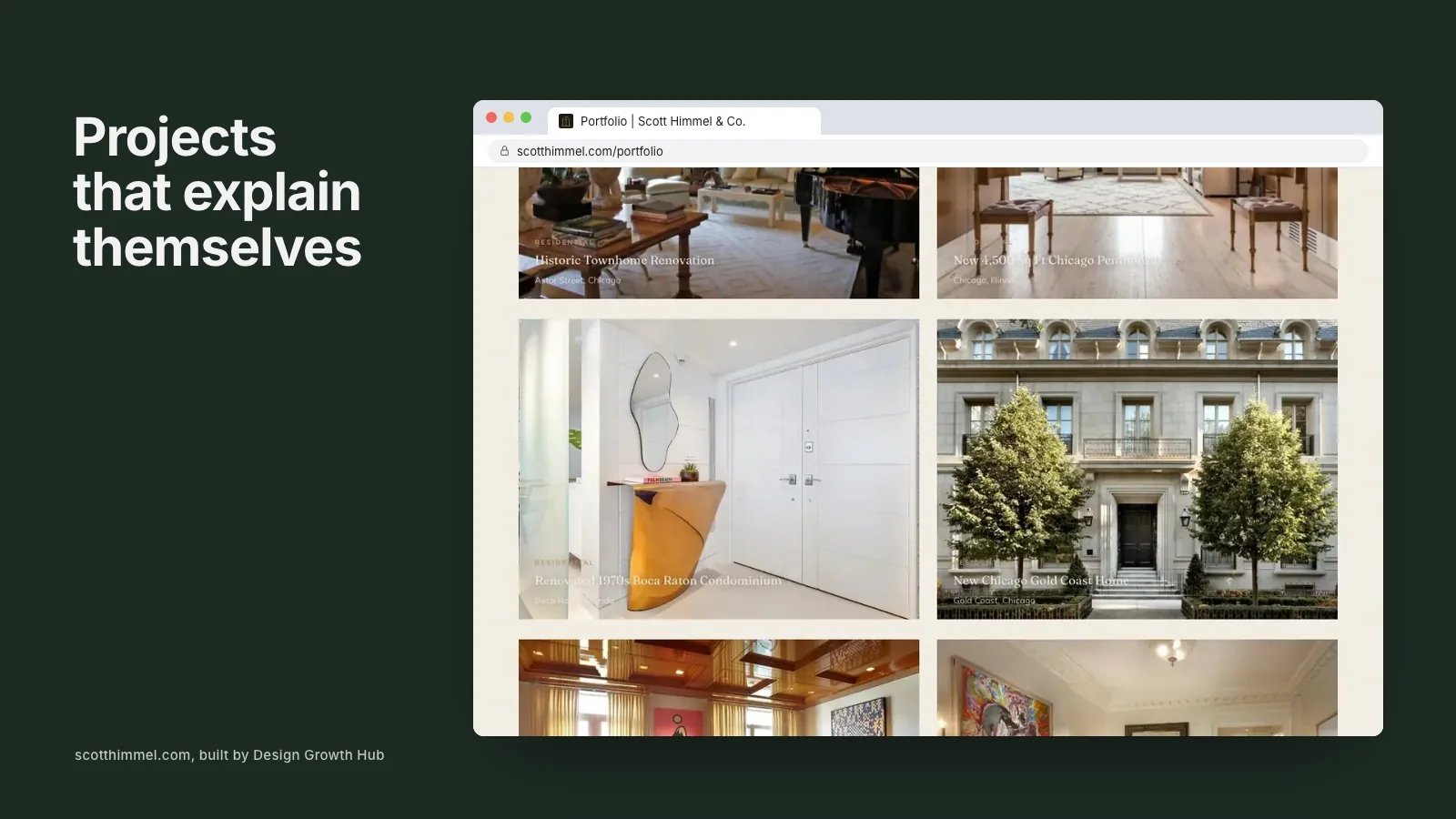
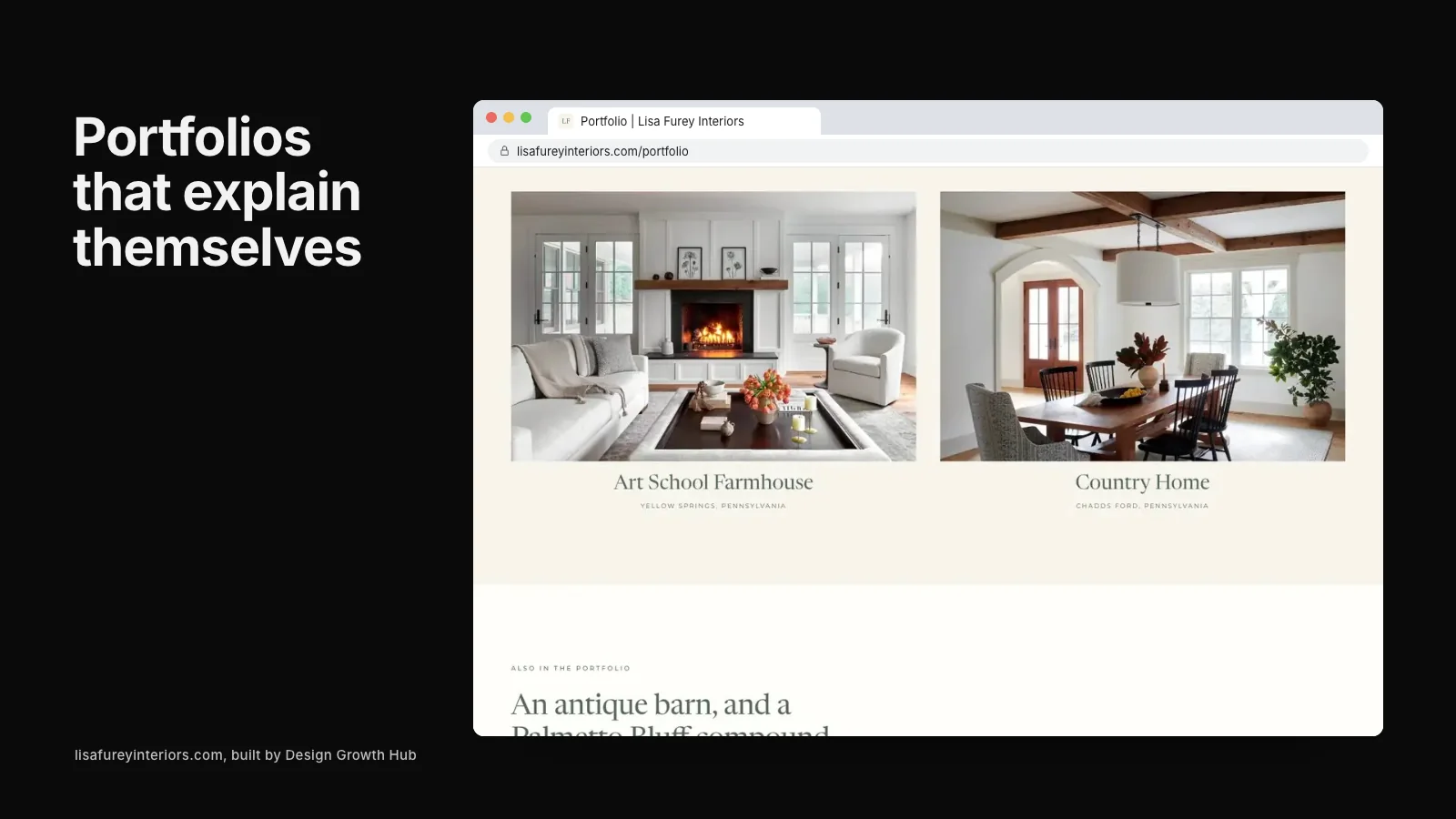
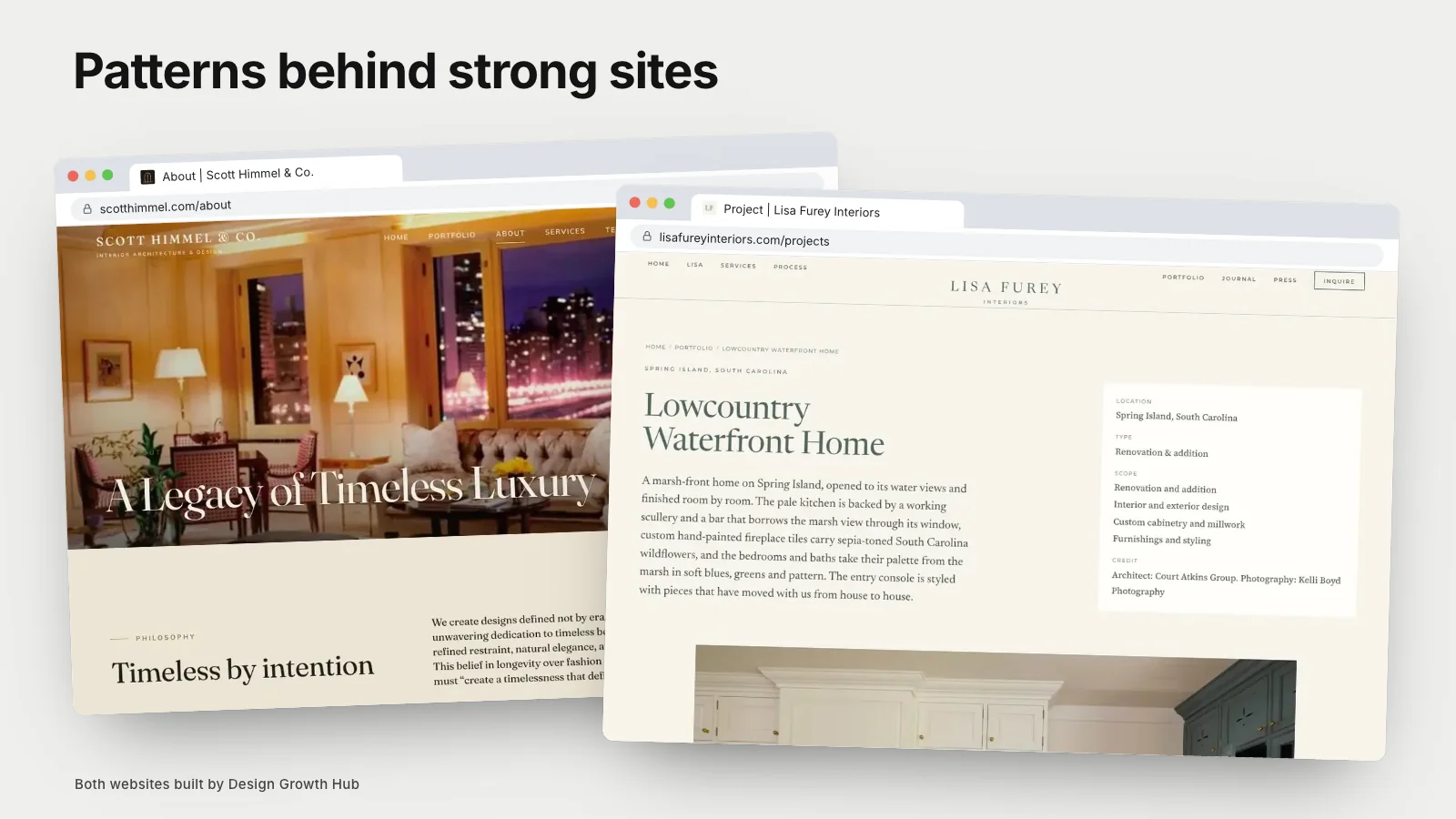
Visitors want to see work like theirs and understand how you approached it. Each project page should include the brief, site, design decisions, materials and outcome, with photography and drawings. Titles that name the project type and location help visitors find relevant work. Our article on architecture portfolio examples that win clients shows effective approaches.
Explain the process
Many prospective clients hesitate because they do not know how working with an architect unfolds. A clear process page describing each phase, what clients do at each stage and typical timelines removes that uncertainty.
Address fees
Fees are a common reason people hesitate to inquire. Explain how you structure fees and what affects them. Some firms mention typical construction budgets for projects they take on, which helps visitors decide whether to reach out.
Introduce the people
Clients hire people. Show principals and project leaders with real photos and short bios. A personal note about why you love the work makes the practice approachable.
Show proof
Testimonials from past clients, publications, awards and collaborations reassure visitors. Place a testimonial on key project pages and near the contact form, not only on a separate page.
Make the next step obvious
End every project page and the process page with an invitation, such as "Planning a new home? Tell us about your site." Keep a contact link visible in the navigation on every page.
Keep the inquiry form short
Ask for name, email, project location, project type, approximate timeline and an optional budget range. Explain what happens next, such as an introductory call. Long questionnaires belong after the first conversation.
Reply quickly
The website's job ends when someone submits the form. Reply within a business day if possible, even briefly. Prompt, personal replies signal how you will communicate during a project.
Make it fast and mobile-friendly
Many visitors arrive on phones after a referral. Large images must load quickly and pages must be easy to navigate. Test the site on a phone regularly.
Help search and AI tools
Clear headings, descriptive project titles, project facts and consistent business details help search engines and AI tools understand and recommend your practice. These same details help human visitors.
Use the about page to build connection
The about page is often one of the most visited pages on an architecture website. Use it to explain why the practice exists, what it values and who works there, with real photos and a personal voice. Link from the about page to selected projects and the contact page so interested visitors have a clear next step.
Show work in progress
Projects under construction or in design, shared with clients' permission, show that the practice is active and give visitors insight into process. A short series following a house from sketch to completion can be especially engaging and gives returning visitors something new to see.
Answer common questions
Prospective clients often wonder how long design takes, how architects work with builders, whether they need an architect for their project and how fees compare. A short questions section on the process page answers these honestly and reduces hesitation.
Offer something useful
Some firms offer a short guide to planning a new home or renovation, available on the website. Useful resources show expertise and give visitors a reason to stay in touch, especially if they are early in their planning.
Keep the site current
A portfolio that ends years ago makes visitors wonder whether the practice is active. Add new projects, update the team and refresh recognition regularly so the site always reflects the firm today.
Learn from your data
Look at which pages visitors view before inquiring and where they leave. Improve the pages that attract attention but rarely lead to contact.
Examples and structure
Our articles on what great architecture firm websites have in common, architecture firm website examples, architect website design that wins residential clients and how to build an architecture portfolio website explain the foundations. Practices combining architecture and interiors can see one website for an architecture and interior design practice.
If you would like help turning more visitors into inquiries, our website redesign service works with architects. Or request a studio review and we will point out where your website loses potential clients.
Small, steady improvements made every month add up to a practice that is easier to find, understand and trust.
Build your visibility foundation
Design Growth Hub helps interior designers build the visibility foundation behind high-value discovery.
Request a Studio Review