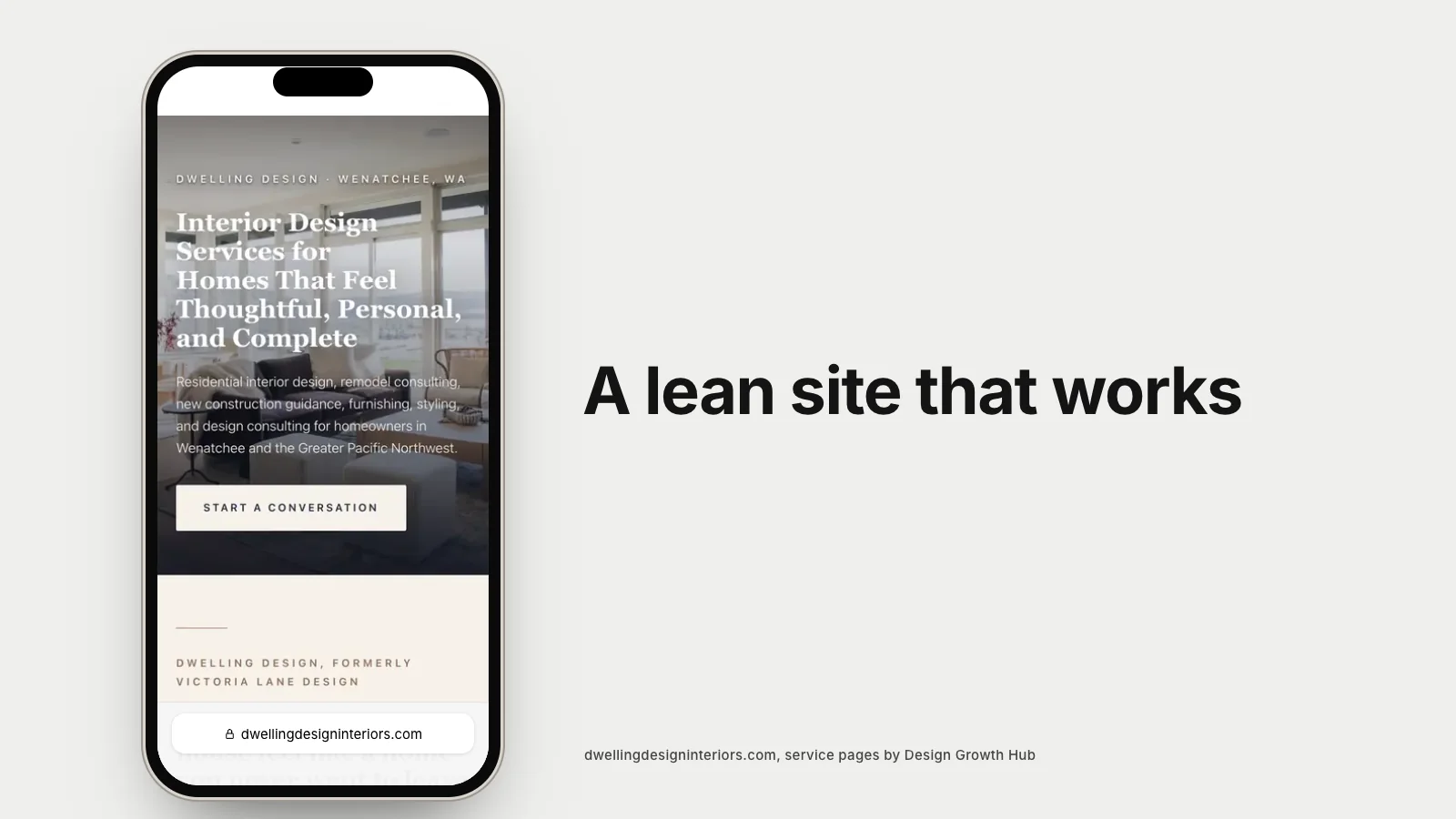
The right website for a freelance interior designer is lean and personal: a clear home page, a few strong projects with short stories, a warm about page with a real portrait, simple service descriptions, an easy contact form and the search basics that help local clients find you. It should be quick to update, because as a freelancer your time is your most limited resource.
Here is a practical plan, with notes on what to prioritize and what can wait.
What makes freelance different
Freelance designers often work on a mix of projects: some full-service, some consulting, some e-design, some subcontracted from other studios. Clients hire you as a person rather than a company, so personality and trust matter even more. And you are probably handling the website alongside everything else.
That means your site should be simple to maintain, honest about what you offer and focused on helping the right clients contact you.
A lean page plan
You can start with five or six pages:
- Home: who you are, what you do and where, with a few featured projects.
- Work: a page for each of your best projects.
- Services: a single page describing each service clearly.
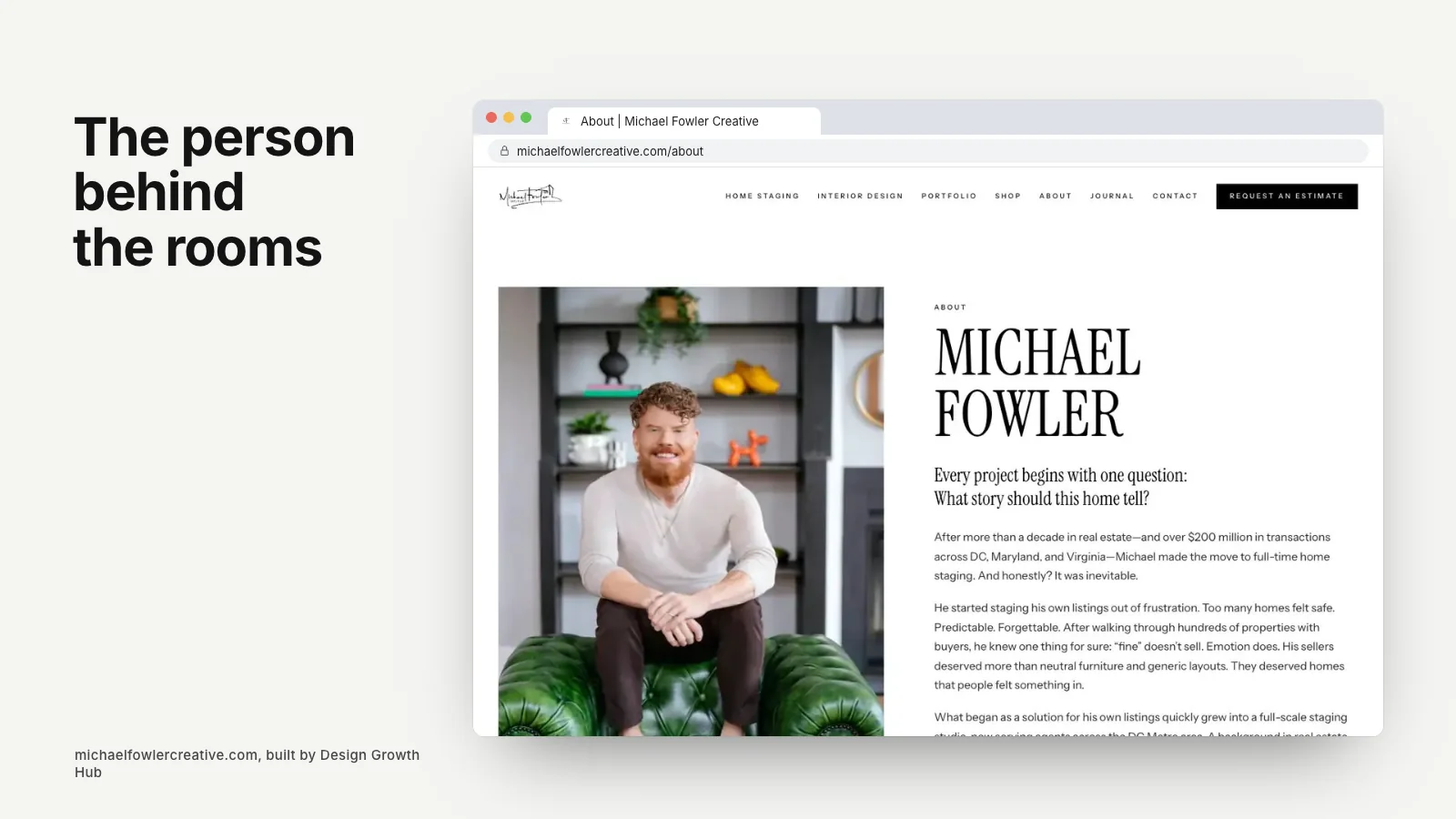
- About: your story, approach and a real portrait.
- Contact: a short form and email address.
Add a journal, press page or location pages later if they become useful.
Choose projects carefully
You may have fewer projects than an established studio, and that is fine. Choose three to six that show your strengths and the work you want more of. Give each its own page with a short story. If you have worked on projects at another firm, include them only with permission and clear credit for your role.
If you lack professional photography, consider investing in a shoot of your strongest project, or partner with a photographer who wants portfolio work. Our guide to building an interior design portfolio website has more on choosing and presenting projects.
Write a personal about page
For freelancers, the about page carries real weight. Clients want to know who will walk through their door. Write in the first person, explain how you work and include a natural portrait. Our guide to writing the about me section of a design portfolio offers prompts and an example.
Be clear about services and formats
Freelancers often offer flexible formats. Make them easy to understand:
- Full-service design: from concept to installation.
- Consultations: a set number of hours for advice and direction.
- E-design: remote design packages with sourcing lists.
- Styling and furnishing: for clients who have finished building or renovating.
- Trade collaborations: working with other studios, builders or architects.
Give each a short description, who it suits and how to start. If you prefer not to share prices, explain what affects cost.
Make inquiring simple
A short form with name, email, location, what the client is planning and an optional budget range is enough. Tell people when you will reply. Many freelancers also share a direct email address, which can feel more personal.
Pick a platform you can manage
A builder such as Squarespace or Showit suits most freelancers, because you can update it yourself without help. Our guides to choosing a website builder as an interior designer and website builders versus hiring a designer compare the options. Use your own domain and a matching email address so you look established from day one.
The search basics freelancers should not skip
Freelancers often rely on referrals and Instagram, but local search can bring steady inquiries too. Cover the basics:
- Mention your location and the areas you serve on your home and about pages.
- Write descriptive page titles, such as "Interior Designer in Asheville | Your Name".
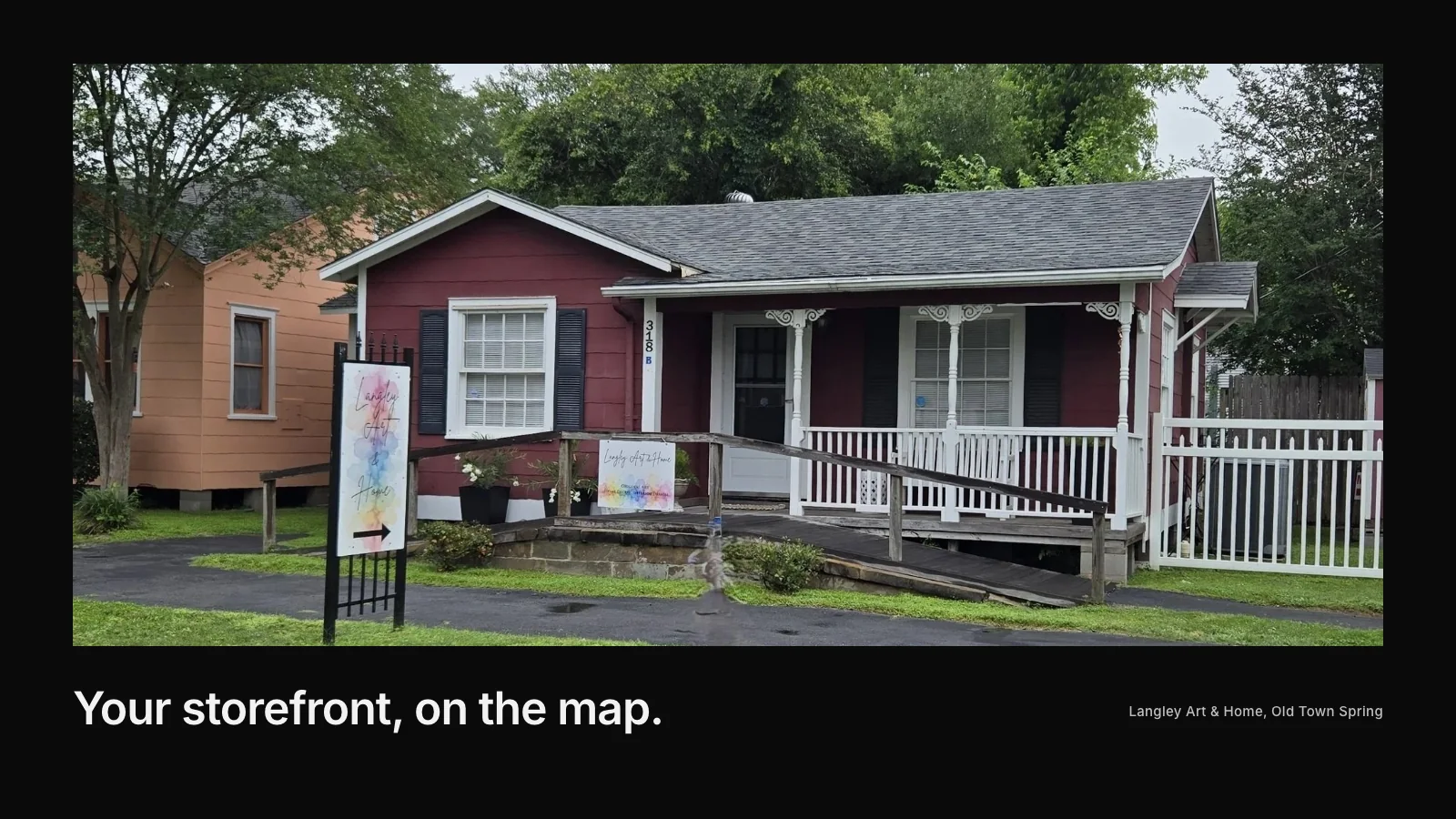
- Create and complete a Google Business Profile.
- Ask happy clients for Google reviews.
- Keep your name, contact details and service area consistent everywhere.
Our guide to Google Business Profile for interior designers walks through setup, including options if you work from home.
Prepare for AI recommendations
Some clients now ask ChatGPT or Gemini to suggest designers near them. AI tools rely on clear written information about who you are, what you do and where. A simple, well-written site with consistent details helps. Our article on making an interior design website AI-readable explains the essentials.
Keep it easy to update
Set a simple routine so the site never falls behind. When a project is photographed, add it within a few weeks, even with a short story to start. Once a season, reread your services page and adjust anything that no longer reflects how you work. Once a year, update your portrait and about page. These small habits take an hour or two at a time and keep the site feeling current, which matters to clients who are deciding whether you are active and available.
What can wait
- A shop or product catalog.
- A blog, unless you enjoy writing.
- Complex animations and video.
- Location pages for every nearby town.
- Advertising, until your site and profile are solid, as explained in what to fix before running ads.
Learning from studio sites
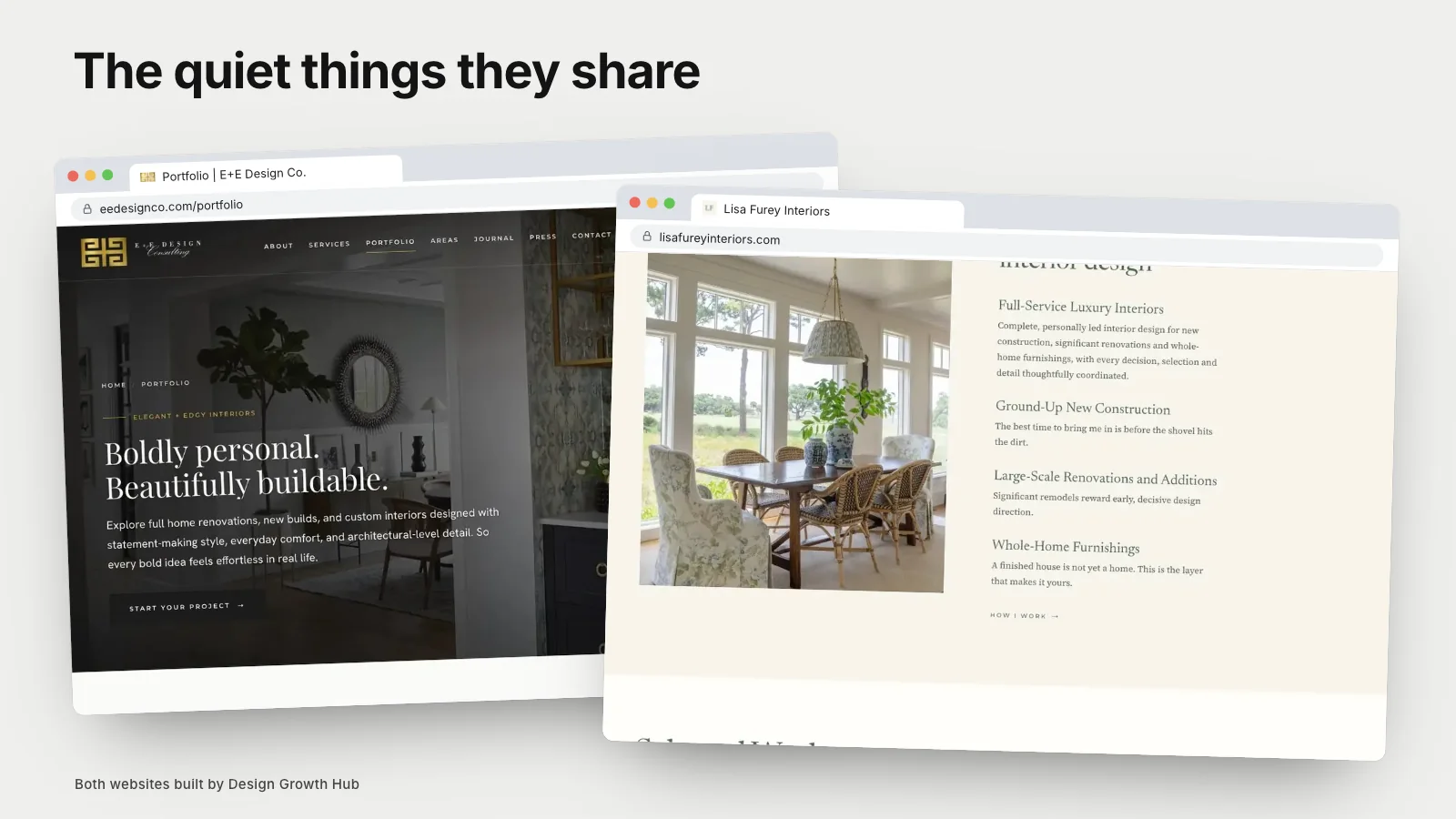
Even as a freelancer, you can borrow ideas from larger studios. Our articles on interior designer website design and what the best interior designer websites have in common show the patterns that build trust.
When you are ready for a more polished site, our website creation service works with freelancers as well as studios. Or request a studio review and we will suggest the few changes that would help most.
Make your studio easier to find
When the right clients search, clarity is what brings them to you. Let us look at the structure behind how you are found.
Request a Studio Review