The about me section of an interior design portfolio should help a prospective client feel they know you a little before they ever call. Write it in your own voice, explain how you came to design and what you care about, describe how you work with clients, include a real portrait and mention genuine credentials and recognition. Keep it warm, specific and honest rather than grand.
Here is how to structure it, what to include and what to leave out, with examples you can adapt.
Why the about me section matters so much
Interior design is personal. Clients will invite you into their homes, share how they live and trust you with significant decisions and budgets. Before they reach out, they want a sense of who you are. Your portfolio shows what you can do. Your about section shows what you are like to work with.
Many designers find this the hardest part of their website to write. It often ends up either very short or full of general phrases about passion and timeless spaces. Neither helps a client decide.
Start with a single clear sentence
Open with a sentence that says who you are and what you do, in plain words. For example: "I'm an interior designer based in Charleston, working mainly on whole-home renovations and new builds for families across the Lowcountry." It sets context immediately and helps both people and search engines.
Tell your story briefly
A few sentences about how you came to interior design can be engaging, especially if your path is unusual. Perhaps you trained as an architect, worked in fashion or started by renovating your own house. Keep it short and relevant. The story should help explain how you design, not read like a full biography.
Describe how you work
This is the most useful part for prospective clients. Explain what working with you is like:
- How you begin a project and get to know clients.
- How involved clients are in decisions.
- How you handle budgets, timelines and communication.
- Who you work with, such as architects, builders and makers.
- What clients often say about the experience.
Specific details here are reassuring. "I send a short update every Friday during construction so you always know what happened that week" says more about you than any adjective.
Share what you value
What do you care about in a home? Natural materials, rooms that age well, spaces that work for real family life, local craftspeople? A short paragraph on your design values gives clients a sense of fit. Write it as you would explain it over coffee, not as a mission statement.
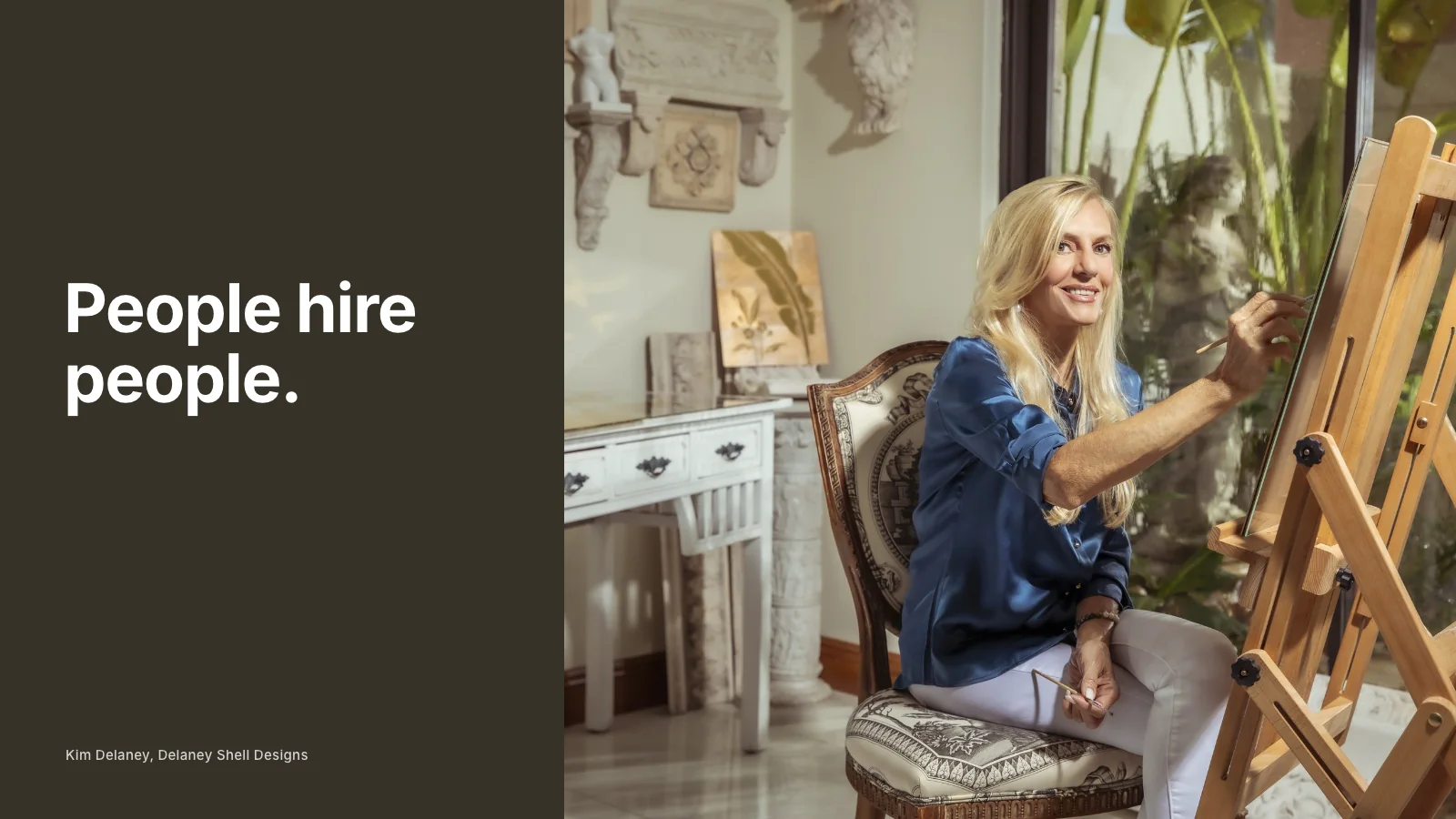
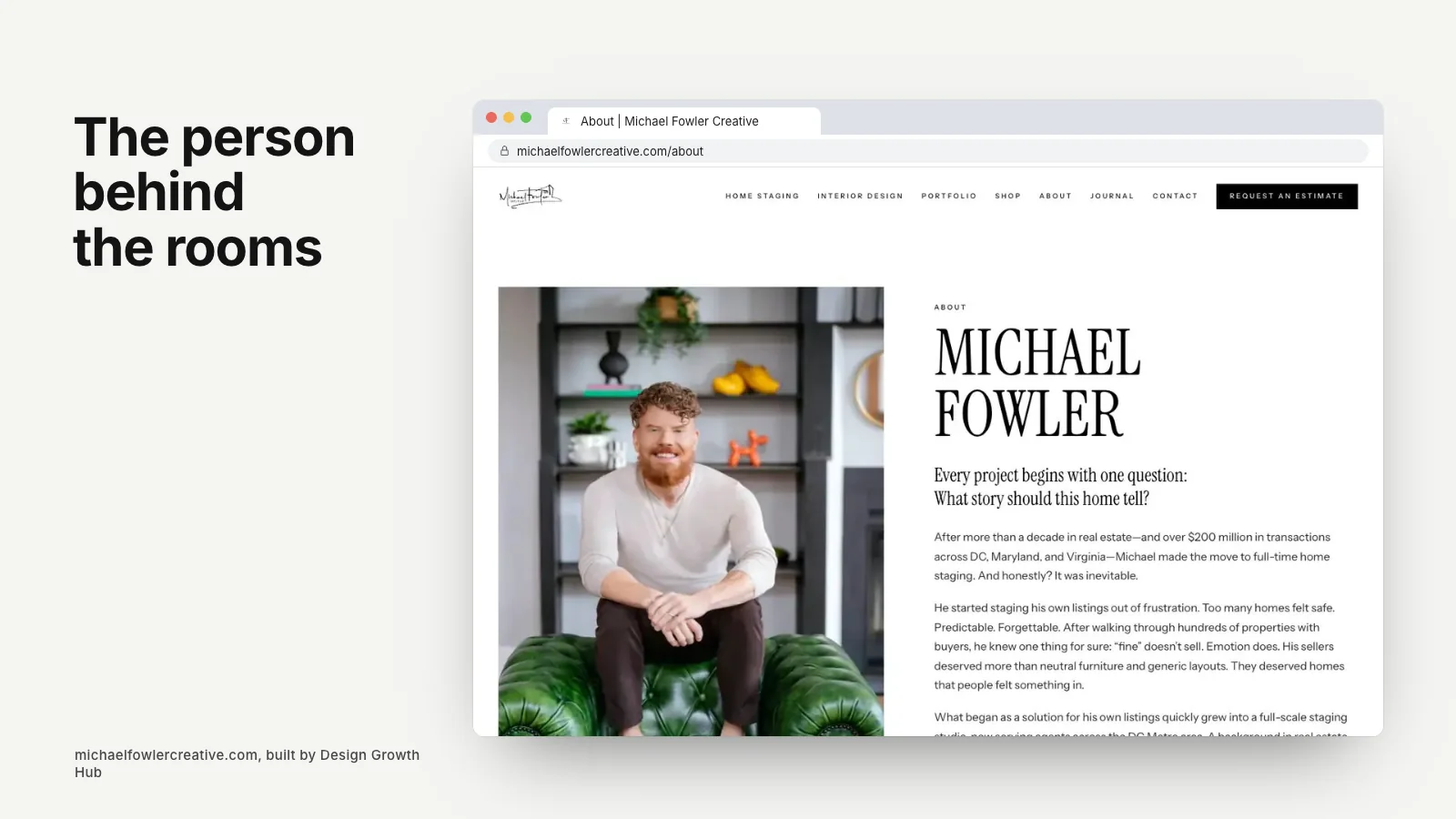
Include a real portrait
A professional portrait, ideally in a space you designed or in your studio, makes the page feel human. Avoid heavily posed corporate shots. A natural, well-lit photo where you look approachable works best. If you have a team, include photos of them as well.
Mention credentials and recognition honestly
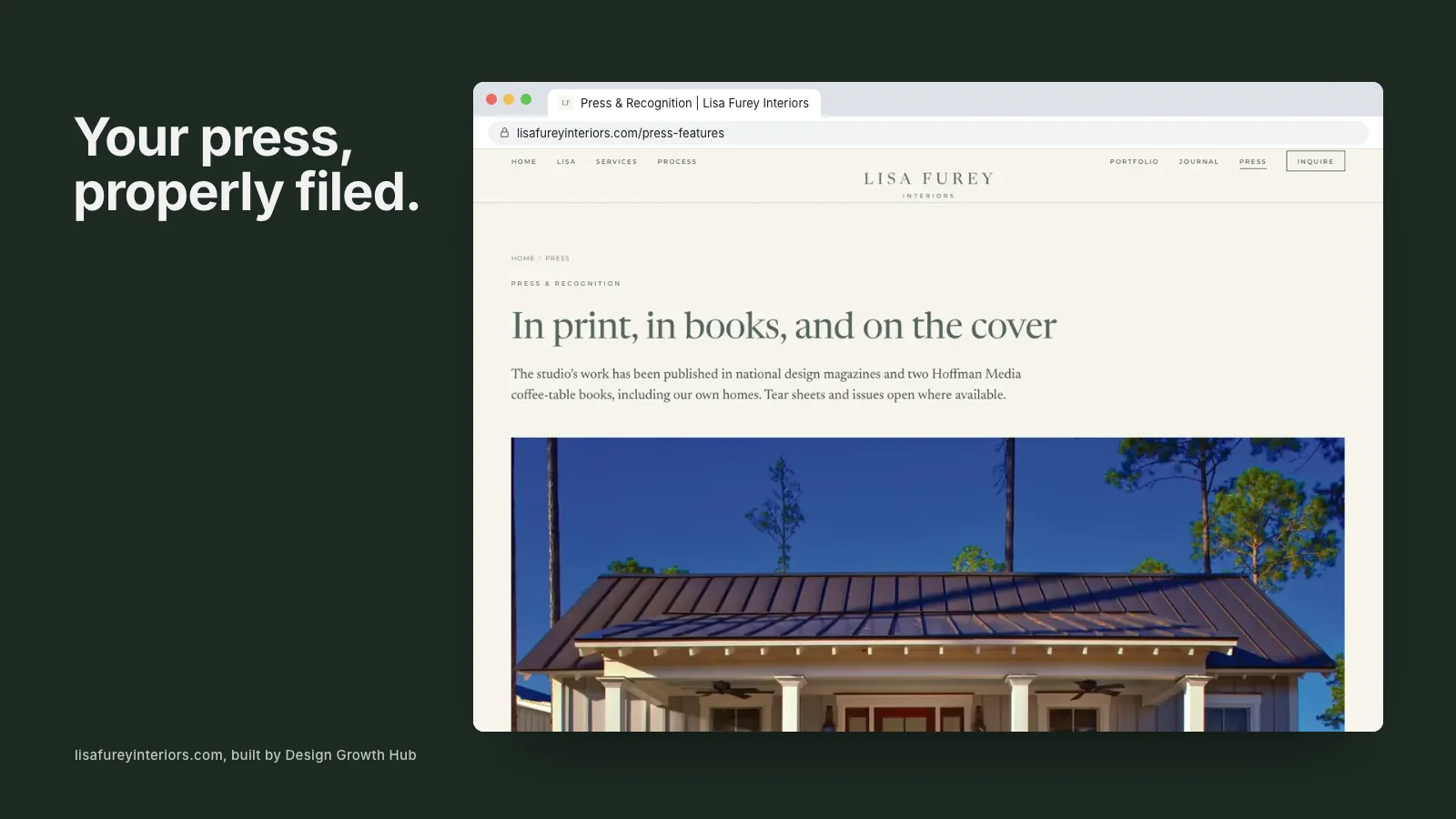
List relevant education, certifications, professional memberships and publications. These build credibility, especially with clients making large investments. Present them simply, and only include what is accurate and current. If you hold NCIDQ certification or ASID membership, say so. If you were featured in a magazine, link to it. Our article on press features and AI search explains why linking press helps visibility too.
Mention where you work
Include your location and the areas you serve. It sounds obvious, but many about pages leave it out. It helps local clients feel confident and helps Google and AI tools connect you to those places. Our article on how your about page affects Google and AI visibility explains this further.
An example to adapt
"I'm Anna, an interior designer in Charleston working mainly on whole-home renovations and new builds across the Lowcountry. Before starting my studio, I spent eight years at an architecture firm, which is why I still love a good floor plan as much as a beautiful fabric.
I start every project by spending time in the house, often with a sketchbook, before suggesting anything. I work closely with local builders and makers, and I keep clients informed with a short weekly update so nothing comes as a surprise. My favorite homes are the ones that feel calm, practical and a little unexpected."
It is short, specific and sounds like a person.
What to leave out
- Long lists of design adjectives.
- Generic claims such as "passionate about creating beautiful spaces".
- Every job you have ever held.
- Overly personal details that do not help clients decide.
- Credentials you no longer hold or press you cannot point to.
First person or third person?
Solo designers usually do best in the first person, which feels warmer. Larger studios often use the third person for the firm and the first person in individual team bios. Whatever you choose, be consistent.
Connect the about section to the rest of the portfolio
End the about section with links to your portfolio and contact page. A sentence like "See recent projects" or "Tell me about your home" keeps visitors moving. Our guides to building an interior design portfolio website, writing a project portfolio page and portfolio examples that sell the work show how the about page fits with the rest.
Keep your voice consistent everywhere
The voice you develop on your about page should carry into your social captions, journal and emails. Our articles on writing captions for social media and what to blog about as an interior designer show how to use it elsewhere.
If you would like help writing or restructuring your about page, our website redesign team works on copy as well as design. Or request a studio review to start with a review.
Fix the structure behind your website
Beauty gets attention. Structure gets discovery. We help you build both, so the right clients arrive ready.
Request a Studio Review