The interior design portfolios that sell the work do more than display photos. They pair strong photography with short, specific stories, organize projects the way clients think and add quiet proof such as publications and collaborations. Below are real examples from studios we have worked with, each showing a different way to present a portfolio, along with what you can borrow for your own.
The story-led portfolio
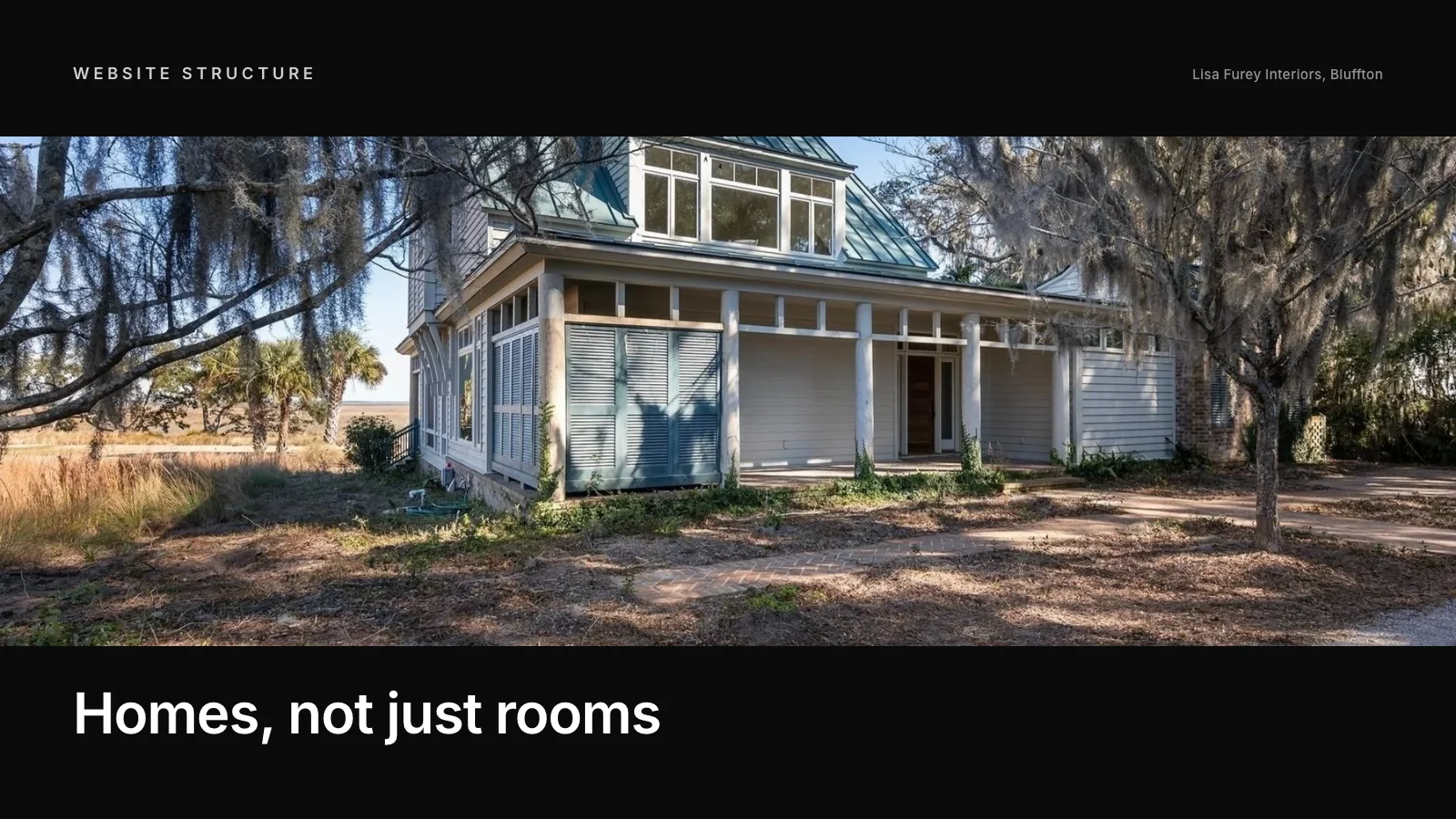
Lisa Furey Interiors in Bluffton, South Carolina, presents ten projects, each as its own story. Every page opens with a strong image, introduces the home and the clients' goals and then moves through a long gallery paced like a magazine feature. Press for each project is noted where it applies.
What to borrow: give each project a narrative, even a short one. Explain what the clients wanted and what changed. Our guide to writing an interior design project portfolio page shows how. The full structure is in the Lisa Furey Interiors case study.
The large, filtered archive
Michael Fowler Creative in Washington, DC, works across home staging and interior design, with more than 290 projects. A single grid would be overwhelming. Instead, the portfolio is filterable, and one flagship project is told in depth as a case study.
What to borrow: if you have a large body of work, let people filter it and choose one or two projects to tell fully. Depth on a few projects persuades more than breadth across many.
The architecture-led portfolio
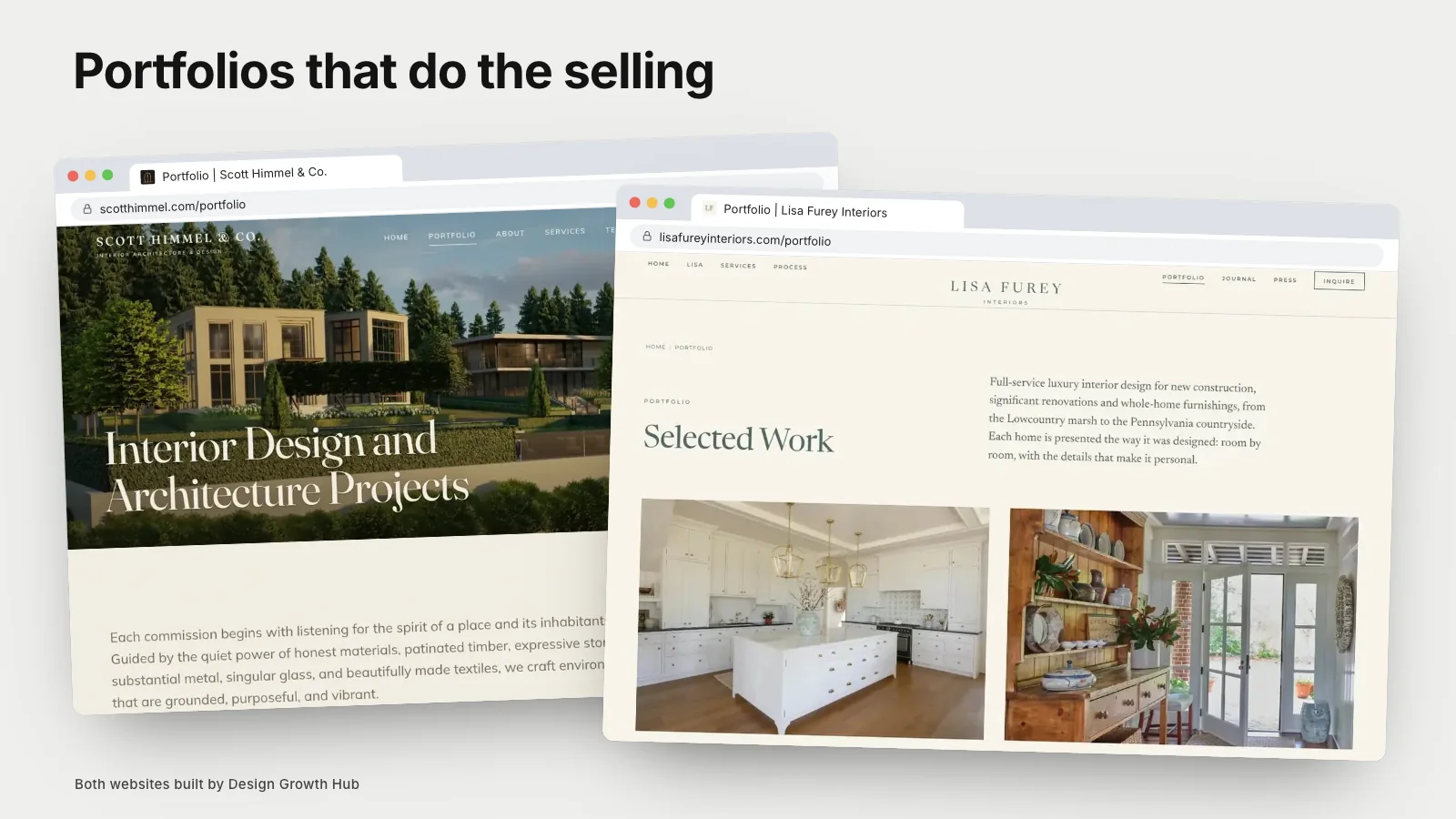
Scott Himmel & Co. in Chicago practices architecture and interior design. The portfolio presents 24 projects, each with its own page, filterable by type. Because the firm has a long publication history, press and honors appear on the About page rather than crowding each project.
What to borrow: if your credibility runs deep, separate the work from the accolades so each has room. Our guide to showing a residential interior design portfolio online covers related ideas.
The showhouse feature
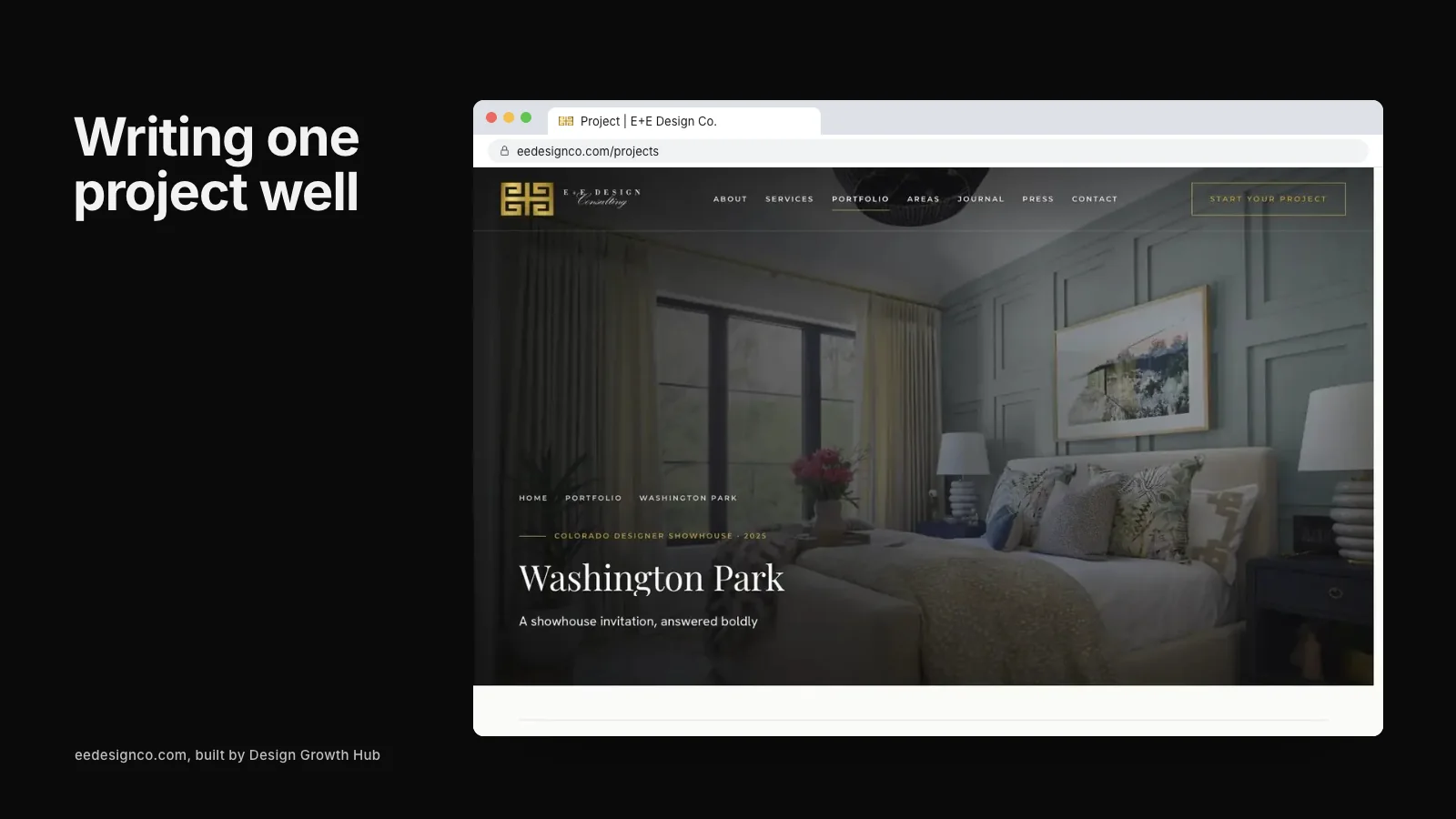
E+E Design Co. in Denver includes the 2025 Colorado Designer Showhouse among its project stories. Showhouses are valuable portfolio entries because they show a designer's voice with fewer constraints and often come with press and public attention.
What to borrow: if you take part in showhouses, design competitions or notable collaborations, present them as full projects with context, not just a photo or two.
The discipline-based portfolio
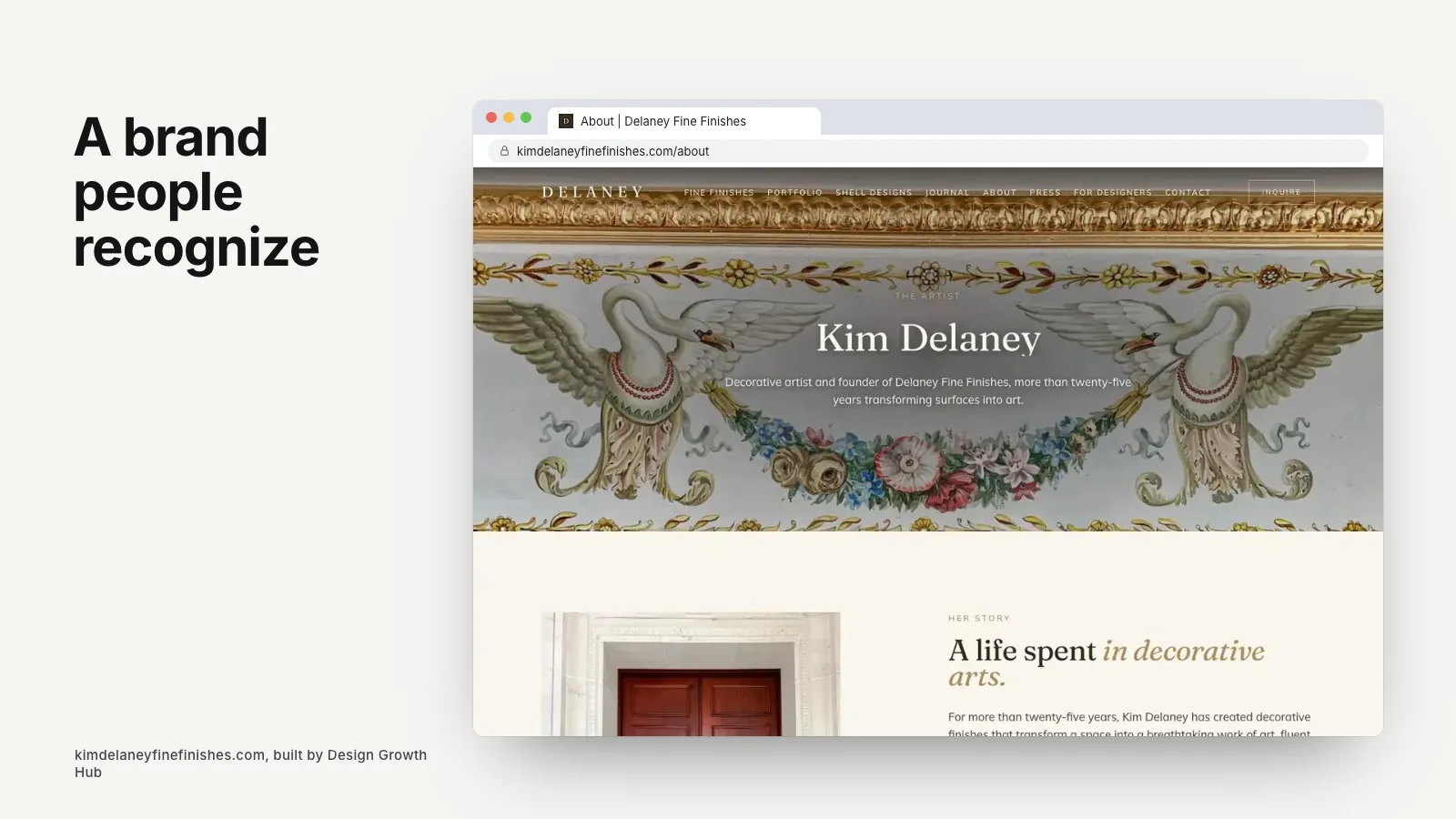
Delaney Fine Finishes, a decorative artist in Florida, organizes work by discipline: frescos, murals, gilding and other finishes. Clients and the designers who hire her can find the exact technique they need. A page written specifically for designers and architects explains how she collaborates.
What to borrow: if your work spans distinct specialties, organize the portfolio by those specialties so people can find them directly.
The studio and shop portfolio
Nickey Kehoe in Los Angeles and New York presents its design studio portfolio alongside a furniture and vintage storefront. The portfolio and the shop are clearly separated, so clients looking for design services and buyers looking for a piece each find their way.
What to borrow: if your business has two sides, give each its own clear path rather than blending them.
Patterns that appear across every strong example
- One page per project, with a descriptive title.
- Project facts, such as location, scope and collaborators.
- Short stories in the designer's own voice.
- Captions that add meaning.
- Consistent layouts that visitors learn quickly.
- Links to related projects and services.
- A calm invitation to inquire at the end.
These patterns matter for more than presentation. They also give Google and AI tools specific context to understand your work. Our article on why portfolio pages need more than pretty photos explains this in more depth.
Common portfolio mistakes these examples avoid
It is just as instructive to notice what strong portfolios leave out. They avoid untitled projects that force visitors to guess. They avoid mixing professional photography with phone snapshots. They avoid long, unfiltered grids that bury the best work. They avoid showing projects that no longer represent the studio, simply because they exist.
They also avoid exaggeration. A portfolio that credits the architect and builder, notes the real scope and describes the work honestly feels far more credible than one that implies a studio did everything. High-end clients and the professionals who refer them notice the difference.
How to choose the right model
Think about how your clients choose a designer. If they are drawn by a particular aesthetic, a story-led portfolio works well. If they browse by project type, filters help. If your reputation rests on publications, a press-led presentation makes sense. Most studios combine elements of several models.
Your branding should carry through every model, so the portfolio feels unmistakably yours. Our article on interior design branding that holds up online explores that connection.
Where the portfolio sits on the site
A portfolio works best inside a clear layout, linked from the home page, connected to services and leading naturally to the contact page. Our guides to the website layout that leads to inquiries and service pages beyond the portfolio explain how these pieces fit together.
If you would like your portfolio restructured using these models, our website redesign service includes project storytelling and structure. You can also browse all our case studies or request a studio review to talk about your own.
Build your visibility foundation
Design Growth Hub helps interior designers build the visibility foundation behind high-value discovery.
Request a Studio Review