A residential interior design portfolio works best online when it shows complete homes rather than isolated rooms, tells each family's story in a way that protects their privacy, and makes it easy for homeowners to find projects like theirs by type and location. Before and after images, honest notes on scope and glimpses of how the home is lived in all help prospective clients picture working with you.
This article focuses on what is different about presenting residential work, and how to handle the details that commercial portfolios rarely face.
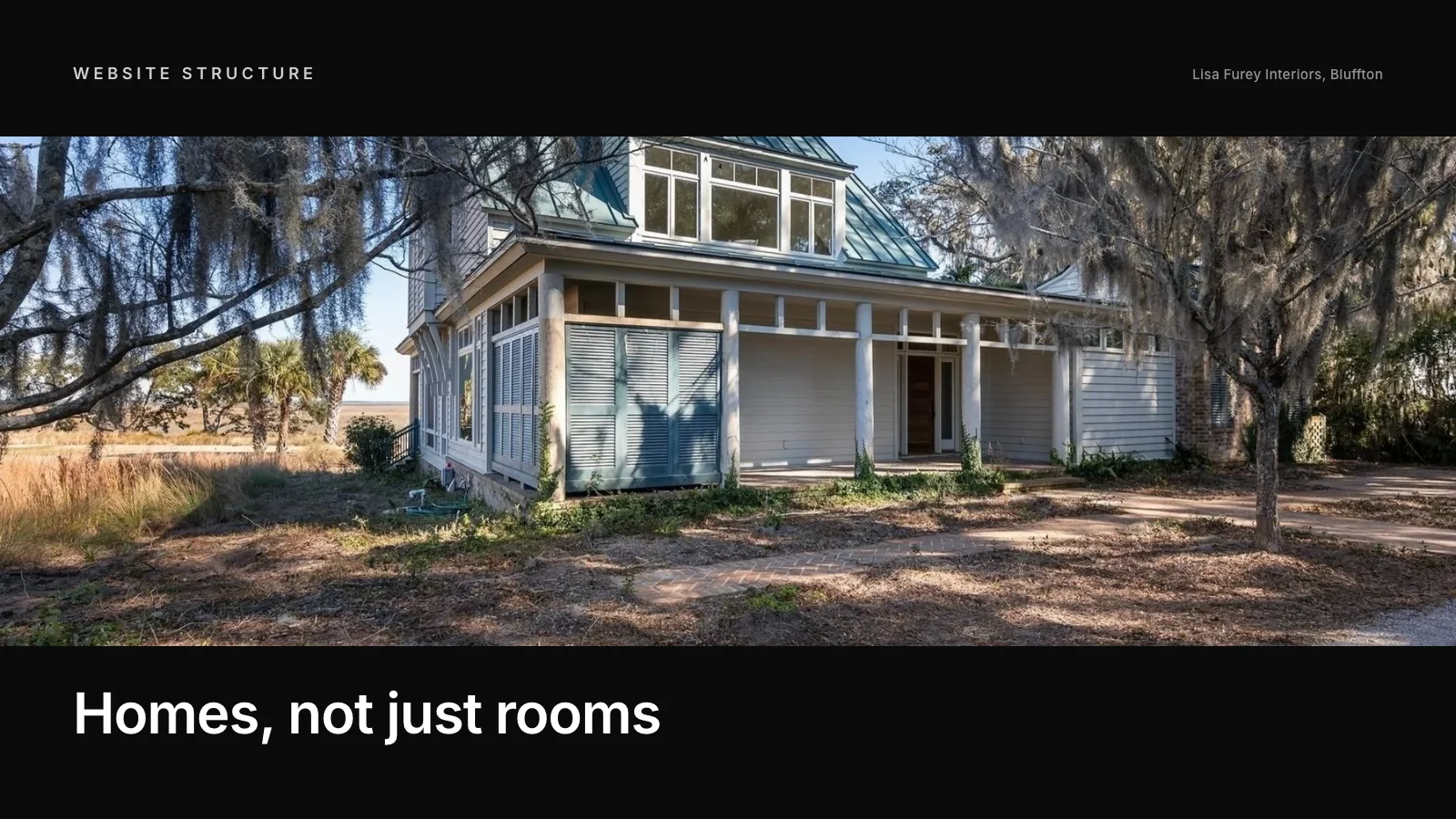
Show homes, not only rooms
Homeowners are not hiring you to design a single beautiful corner. They want to know how you think about a whole house: how rooms connect, how light moves, how a family will use the space on an ordinary Tuesday. A residential portfolio should reflect that.
Organize each project as a home. Start with the arrival, move through the main living spaces, then the kitchen, bedrooms and baths, and finish outdoors if relevant. This room-by-room pacing helps visitors feel the flow of the house, which a random selection of beautiful images cannot do.
Tell the family's story without exposing them
Residential clients often value privacy, especially at higher budgets. You can still tell a human story. Describe clients in general terms: "a young family relocating from New York", "empty nesters who wanted a home for visiting grandchildren". Focus on how they wanted to live rather than who they are.
Avoid street names, identifiable exteriors and personal objects that reveal too much unless your clients have agreed. A short line on the project page noting that some details are kept private for the family can quietly signal discretion, which itself builds trust with high-end clients.
Before and after, used well
For renovation work, before and after images are powerful. They show the problem you solved, which is often more impressive than the finished room alone. Use them selectively:
- Show the most dramatic transformations, such as a reconfigured kitchen or an opened floor plan.
- Match angles where possible so the change is easy to see.
- Keep before photos honest but respectful of the clients' previous home.
- Pair them with a sentence explaining what changed and why.
Before photos do not need to be professional quality, but they should be clear. Start taking them on every project now, even if you are not sure you will use them.
Group projects the way homeowners think
Homeowners usually look for work that matches their situation. Common groupings for a residential portfolio include:
- Whole-home renovations
- New construction
- Kitchens and baths
- Vacation and second homes
- Historic homes
- Apartments and condos
You do not need every category. Choose the ones that reflect the work you want more of and label projects clearly. Our article on why high-value clients search by project type explains why these labels matter for search as well as browsing.
Location matters more for homes
Residential clients often want a designer who knows their area: local architecture, building practices, trades and even weather. Naming the town or region on each project page helps local clients recognize you and supports your local search visibility. If you work across several areas, consider short location pages that link to relevant projects.
Show how homes are lived in
The most persuasive residential images often include a hint of life: a set table, a reading chair with a lamp on, a child's room that feels playful rather than staged. Work with your photographer and stylist to include a few of these. They help homeowners imagine themselves in the space.
Credit the team that built the home
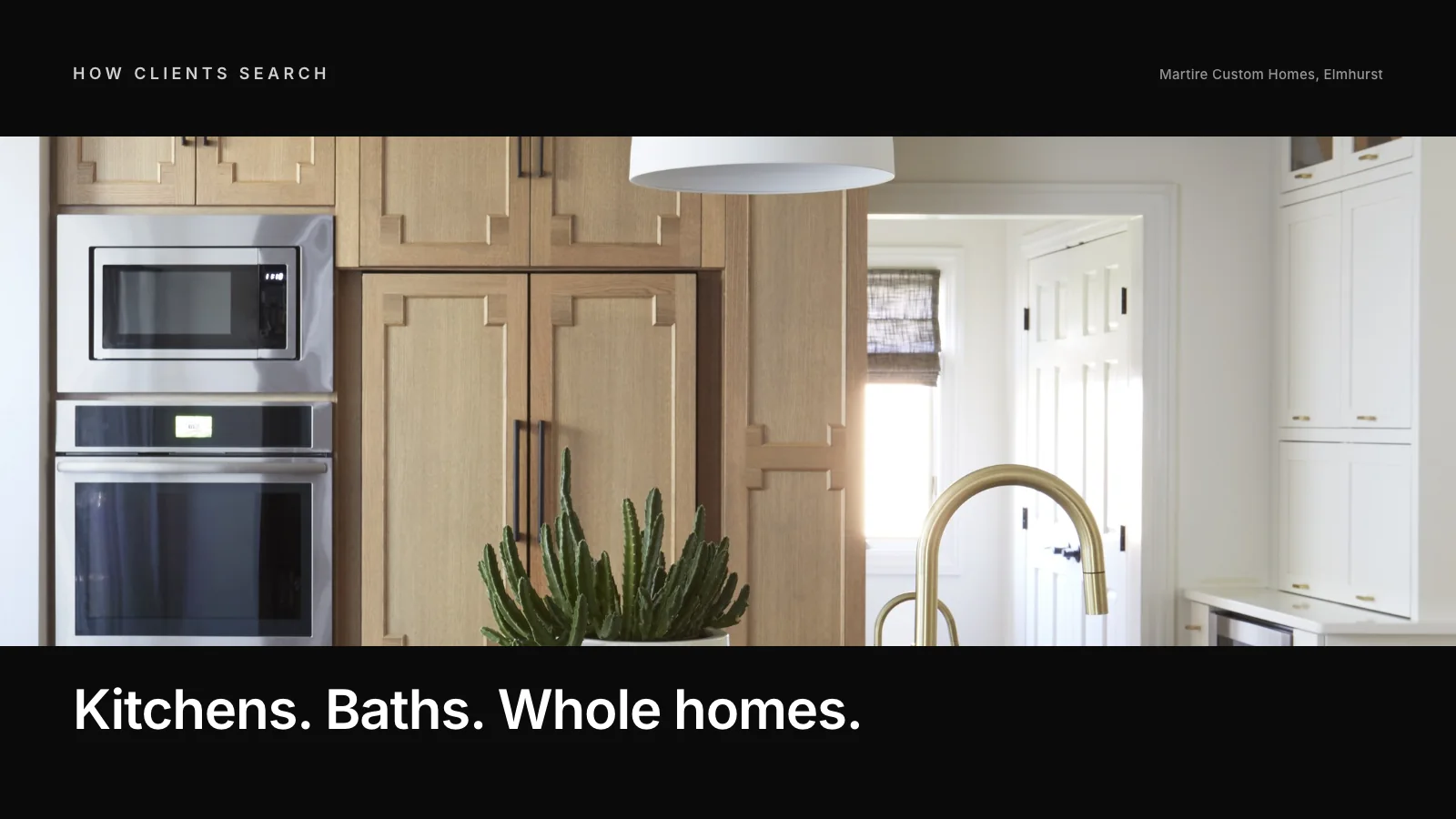
Residential projects usually involve an architect, builder and trades. Crediting them shows that you collaborate well, which matters to homeowners worried about managing a renovation. It also strengthens relationships with the professionals who refer you. Martire Custom Homes, a renovation and custom home builder near Chicago, presents its portfolio with project stories and process, which shows how builder and design work can be presented together. See the Martire Custom Homes case study.
Write stories that answer homeowner questions
Homeowners reading a residential project are quietly asking practical questions. How long did it take? Did the family live there during the work? How did the designer handle the budget? You do not need to share every detail, but a sentence or two touching on timeline, phasing or living through the renovation can be reassuring. Our guide to writing an interior design project portfolio page gives prompts for this.
Keep the presentation consistent
Residential portfolios often grow over many years, with photography by different people. Consistent layouts, image ratios and editing help the collection feel coherent. If older projects look noticeably different, consider retouching or retiring them. Our collection of interior design portfolio examples shows several consistent approaches, and our article on why portfolio pages need more than photos explains how words and images work together.
Connect the portfolio to your services
Each residential project should link to the service it represents, such as full-service design, renovation or furnishing. Service pages should show matching projects in return. This connection helps homeowners understand what working with you involves, as we explain in why designers need service pages, not just a portfolio.
Let your brand carry through
A residential portfolio should feel unmistakably yours, from the photography style to the way you write about homes. Consistency of voice and visual identity across projects builds recognition. Our article on interior design branding that holds up online explores how. And once your portfolio is in good shape, our guide to promoting your interior design business online covers how to bring more of the right people to it.
If your residential work deserves a better showcase, our website redesign service specializes in presenting homes this way. Or request a studio review and we will look at how your portfolio reads to a homeowner today.
Strengthen your Google + AI visibility
The studios that get found are not always the best. They are the clearest. Let us make yours easier to understand and recommend.
Request a Studio Review