Good interior design captions add context the photo cannot show: what the clients needed, a design decision, a material or maker, or how the room is used. They sound like the designer, not like a brochure. They follow a simple structure, so writing them is quick. And they invite readers to take a next step, such as reading the full project story on your website.
Here are caption structures that work for designers, with examples you can adapt.
Why captions matter
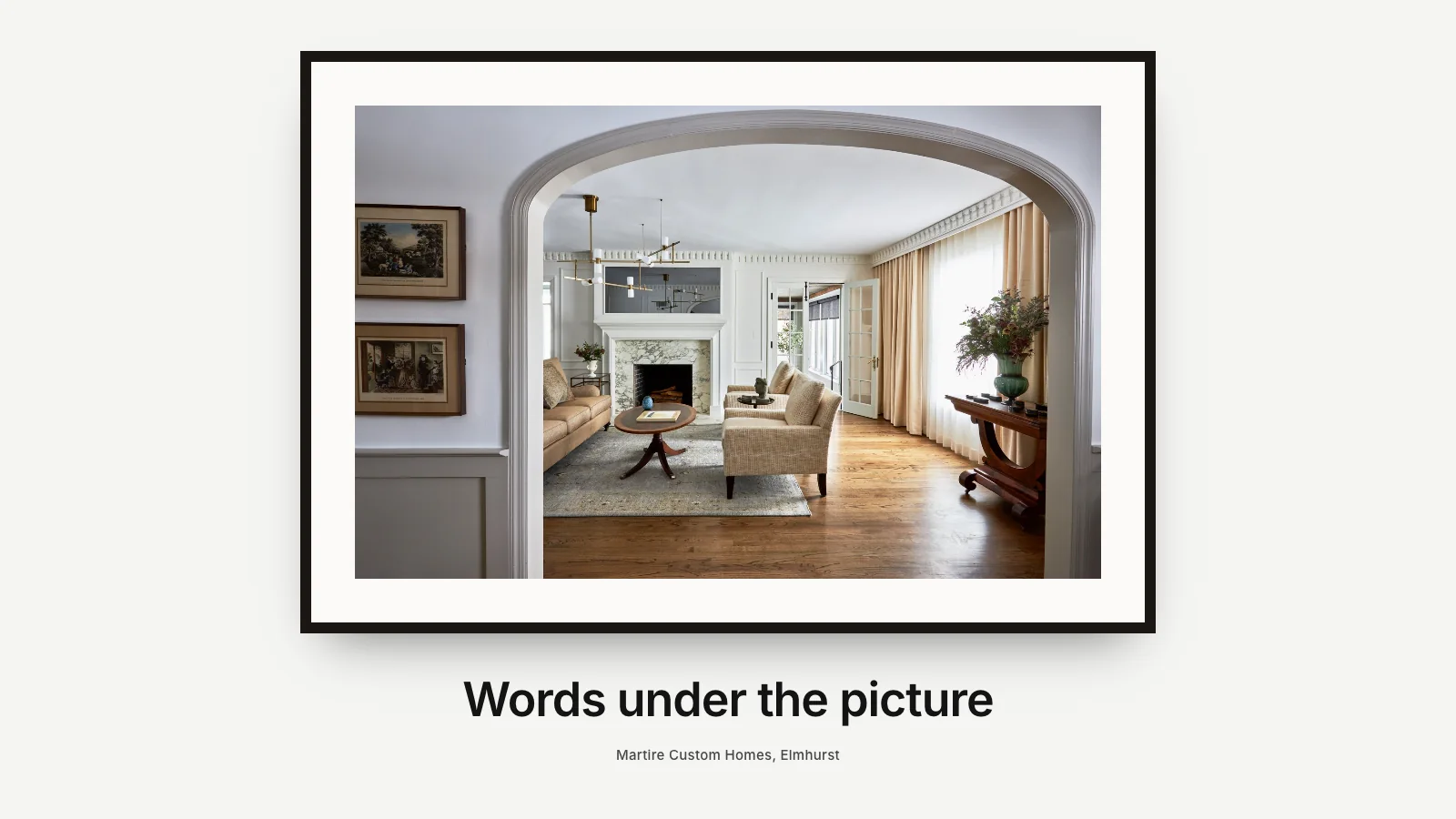
A beautiful photo stops the scroll. A caption gives people a reason to stay, save or reach out. It shows how you think, which is often what clients are really hiring. It also tells followers what the image shows, which helps people who use screen readers and adds context for anyone looking more closely.
Find your voice
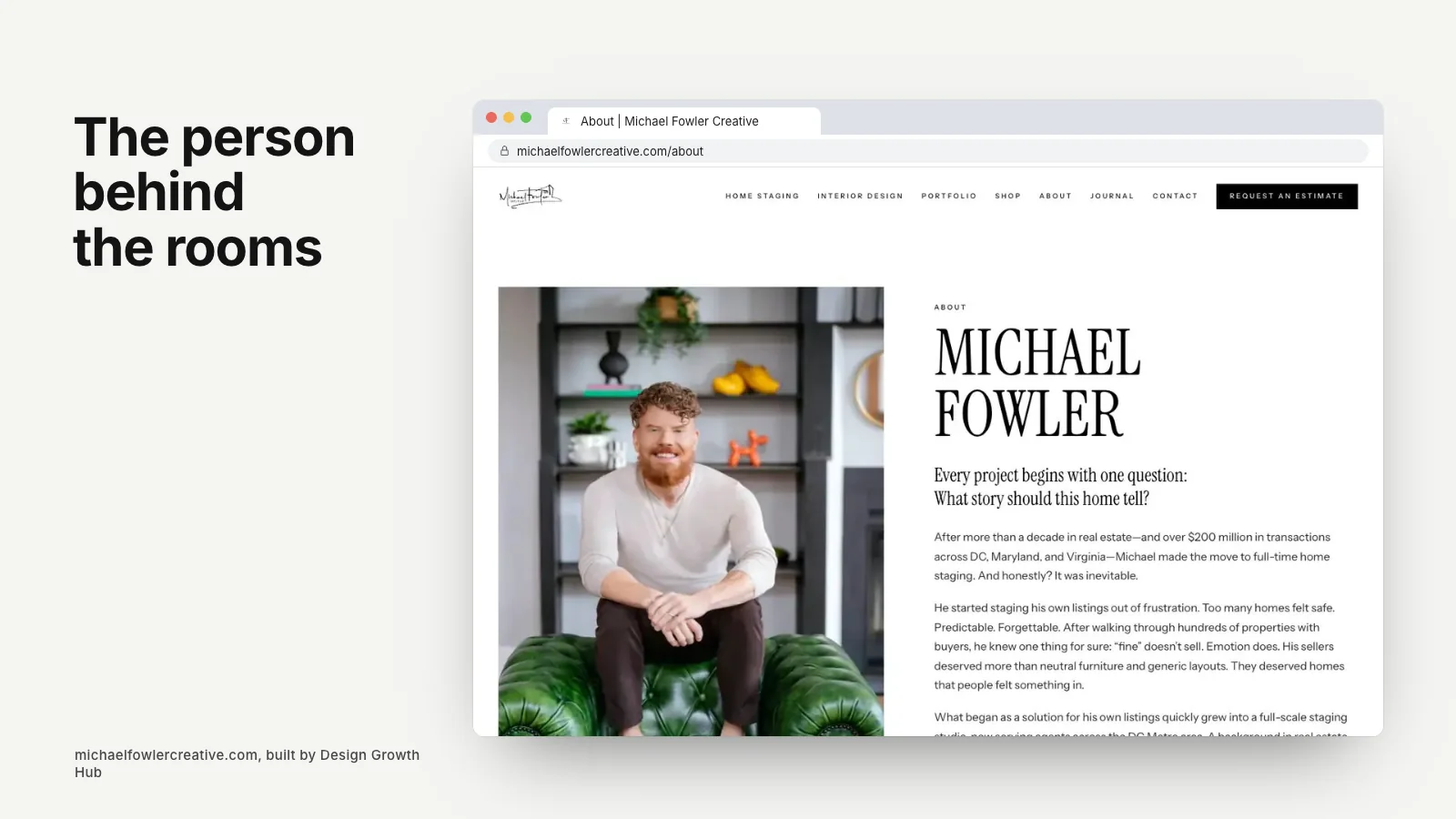
Before writing, decide how you want to sound. Warm and personal? Precise and confident? Lightly witty? Your voice should match your brand and how you speak to clients. Our guide to writing the about me section of your portfolio helps you find it, and interior design brand guidelines explains how to document it.
Once you know your voice, use it consistently.
Structure one: the design decision
Explain one choice and why you made it.
Example: "We lowered the ceiling in this primary bedroom by eight inches. It sounds counterintuitive, but the room felt cavernous and cold. Now it feels wrapped and calm, and the new cove lighting gives a soft glow at night."
Structure two: the brief and the result
Describe what the clients wanted and what you delivered.
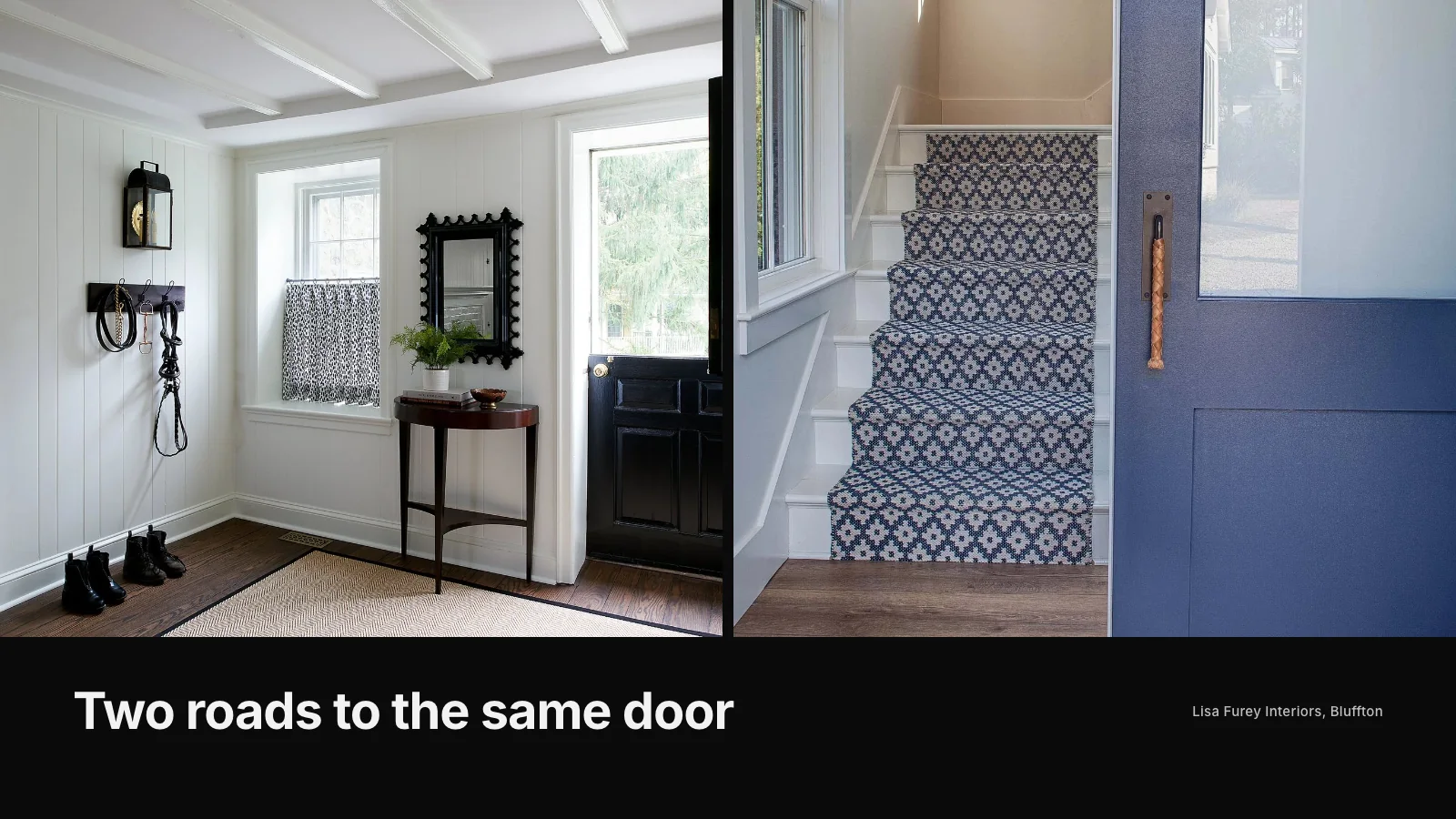
Example: "The brief: a kitchen that could handle three kids and still feel like the most beautiful room in the house. We chose honed marble that will patina, a long island with storage on both sides and a pantry that hides the everyday clutter."
Structure three: the material story
Share where something came from or who made it.
Example: "This hood was hand-plastered by a local artisan over three days. Every curve was shaped by hand, which is why the light catches it differently throughout the day."
Structure four: the client question
Answer a question clients often ask.
Example: "How long does a whole-home renovation take? For this project, about fourteen months from first meeting to install. Design took four, construction took nine and the final month was furniture, art and the details that make it home."
Keep timelines and facts accurate to the actual project.
Structure five: the before and after
Explain what changed.
Example: "Before: a closed galley kitchen with no natural light. After: we removed one wall, moved the sink to the window and added a skylight. Same footprint, completely different room."
Keep captions readable
- Lead with the most interesting sentence.
- Use short paragraphs and line breaks.
- Avoid long strings of hashtags in the main text.
- Tag collaborators such as the architect, builder and photographer.
- Mention the location if clients agree.
Add a gentle call to action
End with a simple next step when it fits: "See the full project at the link in our bio", "Planning a renovation like this? Tell us about it" or "Save this for your kitchen ideas". Not every caption needs one, but project posts usually benefit.
Link captions to your website
Each project you share should have a full story on your website. Captions can tease the story and point there. This turns social attention into website visits, which are more likely to lead to inquiries. Our article on social media versus Google search explains why this connection matters.
Write alt text too
Instagram lets you add alt text to images. Describe what is visible: "Kitchen with honed marble island, plaster hood and brass pendant lights." It improves accessibility and gives Instagram more context about your content.
Captions for ads
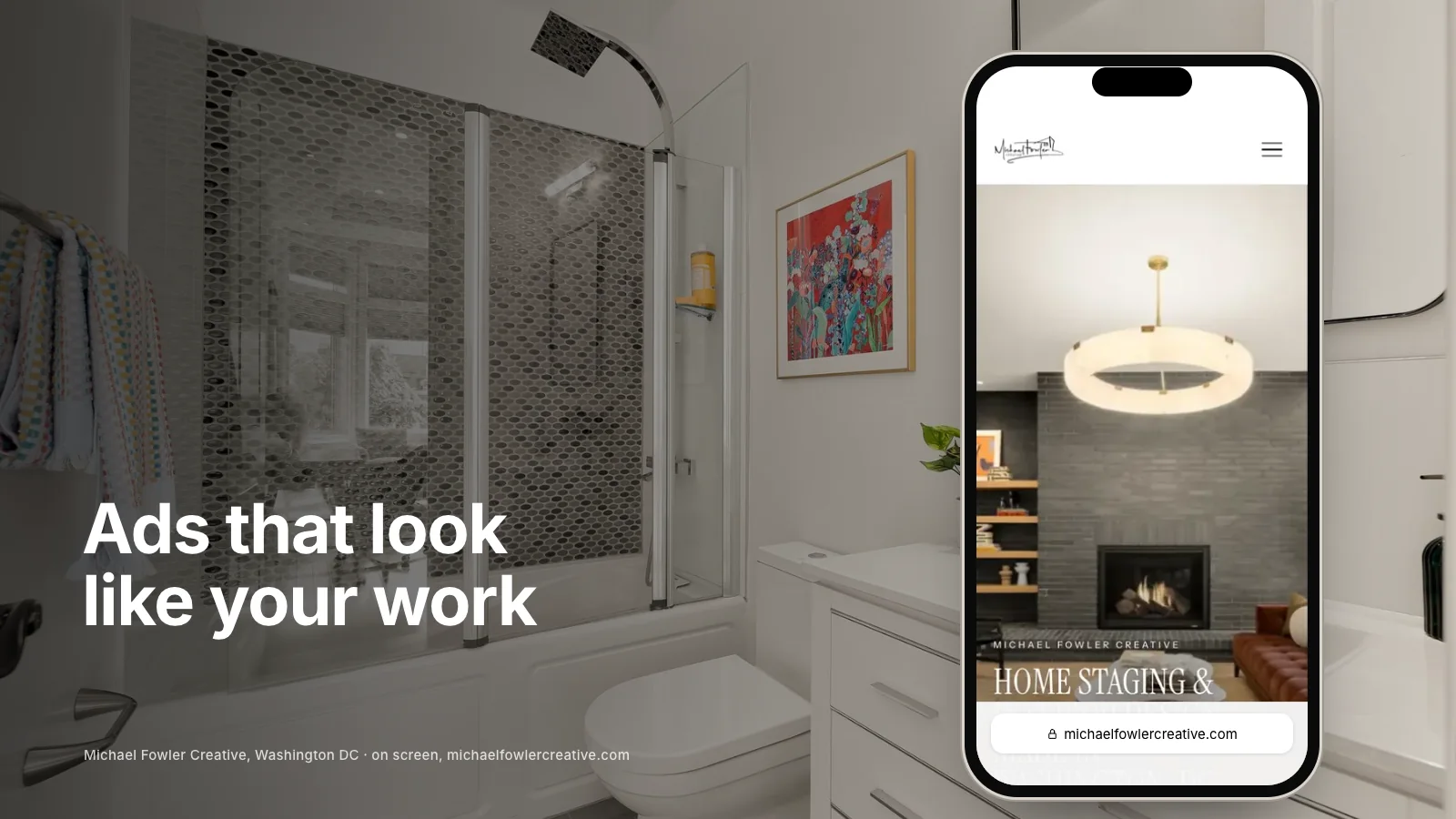
Ad captions need to be shorter and clearer, with a stronger call to action. Our guide to social media ads worth running explains how to adapt your voice for paid posts.
Make captions faster to write
- Keep a running document of design decisions and client quotes during each project.
- Write captions for a whole project at once, when the photography arrives.
- Reuse your structures, varying the content.
- Batch-write a week's captions in one sitting.
If time remains a problem, consider help. Our article on whether to hire a social media manager weighs the options.
Captions and trends
Caption styles change with platform trends: longer storytelling captions, short punchy lines, list formats. Use what suits your voice and audience rather than chasing every shift. Our guide to social media trends worth your time offers perspective.
Captions and your website copy
Many good captions can grow into website content. A design decision caption can become a paragraph on a project page. A client question caption can become an FAQ answer. This reuse saves time and makes your website richer, which helps both visitors and search engines.
If you would like help building a website that turns social attention into inquiries, our Google and AI visibility services can help. Or request a studio review to see how your social presence connects to your site.
Build your visibility foundation
Design Growth Hub helps interior designers build the visibility foundation behind high-value discovery.
Request a Studio Review