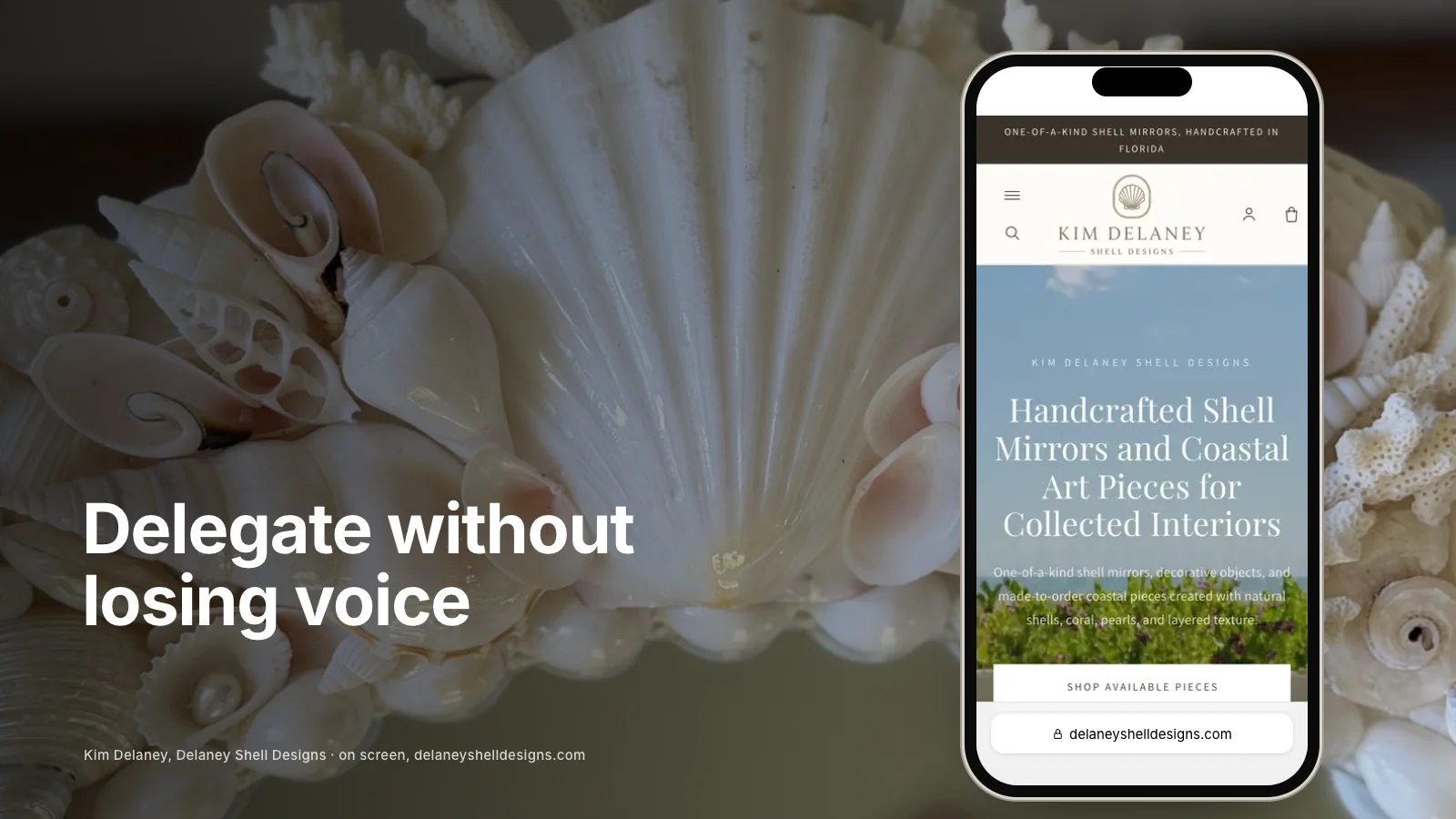
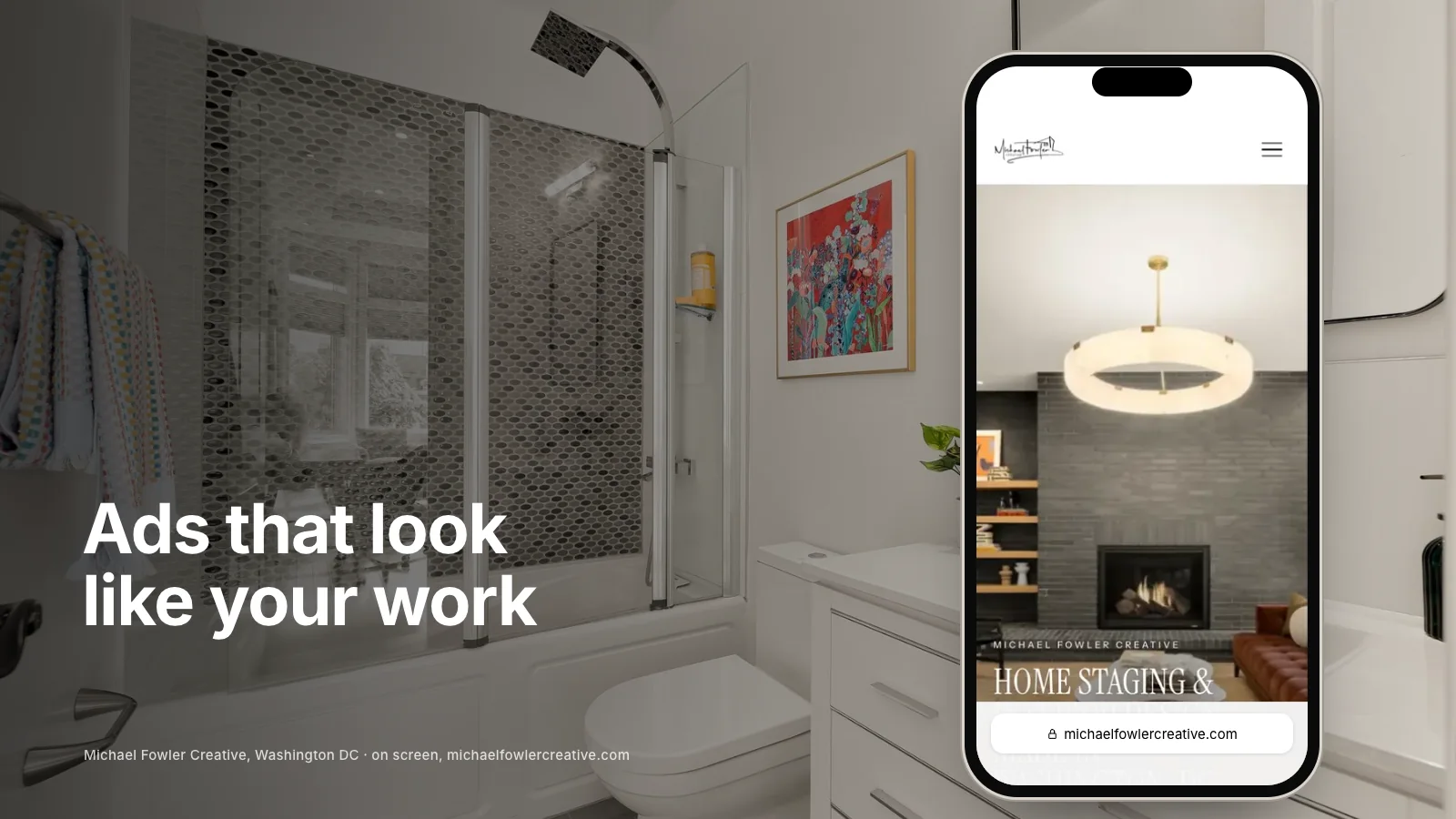
The social media ads worth running for an interior design studio are usually simple: a carousel of a finished project, a short walkthrough video, a before and after for a renovation, or a retargeting ad reminding past website visitors about your work. Each should reach homeowners in your area who match your ideal client, link to a page that continues the story and be judged by the inquiries it brings rather than the likes it collects.
Here are the ad formats that tend to work for designers, how to build them and what to avoid.
Why social ads suit design studios
Interior design is visual, and Instagram and Facebook are built for visuals. Social ads let you put your best work in front of homeowners before they start searching for a designer. That makes them good for building familiarity and demand, especially in a defined local area.
They are less suited to capturing urgent, high-intent searches. That is where Google Ads and organic search play a stronger role. Our guide to Google Ads for interior designers covers that side.
Before you run any ad
Ads send new people to your website and Instagram profile. If either is unclear, the money is wasted. Make sure your profile bio says what you do and where, your recent posts reflect your best work and your website has strong project pages and an easy contact form. Our checklist of what to fix before running ads covers the essentials.
Project showcase carousels
A carousel of five to ten images from a single finished project is one of the most effective formats for designers. Start with the strongest image, move through the home and finish with a detail. The caption explains the project in a sentence or two and invites people to see the full story on your website.
Carousels work because they feel like a portfolio, not an advertisement. They let people swipe through your work at their own pace.
Short walkthrough videos
A short video walking through a finished room or home, with natural movement and good light, can be compelling. Keep it under thirty seconds for most placements. Add captions, because many people watch without sound. Avoid fast cuts and trending audio that clash with a refined brand.
Before and after ads
For renovation work, before and after images show the value of your work clearly. Pair a single before with a single after, or use a carousel to show several rooms. Keep the before photos honest but respectful of the clients' previous home.
Process and personality ads
Some studios run ads showing the designer at work: selecting materials, on site with a builder, presenting a scheme. These build trust by showing who clients will be working with. They work best alongside project ads rather than on their own.
Retargeting ads
Retargeting shows ads to people who have already visited your website or engaged with your profile. These people know your work, so a gentle reminder can prompt an inquiry. Retargeting typically costs less and converts better than reaching entirely new audiences. Keep frequency low so the ads feel like a reminder rather than pursuit.
Lead form ads
Meta offers lead forms that let people submit their details without leaving Instagram or Facebook. They can increase volume but often lower quality, because submitting is so easy. If you use them, add a few qualifying questions and follow up quickly. Many studios prefer sending people to a landing page on their own website, where they can see more work first.
Targeting the right people
Target by location first, limited to the areas you serve. Then consider age ranges, interests related to homes, renovation and design, and lookalike audiences based on past clients or website visitors. Avoid targeting so narrowly that the audience is tiny, or so broadly that it includes people far from your ideal client.
Writing ad copy
Keep copy short and specific. Say who the ad is for, what you offer and what happens next. "Planning a whole-home renovation in the North Shore? See how we transformed this 1920s Tudor, then tell us about your home." Our guide to writing interior design captions offers more on tone and structure.
Landing pages for social ads
Send ad traffic to a page that matches the ad: the same project, the same message, with a clear invitation to inquire. A dedicated landing page usually performs better than the home page. Our guide to building an interior design landing page explains how.
Budgets and testing
Start with a modest budget focused on one or two ads. Let them run long enough to gather meaningful data, then compare which images, videos and copy bring inquiries. Shift budget toward what works and retire what does not.
Measuring results
Set up tracking so you can see which ads lead to form submissions. Record every inquiry from ads and follow it to whether it became a project. Likes, comments and reach are helpful signals but not results.
Ads to avoid
- Discount offers that attract price-focused clients.
- Stock images or renders that do not show your real work.
- Trend-driven videos that clash with your brand.
- Generic "Book a free consultation" ads with no context.
- Ads running to a profile or website that is not ready.
Social ads and the bigger picture
Social ads work best as part of a wider system: organic social media, search visibility, reviews and referrals. Our articles on social media versus Google search, social media trends worth your time and whether to hire a social media manager help you plan the organic side.
If you would like help building and managing social campaigns, our paid advertising service creates ads and landing pages for design studios with proper tracking. Or request a studio review and we will tell you whether your foundations are ready.
Fix the structure behind your website
Beauty gets attention. Structure gets discovery. We help you build both, so the right clients arrive ready.
Request a Studio Review