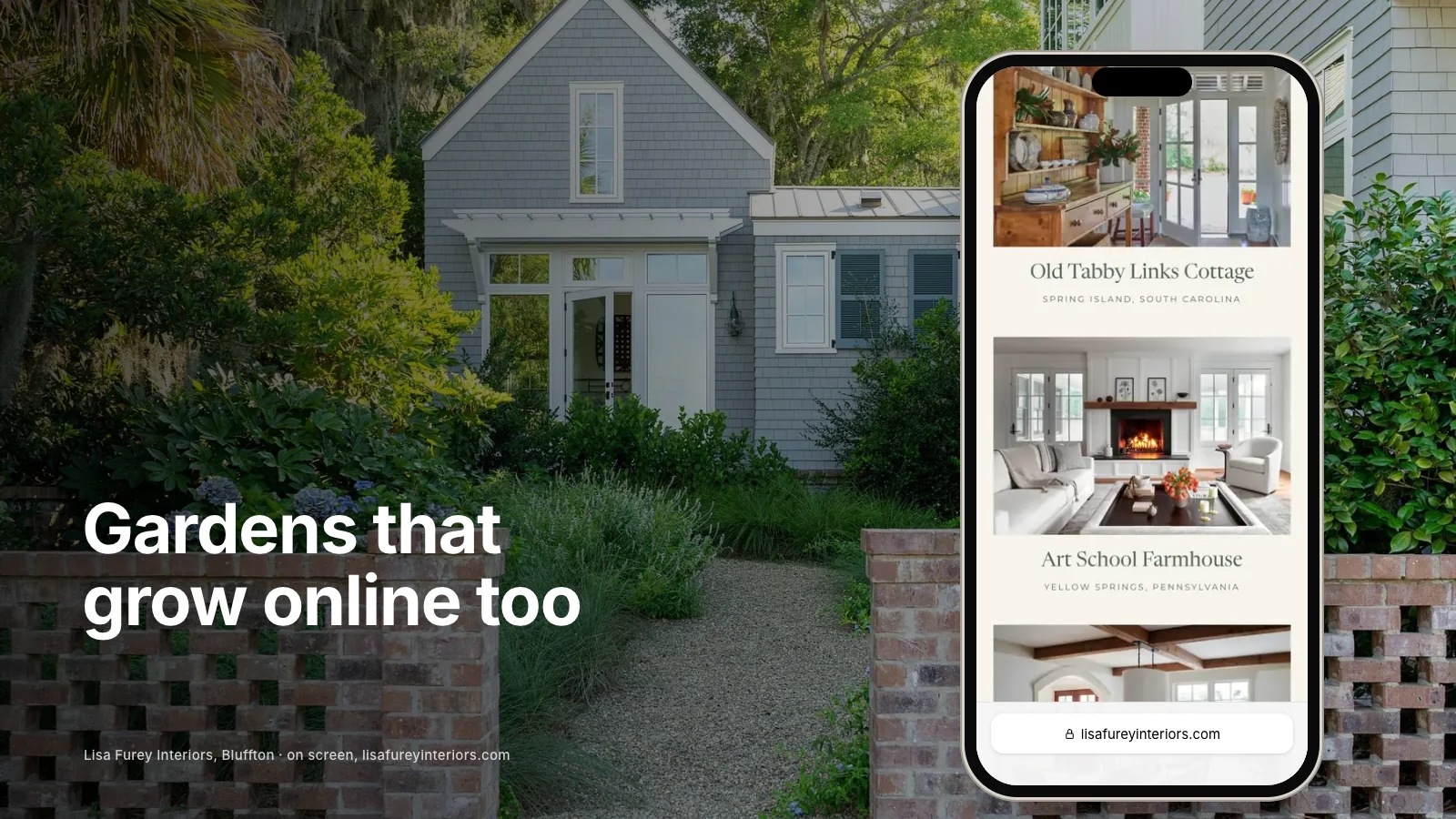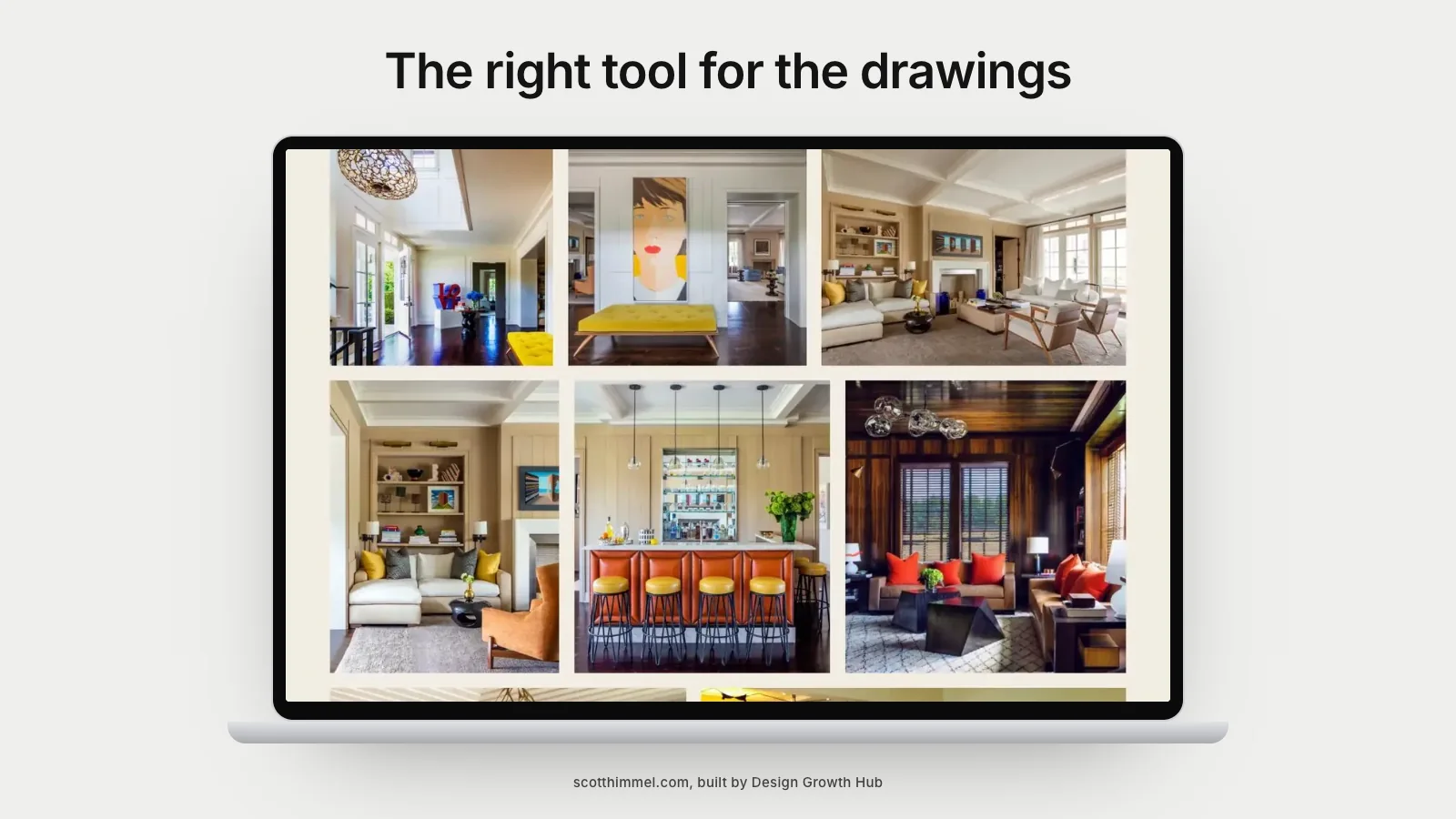
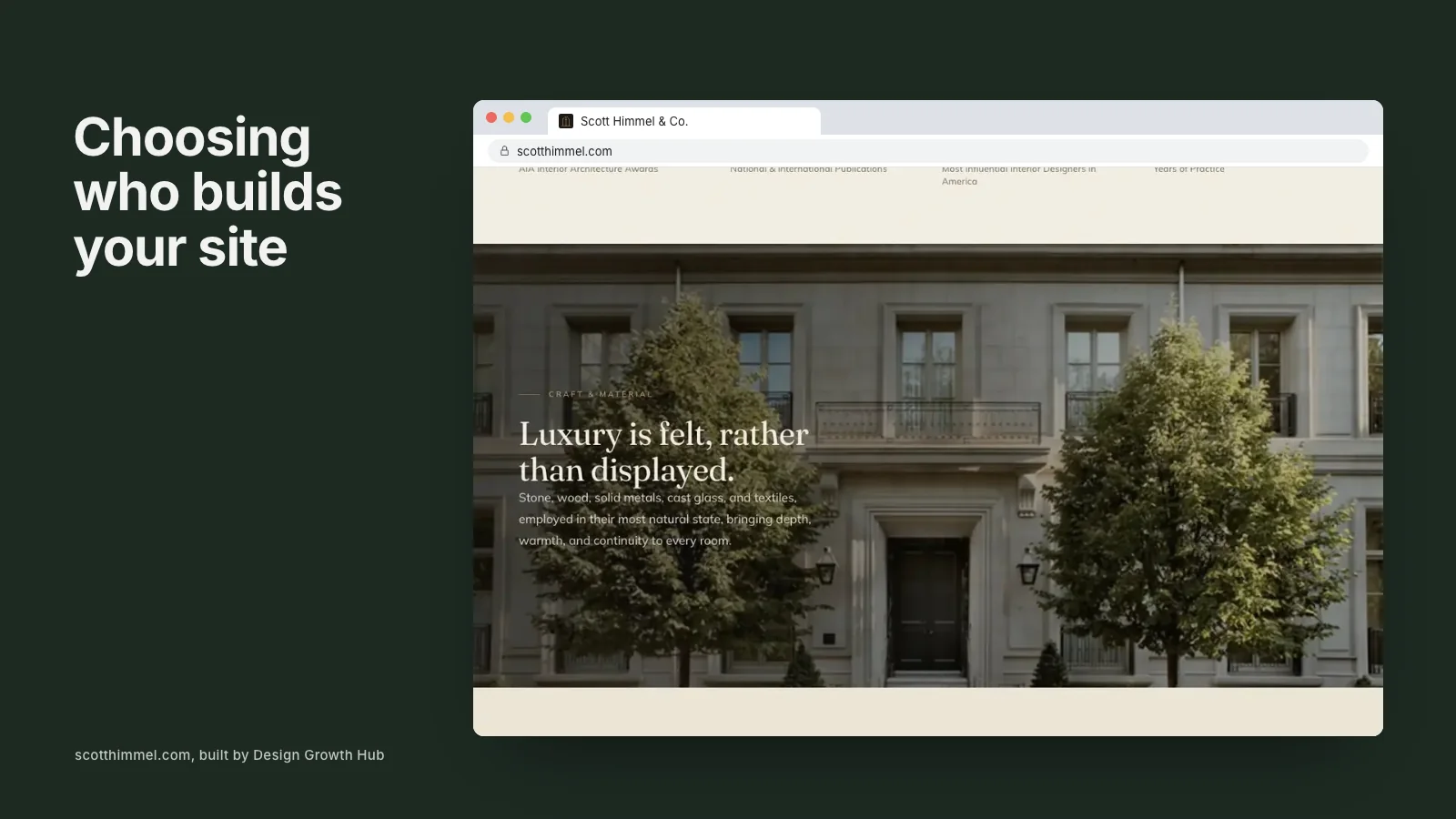
When hiring website designers for an architecture practice, look for designers who understand how architecture should be presented, let photography and drawings lead, care about clarity and speed as much as aesthetics, can help structure project stories and services, include search basics in every build and leave you owning and able to update your site. Ask to see architecture or design websites they have built and test them on your phone.
Here is what to look for and what to ask.
What a good designer brings
A good website designer for architects brings an eye for restraint, typography and image sequencing, an understanding of how clients read architecture websites, the ability to structure projects, services and people clearly and the technical skill to make large images load quickly. Many also help with writing or work with writers.
Judging portfolios
When reviewing a designer's past work, look beyond visual style. Ask:
- Can I quickly tell what each firm does?
- Are projects explained, or only shown?
- Do drawings display clearly?
- Do pages load quickly on my phone?
- Is it easy to find contact details?
A beautiful site that fails these tests will not serve your practice well.
Questions to ask
- Have you designed websites for architects or design firms?
- What is your process, and how long does it take?
- Who writes the content, and how do you help with project narratives?
- Which platform do you recommend, and why?
- What search setup is included?
- How do you handle image optimization?
- Who will own the domain, website and accounts?
- Can we update the site ourselves?
- What support is available after launch?
Content and structure
Content often determines whether a website brings inquiries. Clarify whether the designer will help plan pages, write or edit project narratives and organize services. A designer working only from placeholder text may produce a site that looks good in mockups but feels empty once real content arrives.
Platform choice
Designers work with different platforms, such as Squarespace, Webflow, WordPress or custom builds. Ask why they recommend one for your practice. Consider portfolio size, update frequency and who will maintain the site. Our article on the best architecture portfolio website builder compares options.
Search setup
Every page should have a unique title and description, clear headings, clean addresses and image alt text. Project pages should include facts and narratives. Ask whether the designer connects Search Console and sets up redirects if you are replacing an old site.
Ownership
Your domain, website, hosting and analytics should belong to your practice, with the designer given access. Get ownership terms in writing.
Cost and value
Costs vary with scope, platform and experience. Compare proposals by what is included: pages, content support, search setup, migration, training and support. A cheaper proposal that excludes content or search may cost more over time.
Timeline and involvement
Ask what the designer needs from you and when: photography, drawings, project facts, team bios. Delays usually come from content, so plan ahead.
Support after launch
Websites need updates and occasional fixes. Ask about support plans and costs, and whether training is included so your team can add projects.
Specialized needs
Landscape architects, combined architecture and interiors practices and solo architects each have particular needs. Our articles on what a landscape architect website should show, one website for an architecture and interior design practice and website design for freelance architects explain them. For residential practices, see architect website design that wins residential clients.
Red flags
Be cautious of designers who cannot show architecture or design work, who propose heavy animation without explaining its purpose, who hold domains or accounts in their own names, who have no plan for content or who cannot explain how their sites perform on phones. Vague answers about search setup or redirects are also warning signs.
Working well together
Give the designer what they need: high-resolution photography, drawings, project facts, team bios and clear feedback. Agree on a review schedule and decide who in your practice approves each stage. Projects move faster and turn out better when the architect's team is engaged and decisive.
Reviewing before launch
Before launch, walk through the site as a prospective client would: find a project like theirs, read about the process, look for fees and send an inquiry. Test it on a phone and a laptop. Ask a past client to try it too. Fix anything confusing before going live.
After launch
Plan who will add projects, update team pages and refresh recognition. A website is never finished. Practices that maintain their sites steadily get far more value from them than those that redesign every few years and change nothing in between.
Accessibility
Ask how the designer handles accessibility: readable contrast, keyboard navigation and descriptive alt text. Accessible sites serve every visitor better and support search.
Beyond the website
A website is the foundation for visibility. Our articles on making a design website AI-readable and what to fix before running ads explain how it supports search and advertising.
If you would like to talk with a team that designs websites for architects and design firms, our website creation service starts with a review. Or request a studio review to see what your site needs.
A little attention each month keeps this foundation strong and working for the practice.
Strengthen your Google + AI visibility
The studios that get found are not always the best. They are the clearest. Let us make yours easier to understand and recommend.
Request a Studio Review