A landscape architect website should show what makes landscape work different: it grows, changes with the seasons and matures over years. Strong sites present projects across seasons and time, include site plans and planting palettes, explain the design and installation process, describe how the work responds to ecology and climate, credit collaborators such as architects and builders and make it easy for homeowners and partners to start a conversation. Photography alone rarely conveys the thinking behind a landscape; context and drawings do.
Here is what to include and how to present it.
Projects across seasons and years
A garden photographed only in early summer tells part of the story. Where possible, show projects in different seasons and revisit them years after installation. Mature plantings demonstrate the long-term quality of your design and reassure clients that the landscape will improve with time.
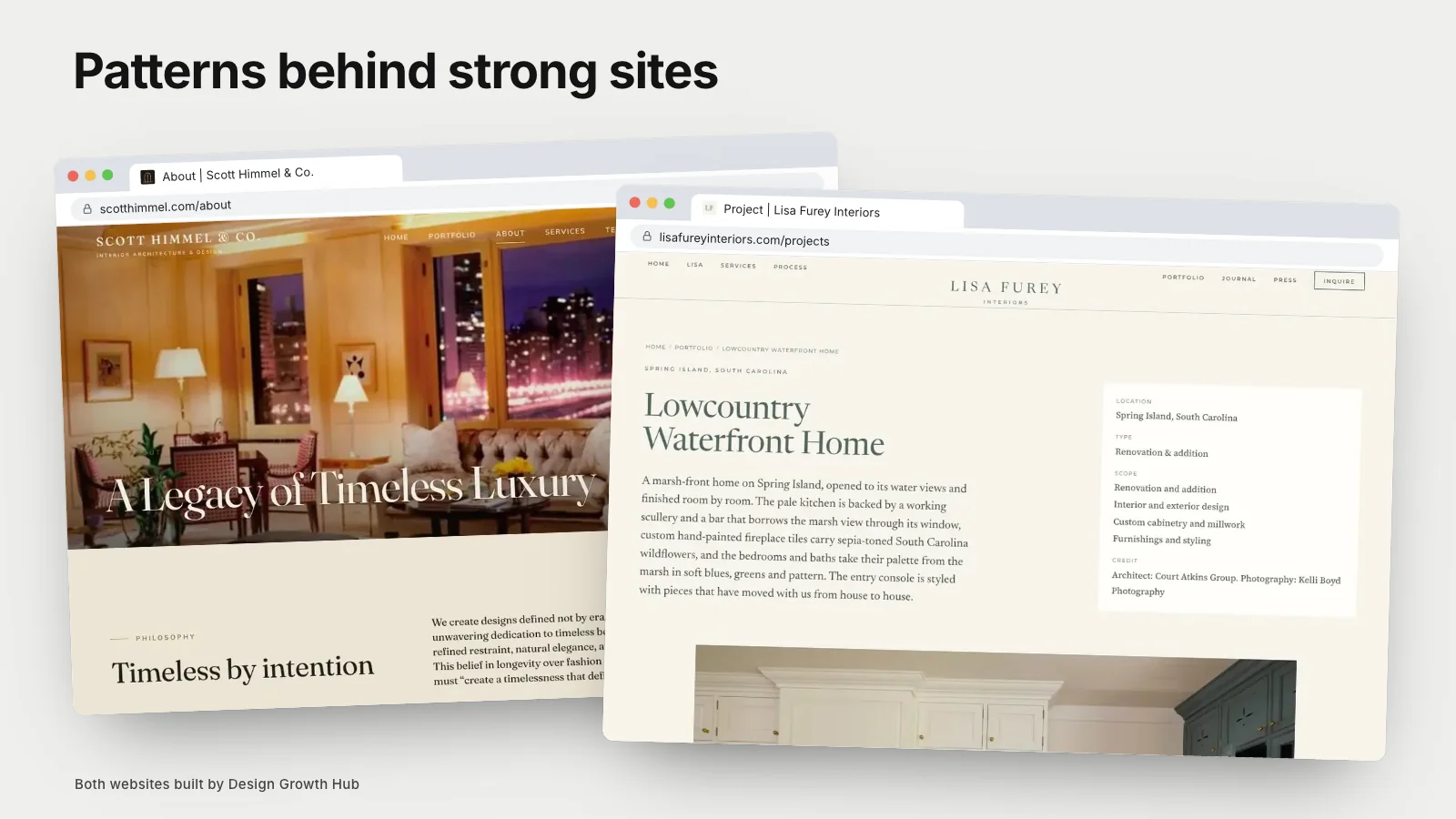
Organize each project page with an opening image, project facts, a short narrative and a sequence of photographs moving from overall views to details. Include before images where they show the transformation.
Plans and planting palettes
Site plans, sections and planting palettes show the design thinking behind the landscape. Present them at readable sizes with short captions. Planting lists with seasonal interest, native species and maintenance considerations interest homeowners and differentiate you from installers who focus only on construction.
Explain the process
Clients often do not know what a landscape architect does compared with a landscape contractor. Explain your process: site analysis, concept design, design development, documentation, contractor selection and construction observation. Mention typical timelines and how fees are structured. A clear process page reduces confusion and attracts clients who value design.
Ecology and climate
Many clients care about sustainable landscapes: native planting, water management, habitat and resilience. If these principles guide your work, explain them in plain language and show how they appear in projects. Avoid jargon; describe outcomes such as less irrigation, more pollinators or better drainage.
Collaboration
Landscape architects work closely with architects, builders, pool designers, lighting designers and interior designers. Show these collaborations and credit partners on project pages. Our articles on one website for an architecture and interior design practice and architect website design that wins residential clients show how related professions present collaborative work.
Types of projects
Organize work by type: residential gardens, estates, rooftops and terraces, public spaces, hospitality or institutional landscapes. Clients want to find work like theirs quickly.
Service areas
Landscape work is closely tied to climate and region. State clearly where you work and describe your experience with local conditions, soils and plant communities. Area pages for your main regions, with local projects, help both clients and search engines.
People and practice
Introduce principals and designers with photos and short bios. Explain the practice's philosophy. Clients hiring a landscape architect often have long relationships with them, so personality matters.
Recognition and press
Awards, publications and garden tours add credibility. Present them calmly and link to features.
Inquiry path
Keep the contact form short: name, contact details, project location, project type, timing and optional budget range. Explain what happens next, such as an introductory call or site visit. Offer to receive photos or plans.
Photography and speed
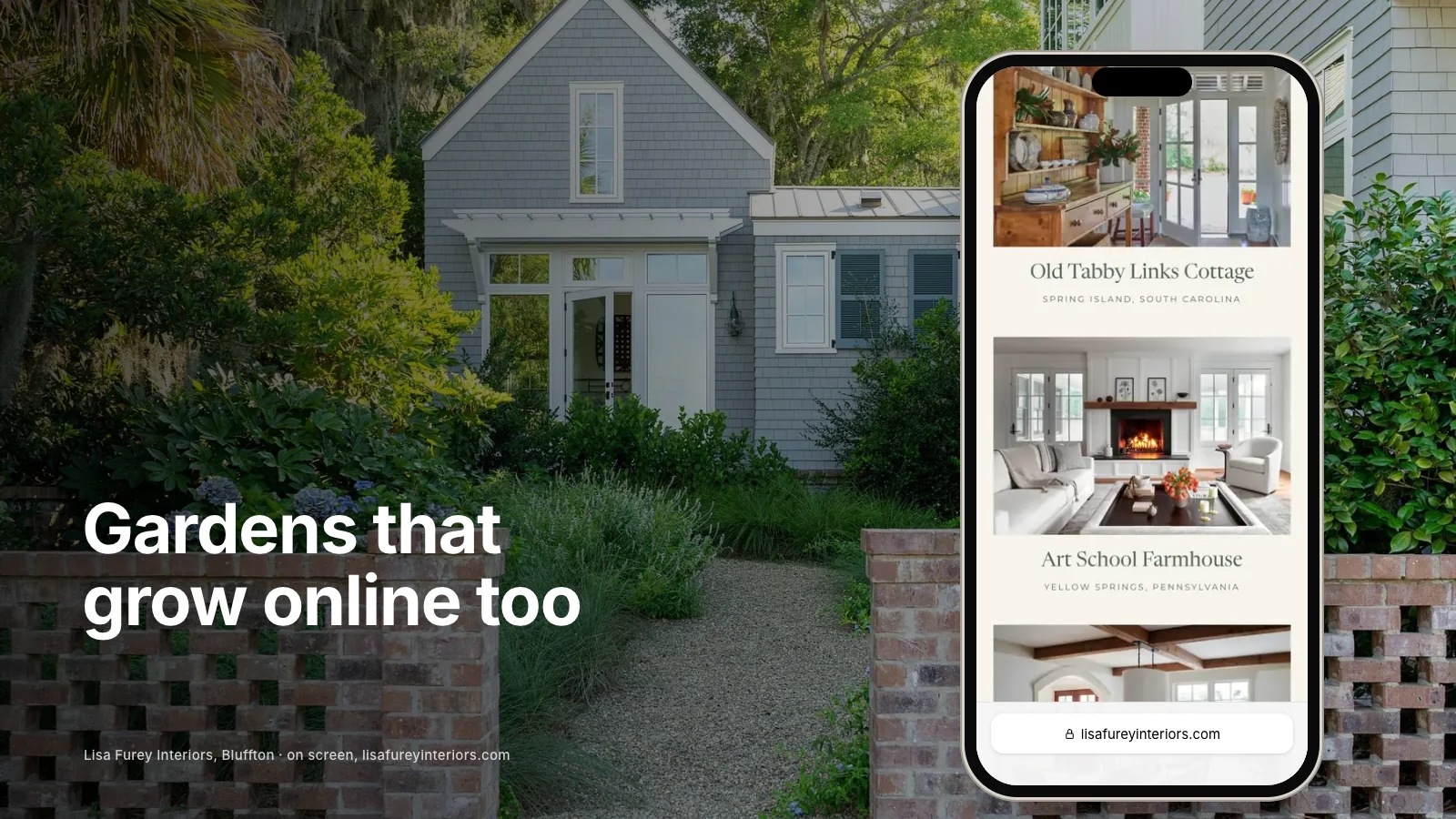
Landscape sites are image-heavy. Compress images, load them as visitors scroll and test on phones. Choose photography that shows light, texture and the experience of being in the space.
Search and AI visibility
Clients search for "landscape architect in [area]" and "garden designer near me." Clear service and area pages, detailed project pages and a complete Google Business Profile help you appear. Our articles on architect marketing ideas and architecture firm website examples offer broader ideas.
Freelance and small practices
Smaller practices can adopt a simpler version: a focused portfolio, a personal about page and a clear process. Our article on website design for freelance architects offers a lighter plan. If you plan to hire help, see hiring website designers for architects.
Maintenance and long-term care
Many clients want to know what happens after installation. Do you offer maintenance guidance, seasonal reviews or relationships with trusted gardeners? Explaining how a landscape is cared for as it matures reassures clients that the investment will be protected. A short section on aftercare, or a page explaining how you support gardens over time, can set you apart from firms that disappear once construction ends.
Lighting and evening views
Landscapes are experienced at night as well as by day. Evening photographs showing lighting design, terraces in use and the glow of a house from the garden add another dimension to your portfolio. They also show expertise in an area many homeowners care about but rarely see presented well.
Answer common questions
Homeowners often ask how long design takes, when planting should happen, how much maintenance a garden will need and whether you work with their builder. A short questions section on your process page answers these plainly and saves time in first conversations.
Keeping it alive
Add new projects and revisit mature ones. A landscape portfolio that shows gardens maturing over years is one of the most persuasive things a landscape architect can publish.
If you would like a website that shows your landscapes and thinking clearly, our website creation service works with architects and design firms. Or request a studio review to start.
Strengthen your Google + AI visibility
The studios that get found are not always the best. They are the clearest. Let us make yours easier to understand and recommend.
Request a Studio Review