Construction company website design should show capability and reliability at a glance: the types of projects you build, a portfolio with real scope and outcomes, a clear process, safety and credentials, the team behind the work and simple paths for each audience, whether homeowners, commercial clients, design partners or job seekers. A site that does this well helps the right clients shortlist you and saves time on inquiries that are not a fit.
Here are the essentials and how to organize them.
Who visits a construction company website
Unlike a small remodeler, a construction company often serves several audiences:
- Homeowners planning custom homes or major renovations.
- Commercial clients and developers.
- Architects and designers looking for builders.
- Subcontractors and suppliers.
- Job seekers.
Your website should help each find what they need quickly, without cluttering the experience for others.
A clear opening statement
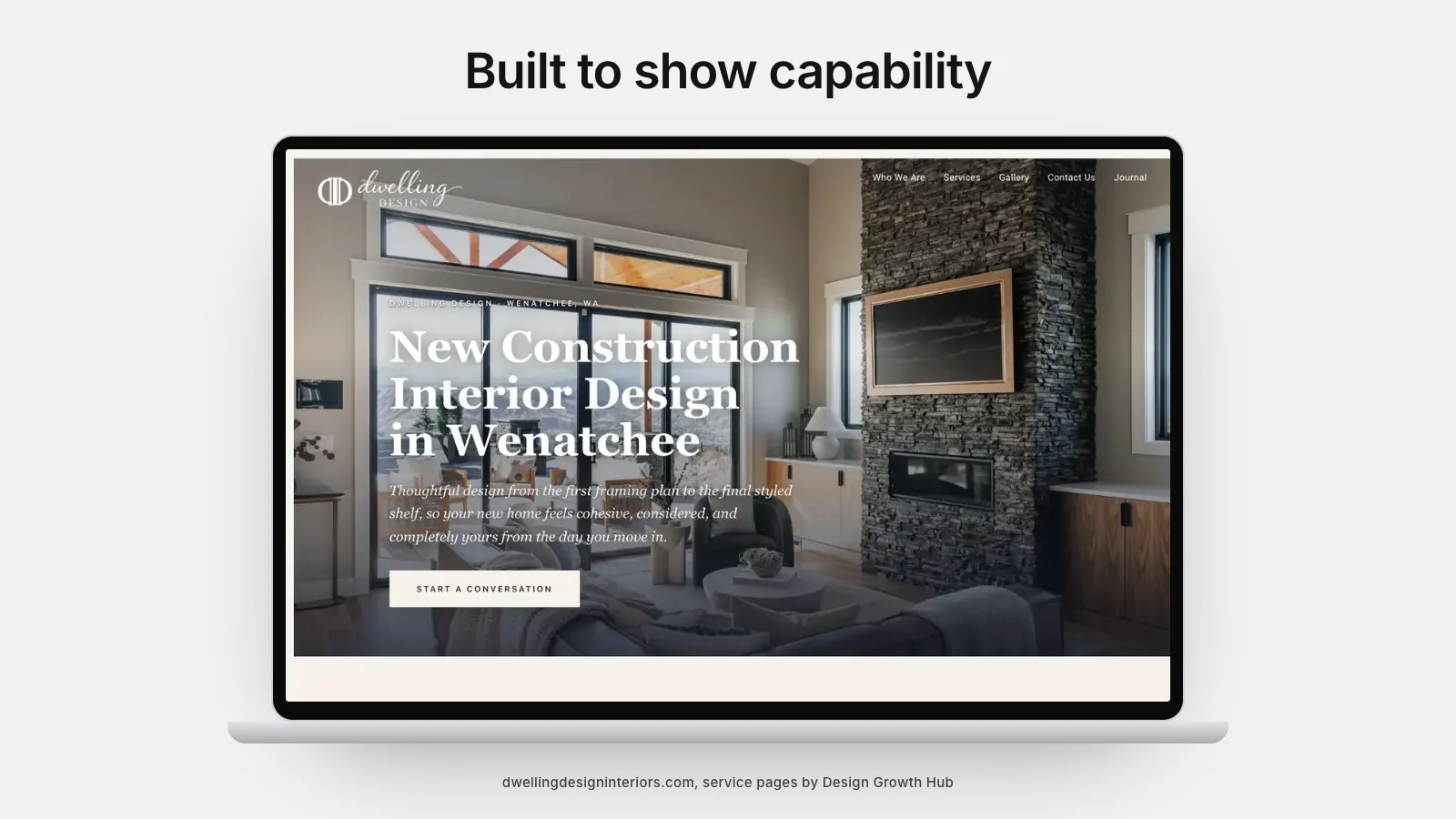
State what you build and where: "Custom homes and major renovations across Northern Virginia" or "Residential and light commercial construction in the Denver metro." Pair it with a strong project image and clear navigation.
Capabilities and services
Describe the types of work you do, each with its own page if possible: custom homes, renovations, additions, commercial build-outs, design-build. Explain your approach, typical project sizes and what sets you apart.
The project portfolio
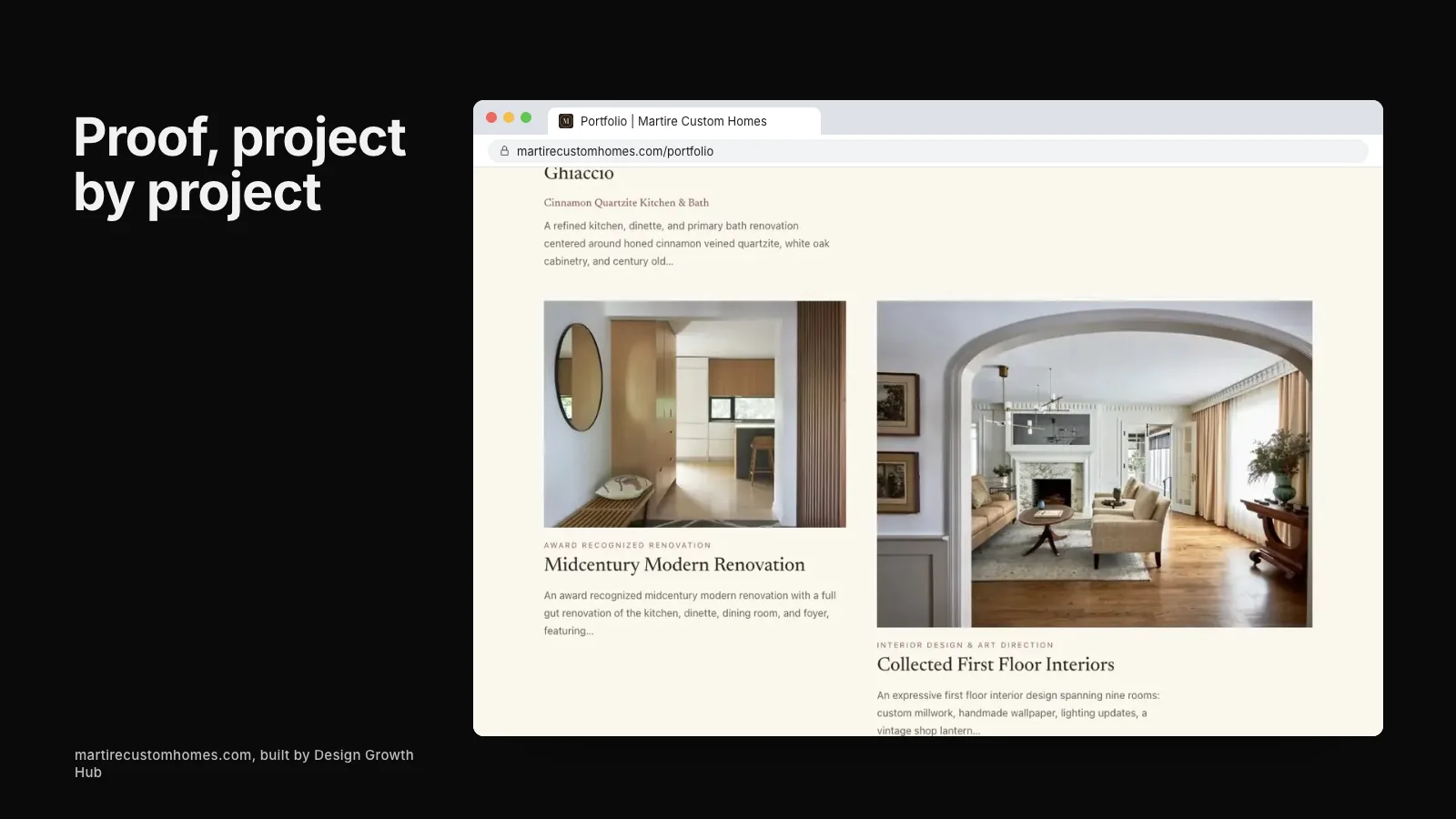
A portfolio is your strongest proof. Organize projects by type and include for each:
- Professional photos.
- Location and project type.
- Scope and size.
- Key challenges and how you solved them.
- Partners such as architects and designers.
Our guides to building a construction company portfolio website and construction company website examples explore this in depth.
Process
Larger projects make clients nervous about cost, schedule and communication. Explain your process from preconstruction through closeout: budgeting, scheduling, subcontractor management, communication, quality control and warranty. A clear process reassures clients that you manage complexity well.
Safety and credentials
For many clients, especially commercial, safety records and credentials matter. Include licenses, insurance, bonding where relevant, certifications and safety practices. Present them clearly without overwhelming the page.
The team
Introduce leadership and key staff with photos and short bios. Clients want to know who will manage their project. A team page also supports recruiting.
Testimonials and reviews
Include testimonials from homeowners, developers and design partners. Link to your Google reviews. Specific comments about communication, schedule and quality are most persuasive.
Service areas
List the regions you serve. If you work across several areas, consider pages for each with relevant projects. This helps local clients and supports search visibility.
Paths for partners and trades
Architects and designers often look for builders they can trust. A page explaining how you collaborate, with examples of joint projects, can bring valuable referrals. Subcontractors and suppliers may need information on prequalification or bidding.
Careers
A careers page helps recruit skilled people and signals growth. Describe your culture, open roles and how to apply.
Content that answers questions
Content such as articles on planning a custom home, renovation timelines or choosing a builder can attract clients early in their research. Our guide to what content a construction company website needs covers the essentials.
Mobile, speed and search
Make sure the site loads quickly on phones, especially portfolio pages. Use descriptive titles, clear headings and consistent business details. A complete Google Business Profile supports local visibility. Our article on SEO for construction companies explains more.
Making projects easy to compare
Clients comparing builders often want to see projects similar to theirs in size, budget and style. Filters for project type and location help, as do short summaries on each project card. For commercial work, note the project type and approximate scale. For residential work, note the type of home and the main scope. The easier it is for a visitor to find a project like theirs, the faster they can decide whether to contact you.
Keeping the website current
Construction companies often launch a website and then leave it untouched for years while the business changes. Projects are completed but never added. Team members leave but remain on the site. New services are offered but never described. A simple quarterly routine of adding recent projects, updating the team page and reviewing service descriptions keeps the website an accurate reflection of the company. It also gives search engines fresh, relevant content to understand.
Writing for decision makers
Commercial clients and developers often read a construction website differently from homeowners. They look for evidence of schedule control, budget management and safety, along with relevant project types and references. Homeowners look for craftsmanship, communication and trust. If you serve both, separate the paths clearly so each audience reads the content written for them rather than a compromise that speaks to neither.
Budgeting for the site
Construction websites range from simple to extensive. Our guide to how much a construction business website costs explains the main factors.
Choosing a web partner
Ask potential partners for construction or builder sites they have built and how they handle portfolios, search and performance. Our guide to hiring a contractor website design company lists useful questions. For remodelers, our article on contractor website design that wins remodeling jobs focuses on the homeowner side.
Example from our work
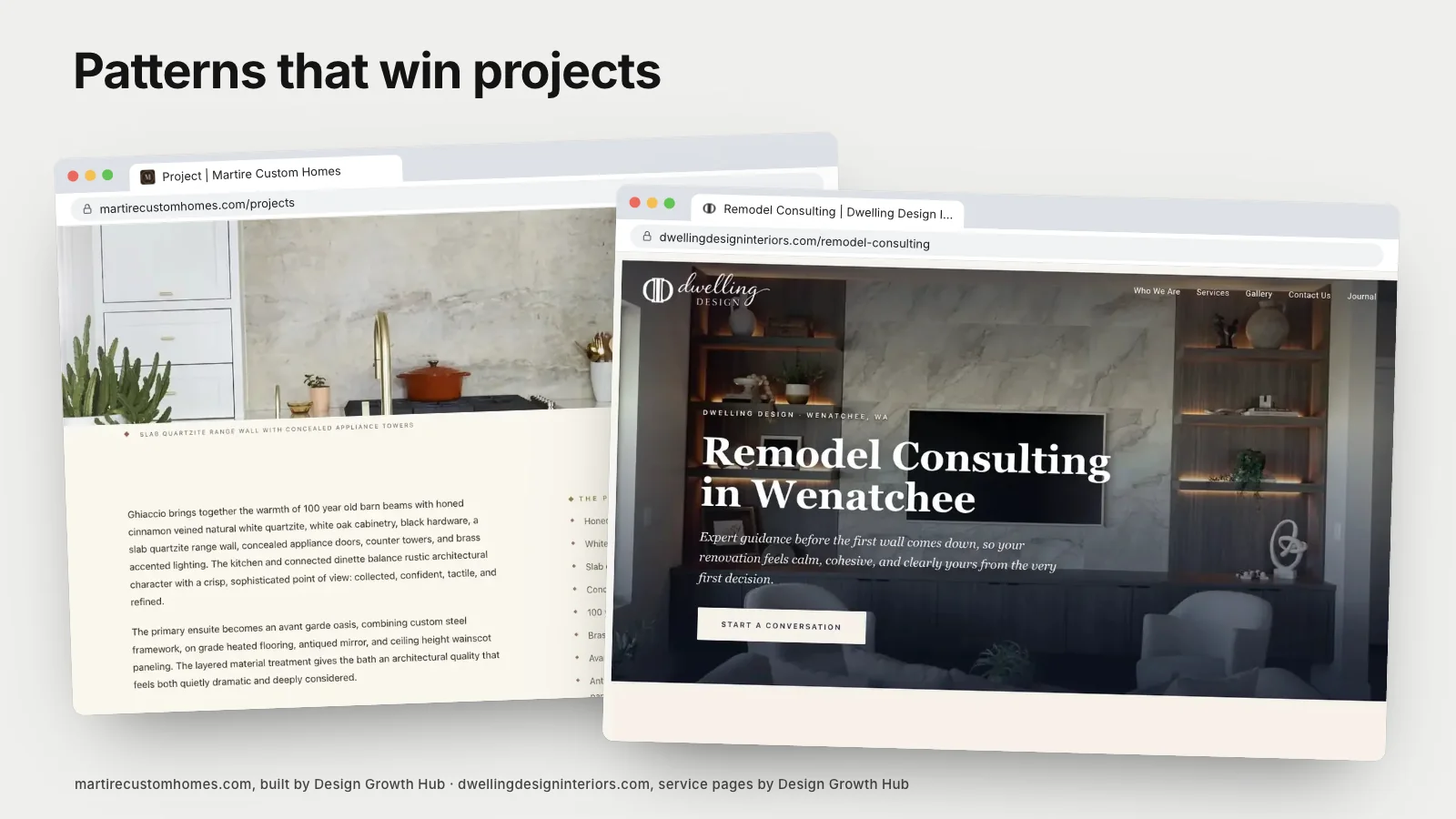
Martire Custom Homes, a luxury renovation and custom home builder near Chicago, needed a new identity and website. The result is a 49-page site with portfolio stories, press, process, a journal and service-area pages for Chicago and the North Shore. You can see it in the Martire Custom Homes case study.
If you would like a website that shows your company's capability clearly, our website creation service works with builders and construction companies. Or request a studio review to start.
Turn your website into a visibility asset
A website can be a brochure or an asset that brings clients. We help design studios build the second kind.
Request a Studio Review