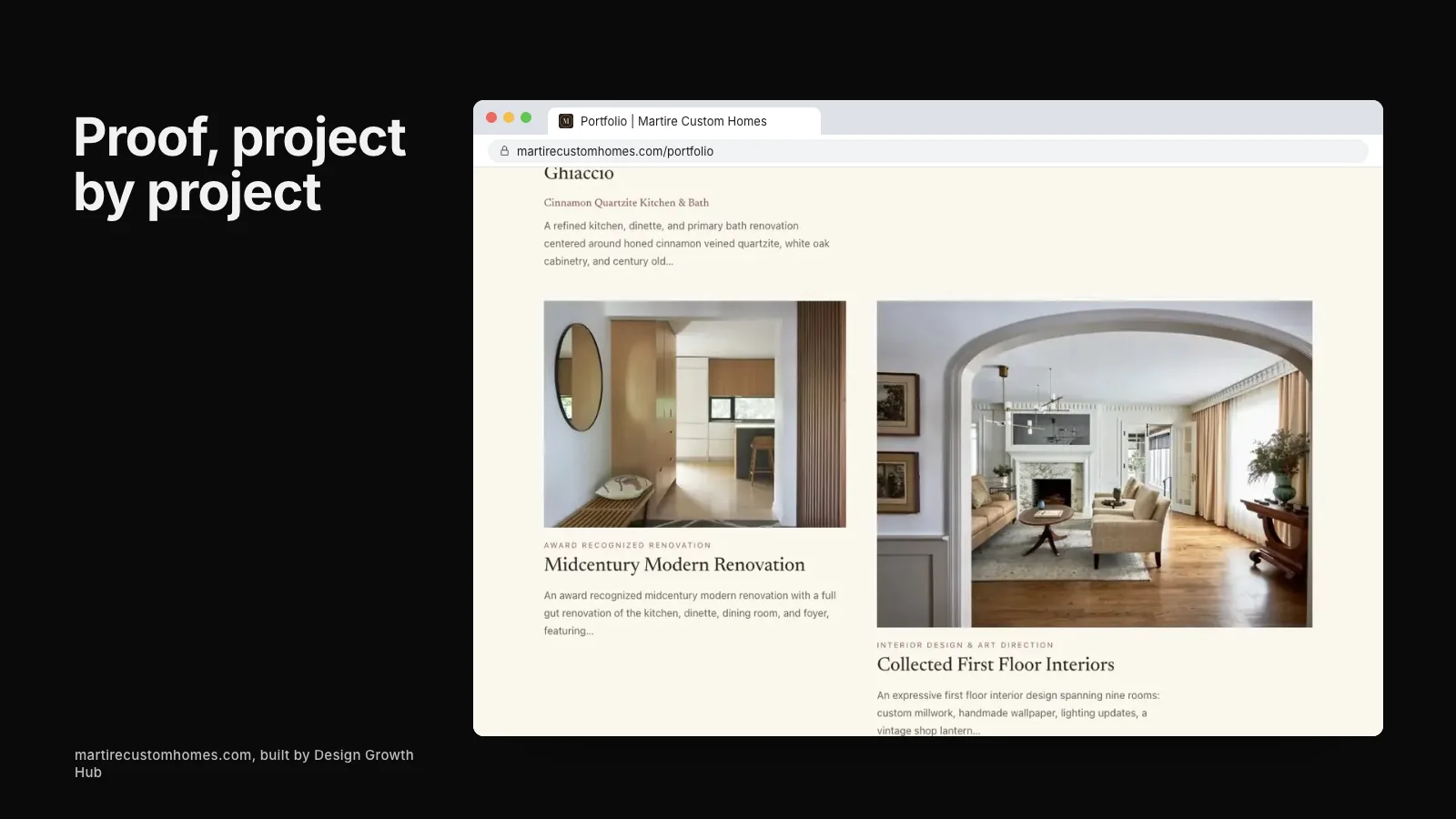
A construction company portfolio website proves what you can build. The strongest portfolios feature a curated selection of projects that represent the work you want more of, each with its own page including professional photos, project facts such as location, type, size and duration, a short story about challenges and solutions and credits to partners. Projects are organized by type so clients can find relevant work quickly, and each page links to related services.
Here is how to plan and build a portfolio that wins better projects.
Choose the projects carefully
Your portfolio is not an archive of everything you have built. It is a selection designed to attract your next clients. Start with projects that represent the work you want more of, are well photographed and show your strengths. Leave out projects that no longer reflect your direction.
Give each project its own page
A dedicated page lets you tell a complete story and gives search engines a specific page to understand. Each project page should include:
- A descriptive title, such as "Lakefront custom home in Lake Geneva."
- Professional photos: exterior, interiors, details.
- Project facts: location, type, size, duration, scope.
- Partners: architect, designer, key trades.
- A short story: the client's goal, challenges and how you solved them.
- Links to related services and similar projects.
Write the story
Clients want to know how you handle complexity. A few paragraphs about site conditions, design challenges, schedule pressures or unusual materials show your problem-solving ability. Keep the tone factual and specific. "We reinforced the existing foundation to support a second story without disrupting the family's daily life" says more than "quality craftsmanship."
Photography
Professional photography is essential. Plan shoots for your best projects at completion, ideally with good light and some styling. Include details that show craftsmanship: joinery, stonework, trim, roofing details. Process photos can add interest within the story.
Organize for easy browsing
Group projects by type, such as custom homes, renovations, additions or commercial. Add filters once you have more than a dozen projects. Short descriptions on project thumbnails, such as type and location, help visitors scan.
Credit partners
Crediting architects, designers and trades shows collaboration and builds relationships. Partners often share projects that credit them, extending your reach.
Connect projects to services
Each project should link to the related service page, and each service page should show relevant projects. This helps clients understand your capabilities and helps search engines connect your pages. Our guide to what content a construction company website needs covers how services and projects support each other.
Show before and after
For renovations and additions, before and after photos show the scale of the transformation. Match angles where possible and explain what changed.
Include testimonials
A short quote from the client on each project page adds credibility. Ask for permission and keep quotes specific.
Make it fast
Portfolios are image-heavy. Resize and compress images, load them as visitors scroll and test pages on phones. A slow portfolio frustrates visitors and harms search visibility.
Help search and AI tools
Descriptive titles, project facts, stories and image alt text give search engines and AI tools specific information about your work. Clients searching for "historic renovation contractor in [town]" are more likely to find a page that clearly describes such a project.
Keep it current
Add new projects as they are photographed. Revisit the selection once a year, retiring older or less representative work.
Write titles people search for
Project titles matter for both visitors and search. A title like "Modern Farmhouse" tells people little; "New construction modern farmhouse in Barrington" tells them the project type and location immediately. Descriptive titles also help search engines match your project pages to searches for that kind of work in that place.
Show the process, not just the result
Clients choosing a builder want to know how you work. Including a few process photos within a project story, such as foundation work, framing or a tricky installation, shows the care that goes into the parts no one sees once the home is finished. Pair each process image with a short caption explaining what it shows.
Respect client privacy
Many homeowners are happy to share their finished homes but prefer to keep their identity and exact address private. Describe clients generally, avoid showing house numbers or street signs and agree in advance what can be published. Discretion builds trust with high-end clients, who often value privacy as much as quality.
Use the portfolio in sales
Your portfolio is not only for the website. Share relevant project pages with prospective clients after first meetings, include them in proposals and send them to architects and designers you want to work with. A well-built portfolio becomes a sales tool used every week.
Examples and design
Our articles on construction company website examples and construction company website design essentials show how portfolios fit into the overall site. If you are budgeting, see construction business website cost. If you are hiring help, our guide to hiring a contractor website design company lists questions to ask, and how to build a construction business website sets out the steps.
A real example
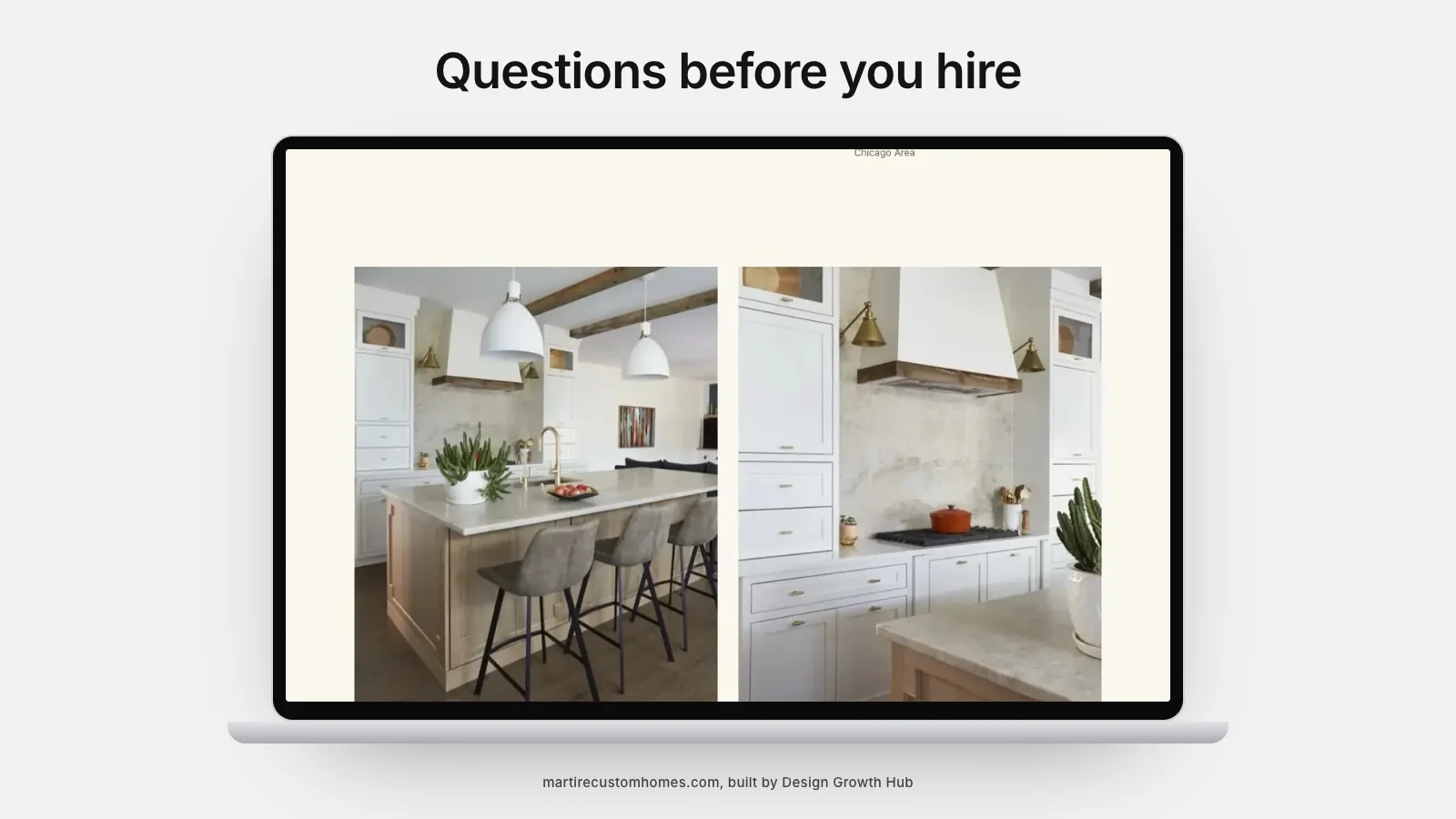
Martire Custom Homes, a renovation and custom home builder near Chicago, presents its work through portfolio stories alongside press, process and service-area pages. You can see how it comes together in the Martire Custom Homes case study.
If you would like help building a portfolio that proves your capability, our website redesign service works with builders. Or request a studio review to start.
Build your visibility foundation
Design Growth Hub helps interior designers build the visibility foundation behind high-value discovery.
Request a Studio Review