A construction company website needs content that answers the questions clients ask before they shortlist a builder: what you build and where, what projects like theirs looked like, how your process works, who will manage the job, what credentials and reviews you have and how to get in touch. Specific, plainly written project stories, process pages, team introductions and FAQs carry far more weight than slogans or generic claims.
Here is the content to include, page by page, and how to write it.
Home page content
Your home page should say clearly what you build and where in a single sentence near the top. Follow it with a few featured projects, a short summary of your services, a line or two about your approach, a testimonial and a clear way to get in touch.
Example opening line: "Custom homes and whole-home renovations across the Main Line, built by a team that answers the phone."
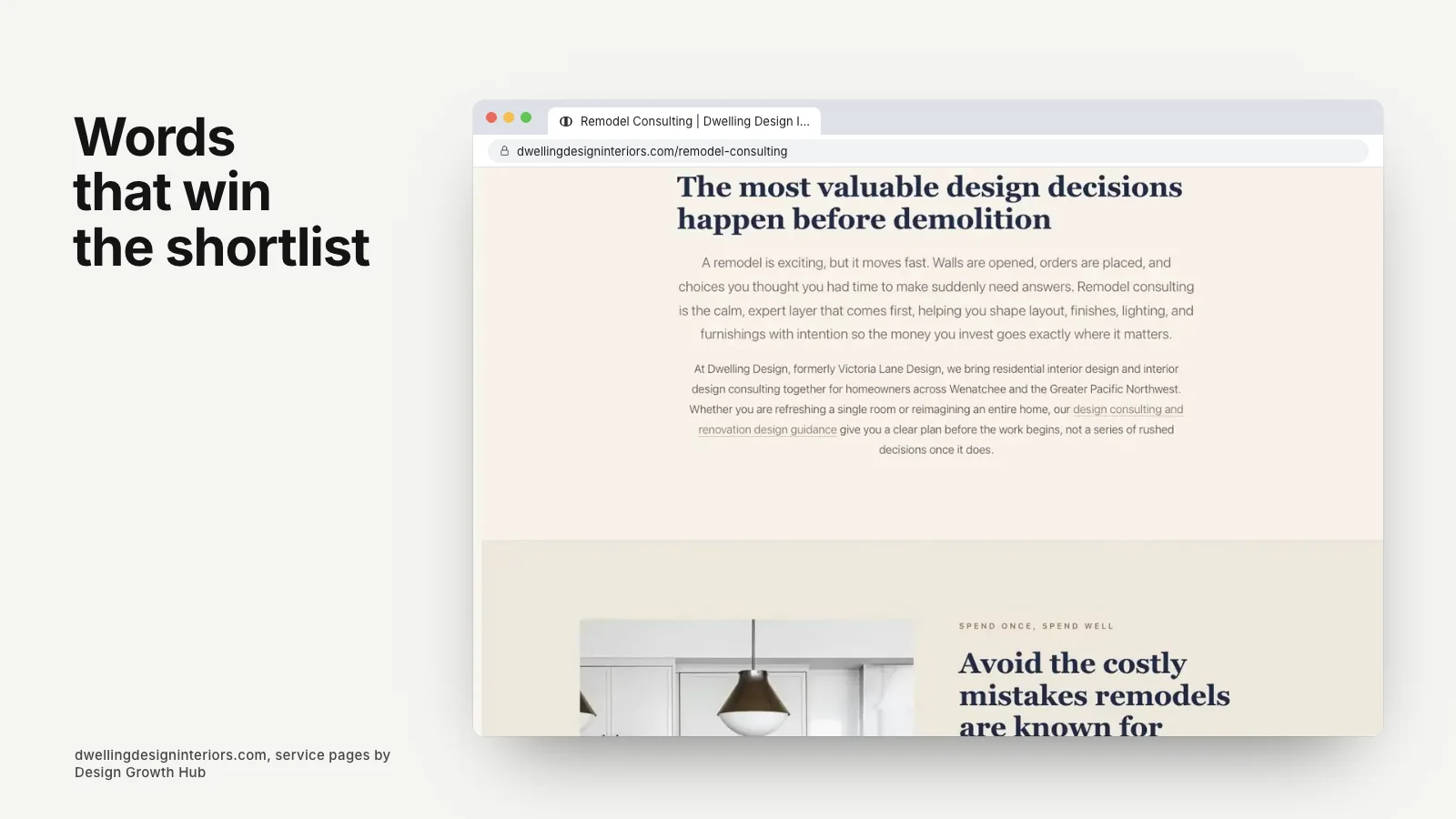
Service page content
Each service needs its own page with:
- Who the service is for.
- What is included.
- How the process works for that service.
- Two or three related projects.
- Common questions and honest answers.
Write in the language clients use. A homeowner searches for "home addition" rather than "residential expansion services".
Project stories
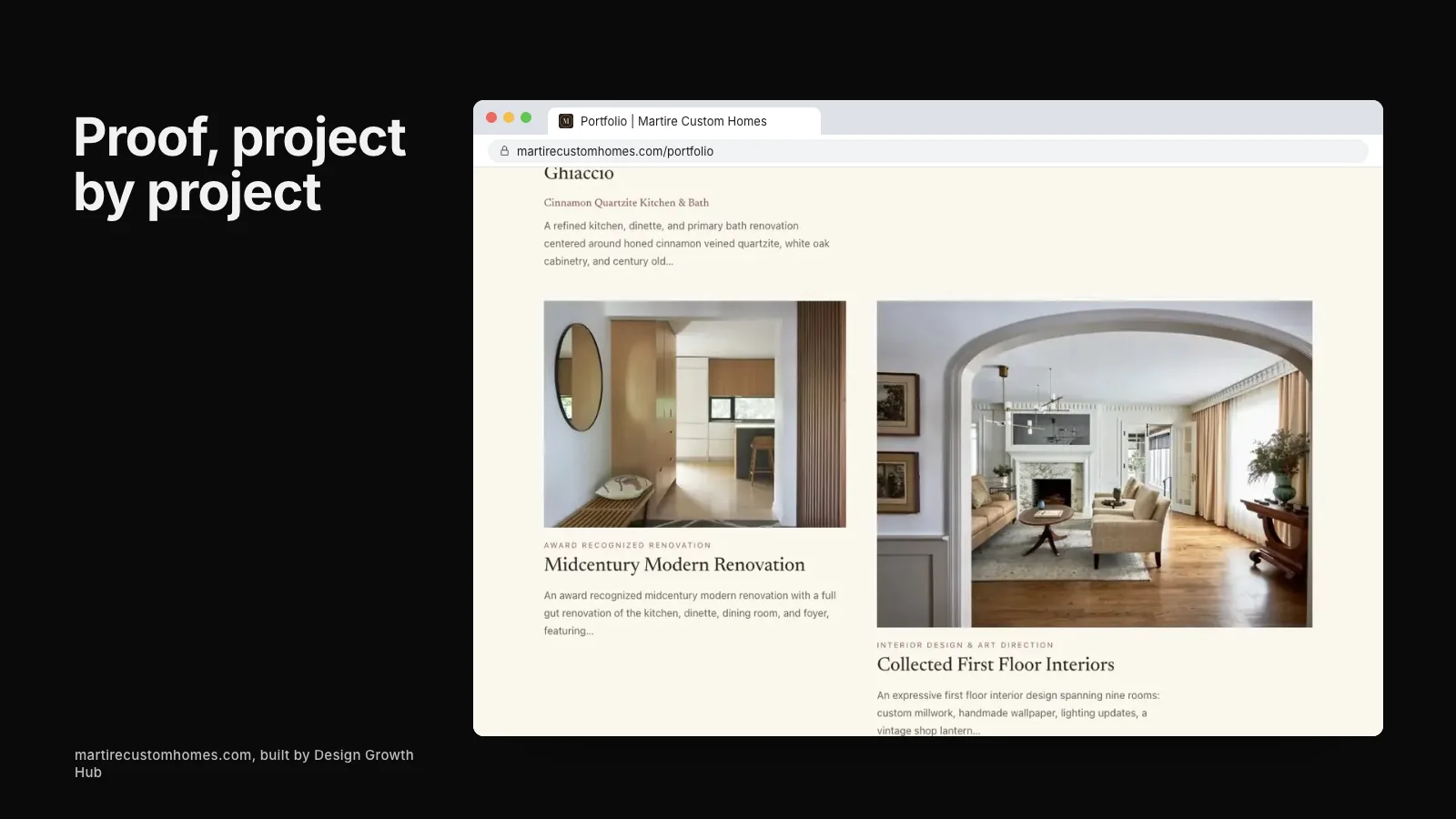
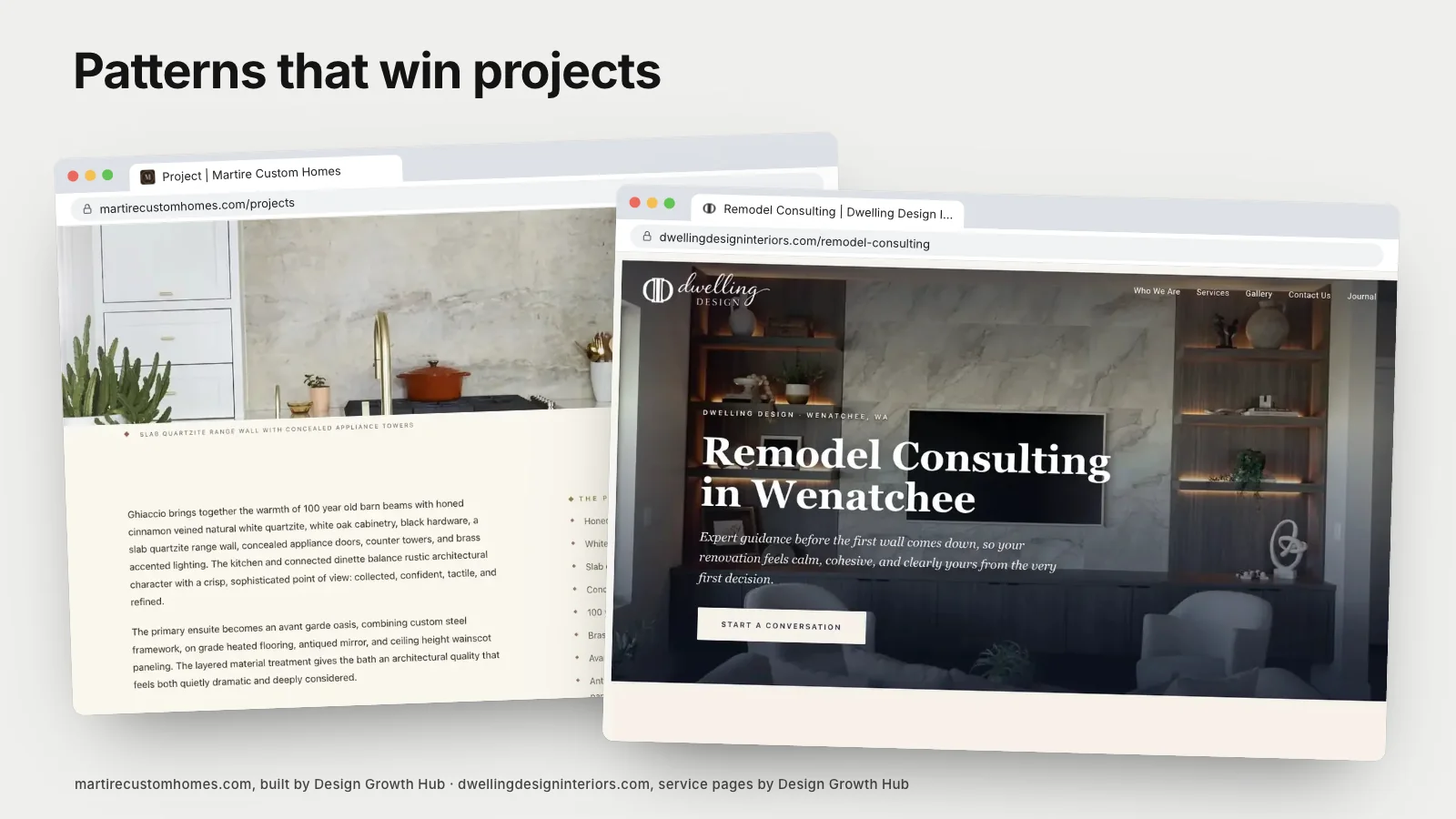
Projects are your strongest proof. For each significant project, write a short story:
- The client's goal.
- The starting point and challenges.
- What you built and how.
- Who you worked with, such as the architect and designer.
- The result.
Add project facts such as location, type, size and duration where helpful. Our guide to building a construction company portfolio website explains how to present these pages.
Process content
Explain how a project unfolds, from first conversation to completion and warranty. Describe how you estimate, schedule, communicate, manage changes and keep the site safe and clean. Clients worry about cost and chaos; a clear process eases those worries.
Team content
Introduce the owner, project managers and key staff with real photos and short bios. Mention experience, specialties and something human. Clients want to know who will be in charge of their project.
Credentials and safety
List licenses, insurance, certifications and memberships. For commercial work, include safety practices and records where appropriate. Keep this information accurate and easy to find.
Reviews and testimonials
Quote clients and partners, ideally with names and locations. Choose testimonials that mention specific qualities: communication, quality, schedule and cleanliness. Link to your Google reviews.
Service area content
Describe the areas you serve. If you have pages for specific towns, write something genuinely local about each: the kinds of homes there, typical projects and examples you have built nearby.
FAQs
Answer the questions clients ask most often: how long projects take, how pricing works, whether they can live at home during a renovation, how changes are handled and what warranties you offer. FAQs help visitors and give search engines and AI tools clear answers to draw on.
Articles and guides
Helpful articles can attract clients early in their research: planning a custom home, choosing between renovating and building, understanding construction timelines or preparing for a kitchen remodel. Write from experience, keep them practical and link to related services and projects.
Content for partners and job seekers
A page for architects and designers explaining how you collaborate can bring referrals. A careers page with real information about working at your company supports recruiting.
Photo captions and alt text
Captions and alt text are small pieces of content that add up. A caption such as "Reclaimed oak beams installed in a 1910 farmhouse addition" tells visitors and search engines far more than an unlabeled photo. Alt text describing what an image shows makes your site accessible to people using screen readers and helps search engines understand your work. Write both for your most important project images.
Writing style
- Use plain language and short sentences.
- Be specific: numbers of projects, types of homes, real challenges.
- Avoid clichés like "quality craftsmanship" without examples.
- Write as you would speak to a client on site.
- Check every claim for accuracy.
Content and search
Clear, specific content helps Google and AI tools understand your company. Descriptive titles, headings and project details match the searches clients make. Our article on SEO for construction companies explains how content supports visibility.
Content that answers objections
Every client has hesitations before contacting a builder. Will the project go over budget? Will the schedule slip? Will the house be a mess for months? Will anyone answer the phone? Good content addresses these objections directly and honestly. A short section on how you handle budget changes, a description of how you protect the home during work and a clear statement of how often clients hear from you can turn hesitation into a phone call.
Keeping content current
Add new projects regularly, update the team page when people join or leave and revise service pages as your work changes. Outdated content quietly undermines trust.
Examples and planning
Our articles on construction company website examples and construction company website design essentials show how content fits into the overall design. For custom home builders, what a custom home builder website needs offers more specific guidance. If you are budgeting, see construction business website cost, and if hiring help, hiring a contractor website design company.
If you would like help writing and structuring your website content, our website redesign service includes content support for builders. Or request a studio review to start.
Strengthen your Google + AI visibility
The studios that get found are not always the best. They are the clearest. Let us make yours easier to understand and recommend.
Request a Studio Review