A custom home builder website needs to earn the trust of people making one of the biggest decisions of their lives. That means a portfolio of homes told as stories, a clear explanation of the building process from lot and design to handover, evidence of craftsmanship and communication, relationships with respected architects and designers, honest guidance on budgets and timelines, real testimonials and a calm, simple way to start a conversation.
Here is what to include and how to present it.
Who your visitors are
Custom home clients are often researching for months or years before building. Some own land; others are still searching. Some have an architect; others need guidance. They may be relocating, building a forever home or creating a second home. Your website should welcome them at each stage.
A considered opening
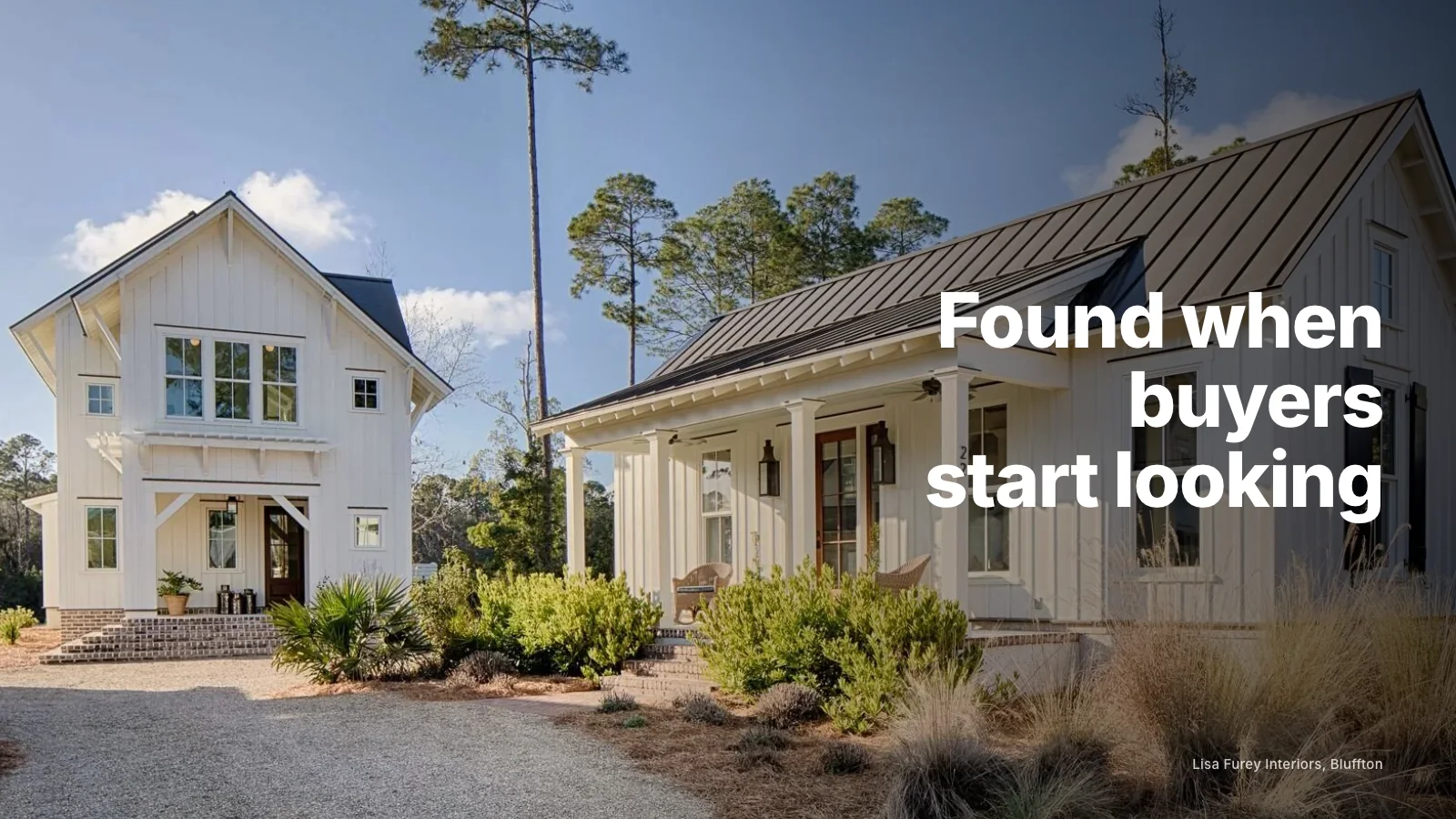
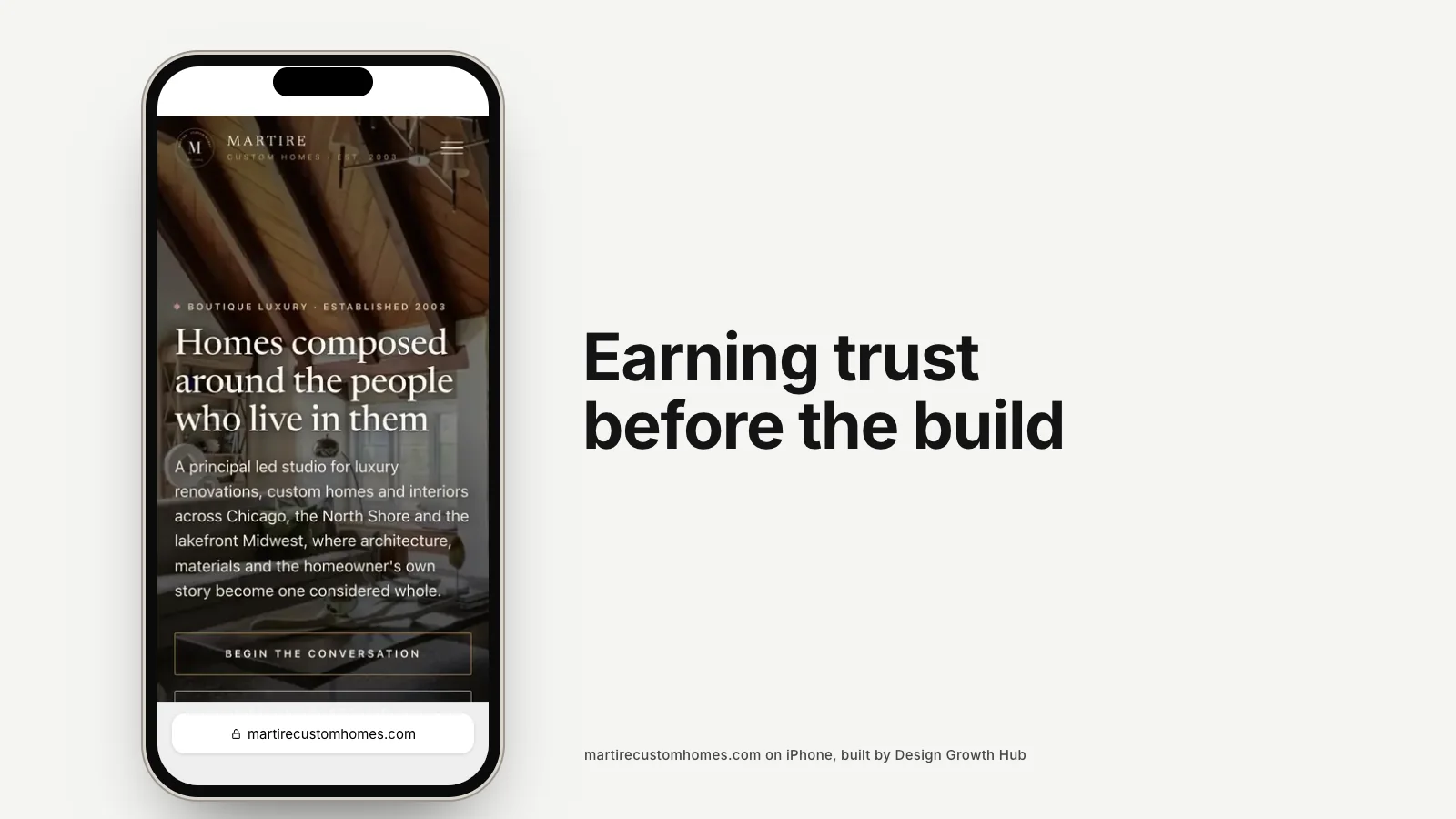
The first screen should feel as considered as your homes. Use a single strong image of a finished home, a clear statement of what you build and where and a calm invitation to explore or get in touch.
Example: "Custom homes and estate renovations across Chicago's North Shore, built with care for families who plan to stay."
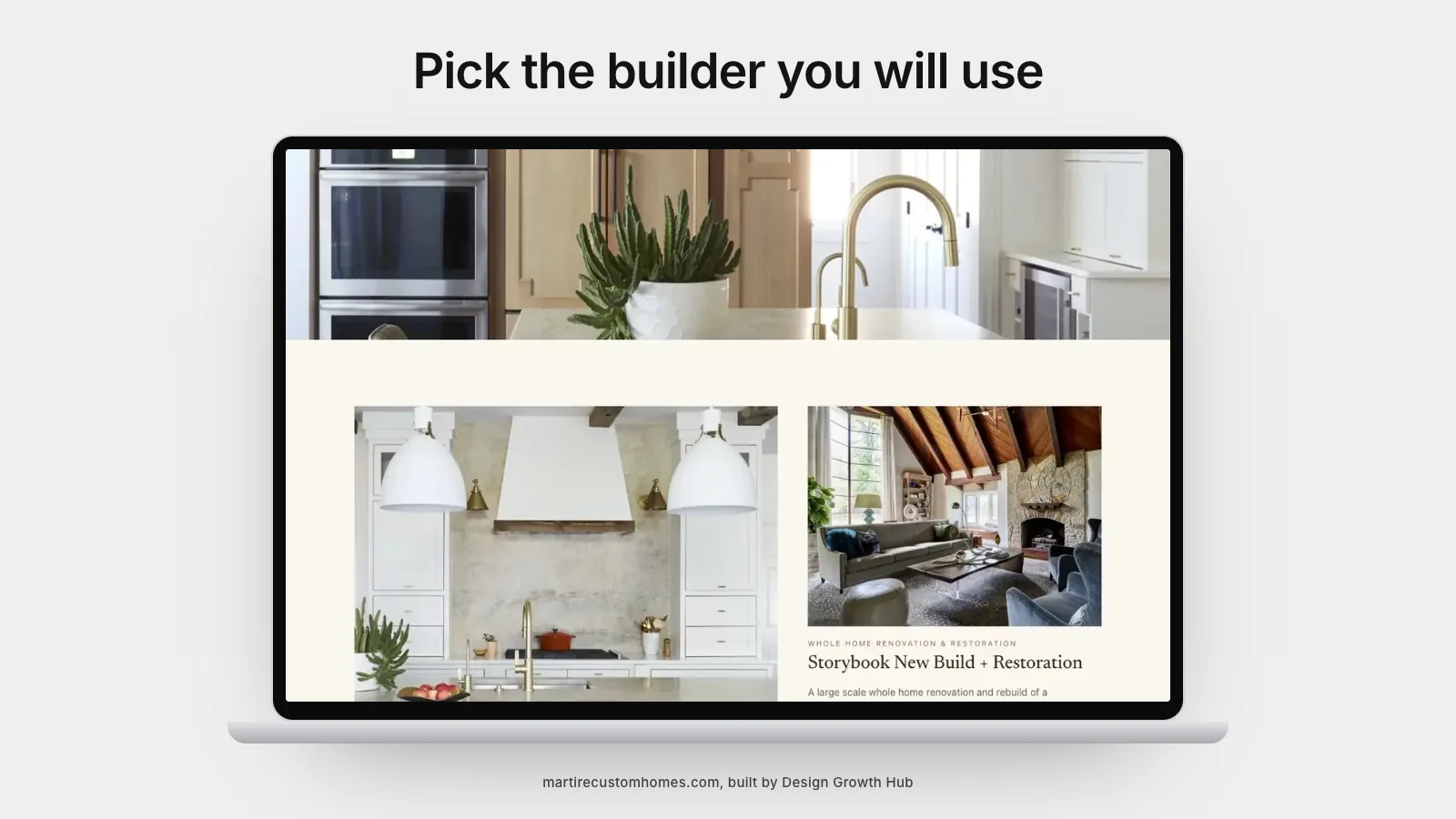
Homes told as stories
A gallery of beautiful homes is not enough. Give each home its own page with:
- Professional photography of the exterior, interiors and details.
- Location and type of home.
- The architect and designer involved.
- The clients' goals in a sentence or two.
- Notable challenges and craftsmanship.
- Size and key features where helpful.
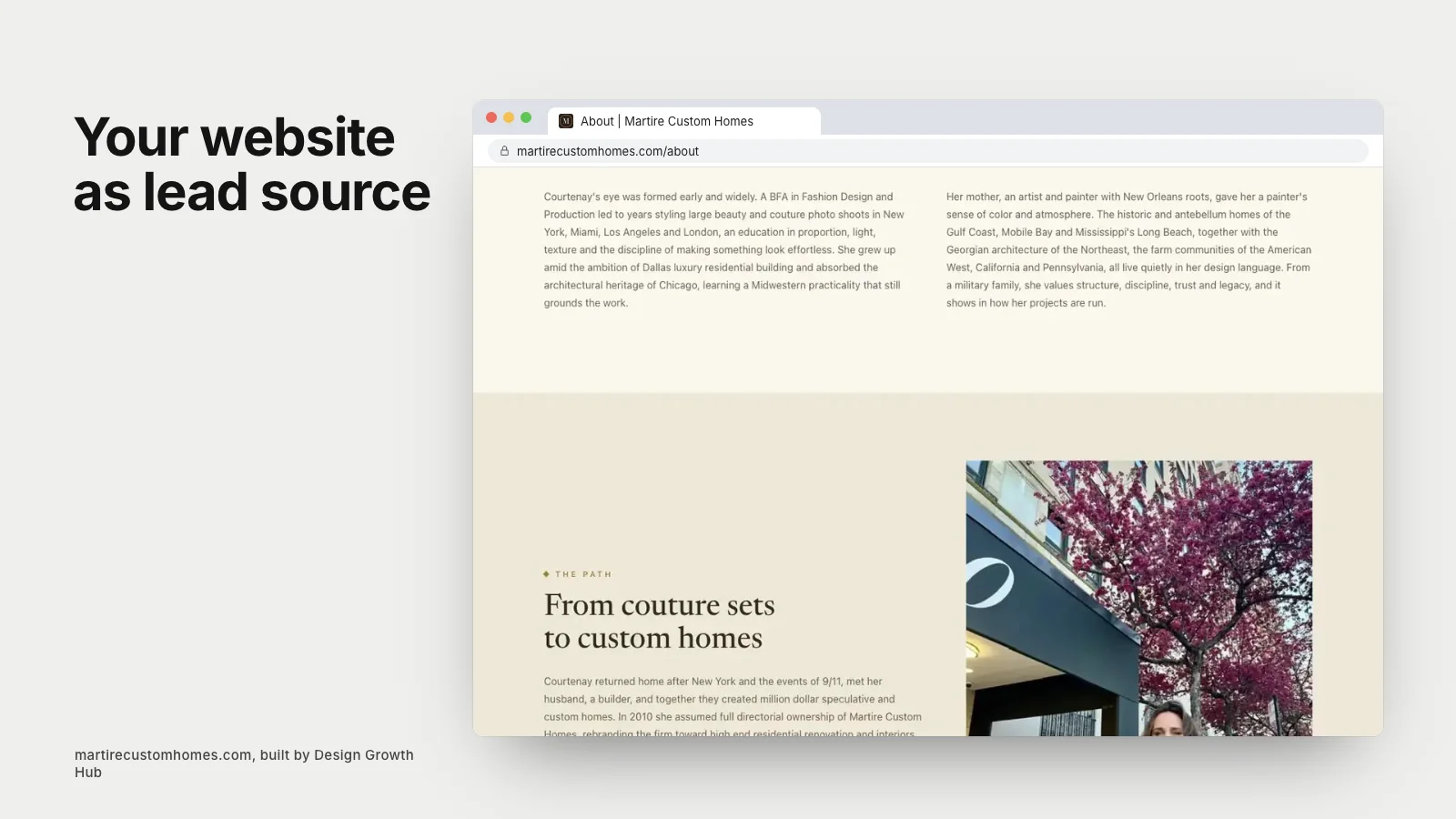
Stories show how you think and work. Martire Custom Homes presents its portfolio this way, with project stories, press and process. See the Martire Custom Homes case study.
The building process
Explain your process clearly:
- Initial conversation: understanding goals, budget and timeline.
- Lot evaluation: if relevant, assessing sites before purchase.
- Design: working with the clients' architect or your design partners.
- Preconstruction: budgeting, selections and scheduling.
- Construction: milestones and how clients stay informed.
- Handover: walkthroughs and orientation.
- Warranty and care: ongoing support after move-in.
A clear process reassures clients that their project will be managed calmly.
Design partners
Many custom home clients choose a builder through an architect or designer. Show the professionals you collaborate with and how you work together. A page for architects and designers can strengthen these relationships.
Craftsmanship and materials
Show details: millwork, stonework, framing quality, finishes. Explain your standards and the trades you work with. Craftsmanship photos reassure clients that quality extends beyond what is visible in finished photos.
Budget and timeline guidance
Clients appreciate honest guidance about what affects cost and how long custom homes typically take. You do not need to publish prices, but explaining factors such as size, site conditions, materials and design complexity helps clients plan and filters out mismatches.
Testimonials
Testimonials from past clients describing the experience, especially communication and problem solving, are powerful. Include names and locations with permission. Link to Google reviews.
Press and recognition
Awards, magazine features and home tours add credibility. Present them clearly on an about or press page.
Service areas
List the communities you build in. Pages for key areas, with homes built there and local considerations, help clients and support local search.
A calm inquiry
Keep the inquiry form short and explain what happens next. Ask a few helpful questions: location, whether they own land, timeline and approximate budget range. Offer a phone number for those who prefer to talk.
Content for early research
Many custom home clients are early in their journey. Articles on choosing a lot, working with an architect or planning a custom home budget can attract them and build trust. Our guide to what content a construction company website needs offers ideas.
Search and visibility
Clients search for "custom home builder in [area]" and similar phrases. Clear service and location pages, project stories and a complete Google Business Profile help you appear. Our guide to home builder SEO explains the details. For lead generation more broadly, see remodeling lead generation from your own website.
Show the experience of building with you
Many custom home clients fear the building process itself: endless decisions, surprise costs and poor communication. Your website can address these fears directly. Describe how clients make selections and how you help them stay on budget. Explain how often they will hear from you and through which channels. Share a short story about a problem that arose during a build and how you handled it. These details reassure clients far more than general promises of quality.
Respect their pace
Custom home clients rarely decide quickly. They may visit your site many times over months. Give them reasons to return: new homes added to the portfolio, occasional journal entries about the building process and an easy way to join a mailing list. When they are ready, the relationship already exists.
Choosing a platform and partner
Custom home builder sites often need many project pages and strong image performance. Our article on choosing a website builder for contractors explains platform options. If you prefer an agency, our article on what a custom home builder marketing agency should do explains what to expect. For semi-custom and production builders, see the home builder website that turns visitors into clients.
If you would like a website that reflects the care in your homes, our website creation service works with custom home builders. Or request a studio review to start.
Fix the structure behind your website
Beauty gets attention. Structure gets discovery. We help you build both, so the right clients arrive ready.
Request a Studio Review