Presenting your portfolio on an interior designer website means more than adding galleries. It means designing an overview page that helps visitors find work like theirs, ordering projects strategically, connecting each one to related services and making sure the whole collection supports your search visibility and any advertising you run.
This article focuses on the portfolio as part of the website: how it is organized, how it connects and how it works for visitors who arrive from different places.
The portfolio overview page
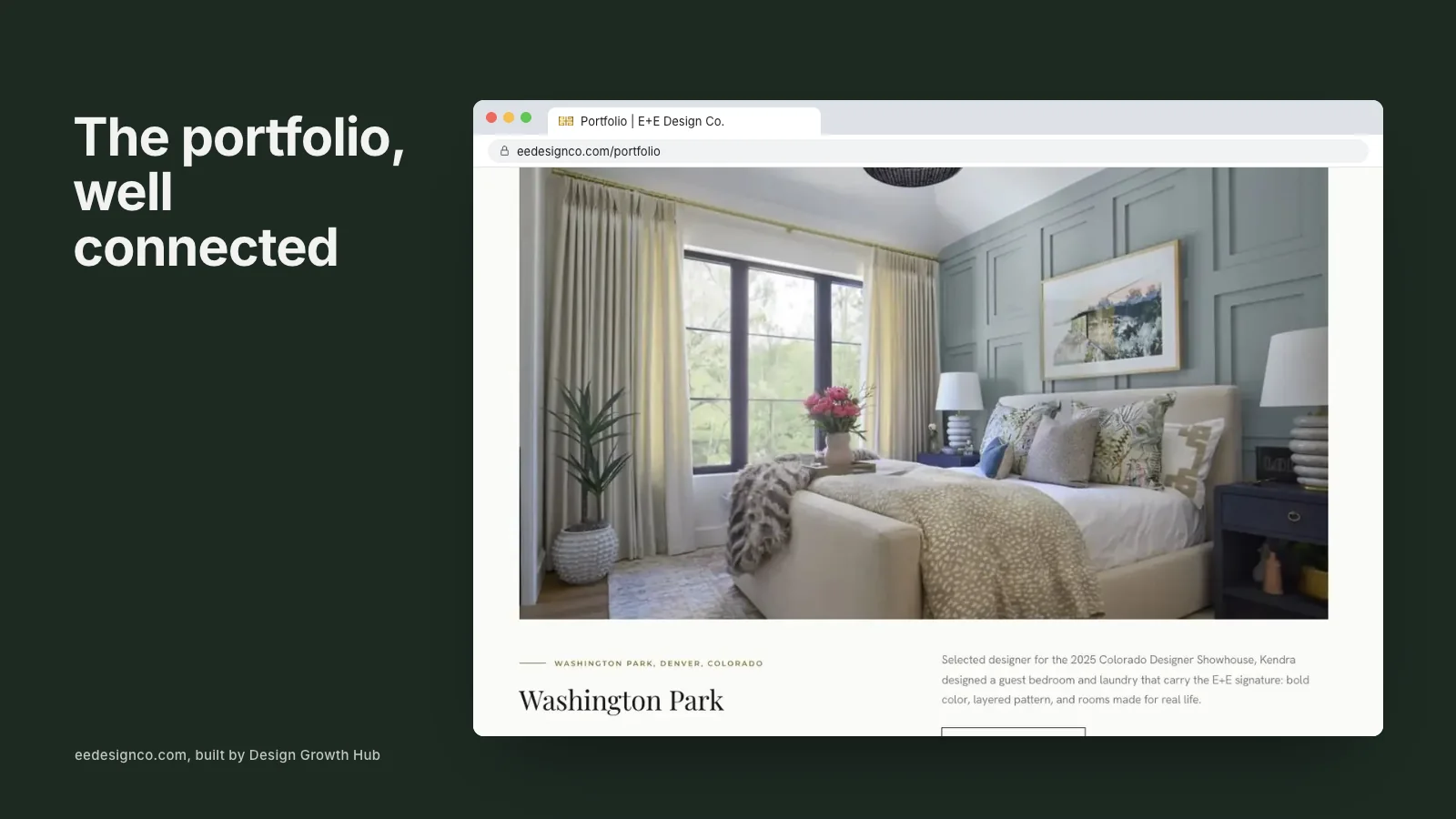
The overview page is often the second page a visitor sees, right after the home page. It should make browsing effortless. Show each project as a strong thumbnail with a clear title and a short line naming the project type and location. Keep thumbnails the same shape so the page feels orderly.
Avoid making visitors click into every project to find out what it is. "Lakeside renovation, Wayzata" tells them far more than a single evocative word.
Order projects with intent
Most studios order projects by date. A better approach is to order them by what you want more of. Put your most representative, highest-quality projects first. If you want more new construction work, lead with new builds. If you want more whole-home renovations, lead with those.
Revisit the order when your goals change. It is one of the simplest ways to influence the inquiries you receive.
Filters and categories
Once you have more than a dozen projects, filters help visitors find what matters to them. Common categories include project type, such as renovation, new construction, kitchen and bath, and location or region. Keep the number of filters small. Too many options can make the page feel like a database rather than a curated collection.
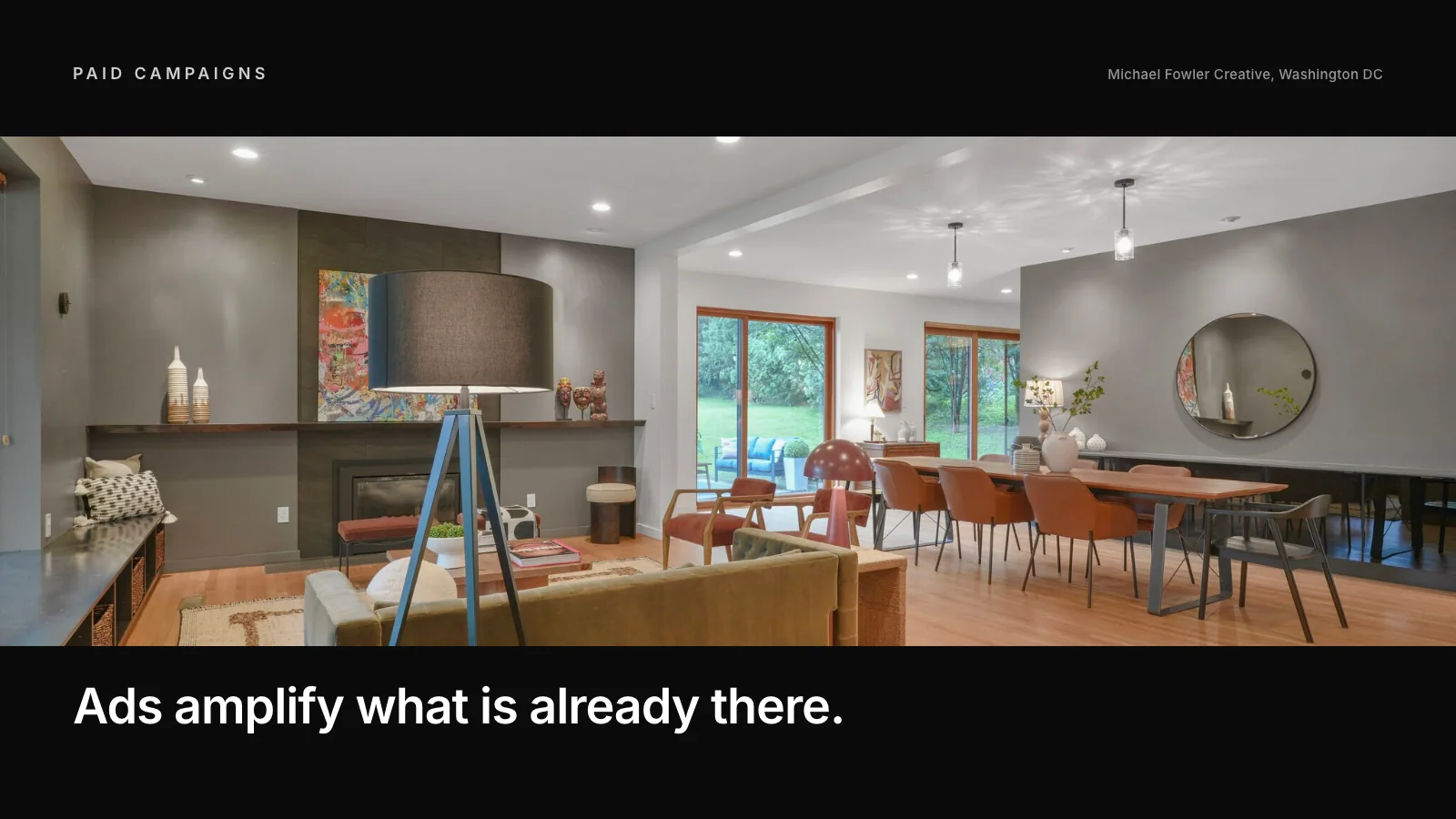
Michael Fowler Creative in Washington, DC, has more than 290 projects across staging and design. A filterable portfolio, together with one flagship case study told in depth, makes that archive manageable. The Michael Fowler Creative case study shows how.
Connect projects to services
Each project should link to the service it represents, and each service page should show related projects. This two-way connection helps visitors move naturally from inspiration to understanding what you offer. It also helps Google understand which projects support which services. Our article on why studios need service pages, not just a portfolio explains the broader idea, and internal linking for interior designers covers how links help search engines.
Connect projects to each other
At the end of every project page, suggest two or three related projects. A visitor who just read about a coastal renovation may want to see another one. These links keep people exploring and give them more reasons to trust you.
Make projects readable by machines
A beautiful gallery with no words is almost invisible to search engines and AI tools. Each project needs a descriptive title, a short introduction, project facts and captions. Structured data describing the project adds even more clarity. Our guide to making an interior design website AI-readable shows what to include.
The portfolio and paid advertising
If you run ads, your portfolio will be judged by people who have never heard of you. They may land on a campaign page and then click through to see more work. A well-organized portfolio with clear project stories reassures them quickly.
If your portfolio is thin or confusing, ads tend to waste money because visitors leave without inquiring. Our articles on what to fix before running ads and why Google Ads fail on a weak website foundation explain why the portfolio is often the first thing to strengthen.
The portfolio and referrals
Referred clients usually arrive with a name and a little curiosity. They often go straight to your portfolio to see whether your work matches what they heard. For these visitors, clarity matters most: recognizable project types, clear locations and easy paths to the contact page.
The portfolio and AI recommendations
More clients now ask AI assistants for designer suggestions, often with very specific requests: a designer who handles historic renovations, or one who works on lake houses in a particular region. AI tools answer from what they can read. A portfolio with descriptive titles, locations, project types and short stories gives them something concrete to match. A portfolio of untitled galleries gives them nothing.
This does not require a separate strategy. It simply means writing your portfolio for people and making sure the words are there. Our article on project descriptions AI tools can recommend explains what to include.
Keep it current
An outdated portfolio quietly suggests a quieter studio. Add new projects as soon as they are photographed, even with a short story at first. Retire older projects that no longer reflect your work. Update captions and press notes as projects are published.
A quick portfolio review
Open your portfolio overview on your phone and ask:
- Can I tell what each project is from its thumbnail and title?
- Are the strongest projects first?
- Can I find work like mine within a few seconds?
- Does each project page link to related services and projects?
- Is there a clear invitation to inquire at the end?
If several answers are no, the portfolio is likely costing you inquiries. Our guide to building an interior design portfolio website covers the project pages themselves. For help restructuring the whole collection, our website redesign service can take it on, or you can request a studio review first.
Fix the structure behind your website
Beauty gets attention. Structure gets discovery. We help you build both, so the right clients arrive ready.
Request a Studio Review