An interior design website home page should include a strong opening image, one plain sentence about what you do, for whom and where, a few featured projects, short summaries of your services, real proof such as press or testimonials, a brief note on how you work and one clear invitation to inquire. Everything else can live on deeper pages.
Here is each section in turn, with example wording and the mistakes that often weaken home pages.
The opening screen
The first screen sets the tone and should answer the most basic question: am I in the right place? Combine a strong image with a short line of text.
Example: "Interior design for whole-home renovations and new builds across Westchester and Fairfield County."
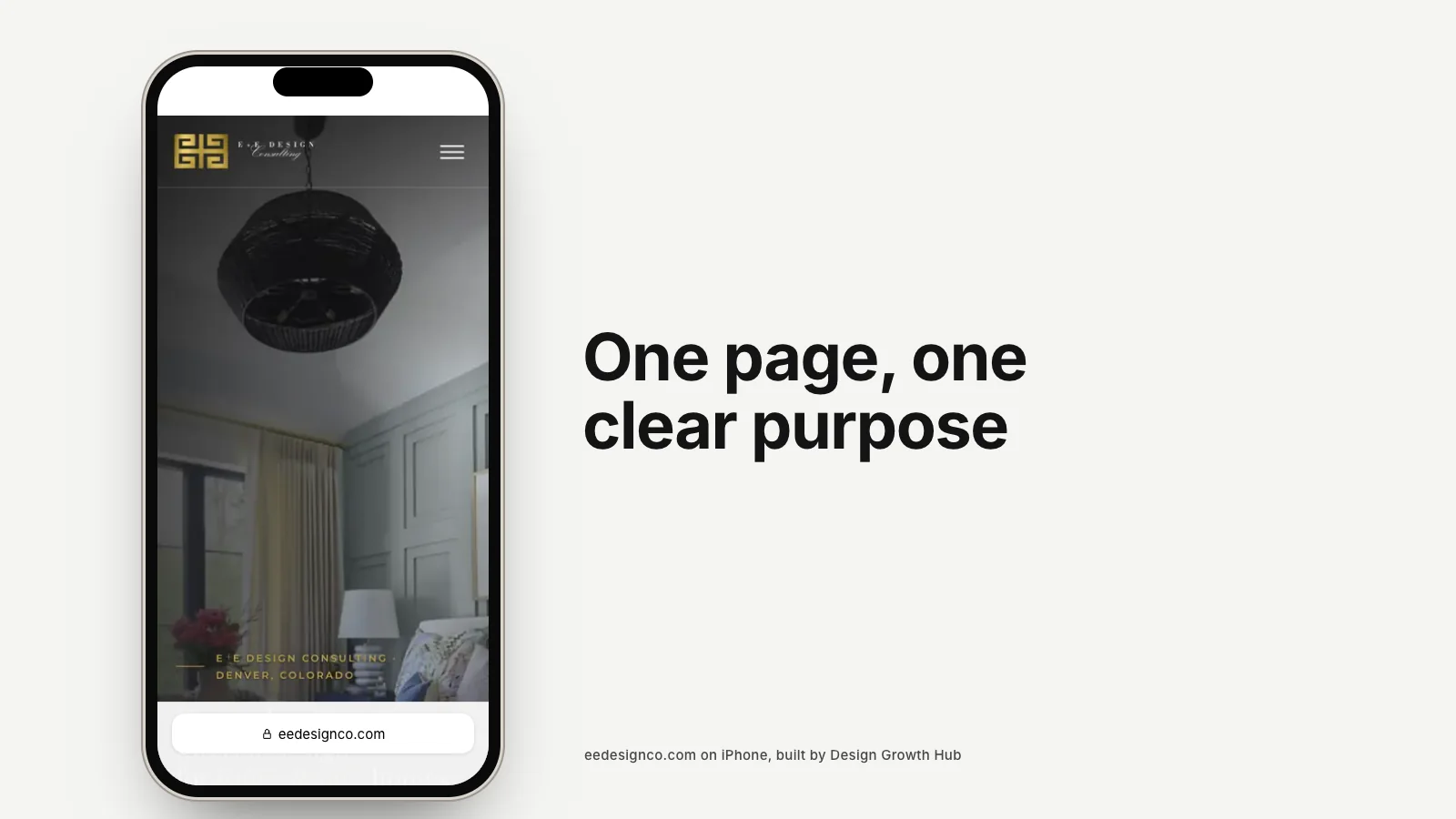
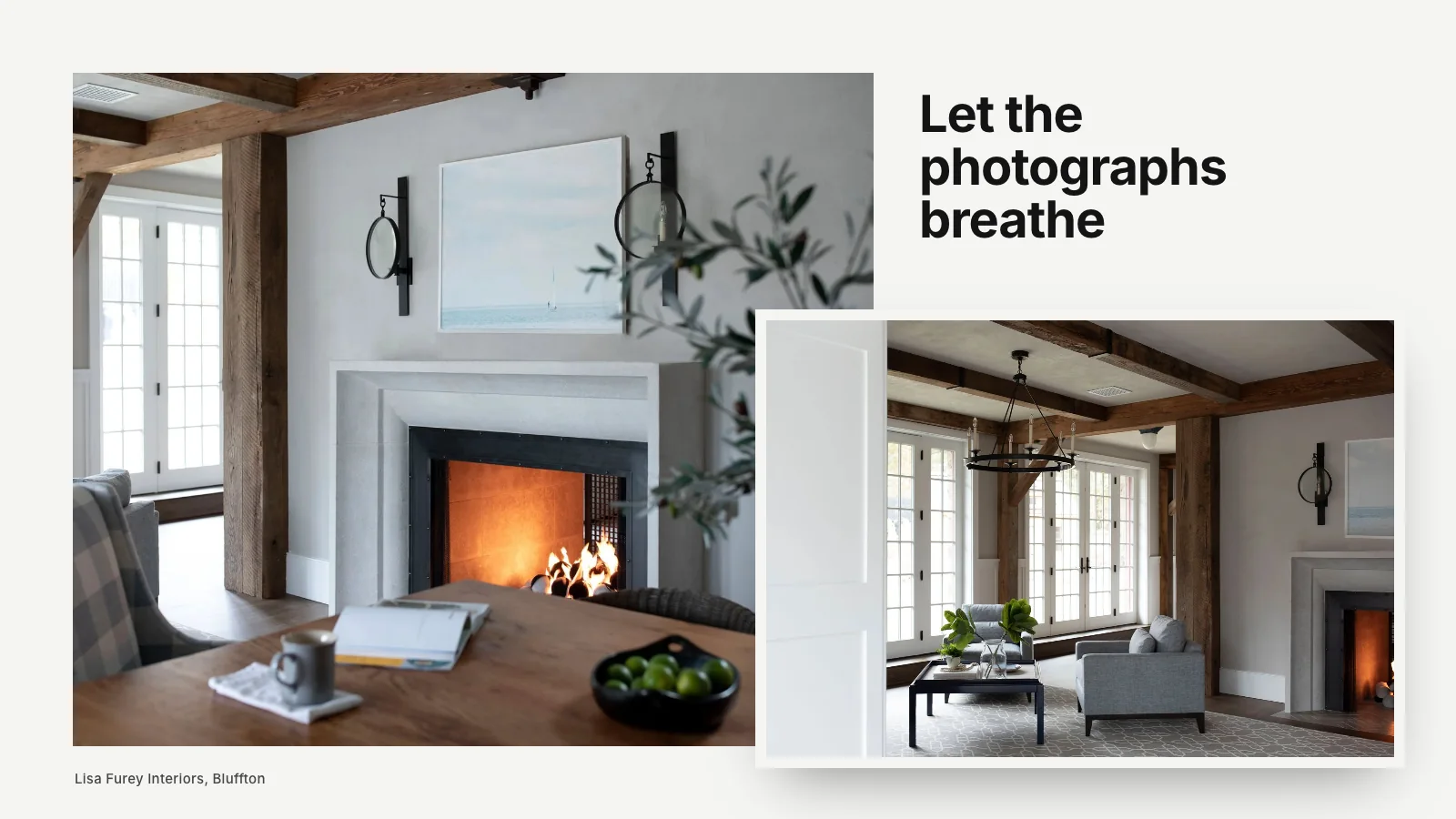
Choose an image that represents the work you want more of, not simply your most photogenic room. Check how it crops on a phone, since many visitors will see a narrow version first. Our guide to using images on an interior design website covers selection and sizing.
A short introduction
Below the opening screen, a short paragraph can expand on who you are. Two or three sentences in your own voice are enough.
Example: "We are a small studio led by Sarah Chen, working closely with architects and builders to create homes that feel calm, practical and personal. Most of our clients come to us at the start of a renovation, when the big decisions are still open."
Featured projects
Show three to six of your strongest projects, each with an image, a descriptive title and a link to the full project page. Avoid a long gallery on the home page. The aim is to tempt visitors into your portfolio, not show everything at once.
Example titles: "Lakefront renovation, Rye", "New build farmhouse, New Canaan", "Pre-war apartment, Upper West Side".
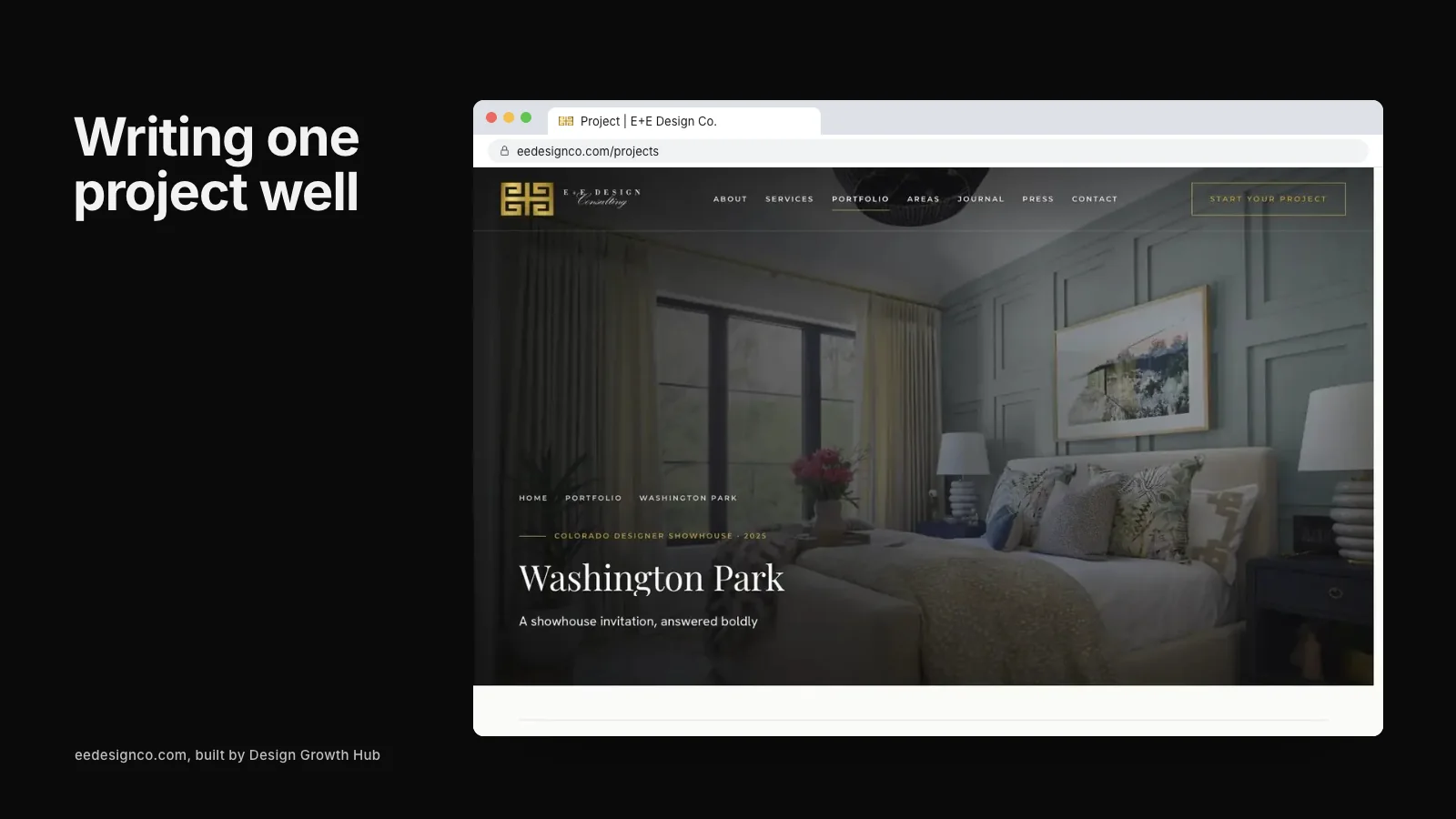
Our guide to writing a project portfolio page explains what those deeper pages should include, and why portfolio pages need more than photos explains why.
Services
Summarize each core service in a sentence or two and link to its own page. Keep the language plain: full-service design, renovation design, new construction, furnishing and styling. Avoid clever names that hide what the service actually is.
Proof
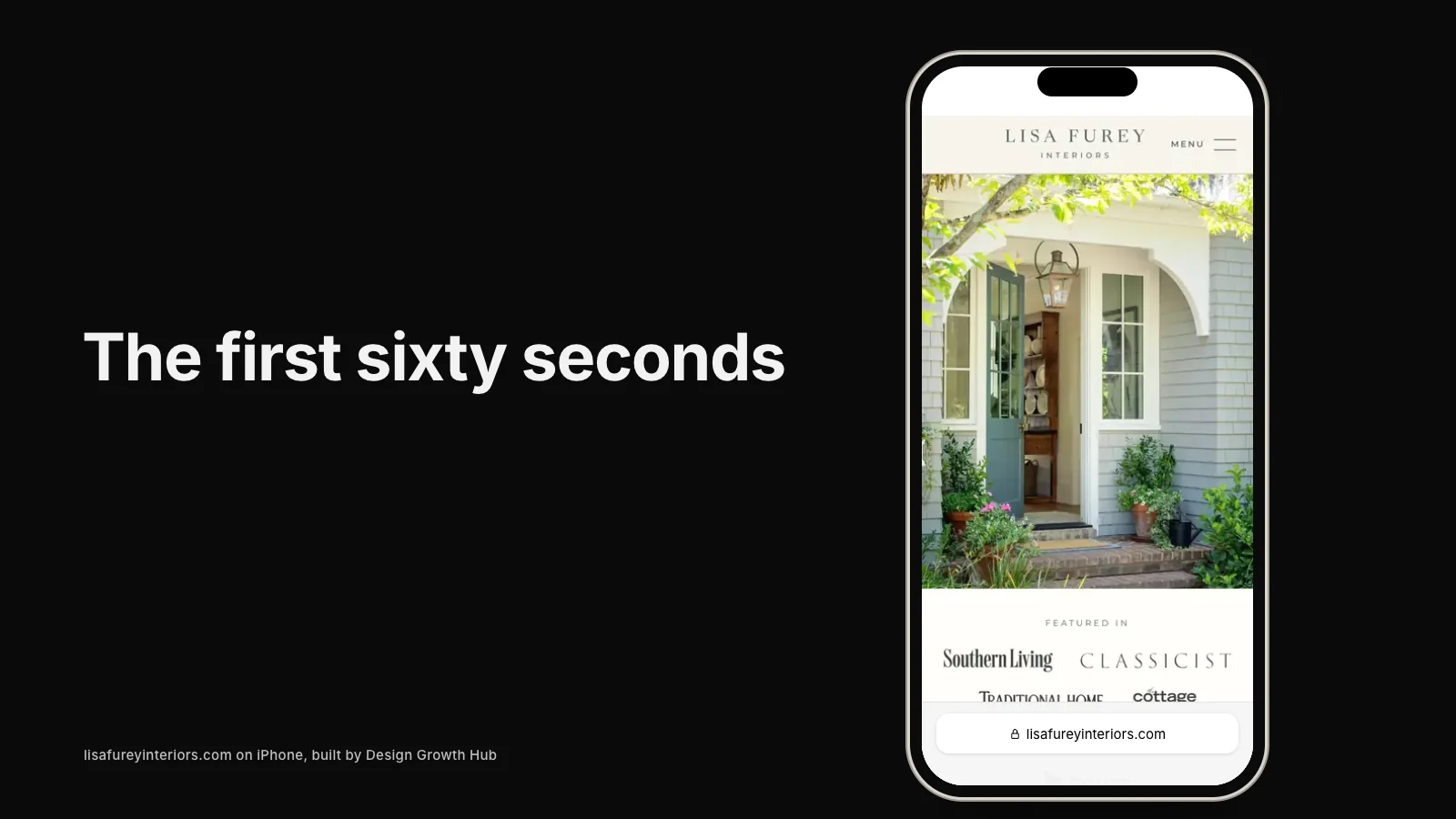
Add a quiet strip of credibility. This might include press logos, an award, a professional membership and one or two short testimonials. Link press to the actual features where possible. Use real names and locations for testimonials when clients agree.
Format to follow: one or two sentences in the client's own words about the experience, followed by their first names and town, used only with their permission.
How you work
A brief section on your process reassures clients who are nervous about a large project. Three or four short stages, each with a sentence, is plenty. Avoid numbered steps that feel mechanical; a short paragraph or a few named stages work well.
Example: "We start with a conversation and a visit to your home. From there, we develop a design plan and budget together, then manage ordering, trades and installation so you can enjoy the process."
One clear next step
Close the home page with a single invitation, linked to your contact page. Use the same wording here as in your navigation.
Example: "Planning a renovation or new build? Tell us about your home."
Avoid ending with several competing options such as newsletters, shops and social media. If you want people to follow you on Instagram, place that link in the footer.
The footer
The footer is often overlooked, but it is useful for visitors and search engines. Include your studio name, service areas, contact details, links to key pages and social profiles. Keep the business details identical to your Google Business Profile.
What to leave off the home page
- Long biographies, which belong on the about page.
- Full project galleries, which belong on project pages.
- Pop-ups that appear before anyone has read a word.
- Autoplay video with sound.
- Several competing calls to action.
Writing for search and AI tools
Your home page should state clearly what you do and where. Use a descriptive page title such as "Interior Designer in Westchester and Fairfield County | Studio Name" and a meta description that summarizes your services. Use real headings for each section. These small steps help Google and AI tools understand your studio at a glance. Our guide to making an interior design website AI-readable covers the details.
Home page or landing page?
Your home page serves everyone: referrals, Instagram followers, past clients and searchers. If you run ads for a specific service, a dedicated landing page is usually more effective than sending traffic to the home page.
Putting the sections in order
The order above works for most studios, but your brand may suggest adjustments. A studio with significant press might move proof higher. A studio known for a personal approach might lead with a short introduction and portrait. Our guide to the website layout that leads to inquiries explains how to decide.
If your home page looks beautiful but does not seem to move visitors deeper into the site, our website redesign service can help restructure it. Or request a studio review and we will tell you what to change first.
Make your studio easier to find
When the right clients search, clarity is what brings them to you. Let us look at the structure behind how you are found.
Request a Studio Review