Marketing an online furniture business means building enough trust that shoppers will buy something large and expensive without touching it first. A clear brand story, detailed product pages with dimensions, materials and real-room photos, honest delivery and return information, visible reviews, helpful content for search and AI tools, inspiring social media, email that nurtures long decisions and partnerships with designers and creators all contribute. Mass-market retailers compete on price; independent online furniture businesses win on story, quality and service.
Here is how to market an online furniture business effectively.
Start with a clear brand story
Why does your business exist? Perhaps you work with specific makers, focus on sustainable materials, design your own pieces or curate vintage. A clear story differentiates you and gives every marketing channel something to say. Our article on how a design business builds a brand online explores brand building in depth.
Make product pages do the selling
Online furniture shoppers need more information than in a showroom. Each product page should include multiple photos from different angles, close-ups of materials, photos in real rooms, exact dimensions, materials and care, available finishes, lead times, delivery details and returns. Include reviews and, where possible, customer photos. Detailed pages reduce hesitation and returns.
Help shoppers judge size and feel
Size and comfort are the biggest worries. Offer dimension diagrams, comparisons with familiar objects, fabric swatches by mail and clear descriptions of seat depth or firmness. Some businesses offer augmented reality previews through their platform; if you do, make sure they are accurate.
Be honest about delivery and returns
Delivery times, costs and return policies strongly influence decisions. State them clearly on product pages and at checkout. Surprises at checkout lose sales.
Search and AI visibility
Shoppers search for specific items ("solid oak dining table", "performance fabric sofa") and styles. Clear product titles, descriptions, category pages and structured data help. Helpful articles, such as how to choose a dining table size or caring for linen upholstery, attract shoppers early and help AI tools understand your expertise.
Social media
Instagram and Pinterest are natural channels for furniture. Share room settings, customer homes, maker stories and short videos. Link posts to product pages. Our article on furniture store marketing ideas offers content ideas that apply online as well.
Furniture decisions often take weeks. Email nurtures shoppers through that time: welcome sequences introducing your brand, reminders about saved items, new collection announcements and care tips after purchase. Keep emails visual and useful.
Partnerships
Interior designers, stylists and home creators can introduce your pieces to new audiences. A trade program for designers, collaborations with stylists and features in home publications all extend reach. Our guide to furniture product marketing strategy for makers explains how makers build these relationships.
Reviews and customer photos
Reviews are especially important online. Ask customers to review after delivery, encourage photos and respond to every review. Showcase reviews on product pages.
Advertising
Paid social and search ads can bring targeted traffic. Use real product and room photos, send people to relevant product or collection pages and track sales, not just clicks. Retargeting shoppers who viewed products can bring them back.
Customer service as marketing
Quick, helpful answers to questions about fabric, size or delivery build trust. Offer chat, email or phone support and respond promptly. Good service leads to reviews and repeat purchases.
Promotion beyond discounts
Constant discounting erodes margins and trains customers to wait for sales. Instead, promote new arrivals, limited runs, maker stories and services such as free swatches. Our articles on promoting a design business online and marketing ideas for design businesses offer broader ideas.
Web marketing foundations
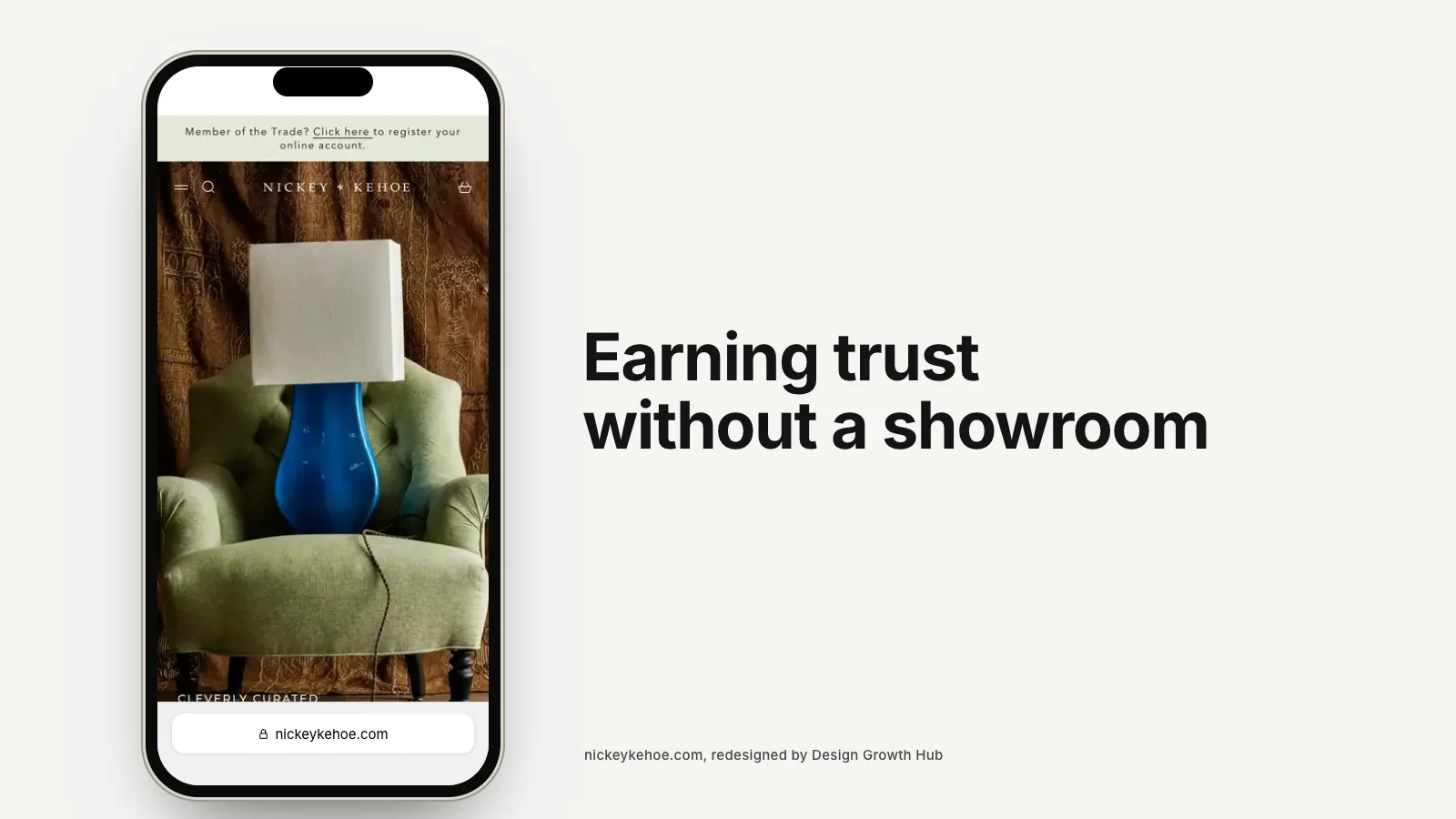
Your website is the store. Speed, clear navigation, mobile usability and a smooth checkout matter enormously. Our article on web marketing for design businesses covers the foundations.
Content that answers buying questions
Online furniture shoppers search for answers before they buy: how deep a sofa should be, which wood finishes resist stains, how to measure a doorway for delivery, whether performance fabric feels natural. Articles and guides answering these questions attract shoppers early, show expertise and link naturally to relevant products. Over time, a library of helpful content becomes a steady source of visitors from search and AI tools.
Sampling and trial
Programs that reduce risk can tip hesitant shoppers into buying: fabric and finish swatches by mail, small sample pieces, clear trial or return periods where your operations allow. Promote these programs prominently on product pages and in ads. Shoppers who have touched a swatch are far more confident about a large order.
Packaging and delivery as marketing
The delivery experience shapes reviews and repeat purchases. Careful packaging, clear tracking, on-time delivery and a thoughtful note in the box all contribute. Customers often share photos of beautiful unboxing or white-glove delivery on social media, which becomes free marketing.
Building repeat customers
Customers who buy one piece often furnish more rooms later. Post-purchase emails with care tips, invitations to see new collections and occasional styling ideas keep you in mind. A small number of loyal repeat customers can be worth more than many one-time buyers.
Measuring results
Track traffic sources, conversion rates, average order value, return rates and customer lifetime value. Note which channels bring customers who buy again.
If you would like help building an online furniture website that earns trust and sales, our Google search services and website work support design retailers. Or request a studio review to start.
Turn your website into a visibility asset
A website can be a brochure or an asset that brings clients. We help design studios build the second kind.
Request a Studio Review