Lead generation for builders works best when it focuses on the projects you actually want: the right type, budget and location. That means a website that shows relevant work and explains your process, strong visibility in Google and AI search, a complete Google Business Profile with steady reviews, relationships with architects and designers who refer clients and a quick, organized follow-up process. Paid ads and lead platforms can help, but they work best on top of that foundation.
Here is how each part works for custom home builders, remodelers and general contractors.
Define the projects you want
Before generating more leads, decide which ones you want. Custom homes above a certain size? Whole-home renovations? Kitchen and bath remodels? Projects within a specific radius? Clear criteria help you focus marketing and avoid wasting time on poor fits.
Look at your most profitable and satisfying projects from the last few years. What did they have in common? That pattern is your target.
Referrals and repeat clients
Past clients and referral partners often bring the best-matched leads. Make it easy for them to recommend you:
- Stay in touch with past clients through occasional, personal contact.
- Ask for reviews and referrals at the end of each project.
- Share finished photography with clients and partners.
- Thank everyone who sends you work.
Architect and designer partnerships
Architects and interior designers meet clients early, often before a builder is chosen. Strong relationships with a few firms can supply steady, well-matched projects. Make collaboration smooth, communicate clearly during construction, credit partners on your website and share finished photography. Our article on what interior designers blog about gives insight into how design partners attract clients, which can help you understand their perspective.
Your website
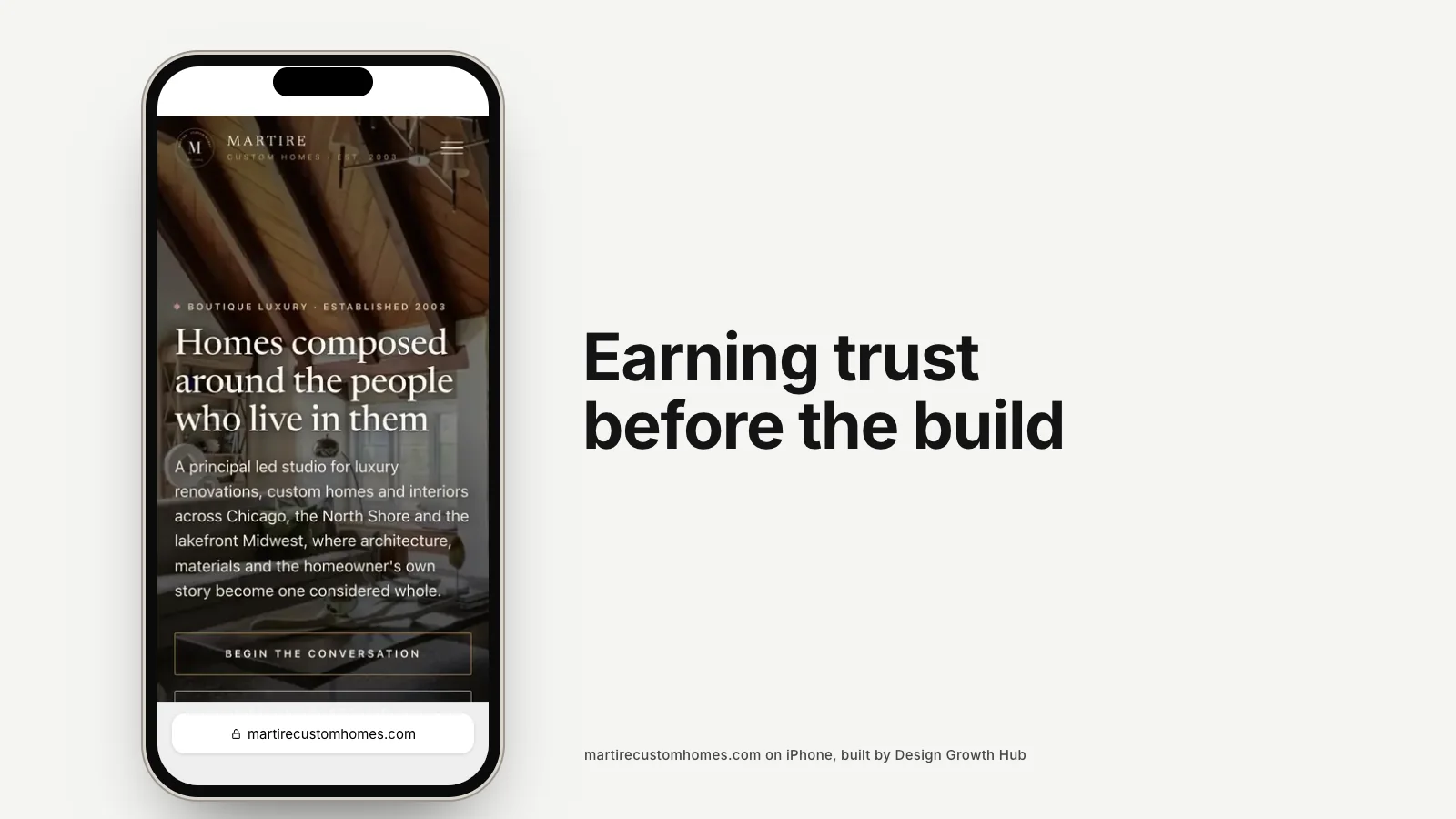
Your website should show the projects you want more of, explain your process clearly and make inquiring easy. Builders often under-invest here, relying on referrals. But referred clients still look you up, and a strong website reassures them. Our guide to custom home builder websites covers what to include.
Google search
Homeowners search for "custom home builder in [town]", "kitchen remodeler near me" and similar phrases. Pages that match those searches, with real project examples and location wording, help you appear. Our guide to SEO for construction companies explains how to build them.
Google Business Profile
For local searches, your Google profile often appears before your website. Complete every section, choose accurate categories, add project photos regularly and keep service areas current. Our article on how Google Business Profile works for contractors walks through it.
Reviews
Reviews influence both trust and local visibility. Ask every satisfied client, make it easy with a direct link and respond to every review. Builders with steady, detailed reviews tend to stand out in local results. Our guide to getting more Google reviews as a contractor offers practical steps.
AI search
Homeowners increasingly ask AI tools for builder recommendations. These tools draw on your website, profile, reviews and mentions elsewhere. Consistent, detailed information helps them describe you accurately.
Paid advertising
Google Ads can capture homeowners searching for builders right now. Meta ads can reach homeowners in specific areas before they start searching. Both work best with focused landing pages and careful tracking. Start modestly and judge results by signed projects, not clicks.
Lead platforms
Lead marketplaces can fill gaps but often provide shared, price-focused leads. If you use them, track the cost per signed project and compare with other sources.
Qualifying leads
Protect your time by qualifying early. A short form or first call can cover project type, location, timeline, whether plans exist and an approximate budget range. Builders who qualify gently but clearly spend more time on projects that fit.
Following up
Many leads are lost through slow follow-up. Reply quickly, schedule site visits promptly and send clear proposals. A simple system, even a shared spreadsheet, ensures no lead slips through. Our articles on kitchen remodeling leads and converting kitchen remodeling leads into signed projects cover follow-up in more depth.
Show your process
Homeowners planning a custom home or major renovation are often anxious about cost, schedule and communication. Builders who explain their process clearly, from preconstruction through handover, reassure them before the first meeting. A short process page with stages, what the client can expect at each and how you communicate during construction can turn hesitant visitors into inquiries. It also filters out clients who want a different way of working, which saves everyone time.
Measuring lead quality
Track where each lead came from and whether it became a project. After several months, you will see which sources bring the work you want. Invest more there. Our guides to remodeling lead generation from your own website and growing a general contractor business with better leads expand on this.
A monthly routine for builders
- Add one recent project to your website with photos and a short description.
- Update your Google profile with new photos.
- Ask two recent clients for reviews.
- Reach out to one architect or designer partner.
- Review last month's leads by source.
If you would like help building a website and search presence that bring better-matched projects, our Google search services work with builders and remodelers. Or request a studio review and we will look at where your leads come from today.
Build your visibility foundation
Design Growth Hub helps interior designers build the visibility foundation behind high-value discovery.
Request a Studio Review