
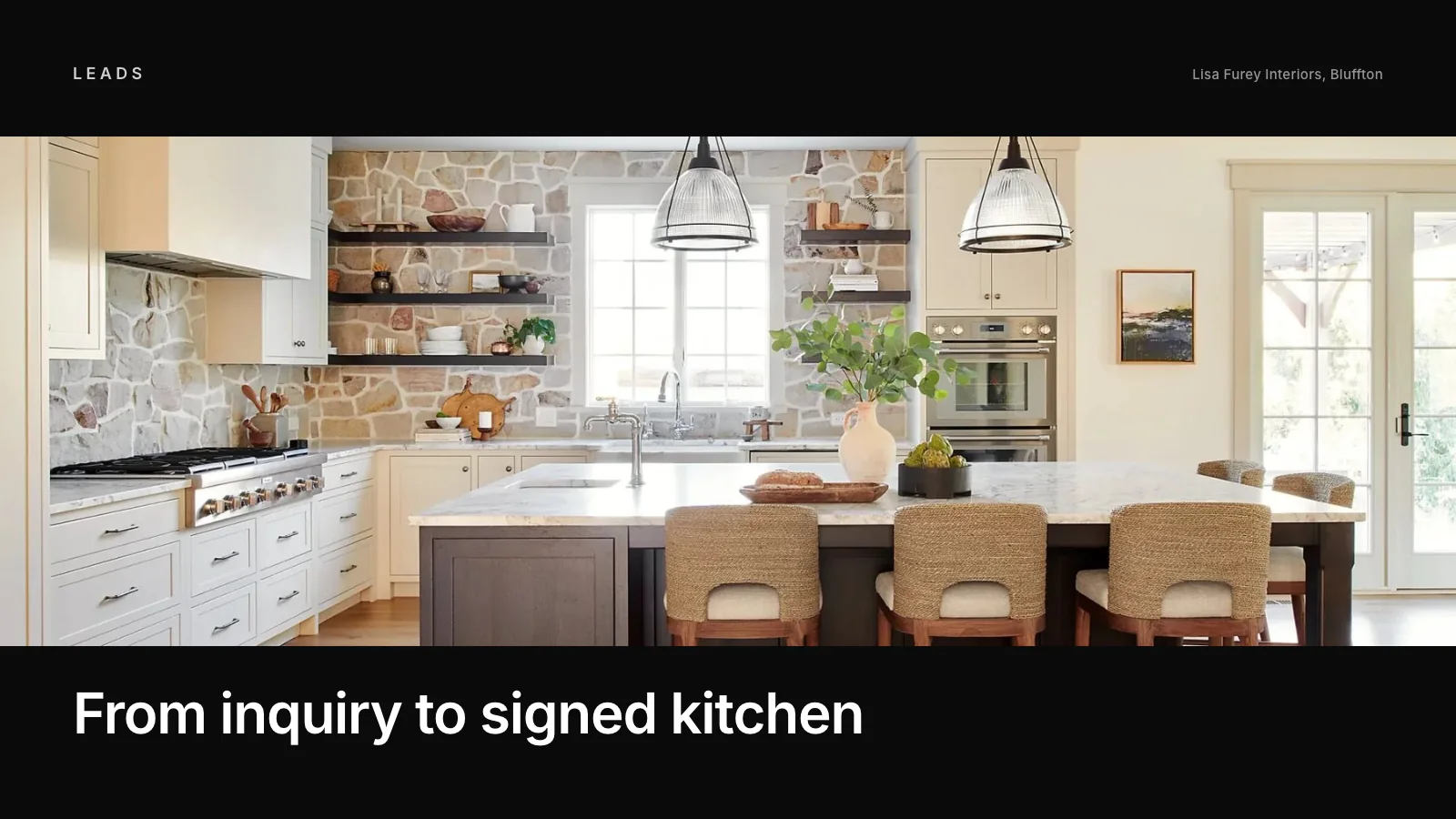
Converting kitchen remodeling leads into signed projects depends on what happens after the inquiry arrives: responding quickly and personally, qualifying scope, budget and timing in a first call, running an in-home visit that shows expertise and listening, presenting a clear proposal with design direction and investment and following up patiently while homeowners decide. Kitchens are among the largest projects homeowners take on, so trust and clarity matter more than speed of closing.
Here is a practical process for turning more kitchen leads into signed work.
Respond quickly
Homeowners often contact more than one remodeler. A quick, personal reply, ideally within a few hours, sets you apart. If you cannot schedule immediately, acknowledge the inquiry and say when you will call.
Example reply: "Thank you for reaching out about your kitchen. I would love to hear more about what you have in mind. Are you available for a short call tomorrow morning or afternoon?"
Qualify in a first call
A short call helps both sides decide whether to meet. Ask about:
- The scope: a full remodel, layout changes or a refresh.
- The home: age, size and any known issues.
- Timing: when they hope to start and finish.
- Budget: the range they are considering.
- Design: whether they have a designer or need design help.
- Decision makers: who will be involved in choosing.
Frame budget questions helpfully, explaining that it lets you suggest the right approach.
Set expectations
Explain your process, what happens at the in-home visit and roughly how long design and construction take. Homeowners appreciate knowing what comes next.
Run a strong first visit
Arrive on time and prepared. Listen more than you talk. Ask how the family uses the kitchen, what frustrates them and what they love. Measure and photograph. Share a few relevant projects, ideally similar kitchens you have completed. Explain your design and selection process.
Avoid designing on the spot. A few observations show expertise; a full design belongs later.
Show relevant work
Bring or send examples of kitchens similar to theirs, with before and after photos. Project pages on your website are ideal for this. Our article on kitchen remodeling leads explains how to present kitchen work online.
Discuss investment honestly
Many kitchen leads are lost because the investment surprises the homeowner late in the process. Discuss typical ranges early, explain what drives cost and connect it to their goals. Honesty filters out mismatches and builds trust with homeowners who are ready.
Present a clear proposal
Your proposal should restate their goals, outline the scope, show design direction or the design process, list what is included and excluded, give a clear investment and payment schedule and explain the timeline. Present it in person or on a call when possible, so you can answer questions immediately. Our article on turning a consultation into a project offers ideas from the design industry that apply well here.
Follow up patiently
Kitchen decisions take time. Follow up a few days after the proposal, then at sensible intervals. Offer to answer questions, arrange a showroom visit or show a completed project in person. Avoid pressure. Many signed kitchens come from homeowners who took weeks or months to decide.
Design meetings and showroom visits
For many homeowners, the turning point comes during a design meeting or showroom visit, when abstract ideas become real materials and layouts. Offer to meet at a cabinet or tile showroom, or bring samples to the home. Seeing and touching options builds excitement and confidence, and it shows that you will guide them through the many decisions a kitchen involves.
Handling price comparisons
Homeowners often compare your proposal with cheaper quotes. Rather than lowering your price immediately, help them compare scope: what is included, the quality of materials and cabinetry, the protection of their home, the warranty and how changes are handled. Many lower quotes leave out items that appear later as extras. A calm, clear explanation often wins the project.
Keeping in touch with undecided leads
Some homeowners postpone their kitchen for months. Keep them on a gentle follow-up list: a seasonal email, a link to a recently finished kitchen or a note when your schedule opens. When they are ready, you will already be familiar.
Track your conversion
Record each lead's source, whether you met, whether you proposed and whether it signed. Calculate conversion rates at each stage. If many leads drop after the first call, your qualification or messaging may need work. If many drop after proposals, review pricing communication or follow-up.
Use your website to support conversion
Homeowners often revisit your website between meetings. Strong kitchen project pages, reviews and a clear process page reinforce your proposal. Our article on home remodeling lead generation from your own website explains how.
Compare lead sources
Some sources bring kitchen leads that convert far better than others. Our articles on lead providers for home remodeling and getting remodeling leads without paying per lead help you compare. For bathroom leads, see bathroom remodeling leads.
Small touches that matter
- A thank you email after each meeting.
- A short summary of what you heard.
- Prompt answers to questions.
- A showroom or project visit invitation.
- A clear, attractive proposal document.
If you would like help building a website that supports your sales process, our website redesign service works with remodelers. Or request a studio review to start.
Build your visibility foundation
Design Growth Hub helps interior designers build the visibility foundation behind high-value discovery.
Request a Studio Review