The best interior design content ideas for Instagram also work on your website. A project carousel becomes a full project story. A post about choosing a stone becomes a short article. A question clients ask often becomes an FAQ. Planning content this way means every Instagram post has a lasting home, which builds trust with visitors and gives Google and AI tools something to understand.
Here are content ideas grouped by theme, with notes on how each translates to your website.
Finished project ideas
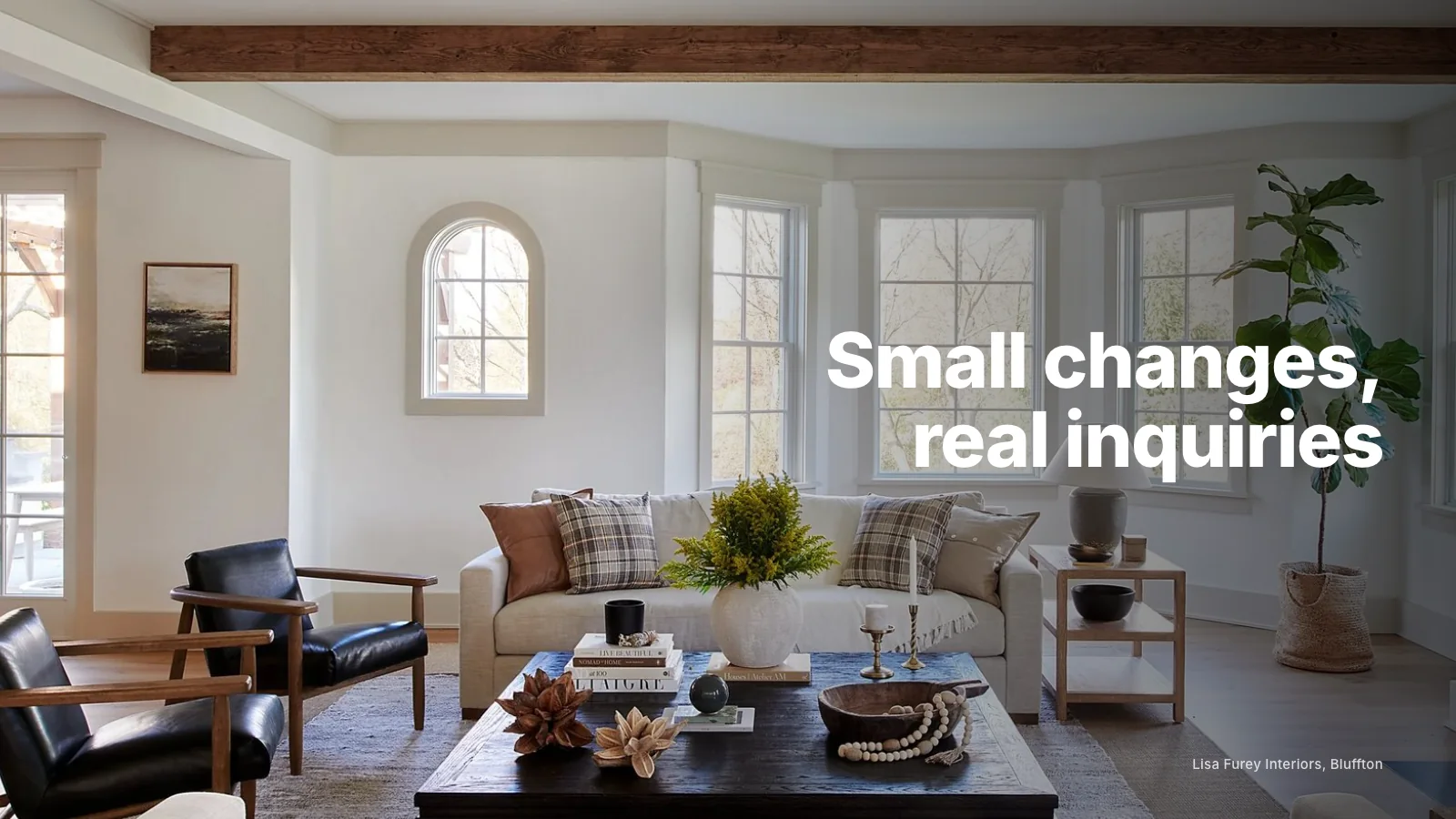
- The full reveal: a carousel of a finished project, with the full story on your website.
- One room, many angles: a series focusing on a single room.
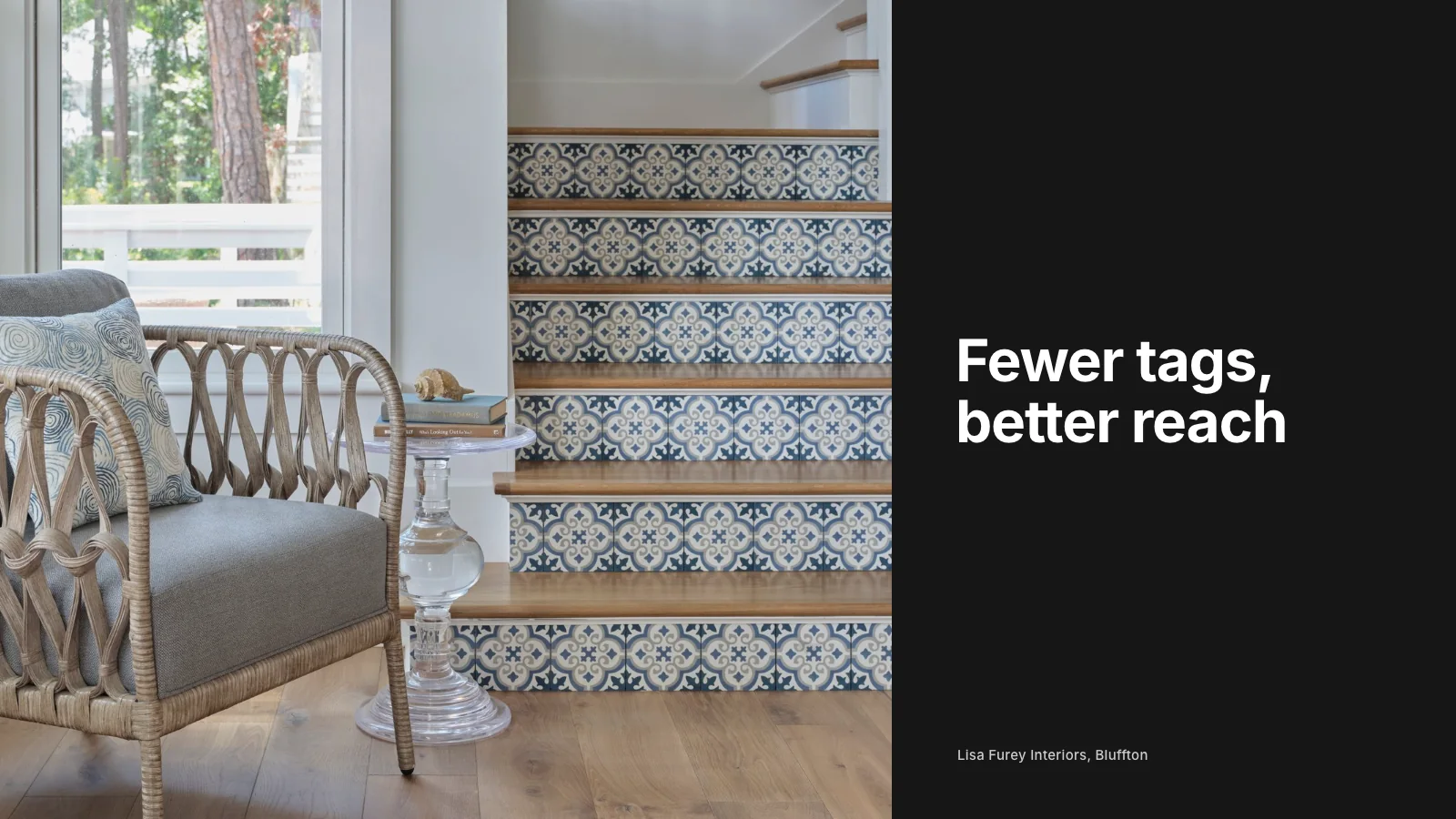
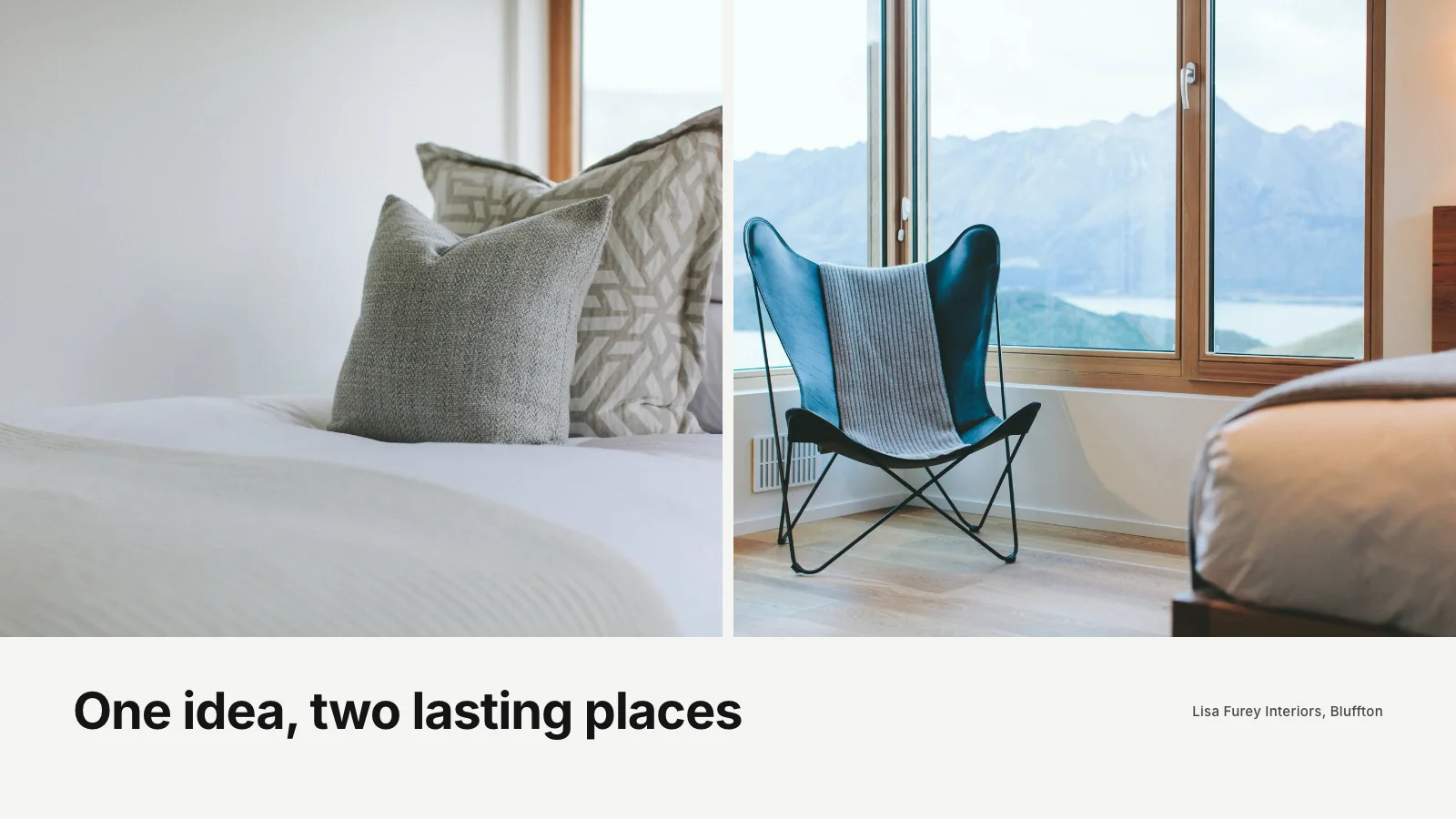
- The defining detail: a close-up of the element that makes a room work.
- The view from the door: how a home feels as you arrive.
- Seasonal styling: a finished room styled for a season or holiday.
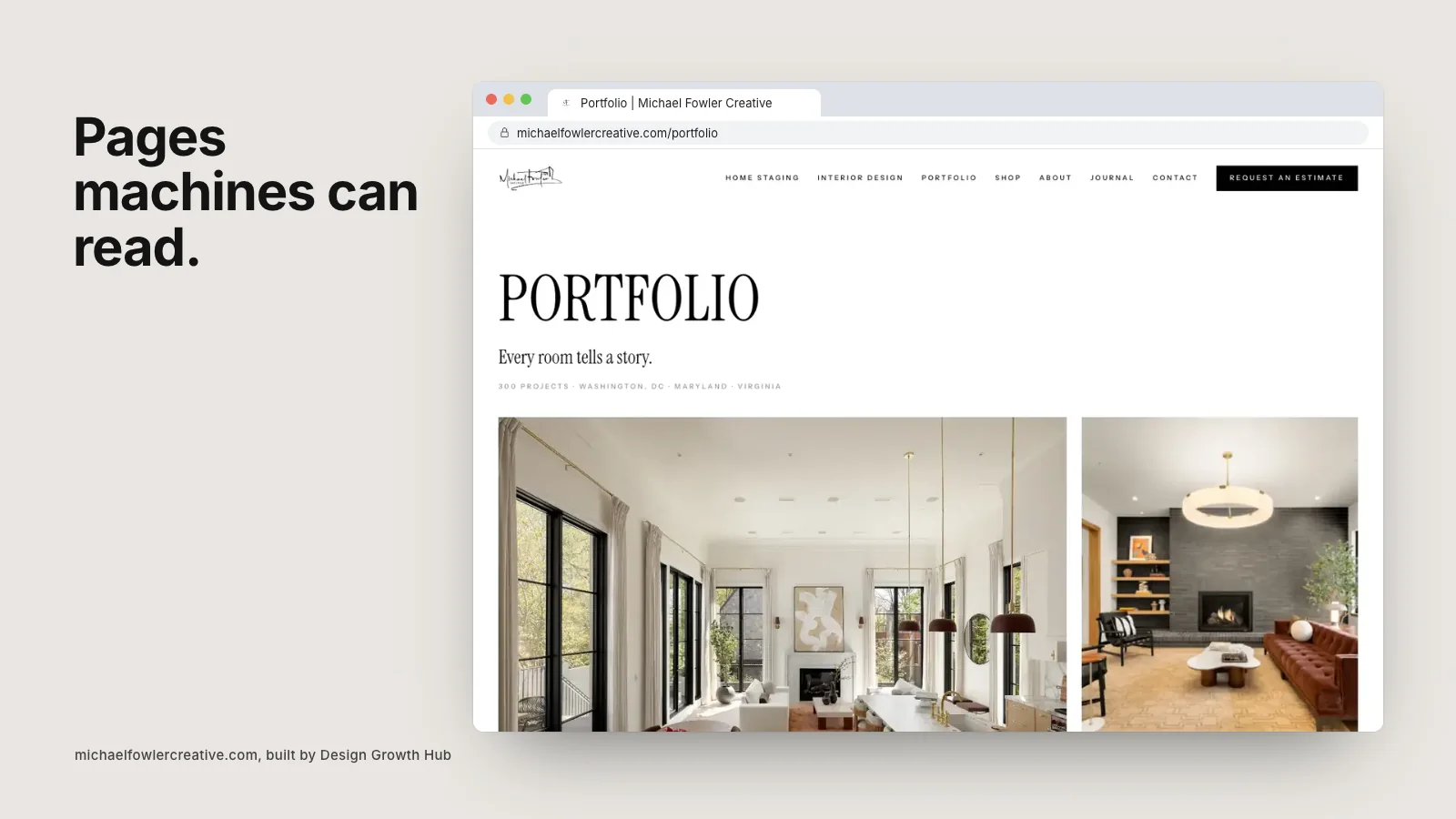
On your website: each project should have its own page with photos, a short story, project facts and captions. Instagram posts link to it. Our guide to writing a project portfolio page shows how.
Before and after ideas
- The transformation: a single before and after pair.
- The floor plan change: a simple sketch showing what moved.
- The kitchen journey: before, construction, after.
- The surprise discovery: something uncovered during renovation.
On your website: add before and after images to renovation project pages, with a sentence explaining what changed and why.
Process ideas
- Material selection: samples laid out for a project.
- The scheme board: an early concept for a room.
- On site: walking through a project during construction.
- Install day: the moment furniture arrives.
- Problem solving: how you handled an unexpected challenge.
On your website: a short "How we work" section or page explaining your process, illustrated with these images.
Detail and craftsmanship ideas
- Maker spotlight: a cabinetmaker, upholsterer or artisan you work with.
- Material stories: where a stone, wood or textile came from.
- Hardware close-ups: the small elements that finish a room.
- Custom pieces: furniture or lighting designed for a project.
On your website: captions on project pages naming makers and materials, and occasional journal articles about craftsmanship.
Client question ideas
- Common questions: how long a renovation takes, how full-service design works, how to choose paint.
- Myth versus reality: gentle corrections of common misconceptions.
- What to expect: a walkthrough of the first consultation.
On your website: an FAQ section on service pages, or short articles answering each question. These are valuable for search and AI tools, as explained in making an interior design website AI-readable.
Credibility ideas
- Press features: share a magazine feature with a link to read more.
- Showhouse rooms: your room at a showhouse.
- Awards and recognition: shared modestly.
- Client testimonials: a short quote over a project image.
On your website: a press page with links and testimonials on service and project pages. Our article on building trust before a client contacts you explains why these matter.
Studio life ideas
- Meet the team: introduce each team member.
- The studio: your workspace, library or sample room.
- Inspiration: a place, artwork or book that influenced a project.
- Your city: local architecture, makers and places you love.
On your website: an about page with real team photos and a few personal details.
Turning one project into many posts
A single finished project can supply weeks of content: the reveal carousel, room-by-room posts, details, a before and after, a maker spotlight, a short reel and a testimonial. Space them out and link each to the project page.
Planning a simple content calendar
Plan a month at a time. Choose one finished project to feature, add a process post, a detail post and a client question post each week, and fill gaps with studio life. This keeps your feed varied without daily decisions.
Hashtags and discovery
Use a few relevant hashtags, especially local ones, and tag collaborators and publications. Our article on whether interior design hashtags still work explains how to use them sensibly today.
Making website content easier
If writing for your website feels like a burden, start with what you already post. Expand a good caption into a few paragraphs. Collect related posts into a project story. Our guide to creating an interior design website explains how to plan pages around existing content, and website ideas that bring real inquiries offers more ways to make your site work harder.
Repurposing older projects
Older projects still have stories to tell. Revisit a home a few years after completion and photograph how the family lives in it now. Share what has aged beautifully and what you would do differently today. These posts show that your work lasts, which reassures clients making long-term investments.
On your website, you can add a short update to the original project page with a few new photos. It keeps the page fresh and adds another layer of evidence that your studio's work holds up over time.
Measuring content
Notice which posts lead to profile visits, website clicks and messages. On your website, see which pages people visit and which lead to inquiries. Over time, you will learn which content ideas bring clients, not just likes. Our article on getting more clients from your website explains how to improve conversion once visitors arrive.
If you would like help turning your Instagram content into website pages that bring inquiries, our Google and AI visibility services and website work can help. Or request a studio review and we will suggest which content to build first.
Fix the structure behind your website
Beauty gets attention. Structure gets discovery. We help you build both, so the right clients arrive ready.
Request a Studio Review