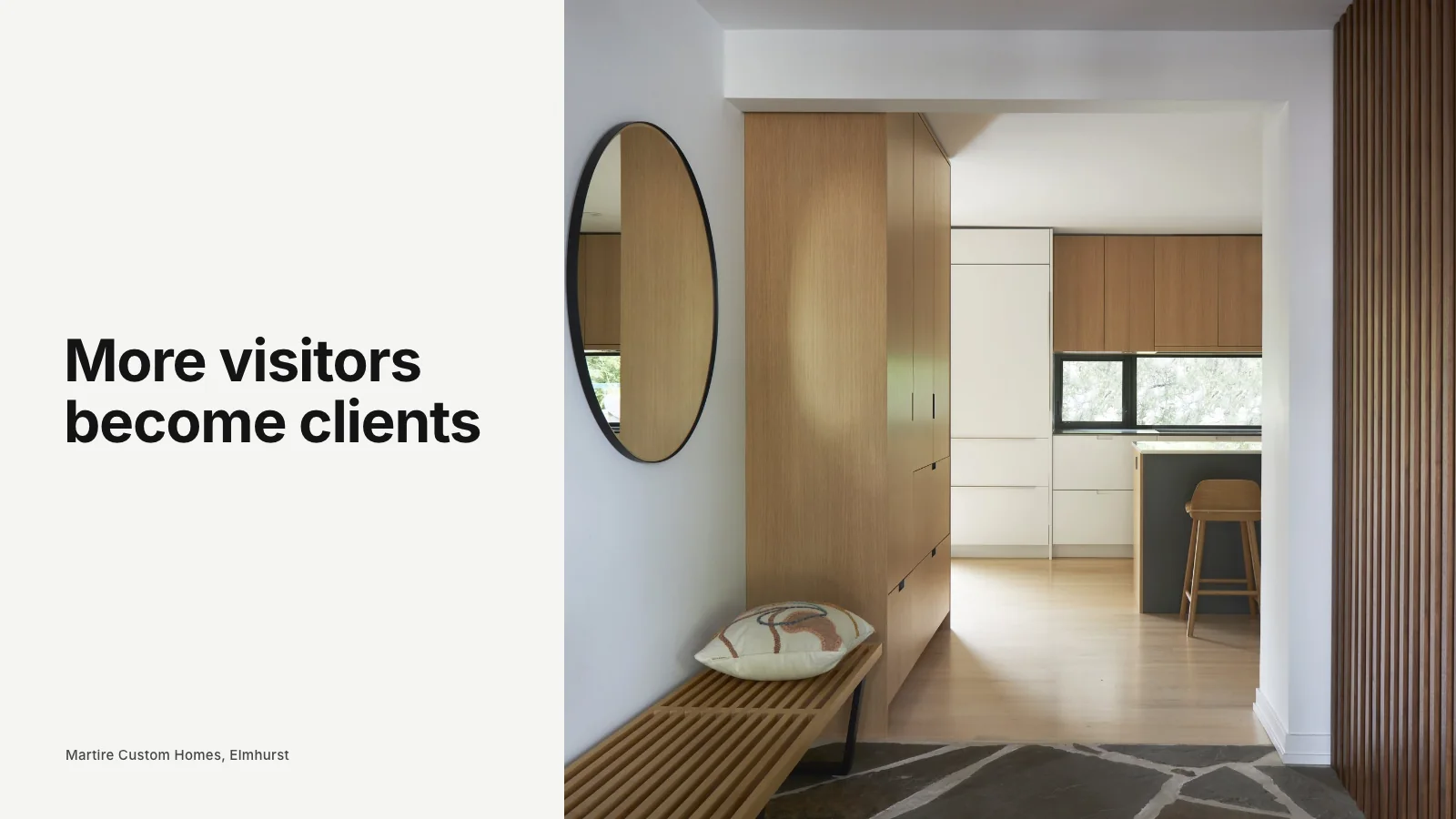
To get more interior design clients from your website, make it immediately clear what you do and where, show projects similar to what visitors are planning, add real proof such as reviews and press, place a consistent invitation to inquire on every page, simplify your contact form, explain what happens next and reply quickly. Most websites do not need more visitors. They need to turn more of their existing visitors into conversations.
Here is a practical checklist, ordered roughly by impact.
Clarify the first screen
Visitors decide within seconds whether they are in the right place. Your opening screen should say what you do, for whom and where, in plain words. "Interior design for whole-home renovations in Greenwich and Westport" helps far more than a poetic tagline. Pair it with an image of the work you want more of.
Show work like theirs
Prospective clients want to see projects similar to their own. Make sure your best-fit projects appear first, with descriptive titles naming the project type and location. Add short stories explaining the brief and outcome. Visitors who see themselves in your work are much more likely to inquire.
Add proof where decisions are made
Trust builds gradually across your site. Place short testimonials on service pages, link to Google reviews, show press logos near the top of the home page and add a quote to the end of each project page. Our article on building trust before a client contacts you covers which proof points matter most.
Make the next step obvious
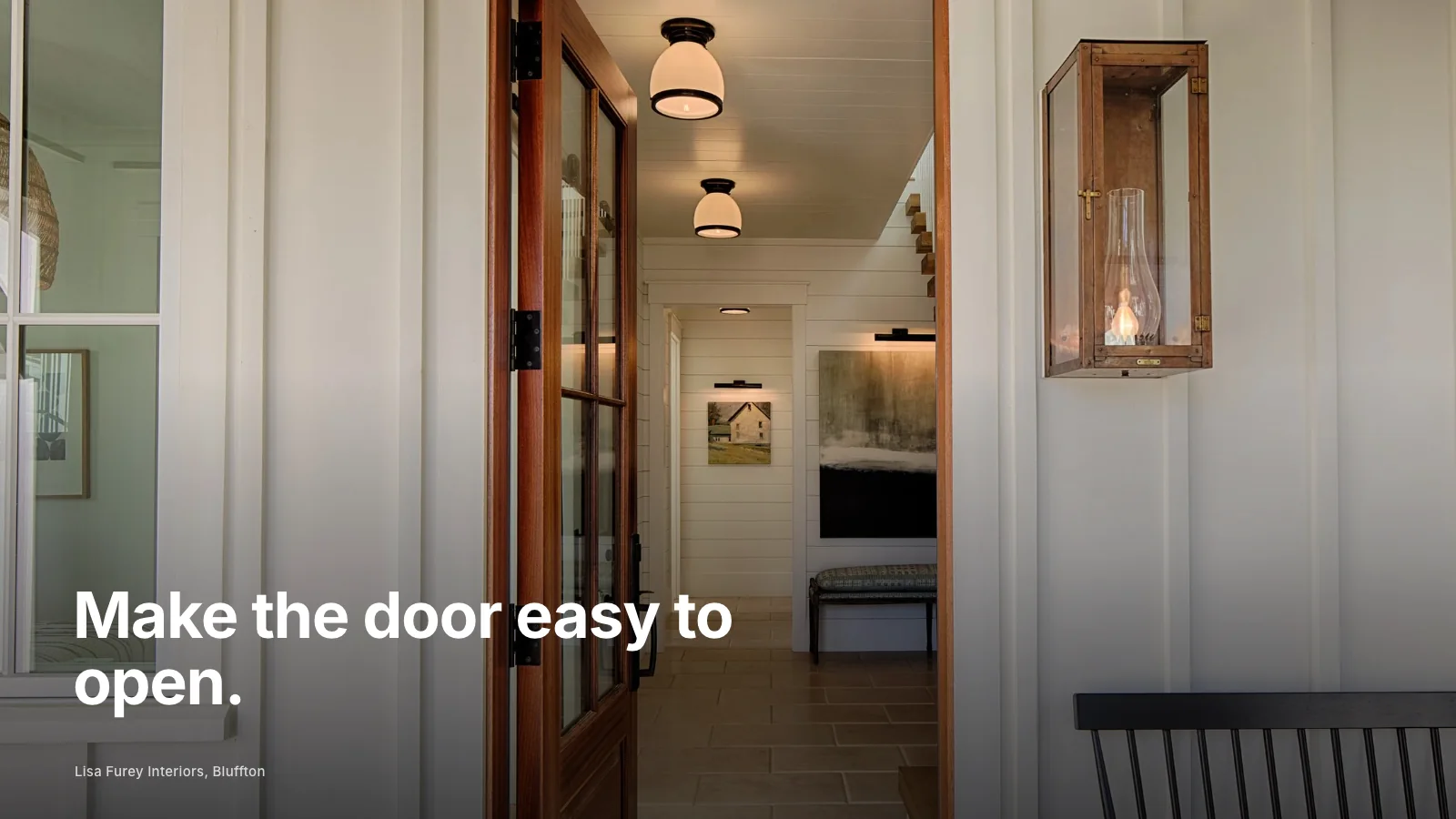
Every page should end with a clear invitation, and your navigation should include a visible contact button. Use the same wording everywhere, such as "Start a conversation" or "Tell us about your home". Avoid competing calls to action that dilute attention.
Simplify the contact form
Long forms put people off. Ask only for what you need to reply well: name, email, location, what they are planning and an optional budget range. Explain what happens next and when. Our article on why your contact page may be costing you better clients lists common problems and fixes.
If you want more detail before a first call, you can send a questionnaire afterward. Our guide to an interior design client questionnaire explains how to use one without slowing the first inquiry.
Qualify without discouraging
You want more of the right inquiries, not just more inquiries. Clear positioning, honest descriptions of your services and an optional budget question help filter gently. Our article on making your website qualify better clients explains how.
Speed and mobile experience
Many visitors arrive on phones. If pages load slowly or the form is awkward on a small screen, people leave. Compress images, test on mobile data and make sure the form is easy to complete with a thumb.
Reply quickly and warmly
The website's job ends when someone submits the form. Yours begins. Reply within one business day if possible, even with a short note confirming you received the message and when you will follow up. Speed signals reliability, and many clients contact more than one designer.
Use a thank you page well
After someone submits the form, show a thank you page that confirms what happens next. You can also suggest a few projects to explore while they wait. It is a small touch that reassures people they did the right thing.
Track where inquiries come from
Record the source of every inquiry: Google, Instagram, a referral, a specific page. Set up conversion tracking so you can see which pages lead to form submissions. Over time, you will learn which content brings the right clients and which needs work.
Common reasons websites underperform
- The first screen does not say what the studio does.
- Projects lack context or are ordered by date rather than relevance.
- Services are vague or hidden.
- The contact page is hard to find or too long.
- There is no proof beyond photography.
- Pages load slowly on phones.
Our article on why beautiful interior design websites still fail explores these patterns in depth.
Improve the pages that matter most
Look at your analytics to find the pages visitors view most often before leaving. Usually these are the home page, portfolio and a few project pages. Improving those few pages often makes a bigger difference than redesigning the entire site.
Write for the questions visitors are asking
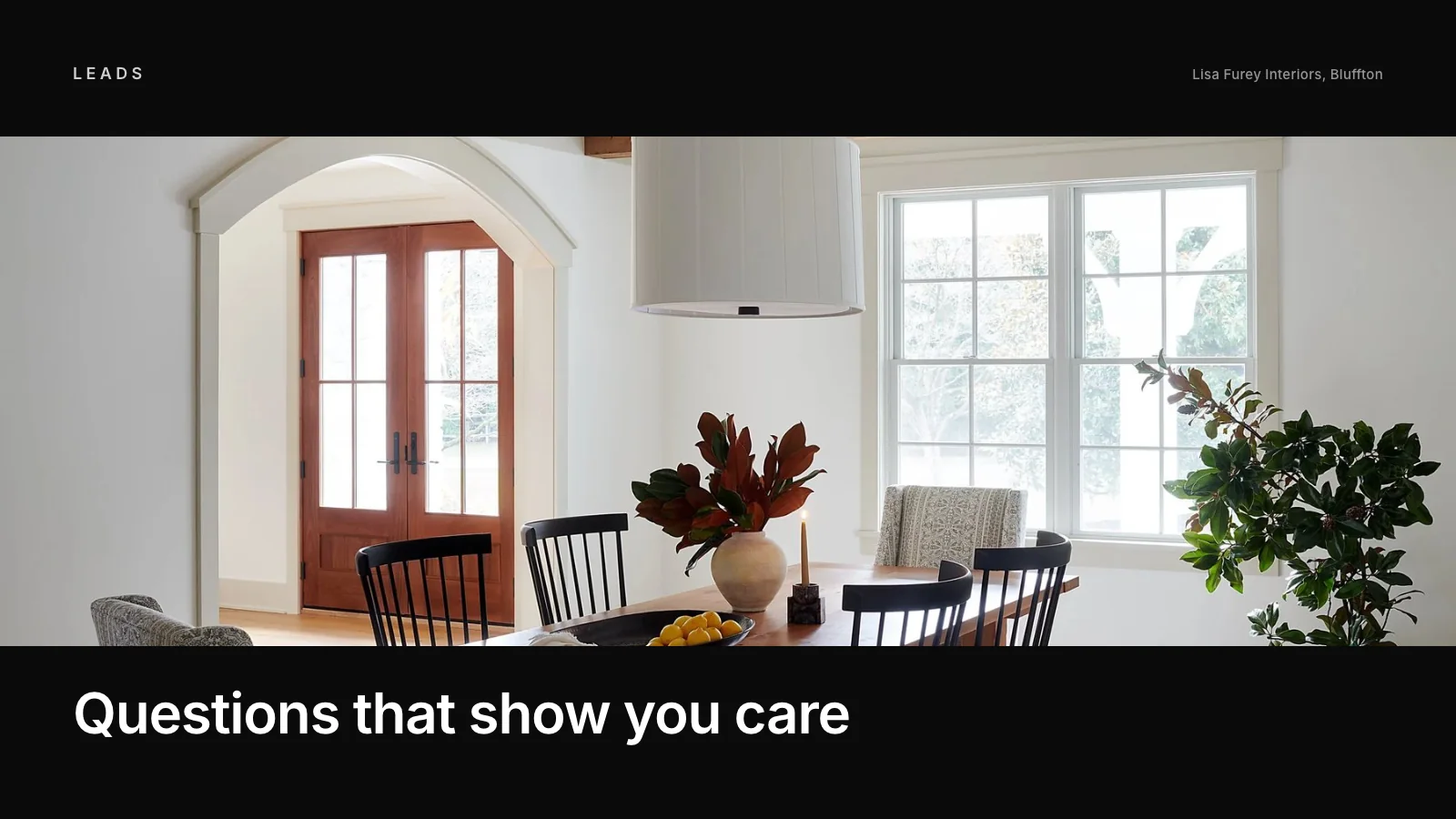
Many visitors arrive with practical questions they hesitate to ask directly. How does your process work? Do you take projects outside the city? Do you work with our builder? What does full-service design include? Answering these on your service pages, or in a short questions section, removes doubt before it becomes a reason to leave.
Look at the emails you receive from new clients and note the questions that repeat. Each one is a small piece of content your website should already contain. When visitors find those answers, they arrive at the first conversation already confident, which makes signing far easier.
Make it a habit
Review your website every quarter. Check the inquiry form works, add new projects, refresh testimonials and look at which pages bring inquiries. Small, regular improvements compound. Our guide to interior designer website design that wins better clients covers the bigger picture.
If you would like a fresh look at where your website loses potential clients, our website redesign service focuses on exactly this. Or request a studio review and we will point out the changes most likely to increase inquiries.
Build your visibility foundation
Design Growth Hub helps interior designers build the visibility foundation behind high-value discovery.
Request a Studio Review