A strong interior design proposal restates the clients' goals in their own words, defines the scope clearly, explains your process and timeline, sets out fees and what they include, outlines key terms and makes the next step simple. It should feel personal, reflecting the consultation, while being clear enough to prevent misunderstandings later. A thoughtful proposal is often what turns a promising conversation into a signed project.
Here is how to structure one, section by section.
Send it promptly
Momentum matters. Send the proposal within a few days of the consultation, ideally sooner. A prompt, well-prepared proposal signals reliability and keeps the clients' enthusiasm alive.
Open with their goals
Begin with a short summary of what the clients told you: how they live, what they want to change and how they hope the home will feel. Use their words where possible.
Example: "You told us the main floor feels dark and disconnected, and that you want a kitchen where the whole family can be together. You hope the home will feel calm, warm and easy to live in."
This reassures clients that the proposal is about them, not a template.
Define the scope
List exactly which rooms and elements are included. Be specific: "Kitchen, family room, dining room and mudroom, including built-in cabinetry, lighting plan, furniture, window treatments and accessories." Note anything excluded, such as structural engineering or landscaping.
Clear scope prevents the most common source of disputes: different assumptions about what was included.
Describe your process
Explain the stages of the project in plain language:
- Discovery: measuring, understanding needs and gathering inspiration.
- Concept: presenting the overall direction, layouts and palette.
- Design development: refining selections, drawings and specifications.
- Procurement: ordering, tracking and receiving products.
- Construction coordination: working with your builder and trades.
- Installation: placing furniture, art and accessories.
Note what the clients will be asked to do at each stage, such as attend presentations or approve selections.
Set out fees clearly
Explain how you charge, whether by flat fee, hourly rate, percentage of project cost, product markup or a combination. State what the fee includes and how additional work is handled. Provide an estimated total design fee where possible, and explain how it may change if scope changes.
If you include a furnishings budget estimate, label it clearly as an estimate.
Outline the timeline
Give a realistic timeline for each stage, noting dependencies such as product lead times and construction schedules. Be honest about uncertainty. Clients appreciate realistic expectations more than optimistic promises.
Explain how you communicate
Describe how and when clients will hear from you: weekly updates, a project portal, scheduled meetings. Clear communication expectations reduce anxiety. Our article on whether your studio needs a client portal explores one option.
Include key terms
Summarize important terms: payment schedule, retainer, how changes are handled, product ordering and returns, cancellation and responsibilities of each party. Your full contract may contain more detail, but the proposal should highlight what clients need to know. Have your contract reviewed by a legal professional.
Show relevant work
Include two or three relevant projects with images and a sentence about each. This reminds clients why they are considering you. Link to the full project stories on your website.
Add a personal note
A short closing note from the principal designer adds warmth. Thank the clients for their time and express genuine enthusiasm for the project.
Make the next step simple
Explain exactly how to proceed: sign the agreement, pay the retainer and schedule the kickoff meeting. Offer to answer any questions by phone or email.
Present it beautifully
Your proposal is a brand touchpoint. Use your brand fonts, colors and photography. A clean, well-designed document reinforces the quality of your work. Our article on client presentation tips that win projects covers the visual side of presenting.
Follow up
If you have not heard back within a week, send a friendly note asking if they have any questions. Many clients simply need a gentle prompt or a quick clarification.
Offer options where it helps
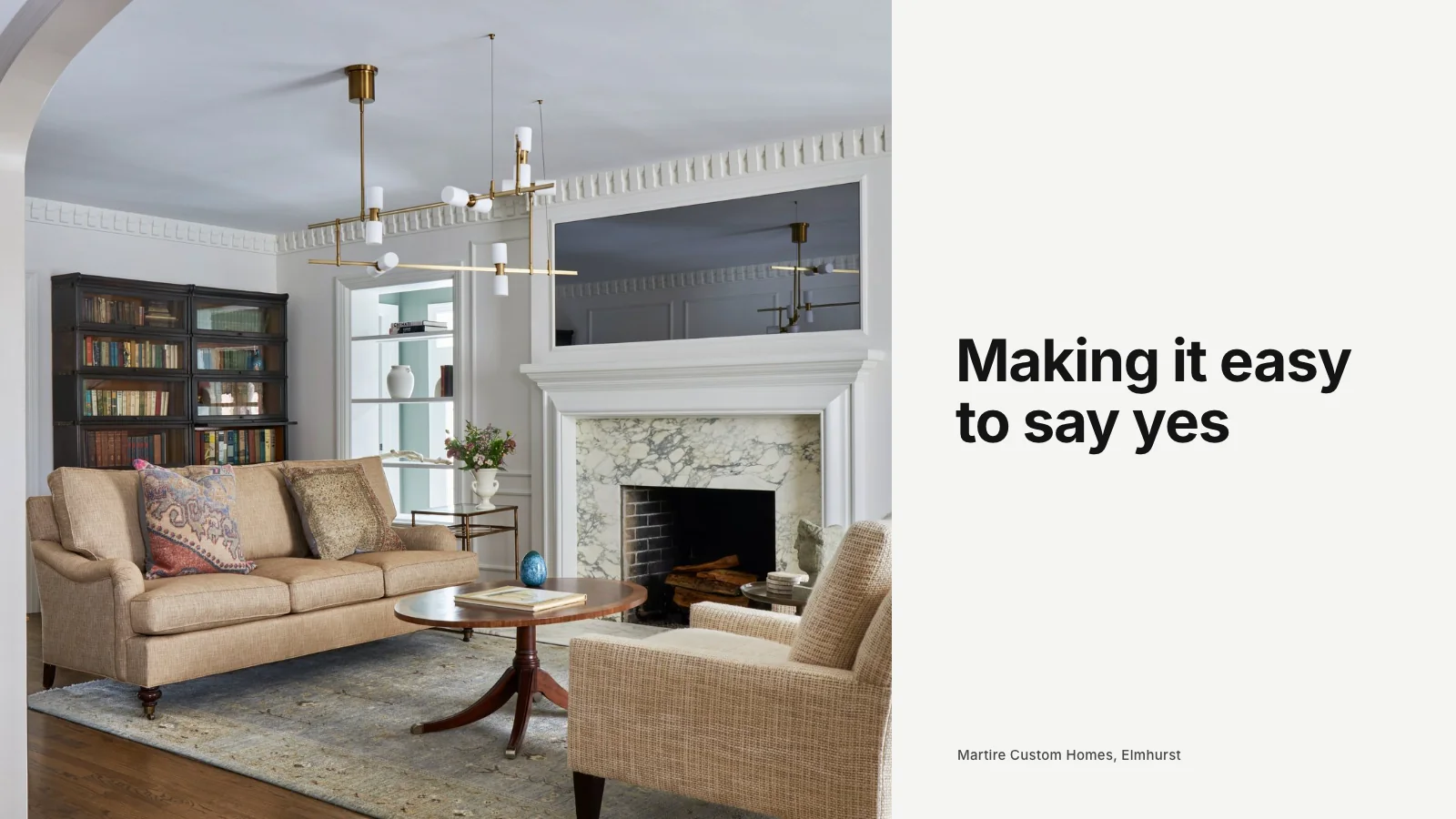
Some clients appreciate a choice of scope: a full-service option and a more focused alternative, or a phased approach that spreads the project over time. Options can make it easier to say yes, especially when budgets are tight or priorities are still forming. Keep options clear and limited, usually two or three, so the decision feels manageable rather than overwhelming.
Common proposal mistakes
- Sending a generic template that ignores what the clients said.
- Leaving scope vague, which leads to disputes later.
- Hiding fees or making them hard to understand.
- Promising timelines that depend on factors outside your control.
- Waiting too long to send it.
When proposals are not accepted
Not every proposal will be accepted. Ask, kindly, if the clients would share what influenced their decision. The answers help you refine your approach. Sometimes it reveals a mismatch that better qualification could catch earlier, as discussed in why your contact page may be costing you better clients and getting clients who fit your studio.
The proposal and the wider journey
The proposal builds on trust established long before: on your website, in your reviews and during the consultation. Our articles on building trust before a client contacts you and why clients search by project type explain how that trust begins. After signing, small gestures throughout the project build the referrals that bring future clients, as discussed in client gifts that earn referrals.
If you would like your website to build the same confidence your proposals do, our website redesign service can help. Or request a studio review to start.
Request a Studio Review
If your work is already strong, the next step is making sure Google + AI can understand it clearly.
Request a Studio Review