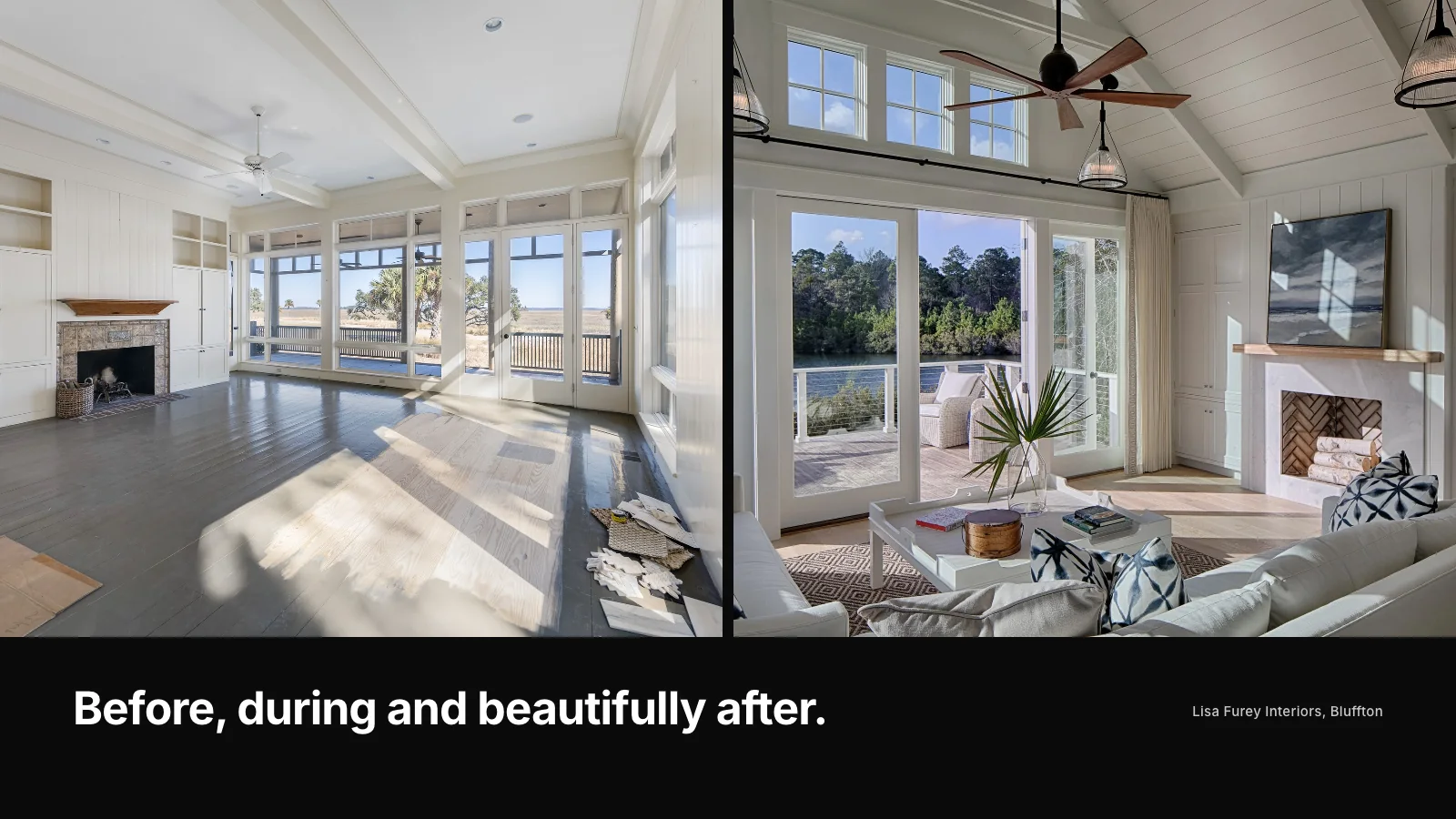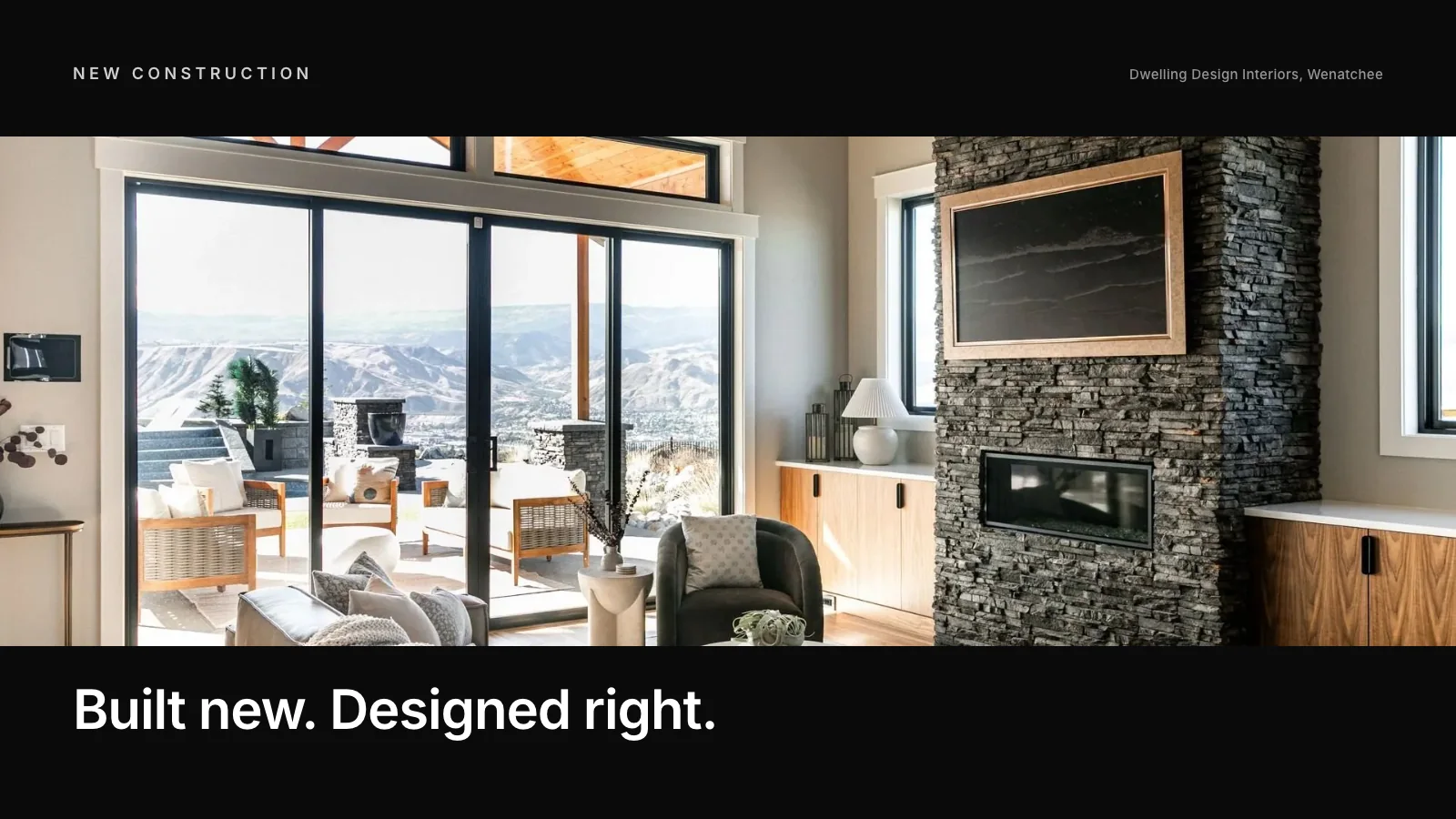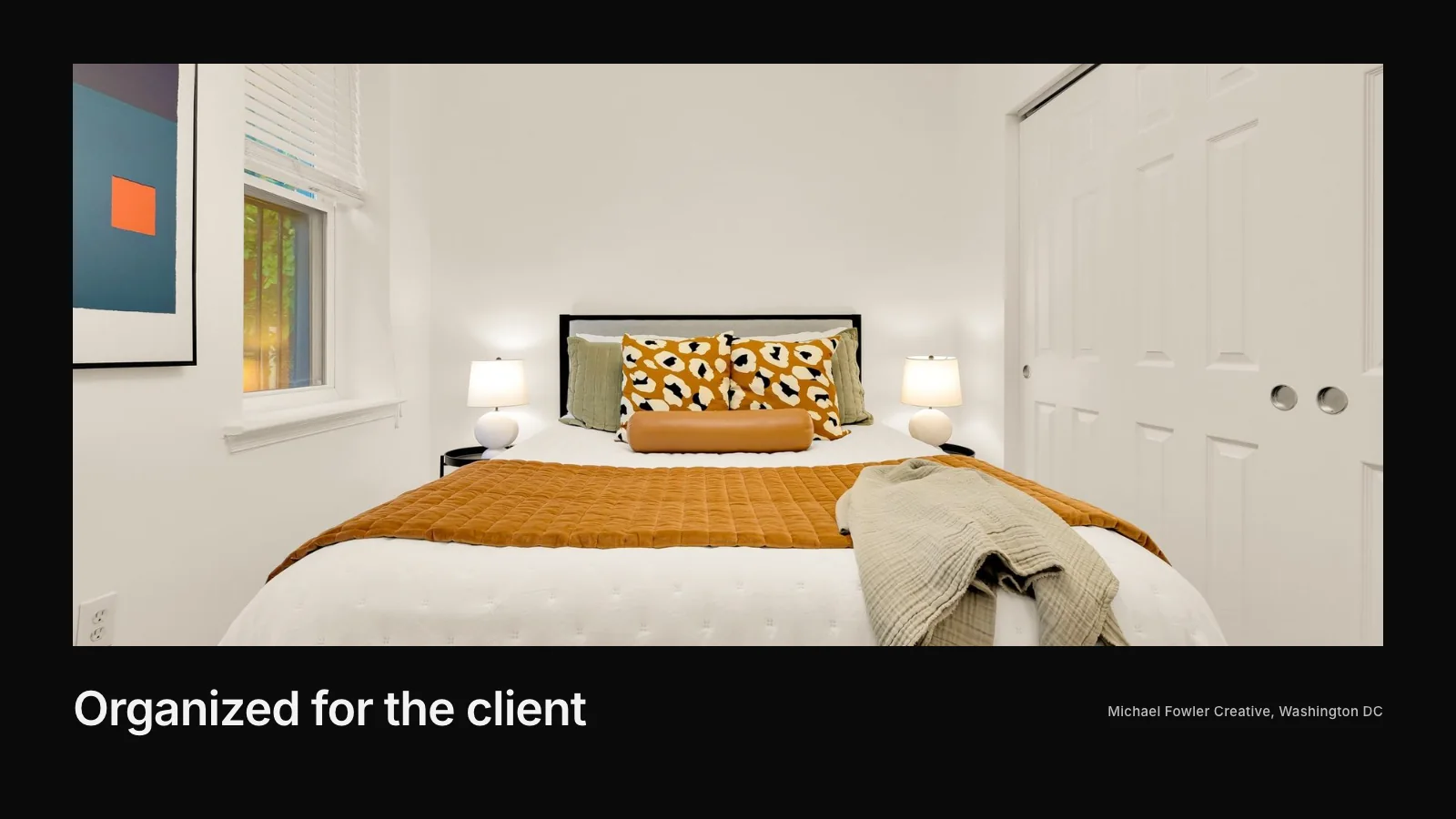
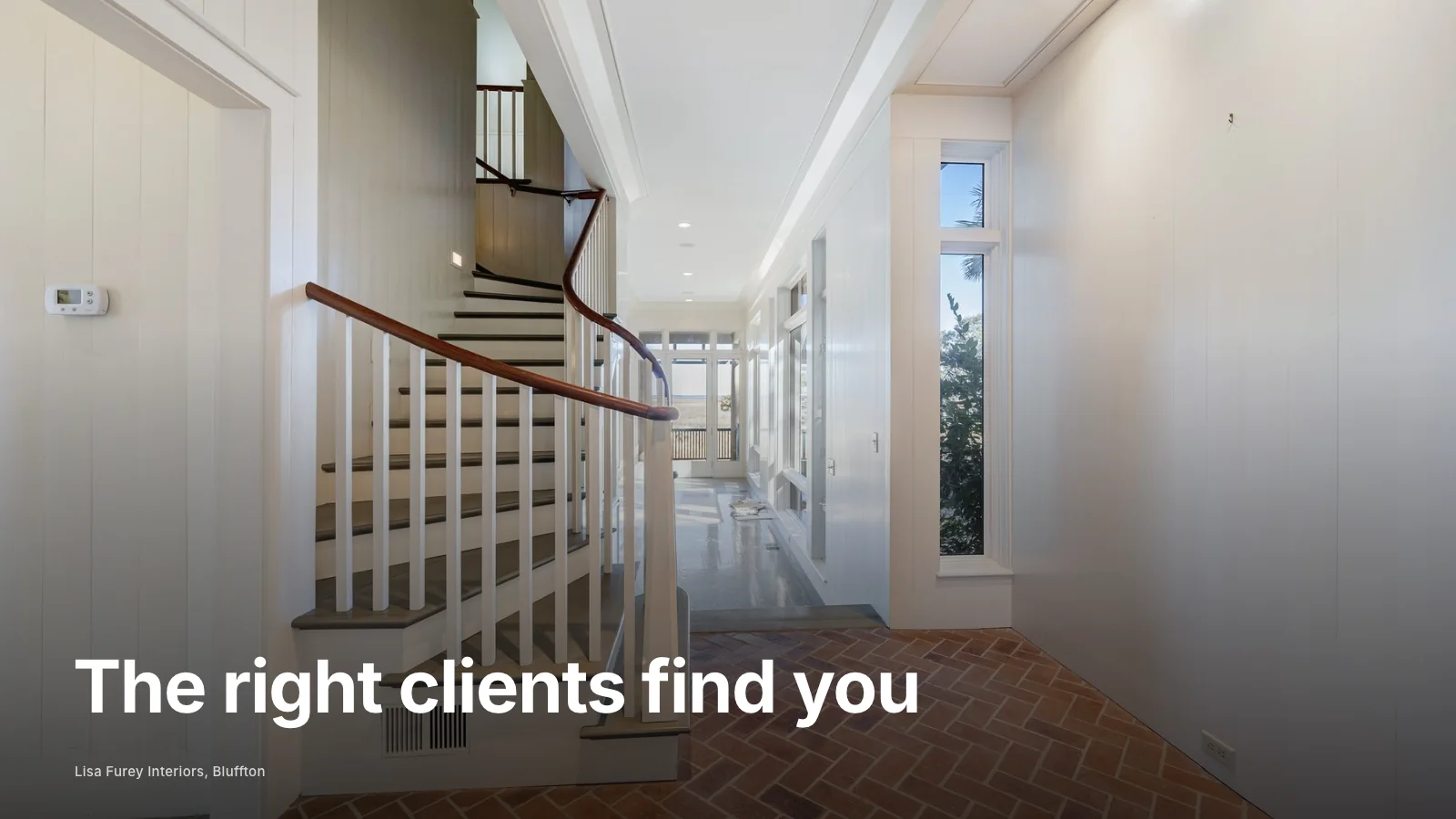
To get interior design clients who fit your studio, define exactly who those clients are, make your work visible where they look, build relationships with the professionals who refer them, present real proof of similar projects and handle the first conversation in a way that makes them feel understood. Most studios focus on getting more inquiries. The ones that grow sustainably focus on getting the right ones.
Here is how each step works in practice.
Define the clients who fit
Look back at your last ten projects. Which ones were rewarding creatively, financially and personally? What did those clients have in common? Usually a pattern emerges: a project type, a budget range, a location, a way of working together.
Write a short description of that client. This becomes the reference point for your website, your marketing and how you respond to inquiries. Our articles on positioning for renovation clients and positioning for new construction explore two common directions.
Make your positioning visible
Once you know who fits, say so plainly on your website and profiles. Name the services, project types and places. Show those projects first. Clients who fit will recognize themselves quickly; those who do not will often move on without an awkward conversation.
Be visible where the right clients look
Ideal clients find designers in several ways:
- Referrals from past clients, architects, builders and realtors.
- Google, searching by service, project type and location.
- AI tools, asking for recommendations in their area.
- Instagram and Pinterest, discovering your aesthetic.
- Press and showhouses, seeing your work in context.
Our article on why high-value clients search by project type explains why your website and Google presence should mirror how these clients search.
Build referral relationships deliberately
Referrals often bring the best-matched clients, because someone who knows both parties has already made the introduction. Treat referral partners as relationships, not transactions:
- Make collaborations smooth and pleasant.
- Credit partners on your project pages.
- Share finished photography with them.
- Stay in touch between projects.
- Thank them every time.
Offer proof of similar work
When a prospective client finds you, they look for evidence that you have done projects like theirs. Give them:
- Project stories that describe briefs and challenges similar to theirs.
- Reviews and testimonials that describe the experience of working with you.
- Press and recognition.
- A clear description of your process.
Our article on building trust before a client contacts you covers this in more depth.
Make the first step easy
A short, friendly contact form, a clear explanation of what happens next and a prompt reply all matter. Many good-fit clients are busy people. If your process feels slow or complicated, they may choose someone else. A simple client portal can also make later stages feel organized, as discussed in whether your studio needs a client portal.
Qualify gently
Not every inquiry will fit. A few thoughtful questions, either on your form or in a first call, help both sides decide: the project type, location, timeline, scope and an approximate budget range. Frame these questions as helping you suggest the right approach, not as a test.
Run a better first conversation
The first conversation is where projects are won. Listen more than you talk. Ask about how the clients live, what frustrates them about their home and what they hope will change. Explain your process clearly. Share one or two relevant projects. End with clear next steps.
Clients who feel understood in the first conversation are far more likely to sign.
Follow up thoughtfully
After a consultation, send a short summary of what you heard, what you would recommend and how to proceed. Many studios lose good-fit clients simply because follow-up was slow or vague.
Say no gracefully
Getting the right clients also means letting the wrong ones go kindly. When an inquiry clearly does not fit, perhaps a single room far outside your area or a budget that cannot support full service, reply warmly, explain why you are not the right studio and, if you can, suggest an alternative such as a consultation, an e-design service or a colleague who might help.
This protects your time and your reputation. People remember being treated well even when the answer was no, and some of them come back later with a project that does fit, or refer a friend who has one.
Learn from every project
At the end of each project, take ten minutes to note how the client found you, what made them choose you and what you would do differently. Over a year, these notes show which channels bring your best clients and which messages resonate. That knowledge sharpens your positioning and helps you invest time where it matters most.
Build a foundation that keeps working
Getting clients consistently requires a foundation that works even when you are busy: a strong website, a complete Google profile, steady reviews and visibility in search and AI tools. Our 90-day visibility foundation sets out a practical plan.
Where to start
If you are unsure where to begin, choose three actions: write your ideal client description, rewrite your homepage opening to reflect it and reconnect with three referral partners this month. Those steps alone often change the type of inquiries you receive.
If your website is the weak link, our website redesign service is built around attracting clients who fit. Or request a studio review and we will look at how well your current presence speaks to the clients you want.
Build your visibility foundation
Design Growth Hub helps interior designers build the visibility foundation behind high-value discovery.
Request a Studio Review