Remodeling ads that attract the right homeowners show real projects, speak clearly to the type of work and budget you want, target the areas you serve, send people to focused landing pages and use honest offers rather than discounts. Google search ads capture homeowners ready to hire, while Facebook, Instagram and Nextdoor ads build familiarity before they search. Measured by signed jobs and project value, a well-built campaign can bring better work, not just more calls.
Here is how to create remodeling ads that bring the jobs you want.
Know which homeowners you want
Before creating ads, define the homeowners and projects you want: kitchens, baths, additions or whole-home renovations, in which towns, at which budgets. Ads designed for everyone tend to attract price shoppers. Ads designed for a specific homeowner attract people who fit.
Choose the right platform
Google search ads: for homeowners actively searching for a remodeler. High intent, often higher cost per click.
Facebook and Instagram: for reaching homeowners in specific areas before they search. Visual and good for showing transformations.
Nextdoor: for neighborhood-level visibility, where recommendations carry weight.
Many remodelers combine search ads for immediate demand with social ads for awareness. Our article on Google Ads for contractors done right covers search in detail.
Show real work
Use photos and videos of your own projects. Before and after images are particularly effective for remodeling. Show quality details as well as finished rooms. Avoid stock photos, which homeowners spot and distrust. Our article on bathroom remodeling marketing that shows your craft explains how to present craftsmanship.
Write clear, specific copy
Say who the ad is for, what you do and where. "Planning a kitchen remodel in Naperville? See how we opened up this 1990s kitchen. Request an in-home consultation." Specific copy attracts homeowners with matching projects.
Honest offers
Offers such as a free in-home consultation or design meeting can encourage action without discounting your work. Avoid heavy discounts, which attract price-focused homeowners and set the wrong expectations. If you offer financing, mention it accurately.
Targeting
On Meta, target by location and home-related interests, and consider audiences based on past clients or website visitors. On Google, target specific towns and use negative keywords. On Nextdoor, focus on neighborhoods where you want work. Avoid targeting areas you cannot serve well.
Landing pages
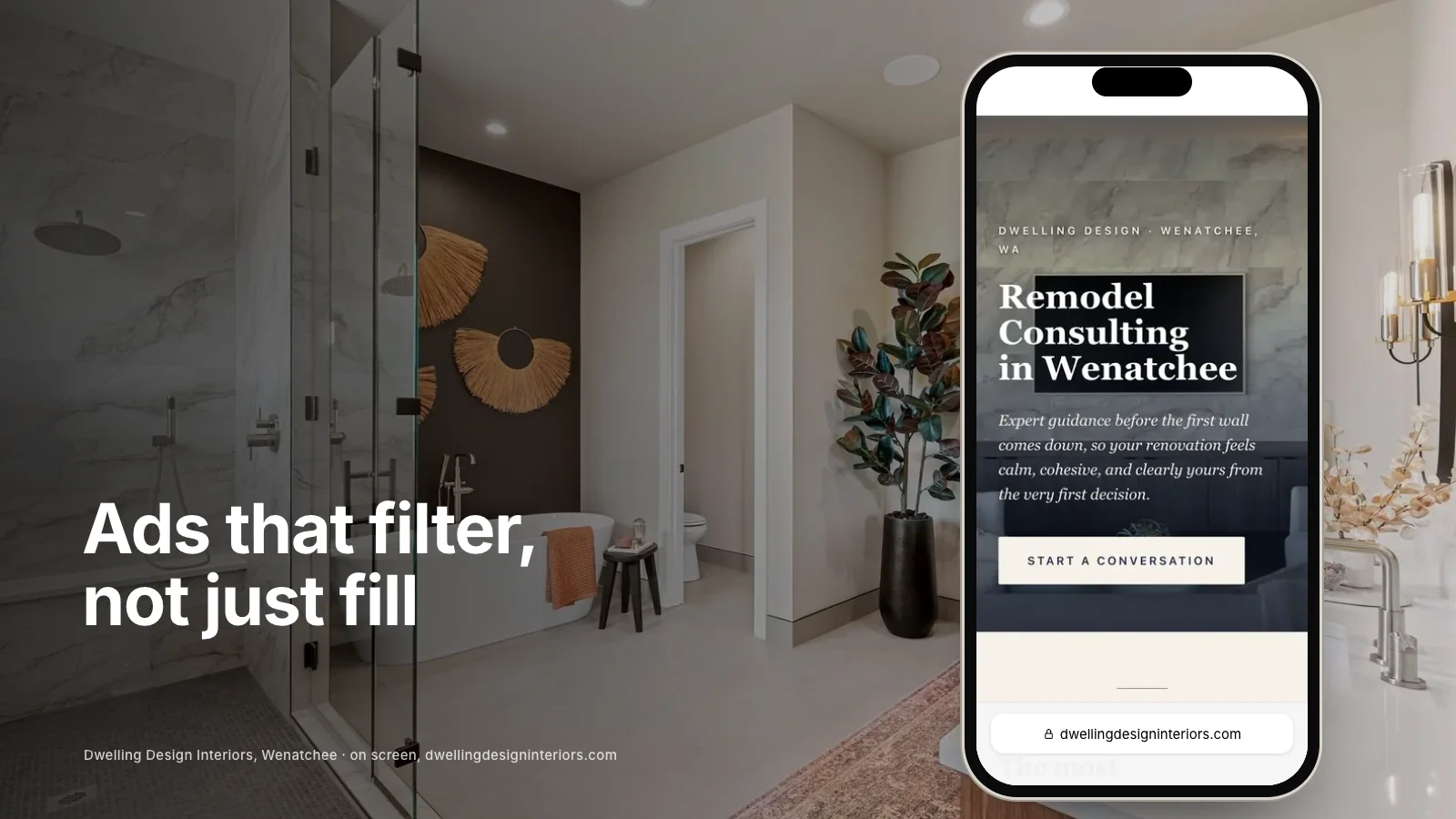
Send each ad to a page that matches it: the same service, project type and message. Include relevant projects, reviews, your process and a short form. A focused page converts better than the home page. Our article on contractor website design that wins remodeling jobs explains what to include.
Retargeting
Show ads to homeowners who visited your website but did not contact you. A gentle reminder with a relevant project can bring them back. Keep frequency low to avoid feeling intrusive.
Budgets and timing
Start modestly and focus on one or two services. Align spending with homeowner planning seasons. Pause or reduce ads when your calendar is full rather than generating leads you cannot serve.
Measuring results
Track leads from each ad and follow them to signed jobs and project value. Calculate cost per signed job. Compare platforms and ad variations. Adjust monthly.
Ads and social presence
Ads work better when your organic social presence is active and credible. Homeowners who see an ad often visit your profile. Our article on social media for remodeling contractors explains how to build that presence.
Ads within your wider marketing
Advertising supports referrals, reviews and search visibility rather than replacing them. Our guide to remodeling marketing that fills the calendar explains how ads fit into a complete plan. For bathroom-specific campaigns, see bathroom remodeling leads.
Video that builds trust
Short videos can be some of the most effective remodeling ads. A thirty-second walkthrough of a finished kitchen, a time-lapse of a bathroom coming together or the owner explaining how they protect a home during work all build trust in ways a single photo cannot. Keep videos natural, add captions for people watching without sound and end with a clear invitation to request a consultation.
Ads for different stages
Homeowners move through stages: dreaming, researching, comparing and ready to hire. Social ads with inspiring transformations reach dreamers and researchers. Retargeting ads with reviews and process details reach comparers. Search ads catch those ready to hire. Matching the message to the stage makes every dollar work harder.
Answering leads quickly
The best ad is wasted if leads wait days for a reply. Decide who answers ad inquiries, how quickly and with what next step. Many remodelers find that faster responses increase signed jobs more than any change to the ads themselves.
Showing the people
Ads featuring your actual team, such as a project manager on site or the owner meeting homeowners, often perform well because they answer the question homeowners care about most: who will be in my house?
Common mistakes
- Stock images instead of real projects.
- Discount-driven offers.
- Broad targeting.
- Sending traffic to the home page.
- No tracking beyond clicks.
- Running ads when you have no capacity.
If you would like help building remodeling ads and landing pages that attract the right homeowners, our paid advertising service works with remodelers. Or request a studio review to see whether your foundations are ready.
Make your studio easier to find
When the right clients search, clarity is what brings them to you. Let us look at the structure behind how you are found.
Request a Studio Review