The marketing strategies that work best for interior designers are the ones that compound: clear positioning that sharpens over time, owned assets like a strong website and project library, a deliberate referral network, a growing body of reviews and press, steady search and AI visibility and simple measurement that shows what brings the right projects. Unlike one-off tactics, these keep working long after the effort is made.
Here is how each strategy builds on itself, and how to put them into practice without losing focus on client work.
Why compounding matters
Some marketing stops working the moment you stop paying for it. Ads are the obvious example. Other marketing keeps working: a well-written project page brings visitors for years, a strong review helps every future prospect and a builder who loves working with you refers clients again and again.
For busy design studios, the most valuable marketing is the kind that builds on itself. That does not mean ignoring short-term tactics. It means making sure most of your effort goes into assets that grow.
Sharpen your positioning
Positioning is the foundation of every other strategy. The clearer you are about who you serve, what you do for them and where, the easier it is for clients, referrers and search engines to understand you.
Positioning compounds because each project you complete within your focus strengthens it. A studio known for historic renovations in a particular city becomes the obvious choice, then the referred choice, then the published choice. Review your positioning once a year and refine it based on the projects you enjoyed and the ones that grew the business.
Build owned assets
Owned assets are things you control: your website, project pages, articles, email list and photography library. Unlike social platforms, they do not change their rules overnight.
- Turn every finished project into a full project page with a story.
- Build service pages that explain each offer clearly.
- Answer client questions in articles that you can share and link to.
- Keep a simple email list of past clients and interested contacts.
Each asset adds to the last. After a few years, a studio with thirty well-written project pages and a dozen useful articles has a body of evidence that is very hard to compete with. Our guide to interior designer website design explains how to structure these assets.
Grow a referral network deliberately
Referrals are the lifeblood of most design studios, but they are often left to chance. A deliberate approach compounds:
- Identify the architects, builders, realtors and showrooms whose clients overlap with yours.
- Make collaborations easy and pleasant, then credit partners publicly.
- Share finished projects with everyone who worked on them.
- Stay in touch with past clients through occasional, genuine contact.
Our article on email marketing for interior designers offers a simple way to stay in touch at scale.
Build reputation signals
Reviews, press, awards and showhouses are reputation signals. Each one makes the next easier. A studio with a strong review profile is more likely to be featured. A featured studio is more likely to be invited to a showhouse. A showhouse brings more reviews and press.
Build simple habits: request a review at the end of every project, submit finished work to publications, and present your recognition clearly on your website. Our article on press features and AI search explains why presenting press well also helps visibility.
Invest in visibility foundations
Search and AI visibility compound because every improvement stays in place. A clear service page, a complete Google profile, consistent business details and well-described projects keep working month after month. Our article on the 90-day visibility foundation sets out a practical plan.
As AI tools increasingly recommend designers, this strategy matters more each year. Our article on what AI means for interior design marketing discusses the wider change.
Use social media as a supporting channel
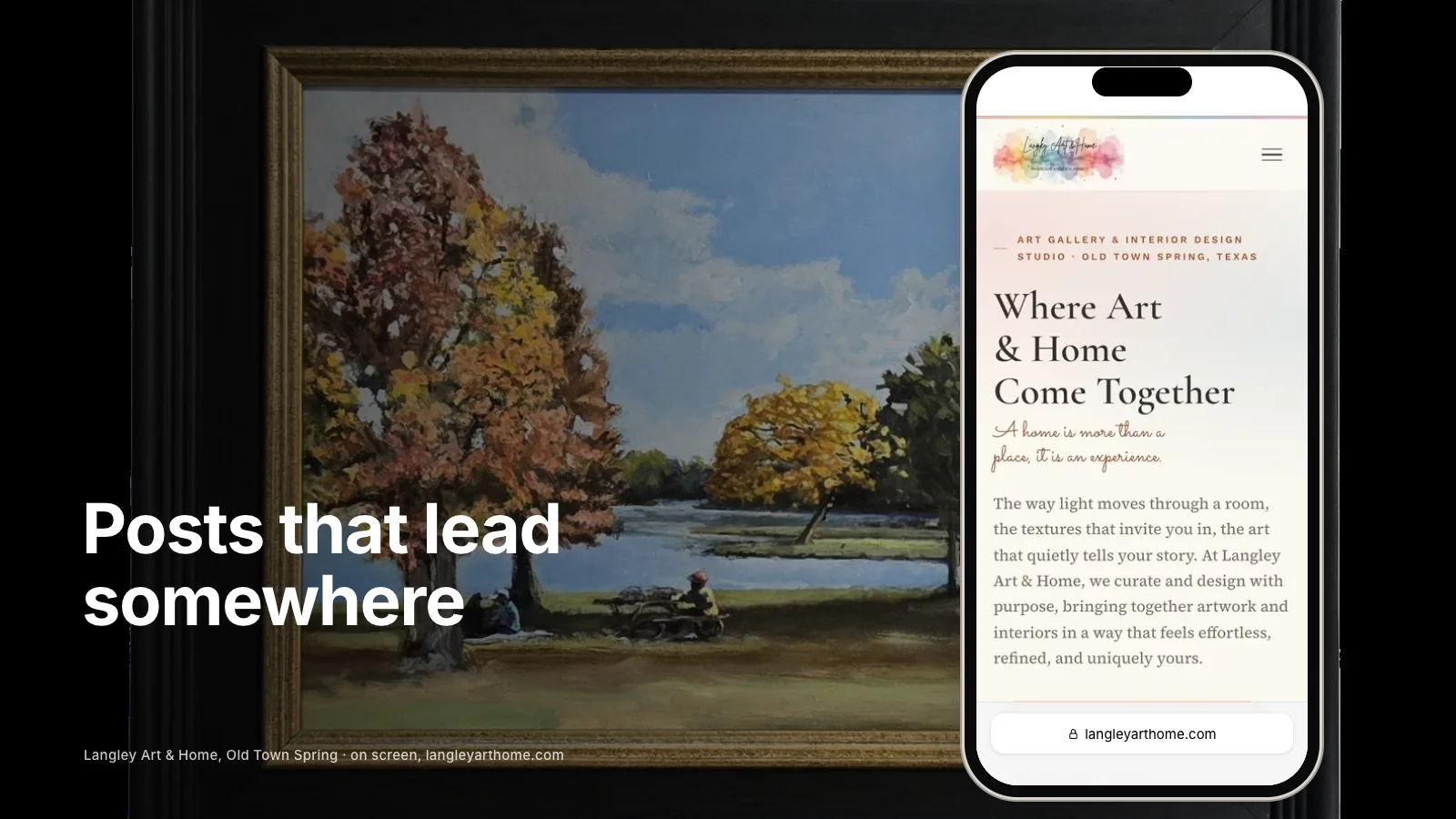
Instagram can build familiarity and bring inquiries, but its value fades quickly once a post scrolls away. Treat it as a way to point people toward your owned assets. Share a project on Instagram, link to its full story on your website. Our guide to Instagram marketing that leads somewhere explains how.
Measure what matters
Track where every inquiry comes from and, more importantly, which sources bring projects you want. Over a year, patterns emerge. Perhaps referrals from one builder bring your best projects, or Google brings steady mid-size work. Those insights let you invest in what truly compounds.
Tactics that support the strategies
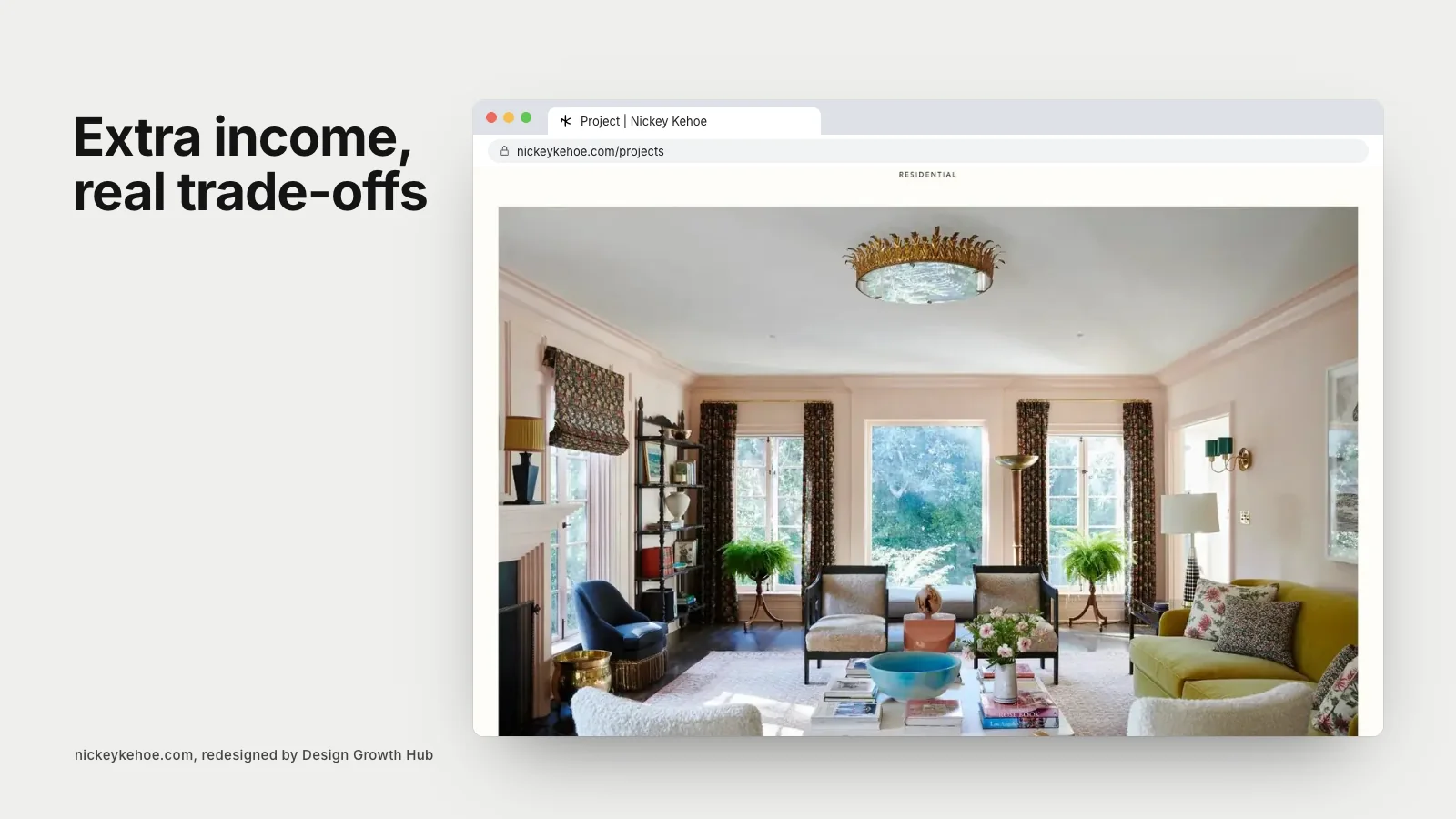
Some tactics are worth using within these strategies: occasional ads to promote a strong new project, affiliate programs for products you genuinely recommend, as discussed in affiliate marketing for interior designers, or seasonal campaigns. Use them deliberately, and keep most of your energy on the long-term strategies.
Putting it together
A simple annual plan might include: refining positioning in January, adding every new project to your website within a month of photography, quarterly outreach to referral partners, monthly review requests, two press submissions a year and a quarterly check of your Google profile and search data. None of this is dramatic. All of it builds.
Our broader guide to interior design marketing that brings better projects explains how these strategies fit into a complete system. If you would like help with the visibility foundation, our Google and AI visibility services focus on exactly that. Or request a studio review and we will suggest where your effort would compound most.
Request a Studio Review
If your work is already strong, the next step is making sure Google + AI can understand it clearly.
Request a Studio Review