Interior design digital marketing covers your website, Google search, Google Business Profile, AI search tools, Instagram, Pinterest, Houzz, email and paid advertising. Each plays a different role. Instagram and Pinterest create interest. Google, AI tools and Houzz capture people who are actively looking. Your website and Google profile turn both kinds of visitor into inquiries. Email keeps past clients and contacts close. Advertising accelerates what already works.
Here is what each channel does well, what it requires and how to connect them.
Your website
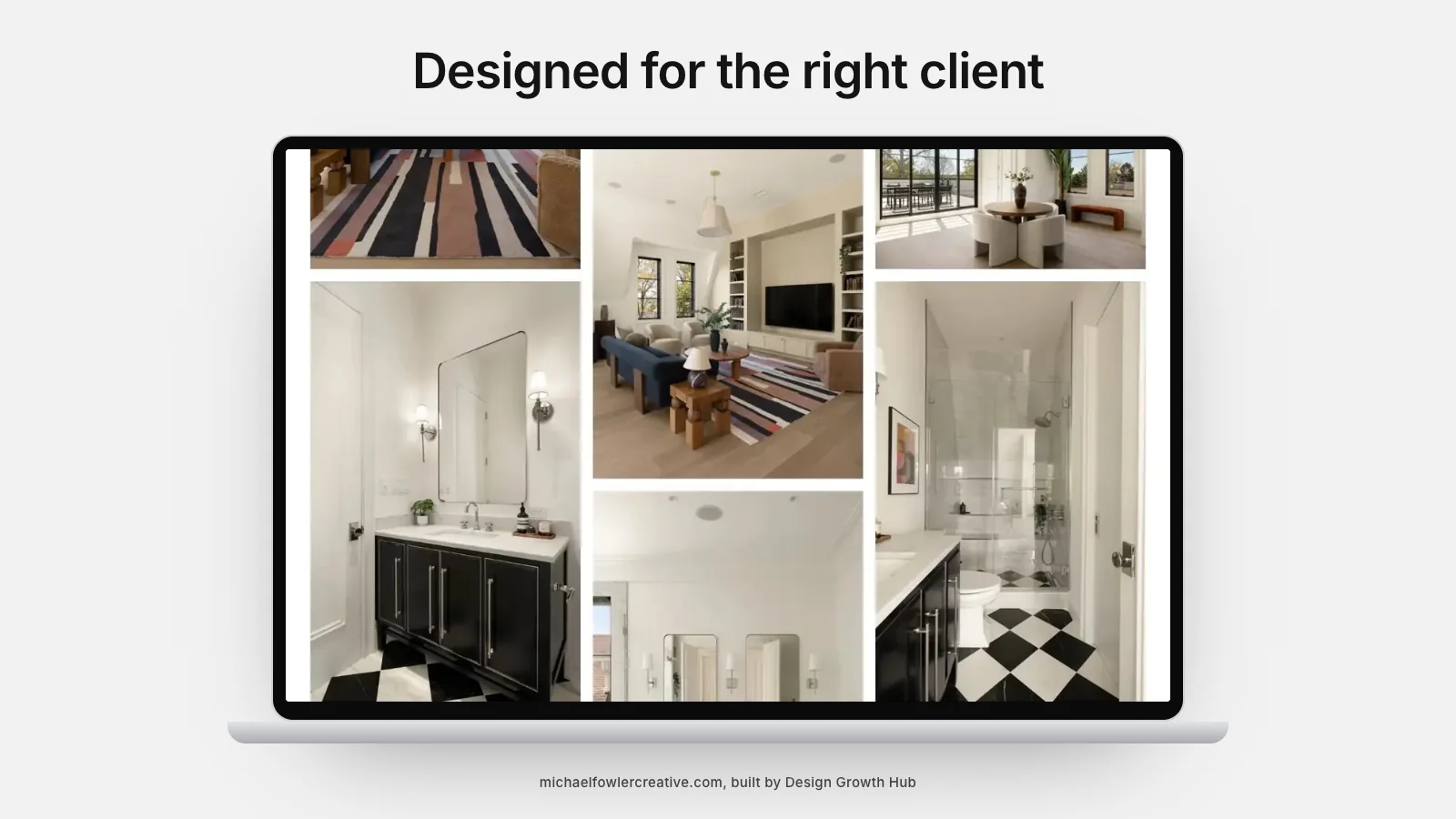
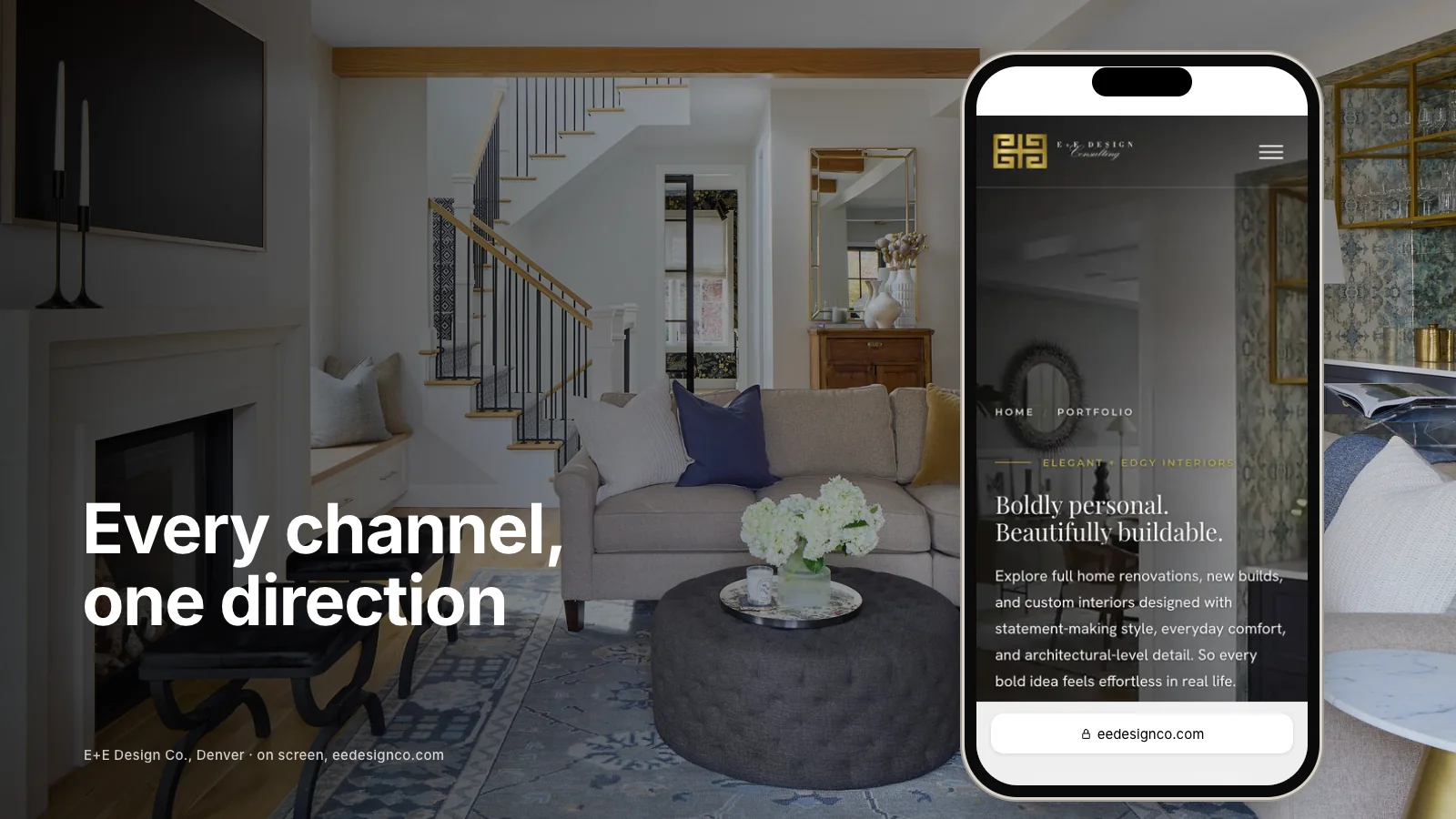
Role: the hub that every other channel leads to. What it needs: clear service pages, project stories, an about page, real proof and an easy inquiry path. Watch for: beautiful galleries with little explanation, slow pages on phones and hidden contact links.
If your website is weak, every other channel underperforms. Our guide to interior designer website design covers the essentials.
Google search
Role: capturing people actively searching for a designer, a service or a project type. What it needs: pages that match those searches, descriptive titles, project content, technical health and links from credible sources. Watch for: expecting quick results. Search builds steadily over months.
Our guide to SEO for interior designers explains how to start.
Google Business Profile
Role: appearing in local and map results, often before any website. What it needs: complete information, accurate categories, services, photos, regular updates and reviews. Watch for: inconsistent details between your profile and website.
AI search tools
Role: answering questions and recommending studios inside ChatGPT, Gemini, Perplexity and Google's AI Overviews. What it needs: clear, consistent information about your studio across your website, profile, reviews and press. Watch for: missing or inconsistent details that lead AI tools to describe you inaccurately or not at all.
Our article on how AI search changes interior design marketing explains this newer channel.
Role: building familiarity, showing your aesthetic and staying in mind between projects. What it needs: consistent, high-quality posts, a clear bio stating what you do and where, and links to your website. Watch for: treating Instagram as your only presence. Followers are not the same as clients.
Role: long-lived visual discovery. Pins can bring visitors for months or years. What it needs: well-described pins linking to specific project pages or articles on your website. Watch for: pinning without links back to your site.
Houzz and directories
Role: capturing homeowners researching renovations and comparing professionals. What it needs: a complete profile, strong photos, reviews and consistent business details. Watch for: paying for premium placements without tracking whether they bring suitable projects. Our article on Houzz for interior designers weighs the options.
Role: keeping past clients, referrers and interested contacts close. What it needs: a simple list and an occasional, genuinely interesting message. Watch for: sending too often or only promotional content.
Meta advertising
Role: reaching homeowners in your area who fit your ideal client profile, often on Instagram. What it needs: strong creative, a clear offer, a landing page that matches and proper tracking. Watch for: sending cold traffic to a weak website.
Google Ads
Role: appearing at the top of results for high-intent searches. What it needs: carefully chosen searches, negative keywords, focused landing pages and conversion tracking. Watch for: broad keywords that bring the wrong inquiries. Our guide to Google Ads for interior designers covers setup.
How the channels work together
The most effective digital marketing connects channels deliberately:
- An Instagram post links to the full project story on your website.
- That project page links to the related service page and to your contact page.
- Your Google profile shows the same project photos and links to your service pages.
- Your newsletter shares the project with past clients and referrers.
- AI tools find consistent descriptions of your services across all of these.
Each channel reinforces the others, and every path ends at a page designed to turn interest into an inquiry.
Choosing your channels
You do not need to be everywhere. Choose channels based on where your ideal clients look and what you can sustain. For most studios, the website, Google Business Profile and reviews are essential. Add one social channel you enjoy, a simple email habit and, once foundations are solid, carefully tracked advertising.
Our marketing plan example shows how a small studio might choose. Our guide to interior design marketing that brings better projects covers the strategy behind it, and marketing ideas for an interior design business offers practical starting points.
Measuring across channels
Ask every inquiry how they found you, and record it. Use Google Search Console, profile insights and ad reports to understand activity, but judge each channel by the projects it helps bring in.
Getting help
If you want support, consider which channels matter most and who is best placed to help. Our Google and AI visibility services focus on the website, search and Google profile, the hub of the system. Our article on what a marketing agency should do for you explains what to expect from broader partners, and brochure or website first covers print. Or request a studio review and we will tell you which channel deserves attention first.
Fix the structure behind your website
Beauty gets attention. Structure gets discovery. We help you build both, so the right clients arrive ready.
Request a Studio Review