To get leads for an interior design business, strengthen the sources that bring well-matched clients: referrals from past clients and trade partners, visibility in Google and AI tools, a complete Google Business Profile with steady reviews, a social presence that points people to your website and, once foundations are solid, carefully tracked advertising. Then make sure your website turns that interest into inquiries and that you follow up quickly.
Here is how each lead source works and what you can do this month to improve it.
Know where your leads come from now
Before chasing new sources, look at your last twenty inquiries. Where did each come from? Which turned into projects you enjoyed? Most studios find that a few sources bring most of their best work. That tells you where to invest first and which sources might be quietly costing time.
If you have never tracked this, start now. Add a simple "How did you hear about us?" field to your form or ask on every first call.
Referrals from past clients
Past clients are often your strongest lead source. They know your work, trust you and talk to friends who are planning similar projects. Make it easy for them to refer you:
- Stay in touch with an occasional, personal note or newsletter.
- Mark project anniversaries with a small gesture.
- Send them finished photography of their home.
- Thank every referral, whether or not it becomes a project.
Referrals from trade partners
Architects, builders, realtors, kitchen designers and showrooms meet clients before you do. A few strong trade relationships can supply a steady stream of well-matched leads. Make collaboration smooth, credit partners on your website and share finished projects with them. A page explaining how you work with trade partners can help them refer you with confidence.
Google search
People searching for "interior designer in [town]" or "kitchen renovation designer" are actively looking. To appear, your website needs pages that match those searches: service pages, project pages and location wording. Our guide to SEO for interior designers explains how to build them.
AI search
More people now ask ChatGPT, Gemini or Google's AI Overviews to recommend a designer. These tools draw on your website, profile, reviews and press. Clear, consistent information makes it more likely they will describe you accurately. Our article on why the future of design leads is Google plus AI visibility explains the shift.
Google Business Profile and reviews
For local leads, your Google Business Profile often appears before your website. Complete every section, add recent project photos and ask every happy client for a review. Profiles with steady, genuine reviews tend to attract more calls and website visits.
Instagram and Pinterest
Social platforms build familiarity and can bring leads, especially when your bio says clearly what you do and where, and when posts link to full project stories. They work best as feeders into your website rather than as the place where leads are captured.
Advertising
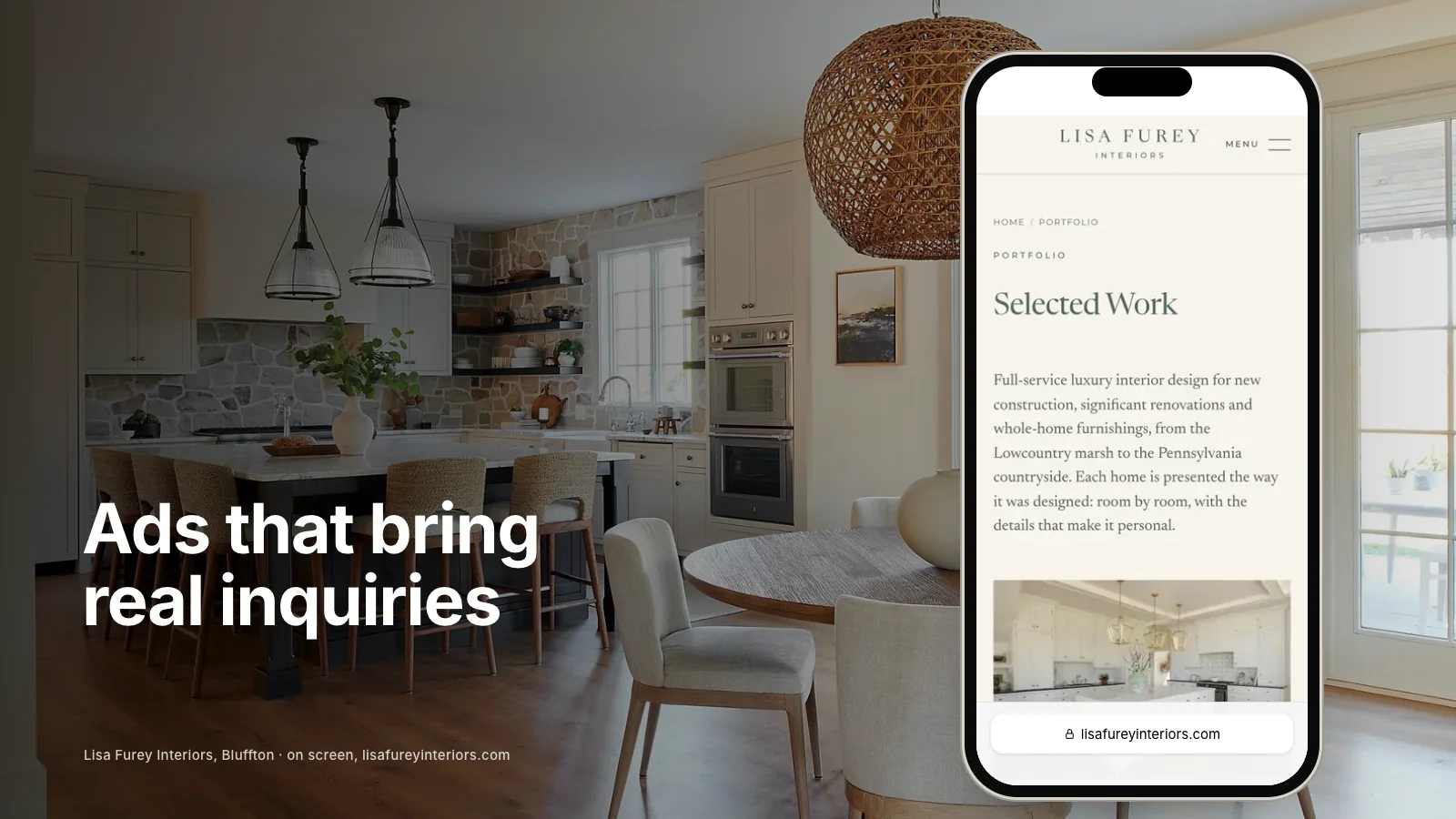
Paid ads on Meta or Google can generate leads quickly. They work best once your website and profile are strong, with a clear offer, a matching landing page and tracking that shows which ads bring real inquiries. Our guide to advertising an interior design business covers the essentials.
Lead generation companies
Some studios use paid lead platforms. These can fill gaps but often bring price-focused inquiries shared with several competitors. Our article on whether to use lead generation companies weighs the pros and cons honestly.
Turn interest into inquiries
Every lead source sends people to your website. If the site is unclear, slow or lacks proof, many leave without contacting you. Make sure your opening screen says what you do and where, your best-fit projects appear first, testimonials and press are visible and your contact form is short and easy to find.
Qualify gently
Not every lead is a good fit. A few thoughtful questions about project type, location, timeline and an approximate budget help both sides decide quickly. Our guide to an interior design client intake form that qualifies leads shows how to ask without putting people off.
Follow up quickly
Speed matters. Many clients contact more than one designer. Reply within one business day, even with a short note, and follow up after consultations with a clear summary and next steps. A simple system, even a spreadsheet, ensures no good lead slips through.
Track lead quality
Record the source of every lead and whether it became a project. After six to twelve months, you will see which sources bring the work you want. Invest more there and less elsewhere. Our article on growing an interior design business steadily explains how this fits into a longer-term plan.
A simple monthly routine
- Ask two recent clients for reviews.
- Add one new project to your website with a short story.
- Update your Google Business Profile with fresh photos.
- Reach out to one trade partner.
- Review last month's leads by source.
This takes a few hours a month and steadily strengthens every lead source.
Getting help
If your website or search visibility is the weak point, our Google and AI visibility services focus on exactly that. Or request a studio review and we will show you where your leads are being lost. For more ways to raise your profile, see how to promote your interior design business online.
Turn your website into a visibility asset
A website can be a brochure or an asset that brings clients. We help design studios build the second kind.
Request a Studio Review