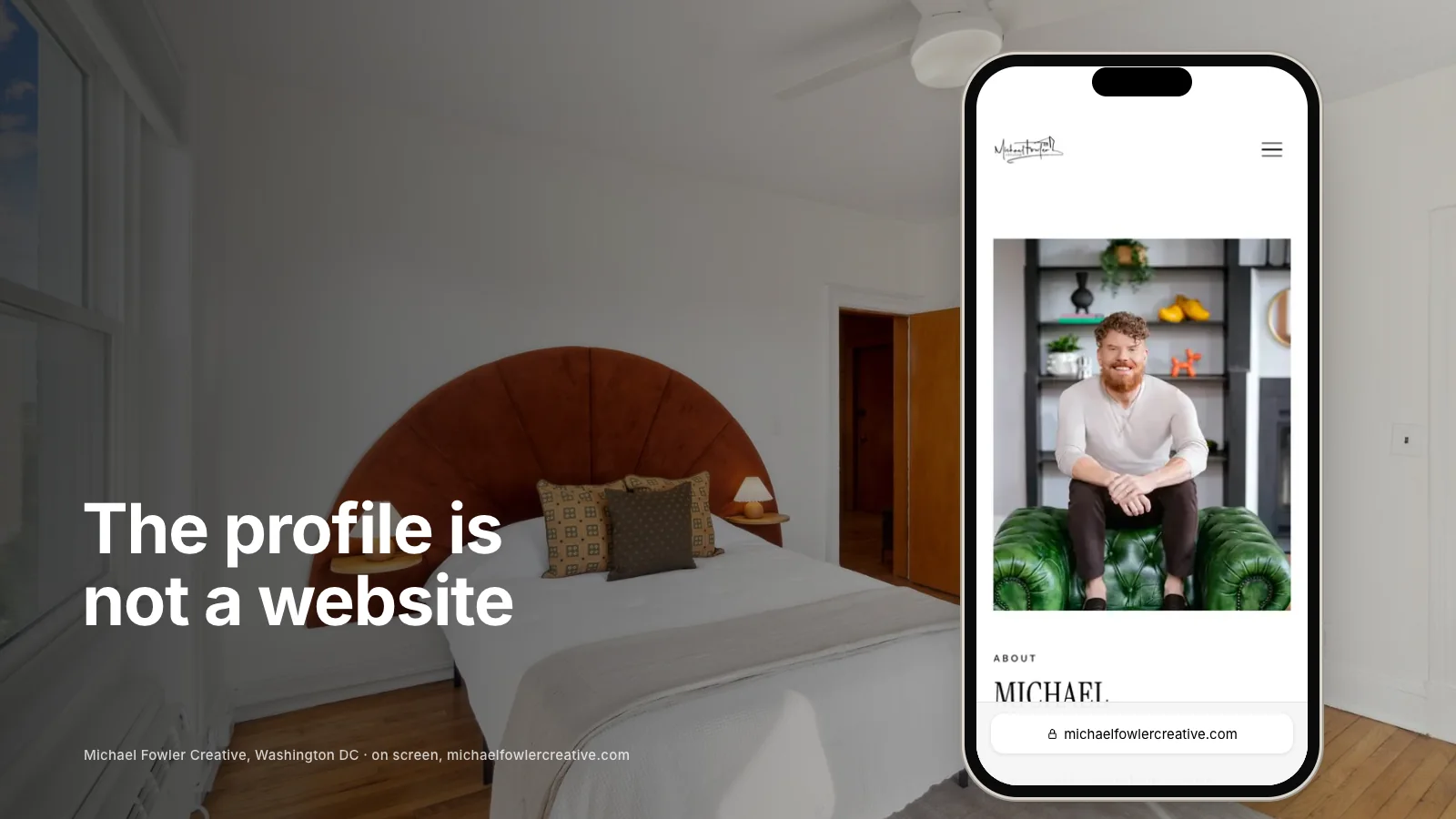
A Google Business Profile does not replace your own website. For several years, Google let businesses create a simple website from their profile, but in 2024 it retired those sites, so businesses that relied on them needed a proper website instead. Even before that change, a profile site offered little control or depth. Your own website lets you explain services, tell project stories, show your brand, build credibility and capture inquiries in ways a profile cannot. The best results come from using both together, with consistent details and the profile linking to your site.
Here is what changed and how to think about the two.
What Google profile websites were
Google offered a basic website builder connected to Business Profiles. Businesses could publish a single, simple page using profile information and photos. It was quick and free but limited in design, content and structure.
What changed
In 2024, Google retired these profile-based websites. Visitors to those addresses were redirected to the business profile for a period, after which the sites stopped working. Businesses relying on them needed to create or link a separate website.
Why your own website matters
- Control: you decide the content, structure and design.
- Depth: service pages, project stories, about pages and articles.
- Credibility: a professional site builds trust with high-value clients.
- Conversion: forms, calls to action and paths designed for inquiries.
- Search visibility: pages that match many searches, not just your name.
- Ownership: your domain and content belong to you.
What the profile does well
Your Google Business Profile helps you appear in local search and maps, shows reviews, photos, hours and contact details and lets people call or get directions quickly. It is essential for local visibility. Our article on why Google Business Profile matters for interior designers explains its role.
How they work together
- Link your profile to your website.
- Keep business name, address or service area and phone identical on both.
- Use the same services and descriptions.
- Share project photos on both.
- Display or link reviews on your website.
Consistency helps search engines and AI tools connect your profile and site.
If you do not have a website yet
If you relied on a profile website or have no website, start with a simple, clear site: home, services, a few projects, about and contact. A builder can get you started quickly. Then grow it over time.
Improving both
Our articles on Google Business Profile tips that matter and improving your profile step by step help with the profile side. Verification and guidelines matter too, covered in verification tips and guidelines design firms break. If you are concerned about cost, what a Google Business Profile really costs explains it.
Social media is not a website either
Some businesses rely on Instagram or Facebook pages instead of a website. Like profile sites, these give limited control and depth. They work best alongside a website, not instead of one.
What to include on your own website
If you are creating a website to work alongside your profile, include the essentials: a clear home page stating what you do and where, a page for each core service, project pages with photos and short stories, an about page introducing the people, a contact page with a short form and your phone number and consistent business details in the footer. These pages give clients the depth a profile cannot and give search engines more to understand.
How the website supports your profile
Google uses information from your website to understand your business. Clear service pages, location wording and project pages that mention places help your profile appear for relevant searches. Linking the profile to a specific, relevant page on your site can also help visitors find what they need quickly.
How the profile supports your website
The profile often reaches people before they see your website, especially on phones. Strong photos, steady reviews and accurate details encourage them to click through. Clients who arrive from the profile already know something about you, so your website should continue the story smoothly.
Choosing a domain
If you are creating a website for the first time, register a domain that matches your business name, in your business's name. Use it for email as well. A professional domain builds trust and keeps your online presence under your control.
Keeping both current
Update your website and profile together when services, hours or contact details change. A profile showing one phone number and a website showing another creates confusion and weakens trust.
Tracking visits from your profile
Add tracking parameters to the website link on your profile so analytics can show how many visitors arrive from it and what they do. This helps you see how profile and website work together and where to improve. If many profile visitors leave quickly, the landing page may need clearer information or a faster load time.
Common mistakes
- Treating the profile as your only online presence.
- Linking the profile to a social page instead of a website.
- Inconsistent details between profile and website.
- Letting either fall out of date.
If you would like help building a website that works with your Google profile, our Google Business Profile service and website work support design businesses. Or request a studio review to start.
Your profile opens the door; your website welcomes people in. Keep both clear, consistent and current, and each makes the other more effective.
Start with a Google + AI visibility audit
Before changing anything, it helps to see clearly. A visibility audit shows exactly where your studio is easy, or hard, to understand.
Request a Studio Review